The Shock of Truth

What is wrong with this Church of ours, that it makes no impact, that it is silent, has nothing to say or contribute to the world around us? What is wrong is that this church has muffled the gospel, and concealed from itself that this is what it has done. This suppression has been going on for so long that we are now only very tenuously connected to the true Church, the true Church that is created and sustained by the gospel. But we have to hear and return to that one, holy catholic and apostolic Church, the Church of all places and all ages, if the ‘Church of England’ is to be what its name claims.

But we have taken out the cross. We have a gospel without truth and judgement, a message of mere empathy and affirmation, an inoffensive and irrelevant gospel, no longer able to cut through any of the contrary claims it meets.

Our church does not see how much trouble our neighbours are in and does not go to their aid. Its ‘gospel’ offers them no diagnosis, no warning, no corrective, no medicine and no surgery. Our neighbours are in the hands of forces that have no sympathy for them. It is for us to go to their aid. It is for us to challenge the thugs who hold them captive. We have to identify what it is that holds people back and ties them down. We have to point out what troubles them and who is inflicting those troubles on them. We need to find some compassion for our neighbours and for the society around us. We have to find enough compassion for them to tell them the truth, although the truth is just what they do not want to hear. For their sake we have to give them what they don't want. We have to tell them that they have been preyed on, and they have identified themselves with those who prey on them, and they have been preying on one another. They have been suffering a delusion, and they have been inflicting it on each other. They are both victims and perpetrators, and all have been complicit in a long concealment of the truth. The gospel comes with the shock and hurt of a plaster being ripped off, of the light being suddenly and blindingly switched on, of being dragged forcibly out of bed, of being thrown out of the vehicle and left on the side of road. The gospel shocks, hurts and exposes us.

Public prayer

A man who stands and prays to God. God hears him and replies. And through the scripture and prayers he reads, he hears the response of God and prays again. In that act and event of conversation that man is not just an individual acting incomprehensively in isolation. He is there together with the Lord, and the Lord with God and God. The man who stands and prays speaks with God, and speaks with and through all the generations who have prayed in this way. Though we only see only one man, two are present there. The man we see draws our attention to the Lord he speaks with. He makes visible or at least draws our attention to the otherwise invisible Lord. As long as he stands there, an upright and unmoving figure in a town centre, he is communicating with God and with man.

Perhaps our concern with written words means that we do not notice the much more direct form of public communication that takes place through this simple act of standing. The Christian communicates simply by standing still there, in public. The act of the single Christian who stands in one place and prays is effective because it is visible and public. It is an address to God and an audience with God that is simultaneously an address to the neighbourhood and nation. He simply stands there where he can be seen, and is immediately noticeable because, unlike all around him, he is still. He prays, worships and intercedes so that the world around him can hear and grasp that they are witnessing a public conversation of man and God, and they may realise, rightly, that this sets a challenge before them. Will they respond? What response can they make? When Daniel heard about the publication of Darius’ decree he went home to his upstairs room where the windows opened toward Jerusalem. Three times a day he got down on his knees and prayed together just as he had always done (Daniel 6.10).

He may pray and be silent, and then pray and worship so that onlookers can hear him. He may stand, and he may kneel. Those who watch or listen, or jeer and heckle, and eventually become embarrassed by their own inability to add anything to this event and who move on and return to their own business. Those who jeer are unlikely to outlast him. If he follows the long-established prayers and psalms adopted and set by the Church over many centuries, he will not run out of prayers. If he stands on the street outside a Church he can assume convention and usage give him permission for this prayer and that he is not intending to obstruct any other public activity. The spot he stands on is his as long as he remains engaged in this public event of communication that is listening to God, and replying, in prayers which are also audible to those around him, and who can therefore add their Amen and so join him. This makes this a generous act.

The man who stands and prays in a public place is engaged in a foundational political act, of creating and recreating public speech. He giving witness that there is a conversation that precedes us, and that we may address one another because this conversation precedes us all. The nation participates in a conversation that has been passed on from one generation to another from long before there was writing and literacy or a single united nation, or government or a state. He is sustaining the breadth of what may be heard in public, and so he dispels our anxieties about public speech, and so he dispels the timidity of the nation. By praying publicly, and so articulating the vast range of concerns expressed through our prayer book and psalms, he is ensuring that anything can be said in public, and so that the nation’s conversation with itself remains large and healthy. As long as he stands there, he holds the public square open.

Two Kingdoms

There are two kingdoms. They are rivals. There is the kingdom of NOW, and there is the kingdom of the Future, or to give it its full title, the kingdom of the Present-and-FUTURE. The rule in the kingdom of NOW is of gratification now, without delay, of welfare without limit and of the instantaneity of all communication and consumption is life. All considerations of what else life could be, are ruled out. Thinking about what good life consists of can only mean delay, which cannot be tolerated. Life at all costs, and our present standard of living at all costs, but do not bother us with questions of how difficult this is going to make the future. It is a Now which seeks to make itself permanent, and is just as rapacious as it has to be to maintain that claim.

Christians are citizens of the Kingdom of the Present-and-FUTURE, or the NOW-AND-NOT-YET. But Christians live surrounded by the people of the Kingdom of NOW. Christians are not NOWists but they live with them. Christians always hold out to the NOWists the prospects of a future not confined by this NOWism. Christians are critics and sometimes opponents of the Present Dispensation.

Those who hold power are always narked by Christian caution and refusal to join in, and they respond with ridicule. Christians, alone sometimes, represent a refusal to believe. We are the dissidents and unbelievers. We do not place our trust in the Present Dispensation or subscribe to the myths the Present Regime creates about its authority. We hold out against over-inflated accounts of the Powers-That-Be, and insist that they are not beyond challenge. We point out that when you imply that you have no need to give an account of yourself, you raise yourself above the rest of us. When you insist that you have authority but you give no account of that authority, you are claiming an entirely different and superior status from the rest of us. You are making a claim to divinity. You present the regime you identify with, and you yourself, as the centre towards which the rest of us must turn. You may be making these claims only implicitly, and when challenged you may deny them. Nonetheless, you are setting your regime up as an object for our devotion and obedience, and so as a form of god.

We call this temptation to present yourself as determinative for us, and as the image around which we should gather, ‘idolatry’. We see this as an attempt to take away from us what is real and replace it with what is fake, and so to rob us. Moreover, we consider that any time anyone attempts to rob or harm us, they are also doing an injury to themselves, and the best thing we can do for them is resist them by insistently pointing out that they are also hurting themselves. Every crime diminishes us, shrivels our habits and character, both of those who commit it and those who do not oppose it, making it more difficult for all of us to do what it right. So for their sake and for our own we vocally and publicly challenge and defy those who do not wish to be called to account. We are not defined and constrained by the Present Dispensation and Regime. We are not slaves in the kingdom of NOW. We are all members of the much larger kingdom that stretches forward into the FUTURE

Defy the cults

So we have two fundamental imperatives. We have the imperative of extreme individualism and the imperative of extreme Collectivism. Either we have Freedom but no community, or we have community but no freedom. We have modernity, crumbling and descending into insanity now, and we have the cult of the primitives. We have these two gods worshipped by these two rival cults.

Now, again, as ever, the West is faced by the society by the society that is an inverse copy of it. It is faced by the cult and society that promotes community over freedom, and indeed which has no room for freedom at all. It is opposed to freedom, and regards freedom as a mistake. Freedom is an error. The demand for freedom is the one pathology which the cult is committed to eradicating. The eradication of freedom. The collective is supreme, the individual is nothing. This cult and society has both borrowed from Christianity and Judaism, and stood Christianity and Judaism on their head. It has who have stood out against Christianity, and made themselves an evil, and who have not been able to move forwards towards a more open society, but have remained primitives, who have not been part of the this success, who took no part in the building of the modern world and are unable to find any significant place in the modern economy. They represent a long howl of envy, of impotence and fury. They have shut themselves out of the modern world. They remain – and insist on remaining – in this closed, primitive economy, in which there is no forgiveness and no opportunity to receive what is new or open – unless it breaks in from outside.

The primitive cult is the freedom-eradication cult. Freedom-eradication is very attractive to some people. Not everyone likes freedom. Freedom always brings risk and a lack of security. Things can go wrong. Freedom requires courage. Some prefer to be told what to think. Some enjoy telling others what to think. There are cowards and bullies, and many of us are both. But not you. Don't be one of them. You have your courage. As soon as you find your courage, we’ll follow you. Or you can follow me, I don't mind which. We are going to withhold our worship from both of these cults, modern and the primitive. We are going to defy them both and we are going to withstand everything they throw at us. Ready now?

Fatherless

Some of the rioters and looters are as young as eight or nine. I then listened to a spokesman for Manchester city council appealing to parents to ensure that their children are not on the streets tonight. Why can?t people see what is staring us all in the face? We are not up against merely feral children. We are up against feral parents. Of course the parents know their children are out on the streets. Of course they see them staggering back with what they have looted. But either they are too drunk or drugged or otherwise out of it to care, or they are helping themselves to the proceeds too.

The parents are the problem; as are, almost certainly, their parents and their parents too. Not that any of them necessarily even know who their parents, in the plural, are. For the single most crucial factor behind all this mayhem, behind the total breakdown of any control or self-control amongst the rampaging gangs of children and teenagers who are rioting, burning, robbing, stealing, attacking and murdering, is the willed removal of the most important thing that socialises children and turns them from feral savages into civilised citizens: a fully committed, hands-on, there-every-day father.

As I have been writing for more than twenty years, a society that embraces mass fatherlessness is a society that is going off the edge of a cliff. There are whole areas of Britain (white as well as black) where committed fathers are a wholly unknown phenomenon; where serial generations are being brought up only by mothers, through whose houses pass transitory males by whom these girls and women have yet more children, and whose own daughters inevitably repeat the pattern of lone and utterly dysfunctional parenting.

The result is fatherless boys who are suffused by an existential rage and desperate psychic need, who take out the damage done to them by lashing out from infancy at the world around them. And all this is effectively condoned, rewarded and encouraged by the welfare state which conceives of need solely in terms of absence of money, and which accordingly subsidises lone parenthood and the destructive behaviour that welfare fatherlessness brings in its train.

Melanie Phillips Goodbye to the Enlightenment

The Slog

The Coalition has been dealt some ghastly cards, and most of the short-term blame for the coming real austerity lies firmly with the bankers and New Labour over-spenders who put flash and news conference bollocks before real needs. But over the long-term, the lack of foresight about demographic trends (and the need to diversify our economy) have been pushed down the road by successive governments since the early 1970s. And of course, we cannot leave this subject without noting that the gold-pensioned Mandarins have given very little in the way of advice over that time. Arse-covering, vote-catching and mad greed have, together, hastened our arrival at this awful cliff-face. But the disaster will be ten times worse than it need be if the current Government doesn?t realise that this is a national emergency ? one to make Dunkirk look like a gentle regatta. I could?ve delved far more deeply into the knock-on tidal wave of effects that will result from rising interest rates and growing national debt repayments; but after a while with statistics, a sort of snow-blindness kicks in.

John Ward What lies ahead

In recent weeks The Slog has been revealing the extent to which the many minions of Rupert Murdoch keep cropping up in the Hackgate saga, part of the long and complex corruption of the British political and media establishment. Strangely The Slog has also had difficulties with internet service providers, so goes offline for periods without good reason being given.

Lynching

Israel is being hanged on a public gallows erected on the grounds of the United Nations with yards of rope gleefully supplied by the Muslim world. But the hangmen are mostly Westerners who still think that the Muslim lynch mob at their doorstep can be pacified with the death of a single victim.

Daniel Greenfield Sultan Knish

Israel, the stone that the builders rejected, yet the cornerstone

Suicide, or as the participants doubtless dubbed it, a â??martyrdom operation,â?? was the evident goal of the Hamas supporters on the Mavi Marmaraâ?¦ the incident was an exercise in the theater of horror, one suicide attack in long and sickening series of suicide attacks. It is hard to see what sequence of events might prevent a horror beyond the worst imagings of the Western public. That is the Islamist trump card. Even if the West wins, the Islamists believe, it loses, as America did in Vietnam and France did in Algeria. The cost of victory will be a wave of horror and revulsion that destroys Western morale. And they well may have judged us aright. If we are incapable of distinguishing our culture from the failing culture of death that has empowered itself in so much of the Muslim world, we will not survive.

David Goldman â??The Horror, the Horrorâ?? on the High Seas

Every independent civil society organisation has a right to maintain its identity and mission

A coherent idea of discrimination requires a substantive account of justice, and that includes defining what legitimate rights individuals and organisations actually possess. All British citizens properly possess the prima facie individual right not to be discriminated against – in matters like employment, housing and social services – on grounds of race, gender or sexual orientation. This is because these involuntary markers of identity are completely irrelevant to such matters. I said "prima facie" because even here there exist widely recognised and uncontroversial exceptions, often arising from the rights of organisations. A rape crisis centre surely has the right to discriminate against men when hiring its counselling staff (perhaps any staff). An African-Caribbean community centre obviously can't be compelled by law to hire a white guy like me as its director. The Labour party is evidently entitled to discriminate on ideological grounds in hiring its research staff. These are all examples of what the law calls a "genuine occupational requirement" (GOR). The idea is simple and compelling: every independent civil society organisation has a prima facie right to maintain its identity and mission by hiring staff who will support the distinctive purposes of the organisation and uphold its raison d'être. This isn't a "privilege", as is often tendentiously suggested, but merely a condition of meaningful self-government. Why then cry foul when religious organisations exercise their right to invoke the GOR provision? Why single them out and deny them the same rights enjoyed by others?

Jonathan Chaplin The Equality Bill must not be used to undermine the right of religious organisations to govern themselves

Jonathan Chaplin is director of the Kirby Laing Institute of Christian Ethics, which is related to Tyndale House, in Cambridge. We need an Institute of Christian Ethics, or even of Christian Theology and Ethics, in London. I think it should look something like this and hold conferences like this one.

Never hope to be employed in the state educational system

Thus the social market, as practiced in Europe, requires the state to step in and provide for those without work and to provide for the mothers of children who have no resident father. These are inevitable results of transferring the responsibility for charity from the community to the state, which is itself an inevitable result of the attempt to make a humane economy, rather than a humane society... The facts have been effectively documented by Charles Murray and others. And the result is clear: that Charles Murray and those like him could never hope to be employed in the state educational system in Europe and would be subject to official condemnation by any politician called upon to consider the matter. The state has externalized the costs of its â??social marketâ?? policies onto society, and the greater the costs, the more the state expands with fictitious plans to reduce them. Never has a better machine for expanding the rentier class of bureaucrats been devised than this one, which constantly amplifies the problem that it is established to solve. Hence, as educational achievement declines in Europe, state expenditure on education increasesâ??to the point where, in Britain, there are nearly two bureaucrats for every teacher, appointed to deal with the social problems that they themselves make a living by producing.

Roger Scruton The Journey Home Intercollegiate Review Spring 2009

Superstate

If this constitution comes into force, the EU will be changed, unalterably and for ever, into a wholly new entity: a 27-nation superstate with no democratic legitimacy which will nevertheless rule our lives - and, in all probability, with Tony Blair as its President. It would be beyond intolerable if, at the very moment that the British electorate finally voted out the government he led and consigned Blairism to the bin, the man who did so much damage to Britain as its Prime Minister should be shoehorned into a post which makes him the effective ruler of this country. For if this constitution comes into effect, Britain and the other EU member states will no longer be self-governing nations. Foreign policy, defence, social, economic and welfare policies, immigration, internal security — every national interest will be subordinated to this new anti-democratic entity. As such, ‘President’ Blair would be committing the single most treacherous act of all towards his own country — taking away its own democratic power of self-government.

Melanie Phillips President Blair

The Ownership State

It is hard to underestimate the challenge faced by our public services. Not only must they contend with ever increasing public expectations and societal challenges such as an ageing population, but they must do this in the face of the biggest shock to public finances in living memory. A new approach is needed. This report argues that real improvement depends on harnessing two powerful forces: the insight and dedication of frontline workers, and the engagement and involvement of citizens and communities. We argue that the way to unleash the energies of frontline staff and citizens and scale up their impact is through the power of shared ownership. We propose a new model of public sector delivery, in which services are provided by social enterprises led by frontline workers and owned by them and the communities they serve. These new social businesses would exchange economies of scale (which are all too often illusory) with the real economies that derive from empowered workers and an engaged public. To deliver this, we recommend that a new power of civil association be granted to all frontline service providers in the public sector. This power would allow the formation, under specific conditions, of new employee and community-owned ‘civil companies’ that would deliver the services previously monopolised by the state. Central to this power would be the obligation to ensure that full budgetary delegation of all the supporting services goes along with new responsibility. The new civil company would be structured as a social enterprise, with the scope and flexibility to allow a number of different governance structures in the light of local conditions. Governed neither by the public state or the private market, this new civil association would localise responsibility, direct agency and promote ethos. It would do this by spreading the ownership of publicly funded provision, revolutionising public service delivery for the benefit of all. Philip Blond ResPublica - The Ownership State

Why hasn’t anyone done there what we did here?

Melanie Phillips - I had the privilege of getting to know Irving Kristol a little in the last years of his life. ‘Explain about Britain’ he would say to me more than once. ‘Why hasn’t anyone done there what we did here, set up publications and think-tanks and talk radio to break the power of the Left in the universities? I just can’t understand why everyone is just sitting there and letting it happen! What’s wrong with them all?’

A profound misunderstanding of the human person

Today ours is an increasingly diverse society in which we can observe the fragmentation of shared values and the emergence of extremist action, with profound on-going effects. In response to this emerging situation, our society has, on the whole, remained with its same priorities and pushed forward with the cause of the individual and of personal autonomy as the central values on which to build. The logical consequence of this is a particular and radical understanding of society itself. In this view, society as such exists to keep the peace between people of quite divergent views. Society’s task, basically, is to protect us from each other. In fact this is the core ‘credo’ of a secular, liberal society: society is the peaceful coexistence of potential or real enemies. This thinking underlies much of our public culture. The ‘social cohesion’ currently being sought is, it seems to me, based on this premise. Yet this premise is, of course, quite inadequate. It is inadequate simply because it does not reflect the concerns and culture by which most people actually live. Up and down our society, in families, within friendships, even as neighbours, and in the very notion of civic friendship within many towns and villages, we seek for something far more than ‘protection from each other’. We share dreams and ambitions; we gather round mutual interests and enthusiasms; we appreciate ‘good things’ together; we still share, in these groups, patterns of thought, or at least profound instincts, about what is to be held as good and wholesome, and what it not. Within all these groups there is a great deal of shared perception (or moral belief) about what is ‘the good life’. These values, and the reflection that carries them, continue to be handed on from generation to generation, adjusted and enriched as that is done. Yet these patterns of moral reflection, for that is what they are, are often marginalised by being unrecognised, disowned or sentimentalised within our public culture. Hence they are gradually being eroded. They are, in fact, being replaced by a static appeal to the opinions of a supposed majority or of well-organised pressure groups. ‘Political correctness’ is a typical and central expression of this process. And within political correctness, as a method of establishing a public moral culture, as many examples how, reasoning is minimised as a way of making moral judgements. In fact we can say that in forming our public culture we have moved away from rational ethics, the detailed discussion of difference, into a public strategy that is determined simply to control all expressions of difference, often removing difference from the public forum, for difference is seen as a potential point of conflict. The roots of this thinking, and the project of social cohesion that flows from it, lie in a profound misunderstanding of the human person.

Archbishop Vincent Nichols of Birmingham Social Cohesion and Catholic Education (PDF)

Primordial

While I was born and raised in the U.S., my parents were born and raised in Egypt. Even though they were Christians (Copts), it was only natural that they would adopt an "Islamicate" worldview, that is, a worldview based on Islamic culture and society, though obviously not Islamic dogma. As a result, while I share and appreciate the Western worldview, so too am I intimately acquainted with the Islamic world's weltanschauung.

This is a worldview typified by cynicism and stoicism: a belief that humanity is intrinsically opportunistic, selfish, and warlike; that might not only makes right, but almost should; that those in the right do not apologize or appease, but rather assert; a survival-of-the-fittest mentality; and, above all, sheer contempt for perceived weakness and equivocation, or, in Islamic parlance, emasculate behavior. Let's call this a worldview based on "primordial politics." Anyone who has spent time in the Islamic world or held sincere conversations with people from there — Muslim or Christian makes no difference — will know this to be true. In short, the worldview of the average person from the Islamic world is the antithesis of the postmodern, "therapeutic" worldview of the liberal West, where "feelings," "mutual respect," "toleration," and the ability to "express oneself" are paramount. This is only natural: people bred in harsh environments (e.g., the vast majority of the Islamic world) are not impressed by soft or sublime words. It bears repeating that these qualities are not so much due to Islam per se; rather, they have an ancient lineage and have permeated almost every major civilization, including the West (e.g., the "neocons"). It is the postmodern, liberal worldview that is aberrant to human history, that is a dot in a long continuum of realpolitik. Living and dying in the height of our era — human lives are so short — it is easy to overlook the evanescence of this epistemology. Islamic civilization, on the other hand, whose essence is trapped in the medieval era (thanks primarily to the concept of sunna), is by far the staunchest champion of primordial politics.

Raymond Ibrahim

Right and wrong - not 'norms'

According to Denis MacEoin, author of Sharia Law or 'One Law For All'?, sharia courts operating in Britain may be handing down rulings that are inappropriate to this country because they are linked to elements in Islamic law that are seriously out of step with trends in Western legislation that derive from the values of the Enlightenment and are inherent in modern codes of human rights. Sharia rulings contain great potential for controversy and may involve acts contrary to UK legal norms and human rights legislation

_Civitas_press release

Whoa! Two things are being confused here. The only grounds we may have against Sharia courts, as for anything else, is that they are wrong. Not that they are ‘inappropriate’ or 'out of step' but that they are wrong.

1. We can say that they are wrong when they break the law. If we think that those operating these 'courts' are breaking the law we may either invite the police and Crown Prosecution Servant to decide whether there seems to be a case, and then to charge these people and bring the case to court, or we may bring a civil case against them ourselves. The court may then find whether or nor they have broken the law.

2. We may use our conscience to judge whether they are wrong. We can continue to maintain that they are wrong even if no law seems to say so and even if we receive no confirmation from the courts that interpret the law. We can say publicly that they are wrong (no one may stop us from expressing this belief) and we add that they break God's law (we may give ‘religious’ reasons for our view).

But these 'courts' are not wrong because they are ‘out of step’, or offend our sensibilities or because it seems possible that they may offend anyone else. We should insist on talking about right and wrong and that we can all make this distinction between legal and moral. This 'norms-values-rights’ discourse is going to get us all into trouble.

Civitas should attempt to bring some of these cases of ‘conflicting jurisdictions’ to court. It could suggest which legislation it believes such Sharia courts break.

About Sharia itself see No to Sharia Law in Britain

The era of representative government is coming to an end

Nevertheless, both [the United Kingdom Independence Party (UKIP) and the British National Party (BNP)] stand to gain because they articulate key issues of overriding importance to the public — such as mass immigration and membership of the EU — but which the mainstream parties obdurately fail to address. These issues are fundamental to the very identity of the country and its ability to govern itself at all. Indeed, their neglect can even be said to have contributed in no small measure to the expenses scandal. This is because parliamentary democracy itself has become steadily emptied of meaning and purpose, leaving a vacuum which has been filled by corruption. For more than three decades, Parliament has become increasingly powerless. In recent years, this was the result of the Labour Government deliberately outsourcing its powers — to the Scottish Parliament and Welsh Assembliy; to quangos, management consultancies or unelected advisers; or to the courts through human rights law. But above all, the British Parliament has progressively surrendered its powers of national self-government to Europe, which has reduced the cradle of democracy to the status of little more than Westminster Regional Council.This whole process was summed up in 1998 by Peter Mandelson, who observed with menacing perspicacity that ‘the era of pure representative government is coming slowly to an end’… Paradoxically, the diminution of Britain’s place in the world has gone hand in hand with an increase in the power of the State over its own citizens. Determined to ram through its agenda for a new world order of which the EU is an important part, the Labour Government increasingly concentrated power in itself while it steadily took it away from Parliament. So there was more and more secondary legislation upon which MPs don’t have to vote, less and less time to debate important measures, and ever-tighter control by the party whips over MPs whose only career was in politics and who were, therefore, totally dependent for their livelihood upon political patronage. The outcome was an empty Commons chamber as MPs found they had less and less to do — and employed their creativity instead in filling in their expenses forms.

Melanie Phillips No wonder British MPs turned to crime

St Paul's Economics debate

My word is my bond? Rebuilding trust - the G20 and beyond

St Paul's Cathedral Tuesday 31st March, 2009, 11am - 12.30pm

On the eve of the G20, St Paul's is hosting a high level debate about the moral questions raised by the dramatically changing world we find ourselves in. Can opportunities for society's good come from the economic crisis? Has there been a disconnection between morality, policy-making and practice? What are the prospects for remaking the global order, rebuilding financial systems and re-establishing trust? How will a new global order actively include development goals and address climate change?

We will deny until the bitter end

Stuff will be getting a lot more expensive in the not-distant future, and you can bet that the Chinese are not going to be selling it cheaply to us in return for our increasingly worthless greenbacks. Perhaps the only thing more grim than our current economic moment is the economy that is awaiting us. We will either learn thrift by a new commitment to old virtues, or we will learn it the hard way. We will be able to afford fewer things, move around less and we will find ourselves facing a world that is not subject to our notional control. For most, this will be an occasion for lamenting. To my mind, it would generally constitute a better way, but a hard way when it comes by force and not by choice. Hard especially because - like our response to the current â??crisisâ?? (a word that reflects our belief that this is something extraordinary, unexpected, exceptional, a departure from the norm rather than the new norm), we will not believe in the reality of the reality that we face. We will deny its truth and its causes, looking instead for another cause other than ourselves. We will deny until the bitter end, avoiding the bankruptcy that awaits us in the belief that past returns are the guarantee of future results, most of all for no better reason than we wish it to be so.

Patrick Deneen Unreal estate

Borrowing against the future

In general, we’re pretty comfortable with ponzi models -we live, quite happily, in a ponzi economy, one in which the concept of perpetual economic growth is sold, divvied up again and resold. We live in a Ponzi ecology where we borrow constantly against the future to pay for our present affluence. Is this truly a Ponzi scheme? I think the answer is yes - a Ponzi scheme never really generates new wealth, it simply relies on a constant stream of new money. And since the eco-Ponzi economy relies most of all on reducing the capacity of future generations to live well - because natural resources and associated wealth are already drawn down, I think that it does meet the criteria at both the economic and ecological levels...

Growth capitalism in general and the real estate bubble in particular depended heavily on the idea that we can’t live together, that everyone has to own their own separate household. So the rise in average material living space from 250 square feet per person in 1950 to 850 square feet for each warm body in 2000 was in part a product of the constant message that living together with one’s family or friends was a measure of failure.

Sharon Astyk The Ponzi Scheme as way of life

Recover

Christians have to recover their genius for showing that there are better ways to live and build a good society; ways which respect freedom, empower individuals, and transform communities. They also have to recover their self-confidence and courage. The secular and religious intolerance of our day needs to be confronted regularly and publicly. Believers need to call the bluff of is, even in most parts of Europe, a small minority with disproportionate influence on the media. This is one of the crucial tasks for Christians in the twenty-first century

Cardinal George Pell of Sydney Varieties of Intolerance, given in Oxford (with thanks to Fr Tim Finigan)

Free Riding

We are also generally aware of the ways that the culture we oppose - of mobility, deracination and placelessness - is also based upon widespread free-riding. The culture of liberalism - writ large - has always free-ridden on the health and vitality of a pre-liberal, even anti-liberal culture. Most basically it assumes the existence of, but does little to support or replenish, the culture of good families. It relies upon the virtues of children raised in those settings, even as it is suspicious of - even destructive of - what are necessarily â??paternalisticâ?? (or â??maternalisticâ??) features of those settings. It has sought to open every closed association and civil institution, ultimately emptying them of the capacity to elicit loyalty, memory and stability. It relies on the good will and sacrifice of citizens even as it assumes that we are fundamentally rational actors driven by self-interest. Tocqueville wrote of Americans that â??we do more honor to our philosophy than to ourselves,â?? meaning that although we explain all of our actions in terms of self-interest, we actually act out of a deeper wellspring of altruism and fellowship. Over time, he observed, our actions would begin to conform to our words, however, thus eviscerating the deepest and better sources of our behavior.

Similarly, over the past century and a half, liberalism has free-ridden on the millenia-long accumulation of â??resourcesâ?? that it has shown exceptional ability in accessing and utilizing, but very little capacity to spare or save. â??Drill baby drillâ?? is akin to the adolescent refrain of â??itâ??s MINE, itâ??s MINE,â?? uncognizant of the work and fortune that went into every inheritance that we may have come into. We have been free-riding on the back of mountaintops removed, all the while congratulating ourselves for our hard work and accomplishment.

Patrick Deneen Free Riding at the very promising Front Porch Republic

They have already become Muslims

The native Dutch are moving out. Since 2004, more indigenous Dutchmen have emigrated each year than immigrants have moved in. People who have lost faith in God do not fight. They run. Since they do not believe in life after death, this life is the only thing they have to lose. One emigrant Dutchman, a homosexual author who lives in Brussels, writes: "I am not a warrior. I do not fight for freedom. I am only good at enjoying it." This mentality has affected the whole of Western Europe. A young German woman recently said that it is "better to let yourself be raped than risk injuries while resisting, better to avoid fighting than risk death." Europe has chosen the path of submission. Islamization is not the cause but the consequence of the collapse of Europe. The very word Islam means "submission." Many Europeans have submitted already. In that sense, they have already become Muslims.

Paul Belien Reshaping America

Speak up

Here's one close to home. Rod Dreher is asking what lessons we can draw from 'St. Cyprian's writings during an early age of martyrdom that Christians living in contemporary liberal democracies can use to determine when they are obligated to speak up... for their faith, and when they are permitted to keep silent without betraying their faith. He

asked a couple of smart Christian journalist friends who work in secular media why they never wrote about homosexuality, religion and public policy. I know that they're both interested in cultural and religious matters, and both are conservative Christians. Both of them said to me that they have careers to protect, which is a big reason why they keep their views on that subject to themselves in their writing... One, a graduate student in theology at a Protestant university, told me that you'd have to be an idiot to defend traditional Church and Biblical teaching about homosexuality inside the university today. He said that's a certain way to end your academic career before it gets started... a professor friend on faculty at a nominally church-affiliated university, who told of a Christian colleague who argued in public for privileging traditional marriage. The teacher had been warned not to do this, because it would end his teaching career at that school. But he felt he had a moral obligation to give his side of the argument. "Sure enough," said my professor friend, "when the vote on his tenure application came up a few months later, they voted him down. He's got a wife and small children to support."

Rod Dreher When do you 'martyr' yourself? Privileging traditional marriage, eh? The man deserves to die, and slowly. When we take his job away so he has no colleagues, no students, no access to libraries or conferences his intellectual contribution will disappear. With no income his self-respect will follow. Over the years he will become a burden to his friends, his family and himself. That ought to do it. Christians, we have to name these sorts of anonymous processes as martyrdom, and celebrate it as such. And the Church has to teach its own people, not imagine that this can happen in universities, however 'Christian'.

Missing commitment to future

During the decade leading up to the crisis, current account deficits increased steadily and became unsustainable. Strong domestic investment (much of it in unproductive residential construction) outstripped domestic saving. Government budget discipline dissipated; fiscal policy became pro-cyclical [ie, not counter-cyclical]. Financial regulation and supervision was weak to non-existent, encouraging credit and asset price booms and bubbles. Corporate governance, especially but not only in the banking sector, became increasingly subservient to the interests of the CEOs and the other top managers. There was a steady erosion in business ethics and moral standards in commerce and trade. Regulatory capture and corruption, from petty corruption to grand corruption to state capture, became common place. Truth-telling and trust became increasingly scarce commodities in politics and in business life. The choice between telling the truth (the whole truth and nothing but the truth) and telling a deliberate lie or half-truth became a tactical option. Combined with increasing myopia, this meant that even reputational considerations no longer acted as a constraint on deliberate deception and the use of lies as a policy instrument. As part of this widespread erosion of social capital, both citizens and markets lost faith in the ability of governments to commit themselves to any future course of action that was not validated, at each future point in time, as the most opportunistic course of action at that future point in time...

Willem Buiter Fiscal expansions in submerging markets; the case of the USA and the UK

See also Ambrose Evans-Pritchard, Naked Capitalism, Jesseâ??s Café Américain and Karl Denniger at Market Ticker.

Purging or detoxing debt from an economy is a strained, long-winded and ugly process. Private creditors exacerbate the crisis by imposing a tough diet on the heavily borrowed: they restrict credit; compound interest on defaulted debt; and impose higher real market interest rates. Yet regulators and politicians turn a blind eye to this financial sector quackery, cause of high mortality and unemployment rates amongst otherwise healthy companies - preferring instead to bail out the quacks. So the US faces a larger challenge. How will it cleanse itself of the money-changers that since the 1970s have acted as parasites on the healthy US economy? Those that burdened thriving companies with debt, and then siphoned off a large share of the profits in the form of interest payments? Or used direct debits to drain excessive interest payments from the bank accounts of hard-working Americans? Will they be purged from the system? Or will American politicians and regulators continue to treat them as delicate â??intestinal floraâ?? - vital to the health of the economy?

Ann Pettifor (the force behind Jubilee 2000)

Spengler says

...this is not a business cycle, but a life-cycle malfunction. Your problem is that nervous retirees are making most of the decisions, rather than young families. The trouble is that America is getting grayer. People with young children are spenders rather than savers. Young people take risks, and old people buy insurance. Your country needs more children. Demographic dearth is the root cause of the economic crisis. Too many aging people tried to accumulate too many assets, and created the biggest asset bubble of all time. Lower home prices make it easier for people to start families. The housing price crash transfers wealth from old people to young people. That's exactly what you want to happen. Rather than spend a trillion dollars to keep overpaid construction union members busy in infrastructure projects, offer enormous tax cuts and subsidies to young families. Increase the per-child deduction to $20,000, and let low-income taxpayers deduct it against payroll taxes. Subsidize mortgages for families with children.

And if you really want to send a message to America, propose a constitutional amendment to reverse Roe versus Wade. Making sex a contact sport rather than a part of life that includes marriage and babies was the beginning of the problem. It's not enough to tinker with tax incentives, although that surely will help. Americans need to change their own outlook about life. A pro-life Democratic president with a family friendly economic recovery plan would be unbeatable.

The unbeatable Spengler

Like St. Benedict

I disagree with the assumption that law is what holds our society together. In his work on the decline and corruption of a culture, C.E.M. Joad correctly notes that decadence is the identification of means with ends. Or as Mr. Wilson puts it 'When our masters have destroyed the schools.' When wealth becomes the end, for instance, there exists economic decadence. Or as Mr Wilson would have it, when ‘Our masters have seen to it that middle and working class families need two incomes to survive…' When power becomes the end, you have political decadence; When pleasure becomes the end, you have moral decadence; and when emotions become the end, you have psychological decadence.

We must always remember that politics is more important than economics, that culture is more important than politics, and theology is more important than culture. In this way we can see that divorce was initiated when we lost the theology of marriage, it accelerated when sexual pleasure became the end of marriage (instead of the procreation and education of children) This assertion that we are a nation of laws and not of men is misleading. We have become a nation of lawless men (culturally), who elect people to lead us (politically) who believe 'It’s the economy, stupid.'

If we passed a law tomorrow in America that prevented divorce before the yougest child born of the marriage was 18 years of age, the pleasure seeking people we have become, would prefer to ressurect the old whore house rather than the old homestead. The collapse is upon us, Humpty Dumty has fallen. The question is where and who will carry the elderly and household Gods out of the burning city. My thinking is it will be folks like burdened Aneas or men like St. Benedict living in the woods, where some old crow will bring them bread from time to time.

Robert Reavis

How it ends

Many people are wondering how the current problems came about:

3. No-one, other than the British Government, believes that the rate of inflation has ever been less than 7% over the last decade and today it is clearly more than 15%.

7. The 'growth' in the profits of most western companies since 2000 are really due to understated inflation figures.

8. The governments of the Western Nations have depended upon their people borrowing more and more as their manufacturing capability has been lost.

10. Low interest rates that do not reflect the real level of inflation will always encourage people to borrow and spend but the consequence is that saving is pointless.

11. It does not benefit the pensions industry, the banks or the Government to admit that any young person that saves for their old age is wasting their time.

20. Although it has not been spelt out to them most young people know that they have no real future and that many of the opportunities that their parents had will be denied to them.

How it ends - Quotations

Crisis

Profoundly unpalatable decisions are going to have to be taken for the sake of our survival and the possibility of future prosperity. It is not enough to say that confidence must return. Instead, great truths will have to be spoken: we are going to have to start being honest with each other about our predicament. Britain has spent and borrowed too much, saved too little and produces not enough of what the world wants. The banking crisis needs breaking down into two parts. First, there is what should be done immediately to end a cycle of despair. Second is what a future government should do to rebuild capitalism. The situation is that serious.

Iain Martin

Britain is not alone in its current distress, although the fall in sterling speaks for itself. The sovereign debt of Russia, Ukraine, Greece, Italy, Belgium, Austria, The Netherlands, Ireland, Australia, New Zealand and Korea is all being tested by the markets. The core of countries deemed safe is shrinking by the day to a half dozen. Sadly, Britain is no longer one of them.

Ambrose Evans-Pritchard

Silenced

Dutch court has ordered prosecutors to put a right-wing politician on trial for making anti-Islamic statements. Freedom Party leader Geert Wilders made a controversial film last year equating Islam with violence and has likened the Koran to Adolf Hitler's Mein Kampf. "In a democratic system, hate speech is considered so serious that it is in the general interest to... draw a clear line," the court in Amsterdam said. Mr Wilders said the judgement was an "attack on the freedom of expression". "Participation in the public debate has become a dangerous activity. If you give your opinion, you risk being prosecuted," he said. Not only he, but all Dutch citizens opposed to the "Islamisation" of their country would be on trial, Mr Wilders warned.

"Who will stand up for our culture if I am silenced?" he added.

BBC

Cranmer responds

Precipice

The country stands on the precipice. We are at risk of utter humiliation, of London becoming a Reykjavik on Thames and Britain going under. Thanks to the arrogance, hubristic strutting and serial incompetence of the Government and a group of bankers, the possibility of national bankruptcy is not unrealistic. The political impact will be seismic; anger will rage. The haunted looks on the faces of those in supporting roles, such as the Chancellor, suggest they have worked out that a tragedy is unfolding here. Gordon Brown is engaged no longer in a standard battle for re-election; instead he is fighting to avoid going down in history disgraced completely….

Iain Martin Britain at edge of bankruptcy

We cannot recapitalize them through taxpayer donations, for through that path we only delay the inevitable. We do not have the ability to "manufacture" or "borrow" the three to five trillion dollars it would take to cover those losses - a full fifty percent increase in our federal debt, on which we would pay hundreds of billions of dollars a year - forever - being a permanent drag on GDP. Such a path will only lead to more insolvency as the crimp on GDP will inevitably lead to more job losses, more credit losses and more malaise, ultimately resulting in the very collapse that the proponents of this path claim to be trying to avoid. The math demands that we take bold action. We must force a cramdown of debt to equity, which will wipe out all of the existing shareholders, including those holding preferreds while converting the bondholders into new equity holders, pushing down the capital structure however far is necessary in order to return the firm to solvency. Many people would argue this is "illegal." It is not. These firms are already bankrupt if anyone bothers to perform a simple dispassionate balance sheet analysis. Their common and preferred stock is worthless. They continue to trade only on the premise that our government would come in and bail them out with an endless supply of taxpayer dollars, mortgaging our nation and its future in order to keep these bankers and their investors from suffering their just desserts as a consequence of their voluntary, irrational and patently unsound lending decisions. None of these investors put their money in with their eyes wide shut - or if they did, they knew better. Nobody was forced to buy a bank stock or bond. Everyone did so expecting a return, and all took a risk. That risk has now become realized - it has gone from hypothetical to actual. President Obama needs direct Treasury and The Fed to immediately go institution-by-institution, write down the assets to "death's door" levels, determine how far down the capital structure needs to be crammed to restore that institution to a strong capital position with double the Tier Capital ratio required by law, and then forcibly reorganize the debt into equity.

Market Ticker There is only one solution to the banking crisis

and see Ambrose Evans-Pritchard

Imagine

After an angry, inevitably, celebrity-studded rally in Trafalgar Square, groups of Jews descended on Brick Lane to assault anyone visibly identified as a Muslim. Some burst into a curry house and attacked the diners, tugging at their beards while shouting Oi Vey. A rabbi is rumoured to have tried to strangle a waiter with a rolled up prayer shawl. Outside one of the many mosques in the area, the Jews chanted 'Death to the Earabs' (in emulation of the Palestinian supporter's 'Death to the Juices' (sic) placard I saw last week). Elsewhere, irate Jews rioted outside the Iranian and Syrian embassies, blaming them for the rocket attacks in Gaza, while mysterious Jewish websites published lists of prominent Muslims who they threatened to kill. In Bradford an imam was dragged from his car and beaten up by two men on a day trip from Stamford Hill. Meanwhile, a group of well-known Jews published a letter in the newspapers warning the British government that if it didn't adjust its pro-Arab foreign policy, there would be a corresponding radicalisation of the British Jewish community who might resume terrorist attacks on public transport. Faced with such concerted manifestations of hysterical anger, the police decided to arrest any Muslims provocatively sporting a Palestinian keffiyah. Tantalised by Jewish violence, the BBC sent several admiring reporters to tell their story to a wider public, giving a new spin to the saw 'Jews means News'. My God how they must have suffered to be this angry, threatening Muslims with something ominously called a 'Holocaust'. Grovelling interviews were conducted with Israeli spokesmen because of their remote connection with these wild-eyed Anglo-Jews. The IDF became heroes over night..... All of which is only as incredible as what we are witnessing now here in London

Michael Burleigh Imagine

This asymmetric character of the global crisis â?? the fact that the shocks were even bigger on the periphery than at the epicentre... the troubles of the rest of the world meant that in relative terms the US gained, politically as well as economically. Many commentators had warned in 2008 that the financial crisis would be the final nail in the coffin of American credibility around the world. First, neo-conservatism had been discredited in Iraq. Now the â??Washington consensusâ?? on free markets had collapsed. Yet this was to overlook two things. The first was that most other economic systems fared even worse than Americaâ??s when the crisis struck: the far larger economic problems in the rest of the world had given Obama a unique opportunity to reassert American leadership, particularly in Asia and the Middle East. The â??unipolar momentâ?? was over, no question. But power is a relative concept, as the president pointed out in his last press conference of the year: â??They warned us that America was doomed to decline. And we certainly all got poorer this year. But they forgot that if everyone else declined even further, then America would still be out in front...

Niall Ferguson An imaginary retrospective of 2009

Impure

Civil society emerges out of altruism – small platoons of enthusiasts with the freedom and resolve to change things. Britain’s institutions and services all began with Victorian self-help groups. Schools, sewerage, charities for the blind, the sick, for orphans, lepers, stray dogs, all were pioneered by Christians. Yet, in Orissa, India’s poorest state to which we are en route, Christians are not regarded as Indian or even human. The worst massacre of Christians since Partition took place in Orissa on 23 August last year, under the orders, so it’s said, of the Vishwa Hindu Parishad – the World Hindu Movement – who claim Christians are ‘impure’, foreign. Most are dalit – literally ‘untouchable’. It is still a sin for a dalit – or outcaste’s - shadow to fall on a Brahmin. It is actually illegal in India for a dalit to convert to Christianity, and so escape this oppressive caste system. If they do, they lose numerous ‘privileges’ such as schooling, and job opportunities. In Orissa, 85 per cent of the population is officially dalit. Despite massive infrastructure development going on everywhere, India’s age-old hierarchicalism and massive, religiously-consolidated injustice is everywhere.

Jenny Taylor Real India

Behind Western Condemnation

Why do citizens in democracies enthusiastically embrace a radical Islamist group that not only seeks the destruction of a fellow democracy but is overtly committed to the substitution of a world-wide Islamic caliphate (or umma) for the existing international order based on territorial nation states? Not because of compassion for the Palestinians, whose plight has never attracted genuine international interest, especially by the Arab states (and for that matter, the Palestinian leadership), whose decades of mistreatment of the Palestinians have gone virtually unnoticed.

Between 1949 and 1967, Egypt and Jordan ruled the Palestinians of the Gaza Strip and the West Bank respectively. Not only did they fail to put these populations on the road to statehood, but they showed little interest in protecting their human rights or even in improving the quality of their life - which is one of the reasons that 120,000 West Bankers moved across to the East Bank of the Jordan and about 300,000 others emigrated abroad between 1949 and 1967. Nobody in the international community paid any more attention to this than they have more recently to the ongoing abuse of Palestinians across the Arab world from Saudi Arabia to Lebanon, a country which was condemned in a June 2006 Amnesty International report for its "long-standing discrimination and abuses of fundamental economic and social rights of Palestinian refugees." Nor has there been any international outcry when Arab countries have massacred Palestinians on a grand scale. In 1970 King Hussein of Jordan ordered the indiscriminate bombing of Palestinian refugee camps in the course of putting down the Palestinian uprising during "Black September." This left between 3,000 and 5,000 Palestinian refugees dead. But the fact that Hussein killed more Palestinians in the course of a single month than Israel managed to do in decades was never held against him or dented the widely held perception of him as a man of peace. Again, more than two decades ago Abu Iyad, the number two man in the PLO, publicly stated that the crimes of the Syrian government against the Palestinian people "surpassed those of the Israeli enemy." While in the wake of the liberation of Kuwait in 1991, Kuwaitis not only set about punishing the PLO for support of Saddam Hussein's brutal occupation by cutting off their financial support for Yasir Arafat's overblown and corrupt organization, but there was also a widespread slaughter of Palestinians living in Kuwait. This revenge against innocent Palestinian workers in the emirate was so severe that Arafat himself acknowledged: "What Kuwait did to the Palestinian people is worse than what has been done by Israel to Palestinians in the occupied territories." Yet there was no media coverage or specially convened UN meetings because it is only when they interact with Israel that the Palestinians win the world's attention.

Efraim Karsh

Our time of trial

Longtime habits of virtue, enactments of responsibility and unconscious acknowledgement of generational bonds had continued to maintain the order upon which the modern system rested and flourished, but in no way renewed or replenished. Thrift; moderation; liberality; self-sacrifice; these, and other virtues, continued for a time, but in this year were revealed to have been overthrown by the mad, even insane pursuit of temporary and fleeting gains. We discovered at once that we had passed a tipping point in our consumption of supposed infinite energy, even as we discovered as well that we had passed a tipping point in the maintenance of the virtues that might have prevented us from such abandoned consumption. We found that neither our leading citizens nor the ordinary working stiff any longer exercised prudence or forsight in making some of the basic decisions that ensures the future of a civilization... While ours, and likely the next, will be the generation that curses its fate not to have lived during a time of plenty and excess, and we will wonder why it was our bad fortune to have lived in the aftermath of an empire's glory, if we are capable of deeper and better perspective, we will understand the blessings of our age. From such times of trial a certain deeper wisdom has been made possible - one thinks especially Augustine's great blessing to have lived in a time that made it possible to write The City of God - and we may yet come to know, and accept - even embrace - the knowledge that our falsity will have spawned. While for most we will despair over our losses and pains, perhaps later if not sooner we will understand the blessings of this - our - time of trial. Patrick Deneen

Secularity in Britain, please

New legislation may be needed to curb the activities of informal sharia courts that are operating in Britain, said the organisers of the One Law For All campaign, which was launched at the House of Lords this week. Maryam Namazie, commented that sharia law was undesirable in any form as it sets up conflicts between both human rights and civil law in Britain. â??Even in civil matters, Sharia law is discriminatory, unfair and unjust, particularly against women and children,â?? she said. Of particular concern was whether women were being coerced into using these courts and tribunals against their best interests... Gina Khan, a secular Muslim who has been fighting for justice on these issues, spoke of her own and her familyâ??s experiences at the hands of sharia justice. She spoke passionately about the way extremists within the Muslim community were exerting control through giving the impression that â??real Muslimsâ?? would settle their disputes using only â??Godâ??s Sacred Lawâ??. This, she said, led to injustice to Muslim women, many of whom didnâ??t know they had rights in British civil courts. Keith Porteous Wood, Executive Director of the National Secular Society, said: â??Sharia is becoming a growth industry in Britain, putting growing pressure on vulnerable people in the Muslim community to use sharia councils and tribunals to resolve disputes and family matters, when they could use the civil courts. Sharia â??lawâ?? is not arrived at by the democratic process, is not Human Rights compliant, and there is no right of appeal.â??

Soft Jihad and Libel Tourism

Most Western governments appear to have forgotten simple political truths which the Islamic challenge should have reinforced. Among these truths is that the principles of the free society require toleration of the tolerant, but demand that intolerance be shown towards those who not only reject such free society’s values but look forward to the day when they are brought down. If civil society is to be upheld and protected from pluralist dissolution, the obligations of the citizen, whether indigenous or incomer, must also be accorded parity of status with claims of rights and be enforced, in the interests of all. David Selbourne

For those, like me, who have only recently become aware of the terms, let alone begun to understand them, they refer to the increasing use of the British (and American – though without so much success) law courts, by individuals like Saudi businessman Khalid Bin Mafouz who use libel law to stifle publication of books or articles that investigate the links between gulf oil money and terrorism.

The clearest recent British example of this was the law suit against Cambridge University Press which resulted in the removal from the bookshelves of Alms for Jihad: Charity and Terrorism in the Islamic World by J. Millard Burr and Robert Collins. CUP issued a full apology to avoid a suit.

Sean Oliver-Dee at Lapidomedia

We should be clear that you don’t overcome resentment by feeling guilty, or by conceding your fault. Weakness provokes, since it alerts your enemy to the possibility of destroying you. We should be prepared to affirm what we have and to express our determination to hold on to it. That said, we must recognize that it is not envy, but resentment, that animates our foes. Envy is the desire to possess what the other has; resentment is the desire to destroy it. How do you deal with resentment? This is the great question that so few leaders of mankind have been able to answer. But we are fortunate in being heirs to the one great attempt to answer it, which was that of Christ. You overcome resentment, Christ told us, by forgiving it. To reach out in a spirit of forgiveness is not to accuse yourself; it is to make a gift to the other. And it is just here, it seems to me, that we have taken the wrong turn in recent decades. The illusion that we are to blame, that we must confess our faults and join our cause to that of the enemy, exposes us to a more determined hatred.

Roger Scruton The Defence of the West: How to Respond to the Islamist Challenge (downloadable Word doc)

The impending Sabbath

For a gentle introduction to the financial crisis, see Ann Pettifor's The Week that changed Everything and Why the Bail-Out would not Work.

For longer-term reasons for the crisis see Spengler's US Shrinking wealth

Why didn't these overseas investors buy mortgages in their own countries, instead of scraping the bottom of the credit barrel in the United States? It is because there aren't enough Germans, or Italians, or Frenchmen or Japanese starting families and buying homes. The aging pensioners of Europe and Asia must find young people to pay interest into their pensions, and they do not have enough young people at home.

There is nothing complicated about finance. It is based on old people lending to young people. Young people invest in homes and businesses; aging people save to acquire assets on which to retire. The new generation supports the old one, and retirement systems simply apportion rights to income between the generations. Never before in human history, though, has a new generation simply failed to appear.

The monster is not the financial system, crooked and stupid as it may have been. The monster is the burgeoning horde of pensioners in Germany and other industrial countries. It is easy to change the financial system. The central banks can assemble on any Tuesday morning and announce tougher lending standards. But it is impossible to fix the financial problems that arise from Europe's senescence.

For more views, here are Becker & Posner, and here are the FT economists' blogs. On the earth's impending Sabbath see Andrew Simms Final Countdown - One Hundred Months to a climate change tipping-point and there's more on the link between other people's poverty and our carbon expenditure at the New Economics Foundation.

It looks as though our bishop has got some more fasting to do. In fact it looks as though we may all be about to join him. Come, friendly Poverty.

23 September 2008

The day humanity starts eating the planet

On September 23, humanity will have used up all the resources nature will provide this year, according to the latest data from Global Footprint Network and its member organisation NEF (the new economics foundation) who devised the concept of Ecological Debt Day. Just like any company, nature has a budget – it can only produce so many resources and absorb so much waste each year. The problem is, our demand on nature’s services is exceeding what it can provide. Since the 1980s, humanity has been in ecological overshoot, using resources faster than they can be regenerated and putting carbon into the air faster than it can be reabsorbed. Globally, we now demand the biological capacity of 1.4 planets.

Our bishop is leading the fast today. There is more fasting to do on 19 October.

In 2000 we made a commitment to the poor amongst us. World leaders signed up to the Millennium Development Goals – 8 goals to halve global poverty by 2015. Those same leaders are making decisions right now which determine whether these goals will be met. On October 19 stand together with thousands of churches worldwide in prayer that the firm commitments we’ve made won’t become broken promises.

Be a part of Micah Sunday.

Meanwhile, Father Tim Finigan finds that our masters at the Treasury appear to be out to lunch.

America now owned by someone else

The reason why the Lehman Brothers collapse is historic is that this institution expected until a very late stage to be saved by the state-run Korea Development Bank (KDP). But Seoul looked at the books and had other ideas: on 9 September 2008 - to the astonishment of Lehman's shareholders and investors - this ever-so-reliable ally of Washington refused to fund a bail-out.

The fact that such sovereign wealth funds as the KDP are no longer willing to finance reckless US institutions is of itself of the greatest significance. It implies a lack of confidence in the solvency of US financial institutions, and indeed of the United States as a whole. This will lead to a fall in the dollar, which will have profound economic implications for the global economy, and for globalisation as a whole.

The billionaire investor Warren Buffett wrote a letter to shareholders in March 2005, in which he predicted that by 2015 the net ownership of the US by outsiders would amount to $11 trillion. "Americans ... would chafe at the idea of perpetually paying tribute to their creditors and owners abroad. A country that is now aspiring to an ‘ownership society' will not find happiness in - and I'll use hyperbole here for emphasis - a 'sharecropper's society'."

Buffett was and is right. The collapse of banks and investment funds, and of the international financial system - a consequence of the unpardonable folly of the powerful - is serious and dangerous enough. But what is even more to be feared is the emergence of a sharecropper society, angry at its downfall. Thus will America's problem become the world's.

Ann Pettifor America's financial meltdown And see Pettifor The coming first world debt crisis (2003)

Real and eternal wealth

We now know that on 9 August 2007 central bankers and regulators finally woke up to the scale of bad debts on the balance-sheets of banks and other financial institutions. On that day blindfolds were removed and scales fell from the eyes - of at least some of the key players in the finance sector. The "guardians of the nation's and the world's finances" finally began to emerge from a long period of stupid and unforgivable denial of the havoc wrought on the international economy by the privatised, deregulated and globally integrated finance sector.

But it has taken more than a year for the wider public to realise that "debtonation day" was but the prelude to a terrifying prospect: large-scale and prolonged economic failure of a globalised, highly integrated economy, built on a financial house of cards... The demand is that losses be socialised or nationalised. The alternative, they warn, is global financial armageddon.

Until recently the vast bubble of debt these private institutions created was regarded by orthodox economists, regulators, politicians and investors as representing real, and possibly eternal wealth. Their delusions fed on the economic mantra that asset prices (such as property, commodities, works of art, racehorses, or commercial brands) were rising because of a shortage of supply and an excess of demand for assets: not because they were being powered upwards by the availability of "easy money" or credit.

Ann Pettifor Global financial mess: blaming the victims

Blasphemy

The UK now has a de facto blasphemy law which protects Allah, Mohammed and mosques more than it did in during the modern era the names of Jesus and YHWH or the Church of England. It is ironic that whilst Parliament was legislating to abolish the crimes of blasphemy and blasphemous libel as they related to Christianity, that the vacuum was being filled by politicians, police and the judiciary increasingly taking the view that Islam had to be treated with kid gloves, and blind eyes had to be turned to those professing Muslims who threatened murder and called for ‘Jihad’ against the apostate and the infidel.

But this UN resolution is now becoming a global blasphemy law by stealth. It is titled ‘Combating Defamation of Religion’, and is sponsored by the 57-nation Organization of the Islamic Conference (OIC) and has been approved by the world body annually since 2005. It comes up for renewal again later this year. Whilst it lacks the force of law, it has been used to provide diplomatic cover for Islamic regimes that wish to deny speech that is critical of them.

Cranmer Global Blasphemy Law

No evidence base

All of our faith-based respondents reported '?immense religious illiteracy' on the part of local government officials, politicians and throughout the policy-making community as a whole. As we have said, the view most consistently expressed was that all faiths were '?˜private ideas' or '?˜private practices' with relevance only on one day of the week. This contrasted with a 'gut feeling' expressed in other quarters that the Church '?is doing a lot around the place'?. Prevalent also was a misinformed belief that across the board 'Christian churches are declining and relying on ageing white women for their numbers'. Dioceses such as London and Southwark, which have enjoyed an increase in Church attendance and an internationalisation of congregations, would seem to refute such a claim. It is also a statistically contested area of forecasting. Notwithstanding these comments, we were astonished to be told by civil servants that there is no evidence base in government circles on Christian institutions. Indeed, in some quarters the very idea that such an evidence base may be relevant to a modern social or policy agenda seemed fantastic.

Based on our interviews with politicians, government officials and people in the faith communities themselves, we can only conclude that the absence of a 'churches' evidence base is grounded in a judgement that churches are not worthy to have even a modest role in government schemes. Such a judgement contrasts strongly with public declarations by Ministers that all of civil society is welcome to the public service reform table and that the government's agenda is for all faiths rather than for a few. Yet if what we were told is correct, the churches simply do not register on the policy-making radar in serious terms.

Von Hügel Institute report - Moral but no Compass

Looking-glass world

As a matter of course, BBC writers have blamed crimes against humanity perpetrated by the enemies of the West on the â??root causeâ?? of Western provocation. Occasionally, but more frequently than the casual viewer might appreciate, they have gone a step further and presented the atrocities of totalitarianism as the atrocities of the West. Maybe they were frightened that they would upset their employers or friends if they wrote honestly. More probably, contemporary liberal ideology has so enveloped them, they cannot understand the implications of their own work. For whatever reason, the BBC still had the brass neck to show fanatically racist white Christian sectarians beheading a moderate Muslim, when nowhere in the world are white Christians, fanatically racist or otherwise, beheading Muslims. Subconsciously, the executives of BBC Drama must have registered the terrors of our time. The dogma of their social set, however, has imprisoned them in a looking-glass world where Left becomes Right, Right becomes Left and the crimes of one side become the crimes of the other.

Nick Cohen

India

One week after the beginning of the violence in Orissa, thousands of people, most of them Christian, are still hiding in the forests or have found refuge in the shelter camps set up by the government. According to the latest figures, there are at least 6,000 people in the refugee camps, and 5,000 hiding in the forests around Kandhamal, but the number of refugees could soon reach 10,000. Today, in Bhubaneswar, a protest demonstration is planned in front of the state government headquarters in Orissa, organized by the activists of the Global Council of Indian Christians (GCIC), following the closing of Catholic schools yesterday all over India. About 25,000 institutes closed their doors, while the students and teachers marched peacefully through the streets of the country calling for an end to the violence against Christians.

Asia News. And see the All India Christian Council and Mission India for more news.

A remedial history of economics

What is economics about? Jesus once made the empirical observation that since the days of Noah and Lot, people have been doing, and until the end of the world presumably will be doing, four kinds of things. He gave these examples: "planting and building," "buying and selling," "marrying and being given in marriage," and "eating and drinking" (Luke 17:26-8). In other words, we humans produce, exchange, give, and use our human and nonhuman goods.

A Brief, Remedial History of Economics Scholastic economics (1250-1776) began when Thomas Aquinas integrated these four elements (production, exchange, distribution and consumption), all drawn from Aristotle and Augustine, in an outline integrated at the individual, domestic and political levels. This scholastic outline was taught by Catholics and Protestants (after the Reformation) for more than five centuries. Classical economics (1776-1871) began when Adam Smith cut these four elements to two, trying to explain "division of labor" by production and exchange alone, eliminating distribution and consumption. Today’s "neoclassical" economics (1871-c.2000) began when three economists independently reinvented Augustine’s theory of utility, reintegrating consumption with production and exchange, but not distribution. I think "neoscholastic" economics will revolutionize the field again by restoring the missing element of distribution.

The three worldviews When Paul preached in the marketplace of Athens, he prefaced the Gospel with a Biblically orthodox adaptation of Greco-Roman natural law. The evangelist Luke tells us that "some Epicurean and Stoic philosophers argued with him" (Acts 17:18). The same dispute continues among (neo)scholastic, classical and neoclassical economists. In (neo)scholastic natural law, economics is a theory of rational providence, describing how we choose both persons as "ends" (expressed by our personal and collective gifts) and the scarce means used (consumed) by or for those persons, which we make real through production and exchange. By dropping both distribution and consumption, Smith expressed the Stoic pantheism that viewed the universe "to be itself a Divinity, an Animal" with God as its immanent soul, while sentimental humans choose neither ends nor means rationally. By restoring consumption but not distribution, neoclassical economics expresses the Epicurean materialism that claims humans somehow evolved as clever animals, adept at calculating means but not ends, since "reason is, and ought only to be, the slave of the passions."

John D Mueller Three worldviews in economics

The fantasy world of our media class

'The London Bombers' is a TV film the BBC made but then dropped.

It makes no sense until you understand the moral contortions of the postmodern liberal establishment. In the past few years, the Foreign Office, the Home Office, the West Midlands Police, the liberal press, the Liberal Democrats, the Metropolitan Police, the Crown Prosecution Service, the Lord Chief Justice and the Archbishop of Canterbury have all either supported ultra-reactionary doctrines or made libellous accusations against the critics of radical Islam. All have sought to prove their liberal tolerance by supporting the most illiberal and intolerant wing of British Islam, and by blocking out the voices of its Muslim and non-Muslim critics as they do it.

As the sorry history of 'The London Bombers' shows, they have left us a country that cannot tell its own stories; a land so debilitated by anxiety and stupefied by relativism that it dare not meet the eyes of the face that stares back at it from the mirror.

Nick Cohen Self-censorship and the BBC

Diversity industry

In June, Christian registrar Lillian Ladele won a case for religious discrimination against her employers, Islington Council in London, after she was ‘discriminated, bullied and harrassed’ for refusing to conduct civil partnership ceremonies for gay couples… Since the CEHR has a statutory responsibility to oppose all forms of discrimination, one might have expected it to have applauded, rather than criticised, a victory for a victim of religious discrimination. But the reaction of the CEHR and other ‘liberal’ commentators to the Ladele case has shown up the nasty, intolerant underside of the modern diversity and equality establishment, and its double standards concerning the interrelationship of Christianity, law and society. In addition, the reactions demonstrate an increasing inability to understand the concept of conscientious moral objection…. two employees at Islington, who described themselves as ‘members of the gay community’, complained about Ladele. In consequence, Lillian was bullied by her manager and details of her personal situation and a ‘confidential’ management letter about her was revealed to the local Lesbian, Gay, Bisexual, Transgender (LGBT) Forum. What her complainants ultimately objected to was not what Lillian did or how she acted, but what she thought and what she believed. She could not be allowed to continue her work in peace, she had to be challenged and her views had to be changed because, in the mind of the heresy hunters of the modern diversity industry, she was guilty of ‘thought crime’

Neil Addison

Labour and the Muslim vote

Labour’s appeasement of Islamism in the UK

1 Immediately after the 2005 election, which saw Labour share of the Muslim vote collapse – the government announced the incitement to religious hatred legislation. This was widely seen by Islamic organisations as the ‘Muslim blasphemy law’ they had campaigned 18 long years for since the Rushdie affair. Blasphemy against Muhammad is THE most serious offence in sharia – and carries the automatic death penalty in countries such as Pakistan.

2 August 2006 Ruth Kelly (Communities Secretary) and John Prescott (deputy Prime Minister) met Islamic leaders immediately after the Heathrow terrorist arrests. They were asked for a partial implementation of sharia for family law in the UK and Muslim festival to become bank holidays. Ruth Kelly then set up a commission to look into implementing the first.

3 June 2007 (Brown now Labour leader and as PM in waiting making joint decisions with Blair) – a government sponsored report on the teaching of Islam in British universities was published. One may well ask exactly what the Labour government was doing asking a senior member of the Islamic Foundation – the UK’s largest overtly Islamist group - to write this government sponsored report ON HIS OWN? The report recommended that non Muslims should be banned from teaching the main Islamic subjects in British universities! The PM publicly welcomed this report!

Cranmer

Remedial institutions

The human-rights tribunals are a censorâ??s dream. Under Canadaâ??s human-rights act, commissioners can convict if they believe any published material is â??likely to expose a person or persons to hatred or contempt.â?? Since they are â??remedialâ?? institutions and not real courts, they need not follow strict legal procedures or grant traditional rights of the accused. No one goes to prison, but the panels can fine and silence people at will â?? and run up the lawyer bills for years. Truth is no defense, and commissioners are authorized to confiscate a computer without a warrant.

John Leo Canadian Kangaroos

The Canadian Human Rights Commission, which enforces the act, has a record of conviction that recalls the awful efficiency of Soviet courts: In over three decades of existence, the commission has yet to find someone innocent.

Jacob Laksin Free Speech on trial

both from Melanie Phillips Jihad of the Word

Fear

All the books discussed in this piece are relevant to Great Britain and Europe. But very few of them are published here. Despite being one of our most significant historians, David Selbourne could not find a publisher for his latest book in the UK. Despite her highly acclaimed previous books, and a position as one of our foremost commentators, Melanie Phillips found it impossible for several years to find a British publisher willing to take her latest book, only finding a small new press after the book was scheduled in America. Oriana Fallaci has a distributor, but no UK notices, reviews or, visible distribution for this translation of her last but one book. Neither Bawer nor Berlinski's books - about the urgent need for Europe to wake up to the threat within - have been published on the continent under discussion. Which suggests that there are problems. The first is the now undeniable issue of pusillanimity in British publishing (Selbourne wrote an important article about this in the Sunday Times before his dense book came out in America). Of course there is some sense in the cowardice. Since the Rushdie affair, publishers have - like newspaper editors - made a not-too secret recognition. They know that publishing novels claiming that Christ was Mary Magdalene's lover pull in "good-controversial" publicity. But they also realise that the "all publicity is good publicity" mantra doesn't extend to the moment when you find the girl from the typing pool with an Allah-gram pinned into her chest because the messenger couldn't reach the editors.

Douglas Murray reviews recent books on Islam in Europe

Insulting Turkishness

The experiences of apostates in Muslim countries are blatantly at odds with their rights as guaranteed under international law. Most Muslim nations are members of the UN and have ratified international human rights treaties. However, these nations and the international community have failed in their duty to uphold the rights of apostates by neglecting to guarantee their personal safety and their full and fair participation in society.

In Saudi Arabia, Mauritania and Iran, where the death penalty for apostasy is not codified, death remains a real possibility for the apostate on the basis of their application of shari’a. In other countries where shari’a is used to govern personal status matters, such as in Bahrain, Jordan, Kuwait, Oman, Qatar and Yemen, apostates face serious penalties, such as the annulment of marriage, termination of citizenship, confiscation of identity papers and the loss of further social and economic rights. Apostates are also penalised under other laws, such as ‘insulting Turkishness’ in Turkey, the blasphemy laws in Pakistan, contempt of religion in Egypt and treason in Iran.

Apostates are subject to gross and wide-ranging human rights abuses including extra judicial killings by state-related agents or mobs; honour killings by family members; detention, imprisonment, torture, physical and psychological intimidation by security forces; the denial of access to judicial services and social services; the denial of equal employment or education opportunities; social pressure resulting in loss of housing and employment; and day-to-day discrimination and ostracism in education, finance and social activities. The affect of all this on the personal lives of apostates and their families can be significant and far-reaching. As the number of apostate communities has significantly increased in the Middle East, North Africa and Asia over the past twenty years, human rights abuses have been more regularly reported.

Christian Solidarity Worldwide

Couple penalty

The UK tax system is unusual in that it takes virtually no account of either marriage or family responsibilities. Most other countries’ systems explicitly recognise both. Tax credits do, of course, take account of the financial needs of children of one parent, but in the case of two-parent families they ignore the needs of the second parent. This is one of the reasons why the Government has failed to meet its child poverty targets.

Care reports Couple Penalty and Taxation of married families

Removing difference from the public forum

Today ours is an increasingly diverse society in which we can observe the fragmentation of shared values and the emergence of extremist action, with profound on-going effects. In response to this emerging situation, our society has, on the whole, remained with its same priorities and pushed forward with the cause of the individual and of personal autonomy as the central values on which to build. The logical consequence of this is a particular and radical understanding of society itself. In this view, society as such exists to keep the peace between people of quite divergent views. Society’s task, basically, is to protect us from each other. In fact this is the core ‘credo’ of a secular, liberal society: society is the peaceful coexistence of potential or real enemies. This thinking underlies much of our public culture. The ‘social cohesion’ currently being sought is, it seems to me, based on this premise.

Yet this premise is, of course, quite inadequate. It is inadequate simply because it does not reflect the concerns and culture by which most people actually live. Up and down our society, in families, within friendships, even as neighbours, and in the very notion of civic friendship within many towns and villages, we seek for something far more than ‘protection from each other’. We share dreams and ambitions; we gather round mutual interests and enthusiasms; we appreciate ‘good things’ together; we still share, in these groups, patterns of thought, or at least profound instincts, about what is to be held as good and wholesome, and what it not. Within all these groups there is a great deal of shared perception (or moral belief) about what is ‘the good life’. These values, and the reflection that carries them, continue to be handed on from generation to generation, adjusted and enriched as that is done.

Yet these patterns of moral reflection, for that is what they are, are often marginalised by being unrecognised, disowned or sentimentalised within our public culture. Hence they are gradually being eroded. They are, in fact, being replaced by a static appeal to the opinions of a supposed majority or of well-organised pressure groups. ‘Political correctness’ is a typical and central expression of this process. And within political correctness, as a method of establishing a public moral culture, as many examples how, reasoning is minimised as a way of making moral judgements. In fact we can say that in forming our public culture we have moved away from rational ethics, the detailed discussion of difference, into a public strategy that is determined simply to control all expressions of difference, often removing difference from the public forum, for difference is seen as a potential point of conflict.

The roots of this thinking, and the project of social cohesion that flows from it, lie in a profound misunderstanding of the human person.

Archbishop Vincent Nichols of Birmingham Social Cohesion and Catholic Education (PDF)

Concern

From its initial growth as part of the Lawyers’ Christian Fellowship, CCFON is now establishing itself as an independent body – complementing the work of the LCF but speaking with its own voice. Today is our first day in this new season. Today is a day of change when we commit to continue the work God has begun and to seek to take it to still greater prominence in the ‘Public Square’ in our Nation. Many of us are concerned about the state of our Nation – the instability in our social order, the breakdown of the traditional family unit and assault on historic values. This has arisen because we have abandoned God’s laws which are good for all mankind.

In abandoning God’s laws for a just and fair society we have seen the weakening of the rule of law and the rise of discrimination dressed up as equality. We call upon Christians everywhere to stand with us in the effort to win back our country for Christ.

Christian Concern for Our Nation and Christian Legal Centre - and there are resources on marriage & family - imported - since we don't seem to have a David Blankenhorn or Douglas Farrow of our own. Here's Iain Duncan-Smith Men are being erased from family life

I spend a large amount of time visiting housing estates and too often I find them full of young mums and no men. The local community groups always tell the same story - young men without any sense of responsibility, no family ties. With few fathers around, the young boys find other role models: the drug dealer or the gang leader. But it isn’t just young men who suffer: girls do too. Studies show that it is from a father that young girls learn about empathetic unconditional love. Without this, vulnerable girls who have no father are more likely to be flattered by male attention and to be drawn into early sex, which is often regretted and unprotected. It seems that the system conspires to break homes, then does its best to lower the life chances of those it is meant to care for. The benefits system is set so that if you are a couple living together, married or otherwise, you will have to work three times longer than a lone parent to get above the poverty line.

Have you seen Dad.Info?

Truth is no defence

Truth has always been the journalist’s best defence as they seek to expose the failings of politicians, governments or societies leaders. Against a torrent of highly paid lawyers, journalists have always been able to rest on truth. Truth, as the Good Book says, will set you free. Except in Canada.

Those complaining don’t ever have to prove that hatred and contempt actually occurred, just that it is likely to have happened or will happen in the future. Except that due to the nature of Canada’s human rights laws, those complaining don’t ever have to prove that hatred and contempt actually occurred, just that it is likely to have happened or will happen in the future. As if being accused of causing something that may not actually have happened is not bad enough, a recent filing by Canada’s Justice Department in another case stated quite boldly "truth and fair comment are no defence". The fact that what you write may be true or simply be a fair journalistic comment, won’t help you fight those charges.

Free speech on the ropes

Economics as doctrine of providence

What is economics about? It describes from one angle what people do all day. Jesus (of all people) once noted that since the days of Noah and Lot and until the end of the world, humans have been doing and will be doing four kinds of things. He gave these examples: "planting and building," "buying and selling," "marrying and being given in marriage," and "eating and drinking" : in other words, we produce, exchange, distribute and use (or consume) our human and nonhuman goods. That's the usual order in action. But in planning, first we choose For Whom we intend to provide, which we will express by the distribution of our goods; next What goods to provide as means for those persons; and finally How to provide these means, through production and (usually) exchange. So we might say that economics is essentially a theory of providence: it describes how we provide for ourselves and the other persons we love, using scarce means that have alternate uses. Scholastic economics began in the mid-13th century when Thomas Aquinas first integrated these four elements, all drawn from Aristotle and Augustine, to describe personal, domestic and political economy. The scholastic economic system is comprehensive, logically complete, mathematical, and empirically verifiable.

Classical economics (1776-1871) began when Adam Smith tried to chop the four scholastic elements to two: dropping Augustine's theory of utility (which describes consumption) and replacing Augustine's theory of personal distribution and Aristotle's theory of social distribution with the mere assumption that everyone is motivated by self-love. This is how classical economics began with only two elements, production and exchange.

Today's neoclassical economics (1871-c.2000) began when three economists dissatisfied with the failure of classical predictions independently but almost simultaneously reinvented the theory of utility, starting its reintegration with the theories of production and exchange.

I predict that in coming decades Neoscholastic or "AAA" economics (Aristotle, Augustine, Aquinas) will revolutionize economics once again by replacing its lost cornerstone - the theory of personal and social distribution.

John D Mueller The Development of Economics There are two longer versions of the same argument in The Economist as Preacher, The Preacher as Economist (2008) and (2003).

Epoch-ending

A member of President Sarkozy's Cabinet once told me that France - as the "eldest daughter of the Church" - could never lose the faith. I suggested to her that she visit Ephesus. The Holy Mother spent her last days there and was assumed from there into Heaven. Ephesus was one of the ancient churches mentioned in the Gospels. Go there now. It is an archeological dig. There is a village a few miles away and in it there is no Christian church. But there are mosques. The faith does not grow on stones but only in human hearts. And so the Southern Baptists had it right in Vienna a few weeks ago and so did Weiler before them. Europe is tired. Europe may be spent. Europe is almost certainly dying. The spread of radical social policies and their death-dealing pathologies, the epoch-ending birth rates, the death of marriage; all these are symptoms of a deeper malaise of the spirit. Europe can only be saved by "more Europeans proclaiming the lordship of Jesus Christ." To reiterate: This is the language of America and of American Evangelicals and it is the language that has kept America percolating as the most religious country in the west. Catholics owe a great debt to Evangelicals for this kind of language. It may not be our language, but it is language that has protected this country from going the way of Europe.

Austin Ruse Saving Europe

Stifling debate in Europe's freest country

Holland — with its disproportionately high Muslim population — is the canary in the mine. Its once open society is closing, and Europe is closing slowly behind it. It looks, from Holland, like the twilight of liberalism — not the "liberalism" that is actually libertarianism, but the liberalism that is freedom. Not least freedom of expression.

The governments of Europe have been tricked into believing that criticism of a belief is the same thing as criticism of a race. And so it is becoming increasingly difficult and dangerous to criticise a growing and powerful ideology within our midst.

Douglas Murray We Should Fear Holland's silence

Overreaching

Our current Government is in danger of sacrificing Liberty in favour of an abused form of equality – not a meaningful equality that enables the excluded to be brought into society, but rather an equality based on dictat and bureaucracy, which overreaches into the realm of personal conscience.

Human rights without the safeguarding of a God-reference tends to set up rights which trump others’ rights when the mood music changes.

John Sentamu Archbishop of York to the Institute of Jewish Policy Research

From tribes to unified people - and back again

The rapid fragmentation of society, the emergence of isolated communities with only tenuous links to their wider context, and the impact of home-grown terrorism have all led even hard-bitten, pragmatist politicians to ask questions about â??Britishnessâ??: what is at the core of British identity; how can it be reclaimed, passed on and owned by more and more people?

The answers to these questions cannot be only in terms of the â??thinâ?? values, such as respect, tolerance and good behaviour, which are usually served up by those scratching around for something to say. In fact, the answer can only be given after rigorous investigation into the history of nationhood and of the institutions, laws, customs and values which have arisen to sustain and to enhance it. In this connection, as with the rest of Europe, it cannot be gainsaid that the very idea of a unified people under God living in a â??golden chainâ?? of social harmony has everything to do with the arrival and flourishing of Christianity in these parts. It is impossible to imagine how else a rabble of mutually hostile tribes, fiefdoms and kingdoms could have become a nation conscious of its identity and able to make an impact on the world.

Bishop Michael Nazir-Ali of Rochester Breaking Faith with Britain

Culture of Denial

Far from just a cult of silence about the true nature of radicalism, there’s now a culture of institutionalized denial. West Midlands police with no less a body than the Crown Prosecution Service have had to apologise to Hardcash Productions, the makers of the Dispatches film ‘Undercover Mosque’, for libeling them with accusations of ‘fakery’ and inciting religious hatred. Their exposure of hate preachers at Green Lane Mosque and other Birmingham Islamic centres, rather than being praised as a service to the community, was reported to the broadcast watchdog Ofcom by the police.

* * *

When someone does something bad in the name of religion, they are usually deemed mad or criminal. How do you criminalise a worldview? You can’t. You just pretend it doesn’t exist. You lie to yourself about what is there in front of your face. Finally, if you can’t stand the message you shoot the messenger. The police and more worryingly still the CPS haven’t a clue about how to tackle cultural crime on this scale. It goes to the heart of our own most sacred cow – a secularism that says all religions are equal – and equally irrelevant.

What we are witnessing is the national sickness of the soul. It is a sickness that leads first to moral and actual blindness – and then to social collapse. A house divided against itself cannot stand.

The bloodthirsty rhetoric of the radicals reveals an ugly – and very real - determination to force their religion on the country by fair means or foul, and it is good citizenship for the sake of all our faiths - not racist or islamophobic or an incitement to religious hatred – to recognize it.

Jenny Taylor Undercover mosque: How did police get it so wrong?

'Living wills'

The Lord Chancellor has warned doctors they risk going on trial for assault if they refuse to allow patients who have made 'living wills' to die. Lord Falconer set out the determination of the Government to use draconian penalties to enforce living wills in a guide to Labour's Mental Capacity Act for doctors, nurses and social workers. The law, which comes into operation next spring, gives full legal force to living wills, or advance decisions, in which patients say, sometimes years in advance, how they wish to be treated if they become incapacitated and lose the ability to speak for themselves. In a living will a patient can demand that life-preserving treatment be withdrawn if they become too ill to communicate or feed themselves.

The guidelines issued by Lord Falconer - with the backing of Health Secretary Patricia Hewitt - say that doctors may declare themselves conscientious objectors if they have religious or moral objections to carrying out the instructions of a living will. But in that case a doctor must pass his or her patient over to another doctor who will follow the instructions to allow the patient to die.

The warning over damages claims raises the prospect that family or friends of a patient who have a financial interest in their death could sue a doctor who fails to kill them. It also opens the bizarre possibility that a patient who recovers could sue a doctor for not letting them die.

Surgeon Dr Peter Saunders, head of the Christian Medical Fellowship, said: 'Clinical circumstances exist where it is entirely appropriate to withhold food and fluids: for example in a dying patient when their delivery proves both burdensome and ineffective for the patient. 'But we are concerned that patients will make unwise and hasty advance refusals of food and fluids without being properly informed about the diagnosis. It is too easy for patients to be driven by fears of meddlesome treatment and "being kept alive", into making advance refusals that later might be used against them.' He added: 'Commonly patients change their minds about what care they would like, as their condition changes. 'This law does not allow real conscientious objection. A doctor who believes it would be clinically wrong to withdraw food and fluids must pass their patient over to another doctor who will do so. That makes them complicit in the death.'

Philosophy Professor David Conway of the Civitas think tank said: 'This is opening a terrible can of worms and it threatens to cause havoc. 'The best option would be for a doctor to find out if patients have made living wills and refuse to treat those who have.'

Academic lawyer Dr Jacqueline Laing of London Metropolitan University said: 'Many people will have filled in advance decision forms in ignorance of their lethal implications and of alternative courses of action. 'The Act inverts good medical practice by criminalizing medical staff who intervene to save the lives of their patients with simple cures and, in certain cases, even food and fluids. Any conscientious opt-out is nullified by the threat of prosecution.' She added: 'The lethal direction of the Act and the cost-saving implications for the NHS should be obvious.'

Doctors face prison for denying the right to die

Think-tanks to challenge the universities

What Britain needs is US-style think-tanks whose size enables them to do what the far more modest British think-tanks cannot do and for which there is a crying need — to challenge the intellectual stranglehold of the universities. Indeed, we need to go much further than that. At the heart of Britain’s spiral of intellectual, moral, social and political disintegration (yes, I am indeed understating the case) lies the intellectual hegemony of the left, enforced through bullying, intimidation, character assassination and the whole bag of tricks used to stifle an open society. The result is a public discourse from which truth, evidence and rationality have been exiled, a society where normative values have been replaced by the transgressive or alien, and a national culture which is losing the will to live. In America, these pressures certainly exist, particularly in the academy and its outriders in the media; but at least there a culture war is in progress with the fightback being conducted by the big think-tanks, publications like the Weekly Standard, City Journal or Commentary, talk radio and Fox News, and the evangelical churches. In Britain, the absence of any such alternative discourse means there has been no culture war here but a culture rout.

Melanie Phillips

Goodbye Mum and Dad

Around the world, the two-person, mother-father model of parenthood is being fundamentally challenged.

In Canada, with virtually no debate, the controversial law that brought about samesex marriage quietly included the provision to erase the term â??natural parentâ?? across the board in federal law, replacing it with the term â??legal parent.â?? With that law, the locus of power in defining who a childâ??s parents are shifts precipitously from civil society to the state, with the consequences as yet unknown. In Spain, after the recent legalization of same-sex marriage the legislature changed the birth certificates for all children in that nation to read â??Progenitor Aâ?? and â??Progenitor Bâ?? instead of â??motherâ?? and â??father.â?? With that change, the words â??motherâ?? and â??fatherâ?? were struck from the first document issued to every newborn by the state. Similar proposals have been made in other jurisdictions that have legalized same-sex marriage.

In New Zealand and Australia, influential law commissions have proposed allowing children conceived with use of sperm or egg donors to have three legal parents. Yet neither group addresses the real possibility that a childâ??s three legal parents could break up and feud over the childâ??s best interests.

In the United States, courts often must determine who the legal parents are among the many adults who might be involved in planning, conceiving, birthing, and raising a child. In a growing practice, judges in several states have seized upon the idea of â??psychologicalâ?? parenthood to award legal parent status to adults who are not related to children by blood, adoption, or marriage. At times they have done so even over the objection of the childâ??s biological parent. Also, successes in the same-sex marriage debate have encouraged group marriage advocates who wish to break open the two-person understanding of marriage and parenthood. Meanwhile, scientists around the world are experimenting with the DNA in eggs and sperm in nearly unimaginable ways, raising the specter of children born with one or three genetic parents, or two same-sex parents.

Nearly all of these steps, and many more , are being taken in the name of adult rights to form families they choose. But what about the children?

Institute for Marriage and Public Policy The Revolution in Parenthood: The Emerging Global Clash Between Adult Rights and Childrenâ??s Needs

Abortion the largest single cause of death in Europe

Marriage and birth rates are falling dramatically, pensioners now outnumber teenagers, and more and more people are living alone, says the Institute for family policy in a survey of life in the 27 EU countries.

The report, â??The evolution of the family in Europe in 2008â??, was debated in parliament on Wednesday and describes the European birth rate as â??criticalâ??.

Urging national governments to set up a ministry for the family, it says, â??Europe is now an elderly continent. Almost one in every five pregnancies ends in abortion. The marriage rate fell by 24 per cent between 1980 and 2006. Two out of three households have no children, and nearly 28 per cent of households contain only one person.â??

It says the average marriage lasts about 13 years and the number of abortions in the EU every year is put at 1.2 million - equivalent to the population of Slovenia. That makes abortion the largest single cause of death in Europe.

It warns: â??Europe is undergoing a demographic winter, and now, Europe is an elderly continent.â??

The parliament.com

Separation of Church and State

Philip Hamburger Separation of Church and State In a powerful challenge to conventional wisdom, Philip Hamburger argues that the separation of church and state has no historical foundation in the First Amendment. The detailed evidence assembled here shows that eighteenth-century Americans almost never invoked this principle. Although Thomas Jefferson and others retrospectively claimed that the First Amendment separated church and state, separation became part of American constitutional law only much later.

Hamburger shows that separation became a constitutional freedom largely through fear and prejudice. Jefferson supported separation out of hostility to the Federalist clergy of New England. Nativist Protestants (ranging from nineteenth-century Know Nothings to twentieth-century members of the K.K.K.) adopted the principle of separation to restrict the role of Catholics in public life. Gradually, these Protestants were joined by theologically liberal, anti-Christian secularists, who hoped that separation would limit Christianity and all other distinct religions. Eventually, a wide range of men and women called for separation. Almost all of these Americans feared ecclesiastical authority, particularly that of the Catholic Church, and, in response to their fears, they increasingly perceived religious liberty to require a separation of church from state. American religious liberty was thus redefined and even transformed. In the process, the First Amendment was often used as an instrument of intolerance and discrimination.

The primary subject of politics is the human person

Because politics, in the vision of the Church, deals with the good of people, individually and collectively, the primary subject of the political system is the human person. As a result, there are matters and issues that arise which the Church considers fundamentally related to the dignity of the human person.

These matters are life, the family, education, religious belief, justice and protection for those most in need in society. The Church’s approach to such issues is based above all in the very nature of the human person as created in the image and likeness of God. Consequently, you can certainly understand why the Church takes such an interest in these questions. It does so, not in an attempt to impose its views or doctrines on society, and even less on any legislative body, but rather it does so in a spirit of service to the common good and the nature of the human person, realities which transcend institutions, but which must rely on the good intentions of institutions to be protected and safeguarded. In that context it is even foreseen that at times the Church can offer its own expertise on these universal questions in collaboration with public authorities while always respecting the distinct competencies that each has.

Obviously, I am very much aware of the challenges facing you as lawmakers, in a pluralistic society, which has so many voices and different points of view about a whole range of issues. Yet, a convergence can be found in keeping in mind those principles whose goal you have as legislators in a spirit of service to your country: to promote the common good and to respect the nature and dignity of the human person.

Address of Apostolic Nuncio His Excellency Archbishop Faustino Sainz Muñoz to the Scottish Parliament

That is how to do it. Always praise politicians for being public servants, talk up this vocation and thank them for taking on such an onerous responsibility.

Facing the hard questions helps

In addition to reshaping the dialogue between Catholicism and Islam, Benedict XVI has made significant changes in the Vatican's intellectual approach to these volatile issues. Catholic veterans of the interreligious dialogue who did not press issues like religious freedom and reciprocity between the faiths have been replaced by scholars who believe that facing the hard questions helps support those Muslim reformers who are trying to find an authentic Islamic path to civility, tolerance and pluralism. Thus Benedict XVI has quietly put his pontificate behind the forces of Islamic reform--and may have found a crucial ally with a Saudi king who is wrestling with Wahhabi extremism in his own domain.

The pope is thinking in centuries here: a reformed Islam capable of living with religious and political pluralism could be an ally in the struggle against what Benedict once called the "dictatorship of relativism." In any event, an Islam recognizing religious freedom and affirming the separation of religious and political authority would be good for Muslims who want to live in peace with their neighbors, and good for the rest of the world.

George Weigel How Benedict XVI Will Make History

Middle-class families: an existential threat to big government

The news that Poole council used surveillance powers designed to track down terrorists to spy on an ordinary middle-class family they suspected of not living in the correct catchment area for their chosen school is not as surprising as it first seems. The government is, after all, fully aware that there exists in this country an organised group that propagates an infectious ideology which considers government officials to be mere obstacles to their goals. Arranged in tightly knit ‘cells’ (usually of two senior operators and one or more younger members), the group as a whole communicates via an informal network of personal contacts, workplace colleagues and Internet forums.

Despite their minority status, they have highly placed members in all the major professions: medicine, law, teaching, business, even politics. The senior members tend to be radicalised while at university. Their main purpose of communication is to target vulnerabilities in the state, and share knowledge of resources that will allow them to pursue their fanatical goal that they are willing to sacrifice all to achieve: the education of their children. The government’s greatest fear is that their ideology, of self-improvement, responsibility and working hard for the future, could spread round the whole of the UK, making much of government obsolete and without a client group to control.

Civitas - blog

Truth and goodness

The heart of the problem lies with the prominence given to what are seen to be the supreme values of today, liberty and equality. These are not the supreme values. Truth and goodness are the supreme values. Liberty is seen as the absence of restraint, rather than the freedom to do what is right, with equality being transformed into a justification of the sameness of social institutions. That is why I went to war with the Labour Governments in Westminster and Holyrood last year, due to what is called political correctness, as they made liberty and equality the supreme moral values for the agenda that they wanted to introduce.

In effect, what they were doing was introducing a new kind of morality, a kind of morality that was bou nd to result in moral mayhem, as it was not based on truth and goodness. That is what happened. We now have a kind of state sponsored morality that is at war with our Christian tradition. Mark me well when I tell you why this is so. It is because liberty and equality have replaced truth and goodness. This is the heart of the problem. When liberty and equality are made the supreme values, not truth and goodness, then we have an agenda that is no longer answerable to what is true and what is good. This is by far the most important thing that I am going to say tonight. So write it down. I will repeat if for all of you. When liberty and equality are made the supreme values, not truth and goodness, we have an agenda that is no longer answerable to what is true and good.

* * *

I remind you that the greatest obstacle to halting the advance of the secularist culture has been our failure to recognise the ambition of the protagonists of that agenda. In seven years there has been a massive transformation in our understanding of family life. The plan for that transformation taking place at the time were not widely known and were so ambitious that, even for those in the know, they were not taken seriously.

Bishop Joseph Devine (Motherwell, Scotland) Saying No to Secularism - Gonzaga Lecture, Glasgow

So write it down. I will repeat it for all of you

This is how a bishop speaks

Thanks to the Hermeneutic of Continuity

Species-bending

In his Easter Sunday message, given at Durham Cathedral, Rt Rev Tom Wright issued a rallying call to all faiths to object to the "1984-style" proposals.

As pressure from religious leaders mounted on prime minister Gordon Brown to allow a free vote on the issue of embryo research in the Commons, Bishop Wright warned that society was in danger of learning nothing from the "dark tyrannies" of the last century.

He told his congregation: "Our present government has been pushing through, hard and fast, legislation that comes from a militantly atheist and secularist lobby. "In this 1984-style world, we create our own utopia by our own efforts, particularly our science and technology.

"The irony is that this secular utopianism is based on a belief in an unstoppable human ability to make a better world, while at the same time it believes that we have the right to kill unborn children and surplus old people, and to play games with the humanity of those in between.

"Gender-bending was so last century; we now do species-bending.

"It shouldn't just be Roman Catholics who are objecting. It ought to be Anglicans and Presbyterians and Baptists and Russian Orthodox and Pentecostals and all other Christians, and Jews and Muslims as well."

BBC report of Bishop Tom Wright's Easter Day sermon

Dear bishops, get your sermons out on your own diocesan websites.

How do we know that this is an accurate report of what you said? A bishop who relies on the BBC to communicate with his people cannot wonder at the hurt and confusion that flock experiences when the BBC's interpretation introduces distortions. We want to read the whole sermon in order to see how all this ethics fits within the theology, that is, how the resurrection frees us from the fears of which this legislation is the expression. Sermons of this sort should be simultaneously pastoral letters read from every pulpit at each mass on the Sunday they are issued.

Fit for Mission

Bishop Patrick O'Donoghue of Lancaster is my hero. In Fit for Mission? he has produced the single most evangelical document that I have seen from any bishop in Britain. Every page is quotable. Here is his Introduction.

. . .

As you will be aware, the diocese is undertaking the ‘Fit for Mission’ review, the overall aim of which is to strengthen the sacramental and missionary life of each area of the diocese so that this and future generations, can have a rich and living encounter with our Lord, Jesus Christ. This is the mission of the Church, this is why we exist – to proclaim the Gospel of Christ and bring each person closer to our loving Father, through the power of the Holy Spirit.

I have come to the conclusion that our hopes to strengthen and deepen the missionary and sacramental life of the Church in this diocese depend largely on the engagement and commitment of our schools and colleges. For many pupils and parents the local Catholic school is their only experience of Church – our schools are at the cutting edge of the new evangelisation, called to make Christ known and loved in our communities.

As your bishop, it is my responsibility to help you create and deepen this authentic Catholic ethos in our schools and colleges. My answer to the question is this – I encourage everyone to unite their energy, creativity, and gifts in this threefold service for their pupils:

1. To share the Father’s passion to liberate His children from the slavery of sin, into the freedom and dignity of being created in the ‘image and likeness of God’.

How do we enable our pupils to experience the wonder and richness of possessing the freedom and dignity of being made in God’s image? How do we allow the Father to free those pupils who suffer the slavery of materialism, pre-marital sexual activity, alcohol, and substance abuse, the slavery of violence and bullying?

2. To follow the Son’s loving service of impoverished and suffering humanity, through advocating and establishing a culture of justice that originates in the purpose, will, and character of God.

How do we encourage our pupils to live in the transforming grace of Christ’s power and promises? How do we allow the Son to heal those pupils who are impoverished by neglect, social exclusion, physical, emotional, and sexual abuse?

3. To be exemplars of the freedom and dignity in intellectual, social, and moral life that comes from being transformed by the Holy Spirit.

How do we empower our pupils with the absolute truth of Catholic doctrinal and moral teaching? How do we allow the Holy Spirit to inspire those pupils imprisoned by doubt, cynicism, atheism, and nihilism?

These may appear to some as abstract, even impractical, but they express the heart of the Gospel, which is God’s development plan for each one of us! Throughout this document I will propose practical ways of realising this threefold service.

Fit for Mission? (67 page PDF) You can find the build-up to Fit for Mission? here

Bishop O'Donoghue's Four Pillars?

The Profession of Faith – devotion to the Apostles’ teaching Sacraments – devotion to the breaking of bread The Moral Life – devotion to the fellowship Prayer – devotion to prayer

I am in awe. You'll find intelligent comment on Bishop O'Donoghue's initiative from Archbishop Cranmer and from the Hermeneutic of Continuity

Human Fertisation and Embryology Bill

We believe the issues raised in this Bill are among the most important we will confront politically in our lifetime.

Catholic cabinet ministers, such as Transport Secretary Ruth Kelly, Defence Secretary Des Browne and Welsh Secretary Paul Murphy, are finding themselves in a difficult position over the Human Fertilisation and Embryology Bill. Their religious beliefs mean they would have conscience problems voting in support of parts of this Government Bill, such as the creation of animal-human hybrids, removal of the need for a father, and further experimentation on embryos.

Christian Concern for our Nation has produced a briefing paper on the Bill and there's a Time to Draw the Line video

MPs have expressed "dismay" that the fertility watchdog, the Human Fertilisation and Embryology Authority, granted licences to researchers to create animal-human hybrid embryos before the House of Commons has voted on whether the creation of these embryos is legal. In a letter to The Daily Telegraph, the MPs said the Human Fertilisation and Embryology Authorityâ??s decision â??makes a mockery of Parliamentâ??.

Nation of Bastards

Douglas Farrow Nation of Bastards: Essays on the End of Marriage

"Erudite and impassioned - an act of faith and of resistance to the insidious claims of the post-Christian and post-liberal state." F. C. Decoste, Professor of Law, University of Alberta

A brilliant exposé of the implications of same-sex marriage - and a compelling analysis of what it will take for society to reclaim the birthright of freedom it has lost in a reckless social experiment.

To some, same-sex marriage is evidence that society has finally come of age. To others, it is yesterday's issue, posing no danger to traditional marriage. To still others - McGill University's Douglas Farrow among them - it has turned civil society on its ear, creating a new political situation in which several things are no longer clear:

Is the state the property of the citizenry? Or are citizens, with their cherished personal associations, including marriage, now the property of the state?

Who "owns" the children, now that natural parenthood had been replaced by legal parenthood?

Is the family still "the natural and fundamental group unit of society," as the Universal Declaration of Human Rights claims? Or is the concept of the "natural" moribund?

See McGill's Pluralism, Religion and Public Policy. Farrow's first and colossal book was Ascension and Ecclesia. Ten years on I am still living out of it.

And an equally wonderful work that takes a long look at the theological history of marriage is

Christopher C Roberts Creation and Covenant:The Significance of Sexual Difference in the Moral Theology of Marriage

R. R. Reno, Creighton University "Sexual ethics and gay marriage -- Creation and Covenant is essential reading for anyone who wants to think about these issues in light of the Western Christian tradition. Roberts helps us see and resist the Gnostic temptation that so dominates the moral imagination of modern culture....A very fine book - just the sort of patient survey of the classical tradition we need, and absolutely on target as far as the core theological issue is concerned. It's the sort of book that will be very helpful for teaching a seminar on sexual ethics."

-Timothy Radcliffe, OP "The question of the significance of sexual difference is at the heart of many divisions within contemporary society. ...Roberts' contribution to the debate is forceful and scholarly, while always charitable. This powerfully argued case for the abiding importance of our sexual identity shows how rich can be the contribution of the Christian tradition to our society's present search to understand the meaning of our lives. ...It will help us all in our journey towards understanding who we are in Christ."

First time

This is the first time that church-going has been adduced as a reason for declaring a couple to be unsuitable for fostering.

Cranmer

The family and the State

It has become fashionable for politicians to extol the virtues of the family. Yet, in this economic analysis of family policy, Patricia Morgan shows how politicians have been at war with the family over at least the last 25 years. The family is an important vehicle for welfare provision and for income transfers to the most needy and dependent members of society. Yet the state, by providing extensive welfare provision, by financing child-care services and by taxing families on an ever-greater proportion of their income, provides strong incentives for families to break up rather than to hold together, and to form family relationships that are hidden from the authorities. Government policy has crowded out voluntary welfare within families and caused otherwise law-abiding people to commit fraud on a very extensive scale.

The author begins by showing the economic benefit of self-sustaining families. She then shows how government policy has increasingly taken over the role of the family in supporting children. It is clear from the evidence presented here that government policy has caused the breakdown of families: policy has not simply responded to autonomous changes in social behaviour. Patricia Morgan then examines changes to divorce laws and to tax and benefit systems that should help reverse the trend and once again make the family the building block of a welfare society.

The willingness of the state to take on the responsibilities of paying for the upbringing of children where parents choose not to take on those responsibilities themselves is at least partly responsible for undermining self-supporting family structures.

The tax and benefits systems have helped to determine family behaviour â?? the tax and benefits systems do not simply respond benignly to changes in social trends. Individuals within families are rational agents and have responded predictably to the tax and benefits systems in the UK, which are particularly hostile to families by international standards.

ï? Because individuals and families are rational agents who have adjusted their behaviour to perverse government policies, it is clear that policy changes can bring about a reduction in welfare dependency and a strengthening of the family as the primary vehicle for the provision of welfare. The family does not have to be favoured but discrimination against it must end.

Patricia Morgan The War Between the State and the Family - Summary

Since the 1950s most tax increases have fallen upon married couples with children, effectively driving women out of the home and into the work force. In the 1950s income tax would not be levied until a manâ??s income had reached half the average income, the assumption being that this was a â??family wageâ??. Now income tax is levied at a third of average income. A man can receive only one tax allowance even if his wife is at home full time caring for their children, while a couple, both of whom work outside the home, will receive two tax allowances.

thanks to Greg Gardner, Jane de Villalobos, Jackie Parkes and the Hermeneutic of Continuity

The Christian community in the Holy Land

The absence of peace exacerbates the many long-standing problems as well as the poverty afflicting the region of the Holy Places. We must recognize that Christians who reside there are a priority for the attention of the entire Catholic Church, together with that of all other Churches and ecclesial communities. For even in their need, they embody the "living charism of Christianity’s origins."

In this way, the Latin community openly supports the Patriarch of Jerusalem, the Franciscans who are Custodians of the Holy Land, and all those belonging to the Eastern Catholic Churches. The desire of the Holy See is that the charitable outreach by all Catholics will not simply be viewed as occasional, but as so continuous and profound that the future may be welcomed with hope. Nor is this program of charitable distribution based upon religious, cultural or political distinctions. Rather, it seeks especially to equip the younger generations to take their place in society in a manner which renders them competent and able to transmit the worth of their Catholic education and formation.

We cannot overlook, however, those numerous other challenges which are serious and urgent. For example, there is the ever present matter of immigration, bringing with it the risk that Christian communities can be deprived of their most important human resources. We must seek to safeguard Christianity’s historic legacy by striving to preserve those ‘living communities’ in which the Mystery of Christ, our Peace, is cherished and celebrated.

Leonardo Sandri Prefect of the Congregation for the Oriental Churches Collection for the Holy Land

Pre-emptors against appeasers

Europe’s Man of Destiny is Geert Wilders, the 35-year-old leader of Holland’s tiny Freedom Party. He has provoked the world Muslim community in order to draw the violent jihadists out of the tall grass, and he seems to be succeeding. Call what Wilders has done nasty but necessary, and blame Europe’s so-called mainstream leaders for abandoning their posts, and leaving the standard in the hands of a young man with the courage to grasp it. At the moment the Dutch government is quaking over the consequences of a 10-minute film that Wilders plans to release in April denouncing the Koran.

Strictly speaking, I do not quite agree with Wilders that the Koran should be banned along with Hitler’s Mein Kampf as an incitement to violence. Nonetheless, he is doing precisely the right thing. A house divided against itself cannot stand, as Abraham Lincoln quoted the Gospels as he made ready to tear down the half that was misbehaving. No civilized state can abide a rival from within who contests the monopoly of violence of legitimate government. If governments refuse to act, the optimal course of action is pre-emptive: bring matters to a decision as fast as possible before the rot destroys the entire house.

Wilders has succeeded in getting the world's attention. "Should it come to riots, bloodshed and violence after broadcasting the Koran movie by PVV leader Geert Wilders, then Wilders will be responsible," the visiting Grand Mufti of Syria threatened the European Parliament in January.

Wilders lives under constant police protection. The courageous Ayaan Hirsi Ali, co-maker of the film that cost Theo van Gogh his life in 2004 and the author of a bestselling tract against Islam, remains in constant danger of assassination. Her predicament sets in relief the moral bankruptcy of Europe’s governments.

Spengler Blessed are the pre-emptors

Aftermath II

Here are some more views on the Archbishop of Canterbury's speech on Civil and Religious law in England: A Religious Perspective:

Ali Eteraz comment at 'Sharia Subjects VI: Concurrent jurisdiction would be used to coerce average believers' at Our Kingdom

A majority of British Muslims are just fine with the legal system. They consider it an Islamic duty to obey the laws of the land. They have learned to balance the requirements of their personal faith with their public obligations and limitations. For example, when they get married they go to city hall and afterwards go to the mosque for a second ceremony. When they get divorced they go to court and then they do an Islamic divorce. If these Muslims find certain policies problematic, they participate in the political process to try and change them. This is, in my opinion, the easiest and most sensible position for Muslims to adopt. It also leads to better citizenship. The development of this position augurs well for the development of a â??minority fiqhâ?? - a jurisprudence for Muslims living in majority non-Muslim areasâ?¦.

Courts like the Islamic Sharia Council are outgrowths of local Muslim communities which, in turn, exert an enormous amount of what I call â??piety-pressureâ?? upon average believers. Subtle black-mailing and intimidation will become further entrenched if Islamic courts are given concurrent status. Sharia bullies will not only be protected by God, but by State as well, just as they are in Islamist regimes around the world. Concurrent jurisdiction for Muslims should be opposed. The position adopted by the vast majority of British Muslims is the correct one: Sharia should remain personal law. Those Muslims who do not adopt this position should be persuaded to change their views, not be compromised with.

And here is Andrew Anthony He ought to split his church from the state

If Dr Williams was seriously concerned about constitutional law and religious justice, he would look at the dwindling number of his followers in this country and call for the disestablishment of the Church of England.

Much of the grievance members of other religions and denominations currently feel stems from the privilege - state endorsement, parliamentary representation - that Dr Williams's church conspicuously enjoys. Who can deny that the church's special treatment looks increasingly absurd in our multicultural society? Even Dr Williams himself has acknowledged that Britain is not a Christian country in terms of "active churchgoers". Therefore the choice on offer is either to downgrade the Church of England, or upgrade other religions. Dr Williams has made his preference obvious.

And here is Andrew Copson The archbishop adapts to survive

But it must nag at you that there is a bit of a mismatch between the power and privilege your organisation holds and the public support it has; you may find it hard to justify the position of a national church when it doesn't any longer represent the nation. With an eye to the future, you really do need to find another way to shore up your church's position.

Judging by the outraged reaction of so many at Rowan Williams' comments on sharia law, there was considerable surprise that he said what he said. In fact, nothing could be less surprising. Of course Williams wishes to argue for the extension of at least some of the privileges enjoyed by his own church to other religions. [This] is the best defence the church today has for its own privileged position.

What would have been genuinely surprising would be for an archbishop to come out in favour of universal human rights and state neutrality in its dealings with each citizen, whatever their religious or non-religious convictions; for an end to the archaic privileges.

But 'universal human rights and state neutrality in its dealings with each citizen, whatever their religious or non-religious convictions' is just what the Archbishop did come out for. It is what the Christian faith comes out for.

To set out the secular sphere, by distinguishing between State and Church, is the privilege given to the Christian Church. It is the task which the Church has to perform for the nation as a whole. But this task is given to the Church by Christ, not by the State through 'establishment'. 'Establishment' and an 'established' Church merely indicate that the State acknowledges that the Church has this role, and that the State does not, which is simply to acknowledge that any State must be secular, by definition - unless it is to start making its own religious, ideological or totalitarian claims.

Clearly we still have some convincing to do. Time for a more robust account of the Christian contribution to secularity and the public square. Perhaps London needs an institute for the Church and the public square?

Aftermath

Rowan Williams comments would have been much better said by someone else. The trouble is that he's leader of the worldwide Anglican communion. His words therefore reflect on Anglicans in Pakistan, Nigeria and Uganda, whose churches are being firebombed by gangs of Muslims, whose leaders and their families are being attacked and murdered. Patrick Sookhedeo of the Barnabas Fund is pretty trenchant:

Furthermore for the many Anglicans and other Christians living in contexts where shari`a is being applied and causing untold misery and suffering, for example in parts of Nigeria and parts of Sudan, the Archbishop of Canterbury's suggestions are not just unwise, but insensitive to the point of callousness.

In many parts of the Muslim world, England is (mistakenly) seen as a 'Christian' country, so for the leader of global Anglicanism to suggest that Muslim law could possibly replace 'Christian' laws looks like a massive admission of defeat by Christians. The Ugandan church's decision today to disassociate from the Lambeth conference may, in part, be a damage limitation exercise. There is a cost to the mission and ministry of the church in Uganda of being associated with a global church which looks like it's lost confidence in the Christian faith. We haven't lost that confidence, it's just that a debate about culture, law and society within the UK looks very different when you're looking from Uganda. That's why, if this needed to be said (and the issue certainly needed to be raised, though maybe not this way), it would have been better said by a local, English bishop rather than AB of C. Symbolism is so important.

David Keen For what it is worth

The inner city vote

On Thursday Gordon Brown’s spokesman denounced Archbishop of Canterbury Rowan Williams’ claim that the introduction of sharia to the UK was inevitable. However, Gordon Brown himself has been quietly seeking to appease certain aspects of the agenda of 'peaceful' Islamist groups in the UK - including what amounts to a partial implementation of sharia.

In the 2005 general election Labour’s share of the Muslim vote collapsed from its normally rock solid 85% down to around 70%. It lost safe Labour seats to the Lib-Dems like Rochdale (5,650 maj), Hornsey and Wood Green (10,600 maj) – not to mention losing Bethnal Green and Bow (10,000 maj) to George Galloway – and nearly lost several other Labour seats. This was partly due to a Muslim Vote card campaign run by the Muslim Council of Britain (MCB), a Muslim umbrella organisation whose leadership was largely taken over by Islamists as soon as it was formed. Candidates of all parties were told to sign up to a range of Islamic issues – public funding Muslim schools, changes in UK foreign policy etc the MCB told Muslims told to vote against candidates who refused to do so. The MCB claimed it could swing the vote in at least 20 constituencies – as the Muslim majority was greater than that of the sitting MP – who was almost always Labour.

So whilst Labour’s record of appeasement may disappoint us, it perhaps shouldn’t surprise us. Labour has a similar relationship with Islamic organisations as it had with the trade unions in the nineties. It wants their votes – but doesn’t agree with all of their agenda. So, it appeases them by giving them some of what they want.

Cranmer Shari'a law and the hypocrisy of New Labour

What did the Archbishop actually say?

The Archbishop made no proposals for sharia in either the lecture or the interview, and certainly did not call for its introduction as some kind of parallel jurisdiction to the civil law.

In other words, the reporting of this lecture was untruthful. Lambeth does understatement, I do understatement. Do you really need me to say 'They lied'?

So what did he really say?

In his lecture, the Archbishop sought carefully to explore the limits of a unitary and secular legal system in the presence of an increasingly plural (including religiously plural) society and to see how such a unitary system might be able to accommodate religious claims. Behind this is the underlying principle that Christians cannot claim exceptions from a secular unitary system on religious grounds (for instance in situations where Christian doctors might not be compelled to perform abortions), if they are not willing to consider how a unitary system can accommodate other religious consciences. In doing so the Archbishop was not suggesting the introduction of parallel legal jurisdictions, but exploring ways in which reasonable accommodation might be made within existing arrangements for religious conscience.

What did the Archbishop actually say?

The media is hostile here in the UK, to the Christian faith, but also simply to ideas. The Archbishop was invited by jurists to give a lecture, in the High Court, to the relationship of law and communities. The press headline was 'Archbishop says Sharia 'inevitable''. This is what you can expect from our press. They consider the Church easy meat, as indeed it is as long as we have no basic ecclesiology. It would be a pity if Christians around the world were unable to read our headlines of our media without any critical hermeneutic. When see the media stoning a Christian, you conclude that he must have done something wrong? Did you learn nothing from Regensburg?

My Archbishop said that more formal recognition of the range of jurisdictions is 'unavoidable'. There is a range of jurisdictions, so for example, two participants to a dispute are sometimes able to choose which tribunal they wish their (civil) case to be examined under. This is takes place now, has always taken place and is very basic to English common law. The only strange thing is that governments have been in denial about this in recent decades. This is part of a decay of civil society that is consequent on understanding our relationships to each other only in terms of rights (and never responsibilities) and understanding governments as service-providers and ourselves as consumers of their products. The result of this is that we believe that governments are to do everything and we are to do nothing: over the long term this makes for totalitarianism - and it is no less totalitarian because we are complicit in it.

The Archbishop believes it is 'unavoidable' that this denial, of civil society, by governments and people, should come to an end. He is right that it should come to an end, and I hope he is right that its end is 'unavoidable'. But if this sort of intelligent, and Christian, contribution to the public square is so vehemently jeered off by the media (BBC is no different from the Murdoch press in this) a smaller, stupider public square in which no one dare say anything intelligent (never mind anything Christian) is the only 'unavoidable' thing here. Like any Christian, an Archbishop can take a lot of flack from opponents of the Church, and it is his priestly calling to do so. But when you, a member of the Church, stand in judgment on him and so leave him to face this fury on his own – who will be there for you, when you are the one picked on?

Secularity is good

The Archbishop of Canterbury gave a speech entitled Civil and Religious Law in England: a religious perspective

In contrast to what is sometimes assumed, we do not simply have a standoff between two rival legal systems when we discuss Islamic and British law...

If the law of the land takes no account of what might be for certain agents a proper rationale for behaviour – for protest against certain unforeseen professional requirements, for instance, which would compromise religious discipline or belief – it fails in a significant way to communicate with someone involved in the legal process and so fails in one of its purposes.

There is a recognition that our social identities are not constituted by one exclusive set of relations or mode of belonging – even if one of those sets is regarded as relating to the most fundamental and non-negotiable level of reality, as established by a 'covenant' between the divine and the human (as in Jewish and Christian thinking; once again, we are not talking about an exclusively Muslim problem). The danger arises not only when there is an assumption on the religious side that membership of the community (belonging to the umma or the Church or whatever) is the only significant category, so that participation in other kinds of socio-political arrangement is a kind of betrayal. It also occurs when secular government assumes a monopoly in terms of defining public and political identity. There is a position – not at all unfamiliar in contemporary discussion – which says that to be a citizen is essentially and simply to be under the rule of the uniform law of a sovereign state, in such a way that any other relations, commitments or protocols of behaviour belong exclusively to the realm of the private and of individual choice.

Anthony Bradney offers some examples of legal rulings which have disregarded the account offered by religious believers of the motives for their own decisions, on the grounds that the court alone is competent to assess the coherence or even sincerity of their claims. And when courts attempt to do this on the grounds of what is 'generally acceptable' behaviour in a society, they are open, Bradney claims, to the accusation of undermining the principle of liberal pluralism by denying someone the right to speak in their own voice.

The Archbishop is asking a single question, to two audiences – liberal secularists and British Muslims.

Can the State be truly secular? Can it provide the open stage for a variety of ways of life in one national community? Can the State avoid turning secularity into an ideological secularism that denies real pluralism? It denies real pluralism when it blanks out all our motivations, determining that they are merely private, interior to the individual, and may have no public expression. Our motivations relate to traditions of thought, religious and other. Is the State determined to make us all ‘citizens’, on the French pattern? Is the State able to allow any community to provide its own forms of arbitration? If not then, then we will have the courts ruling on every industrial dispute for example, because there can be no local forms of arbitration between employers and unions. We will have the courts deciding on divorces because the State cannot tolerate any panels, not instituted by law, by which couples could attempt their own reconciliations or settlements.

The same question, put to the Muslim community, might take this form:

Can the Muslim community support the secular public square? Can it concede that it shares the public square with non-Muslims? Can the Muslim community obey the whole law of the land, and allow, support even promote civil society? Civil society is a society made up of communities that promote many different, ‘non-islamic’, ways of life. Is Islam able to find within itself the resources to say that 'islam' must mean submission to the law of this country and thus to civil society, made up as it is of other religious traditions?

Citizenship in a secular society should not necessitate the abandoning of religious discipline, any more than religious discipline should deprive one of access to liberties secured by the law of the land.

Church in Iraq

The mortal exodus that afflicts our community cannot be averted until the Iraqi Church itself takes a clear position on the political situation and constructs a courageous pastoral plan. The future of the Chaldean-Assyrian Church is in Iraq: this is its land, it is here that its history and heritage were formed, an important part of the wider universal Christian heritage. Church means mission. A Church in diaspora loses its identity. Over the course of history, the Christian presence has contributed greatly to the development of Iraq. Christians have been, and can continue to be today, an instrument of dialogue, peaceful coexistence, and collaboration with our Muslim brothers. Emptying the country of this community is a mortal sin.

The question that requires an urgent and decisive response is: "How can the Iraqi Christians be helped?". Our Church must reorganise itself and update not only its structure, but also its message. To survive these times, we need a strong Church, with a clear pastoral and "political" vision, with precise plans not only for protecting its faithful, but also for fostering reconciliation.

Louis Sako Chaldean archbishop of Kirkuk The future of the Church in Iraq

Better citizens, more faithful Catholics

Catholic Identity in the American Public Square

When we speak about a nation's culture, we mean the entire fabric of its common life, from art and music to sports and schools. But since this is an election year, I want to apply the idea of Catholic witness specifically to our public life as citizens. Here are ten simple points to remember.

1. George Orwell said that one of the biggest dangers for modern democratic life is dishonest political language. Dishonest language leads to dishonest politics-which then leads to bad public policy and bad law. So we need to speak and act in a spirit of truth.

2. Catholic is a word that has real meaning. We don't control or invent that meaning as individuals. We inherit it from the gospel and the experience of the Church over the centuries. We can choose to be something else, but if we choose to call ourselves Catholic, then that word has consequences for what we believe and how we act. We can't truthfully claim to be Catholic and then act as though we're not.

3. Being a Catholic is a bit like being married. We have a relationship with the Church and with Jesus Christ that's similar to being a spouse. If a man says he loves his wife, his wife will want to see the evidence in his love and fidelity. The same applies to our relationship with God. If we say we're Catholic, we need to show that by our love for the Church and our fidelity to what she teaches and believes. Otherwise we're just fooling ourselves, because God certainly won't be fooled.

10. The heart of truly faithful citizenship is this: We're better citizens when we're more faithful Catholics. The more authentically Catholic we are in our lives, choices, actions and convictions, the more truly we will contribute to the moral and political life of our nation.

Archbishop of Denver Charles J Chaput shows his fellow bishops how to do it. Even his website demonstrates a determination to communicate clearly, generously and evangelically. Can't we do that?

Church and vacuum

Dr Nazir-Ali does not simply blame the Saudis, or other foreign governments who might have been funding militant Islam in the mosques of Great Britain, for the rise in Muslim chauvinism in this country. He blames the British people themselves, arguing that there has been a catastrophic collapse in Christian-based morality and spirituality in this country over the past 40 or so years and that this has created a "moral vacuum" in society as a whole, which has been increasingly filled – at least in the minds of impressionable youth – by fundamentalist Islam.

Here, as a leading figure in the Church of England, Dr Nazir-Ali is swimming in dangerous waters. Is it the British people who should be blamed for deserting, in their millions, the once-dominant Church of England? Or should not the Church of England look at its own performance and try to understand why it has lost such a vast proportion of its audience – at least as defined by regular churchgoing, rather than notional affiliation?

Dominic Lawson

The displacement of ancient and established communities

I have been particularly concerned at reports of the decline in the proportion of Christians in the [Middle East] region and the displacement of ancient and established communities. The effects of this tragic situation, about which I have spoken here in the UK as well as in the region on several occasions, are felt not only in the individual lives so deeply affected but also in the threat to some of the core values that underpin healthy societies. Not only will individual nations in the Middle and Near East be immeasurably poorer should they lose viable Christian communities, but the wider international community is likely to suffer as a consequence too.

Archbishop of Canterbury's message to the General Assembly of the Middle East Council of Churches

Core values? Like civil society and rule of law, perhaps? Only the presence of Christian communities prevents these countries from becoming Islamic totalitarianisms, perhaps?

There can never be sufficient appeasement

How does this dual psychology – of victimhood, but also the desire for domination – come to infect so many young Muslims in Britain? In the late 1980s, the situation had changed radically. The change occurred because successive governments were unaware that the numerous mosques being established across the length and breadth of this country were being staffed, more and more, with clerics who belonged to various fundamentalist movements.

Finally, there are the grievances. Some of these are genuine enough, but the complaint often boils down to the position that it is always right to intervene where Muslims are victims (as in Bosnia or Kosovo), and always wrong when they may be the oppressors or terrorists (as with the Taliban or in Iraq), even when their victims are also mainly Muslims.

Given the world view that has given rise to such grievances, there can never be sufficient appeasement, and new demands will continue to be made. It is clear, therefore, that the multiculturalism beloved of our political and civic bureaucracies has not only failed to deliver peace, but is the partial cause of the present alienation of so many Muslim young people from the society in which they were born, where they have been educated and where they have lived most of their lives.

Michael Nazir-Ali, Bishop of Rochester Multiculturalism and young Muslims

Three on the public square

Oxford Centre for Religion and Public Life exists to promote a better understanding of the role of religion in public life and to facilitate dialogue between religious groups of any faith and among such groups and public institutions

Its board is small but distinguished

* The Rt. Rev. Dr. Michael Nazir-Ali, Bishop of Rochester * Professor Oliver O’Donovan, Professor of Christian Ethics and Practical Theology, Edinburgh * Canon Dr. Vinay K. Samuel, Director Emeritus and Senior Teaching Fellow at the Oxford Centre for Mission Studies

But there is no sign of any events in the UK, sadly.

OCRPL is related to Get Religion 'The press just doesn't get religion'

Also trying to educate the media is the brand new Lapido Media: Religious Literacy in Public Affairs

The second Theos Forum Faith in our Media: The Church and the news agenda with the Rt Rev'd Dr Richard Chartres, Bishop of London, takes place on Tuesday 4th December at St Bride's, Fleet St, EC4

The threat of 'relevance'

It is one of the most deeply rooted superstitions of our age that the purpose of education is to benefit those who receive it. What we teach in school, what subjects we encourage in universities and the methods of instruction are all subject to the one overarching test: what do the kids get out of it? And this test soon gives way to another, yet more pernicious in its effect, but no less persuasive in the thinking of educationists: is it relevant? And by â??relevantâ?? is invariably meant â??relevant to the interests of the kids themselvesâ??.

From these superstitions have arisen all the recipes for failure that have dominated our educational systems: the proliferation of ephemeral subjects, the avoidance of difficulties, methods of teaching that strive to maintain interest at all costs â?? even at the cost of knowledge. Whether we put the blame on Rousseau, whose preposterous book Emile began the habit of sentimentalising the process whereby knowledge is transferred from one brain to another, on John Dewey, whose hostility to â??rote learningâ?? and old-fashioned discipline led to the fashion for â??child-centred learningâ??, or simply on the egalitarian ideas which were bound to sweep through our schools when teachers were no longer properly remunerated â?? in whatever way we apportion blame, it is clear that we have entered a period of rapid educational decline, in which some people learn masses, but the masses learn little or nothing at all.

True teachers do not provide knowledge as a benefit to their pupils; they treat their pupils as a benefit to knowledge. Of course they love their pupils, but they love knowledge more. And their overriding concern is to pass on that knowledge by lodging it in brains that will last longer than their own. Their methods are not â??child-centredâ?? but â??knowledge-centredâ??, and the focus of their interest is the subject, rather than the things that might make that subject for the time being â??relevantâ?? to matters of no intellectual concern. Any attempt to make education relevant risks reducing it to those parts that are of relevance to the uneducated â?? which are invariably the parts with the shortest life span. A relevant curriculum is one from which the difficult core of knowledge has been excised, and while it may be relevant now, it will be futile in a few yearsâ?? time. Conversely, irrelevant-seeming knowledge, when properly acquired, is not merely a discipline that can be adapted and applied; it is likely to be exactly what is needed in circumstances that nobody foresaw.

Roger Scruton Culture Counts

Asylum

Working on behalf of the Churchesâ?? Main Committee (representing the spread of Christian denominations in the UK), I have studied a great number of tribunal determinations on asylum claims from across the country, especially claims from people whose conversion to Christianity makes it unsafe for them to return to countries such as Iran.

The adjudicators lack an understanding of the nature of conversion and the differing Christian cultures, whether in this country or in the country of origin. Frequently, ridiculous test questions are asked such as: â??What is the number of books in the Bible?â?? and â??What is the birth date of Jesus Christ?â?? (You have to say December 25.) Failure to produce the required reply breeds a disbelief which prejudices fair judgment.

Many of these applicants are respected members of their congregations and communities, yet evidence by their bishops, clergy and laity who know them best is swept aside by the tribunals.

Dismissal of appeals has led to dawn arrests and deportations at weekends, when it is hard to get preventive injunctions. Legal aid changes have hugely reduced the professional support which can be obtained. On numerous occasions the Home Office has had its fingers rapped by the courts for its refusal to observe due process.

If Labour does lose the next election, it will be partly because all across the country Christian people have lost faith in a government now obsessed with currying popularity rather than standing for justice.

The Very Rev Nicholas Coulton Letter to the Times

And see the Evangelical Alliance's Alltogether for Asylum Justice - Asylum seekersâ?? conversion to Christianity (large PDF) Asylum seekers are in danger of becoming some of the most vulnerable, alienated and demonized members of society.

Churches are central to community engagement and often provide a first port of call to newly arrived asylum seekers as they provide certain core services such as food and clothing, English language courses, and shelter for individuals at risk. It is for this reason that asylum seekers often become engaged with not only the practical side of church life, but also spiritual aspects. Asylum seekers of other faiths and those of no faith often become attracted to Christianity through the work of churches and Christians offering to help them at times of great need. It is, therefore, unsurprising to hear of stories of asylum seekers who convert to Christianity once in the UK. This, however, can complicate their application for asylum. Having arrived in the UK fleeing religious, racial or political persecution in their homeland and initially applying for asylum on those grounds, a conversion to Christianity can provide reason for a fresh claim to be lodged with the Borders and Immigration Agency.

While there are inevitably a proportion of bogus claims of Christian conversion, there remain many asylum seekers who have genuinely chosen to follow the Christian faith. Having had their asylum application refused, they face being sent back to countries where it is not safe for them to practice their faith.

The case studies included in this report are evidence of a number of asylum seekers who, having applied for asylum in the UK under reasons of political persecution, subsequently applied for asylum on the grounds of religious persecution.

Christian human rights organisations such as Christian Solidarity Worldwide and Release International know it is often unsafe to return a practising Christian to an Islamic country let alone return an apostate (a convert to Christianity) to an Islamic country where conversion is illegal. Therefore, there are grave implications for returning asylum seekers who have converted to Christianity to countries like Iran, Afghanistan and Pakistan.

The report includes case studies:

Mrs S became a Christian three years ago after she arrived in the UK from Iran. Her husband is a Muslim. His application for political asylum has been refused. Her fresh application, on the grounds of religious persecution, was refused. The Judge didnâ??t believe that she was a Christian. He accused her pastor, a leader of an Arabic Church, of bias towards her. He is an Iraqi Christian, Mrs S is an Iranian convert.

Mrs S would suffer persecution if she were to return to Iran. Her relatives and friends do not accept conversion. She would be unemployable and subject to physical abuse if returned to Iran.

Mrs S has experienced exclusion for the Iranian community in Wales who canâ??t accept her conversion from Islam to Christianity.

and see Persecution.org

Where is our robust group of Catholic intellectuals?

There are a number of important issues at stake here. First, there is a clearly a clash between two principles: the principle of equality as defined by human rights legislation, which includes sexual orientation, and the principle of freedom of religion and conscience in a pluralistic society. In this case, the principle of equality has trumped the right of freedom of religion and conscience.

Second, what is striking is the influence that the homosexual lobby has gained through using human rights legislation to achieve their political and ideological ends. We have passed from decriminalizing homosexual behaviour to the active promotion of homosexuality as a lifestyle the equivalent of heterosexual marriage. The next stage in this process is the silencing of any opposition—particularly opposition from the Catholic Church.

The Anglican churches in England, Scotland, Wales, and Ireland, like their North American counterparts, are broadly sympathetic to the homosexual cause, as are several other Protestant denominations, thus leaving it mostly to the Catholic Church to defend traditional Christian sexual morality. The success of the homosexual campaign in silencing those who dissent from the new liberal secularist orthodoxy can be seen from the behaviour of the police in recent years. When an Anglican bishop mentioned the possibility of changing sexual orientation in a parish newsletter, he received a visit and a stern warning from the local police. The police have also threatened such Christians as an elderly couple and a Catholic radio broadcaster who objected to the homosexual lifestyle.

Even more ominously, these conflicts over faith schools and Catholic adoption agencies reveal the existence of powerful secularist lobby groups that are not only anti-Christian but especially anti-Catholic. They are found in the main political parties and among public figures and seem determined to remove the Catholic Church from public life and to undermine its institutions.

North American readers are well familiar with this syndrome of the illiberal liberal left. What is lacking in Britain is a robust group of Catholic intellectuals such as exists in the United States to answer these assaults on the Church. Instead, we have The Tablet, which, under the editorship of John Wilkins, gradually abandoned orthodox Catholicism and seems to have become little more than a vehicle for something resembling liberal Anglicanism, which, as has been demonstrated, is no answer at all.

John Loughlin Secularist Attacks on the Catholic Church in Britain

Religion, secularism, public square...

The Church as public service The Christian life in the Church is the form of life in which we can most truly be together. It is life with Christ. The proper identity of Christ is established by the Father, so Christ does not have to establish his own identity, which makes him free to be our servant, and to remain so, forever.

Christian politics rests on this understanding that we are served, by Christ. Christ is not wrestling for power with us as we wrestle with one another. Free from any concern to establish his identity, he endures and will overcome our all power play, against him and one another. The assumption that, if God wields more power or responsibility we are left with less, is entirely untrue of the Christian God. Christ intends us to become like himself, self-controlled, and so free to take our delight in one another and find service of one another its own reward. Christ shares with us the self-control by which he is always free, even whilst being our servant. With Christ fully free, and therefore fully therefore master in all his service of us, we may participate in his self-mastery and freedom. In Christ we participate in the relationships which he shares with all others, and through all these relationships we share in his freedom. Then we are free to receive and pass on the love and care, discipling and mutual correction, which is the form his grace takes.

Members of the church serve one another. The household of mutual service (leitourgia – liturgy) which the Church is, spills out beyond the Church to serve those outside it, so Christians serve whoever is ready to receive their service. The Church serves the world because not to offer guidance, correction or intervention when it seems to be required would be a lack of love. Such love comes as provision of care, protection and order, and explicit teaching about these. Long-term concern for justice, government and education, and public dialogue about them, is an outworking of the gospel, not an addition to it. Through time this outworking does become ossified into the national institutions of justice, law enforcement, education and health services. The service which the Church offers to anyone who will take it, is the extension of the self-government, that is the mutual subordination, of the Church which is the public form of Christ’s service of the world.

Christ, religion and 'other religions'

With many thanks to the Tyndale Fellowship's Ethics & Social Theology group and Jonathan Chaplin of the Kirby Laing Institute for Christian Ethics

Marriage is not a creation of the state

Marriage is first and foremost a social institution, created and sustained by civil society. Law sometimes creates institutions (the corporation is a prime modern example). But sometimes the law recognizes an institution that it does not and cannot meaningfully create. No laws, and no set of lawyers, legislators, or judges, can summon a social institution like marriage into being merely by legal fiat. Marriage and family therefore can never be reduced to a legal construct, a mere creature of the state.

As scholars in other disciplines come to shed increasing light on the importance of marriage as a key social institution, family law as a discipline is moving in the opposite direction, embracing family diversity as the moral ideal which should undergird family law. Even as American society in general begins to refocus on how marriage can better serve the needs of children, much of family law as a discipline and practice remains preoccupied with the sexual choices and rights of adults.

The basic understanding of marriage underlying much of the current same-sex marriage discourse is seriously flawed, reflecting all the worst trends in marriage and family law generally. It is adult-centric, turning on the rights of adults to make choices. It does not take institutional effects of law seriously, failing to treat with intellectual seriousness any potential consequences that changing the basic legal definition of marriage may have for the children of society. Sadly, an attack on the idea that family structure matters now forms a part of some advocatesâ?? case for same-sex marriage in both the courts and the public square.

A legal or policy reform strengthens marriage as a social institution when it: Protects the boundaries of marriage, clearly distinguishing marriedcouples from other personal relations, so that people and communities can tell who is married, and who is not. The harder it is to distinguish married couples from other kinds of unions, the harder it is for communities to reinforce norms of marital behavior and the more difficult it is for marriage to fulfill its function as a social institution.

Treats the married couple as a social, legal, and financial unit. When the law, through the tax code or other means, disaggregates the family and treats married men and women as if they were single, this does not represent â??neutrality.â?? Because marriage is in fact a real economic, emotional, social, parenting, and sexual union, the law must in justice treat married couples as a unit, rather than as unrelated individuals.

Marriage and the Law: A Statement of Principles

Absent from the public sphere

There are two very astute pieces from Pietro De Marco over at Chiesa on the Church and the public square in Italy, though it could be the UK that he is describing. The first is called A Catholicism deliberately absent from the public sphere

A first thesis: in the Tuscan communities, Catholic existence â?? outside of the circles of family and parish, or the many spiritual and intellectual cenacles, as well as the visibility circumscribed by the Sunday Mass and outreach activities â?? is, paradoxically, mainly notable for its absence.

This prevalent absence is an absence from what is called the public sphere. A dominant Catholic invisibility cannot be replaced by a thousand activities, as important and generous as these may be, in the social realm and in the domains of daily life. The public sphere is something else. The civil dimension of â??reactivating at the present time the values of the Christian faith and the ethical guideposts derived from itâ?? (Garelli) is not realized in the little things.

A second thesis: this Tuscan syndrome of a publicly absent Catholic existence is often translated into a presence of individuals in the intellectual or political sphere. This presence is mimetic. What does that mean? A mimetic presence is given if one acts by imitating and adopting the appearance and role of actors already familiar and accepted in the public sphere.

Thus the Catholic is by turns the tolerant mediator, the pacifist, the narrator of the glories of Florence in the twentieth century, the critic of the institutional Church, the extremist defender of the Constitution, the political leader on the side of the citizen, the priest of the disenfranchised (the other priests arouse distrust), the volunteer for strictly humanitarian reasons, the theologian who presents himself as a leftist intellectual, etc. Make no mistake, this mimetic presence is more often the expression of personal conviction than of an effort to mask oneâ??s identity.

A third thesis: this effective invisibility, constituted by a mimetic presence, entails the objective separation of the faith of the individual and of the ecclesial community from the public sphere. But at the same time, it faces recurrent appeals to break down the â??historical barricadesâ?? between the Church and civil society. If this contradiction is accepted with complacency, it is because Tuscan Catholic invisibility and its popular theorems have a background of weak theology, which makes it seem natural to merge the condition of the lay Christian with modern secularism.

So three points:

1. Christian institutions are being made, or making themselves, invisible, as Christian institutions.

2. We are happy to fall into the roles that the media is ready to acknowledge, and then Christian witness is identified with this or that individual rather than with the Christian community, so it ceases to be Christian witness.

3. This minimises the Christian difference. But the point of Christian witness is not to dissolve the difference between the Church and society - that would be to hide the distinctiveness of the gospel. The difference between Church and society must be clear, for the sake of society.

A lot of good theological diagnostic work is being done by the Catholic Church in Europe. The Catholics are teaching us how to be public Christians.

Are evangelicals in the UK listening to this? Are you listening Bible Society, Theos, Evangelical Alliance, Christian Today?

We come to dialogue with the whole of our faith

First of all, a remark about the idea of dialogue itself. It is, I suggest, an idea that finds its roots and origins in the Jewish and the Christian traditions. It is an idea that has undergone, philosophical development in the western world. In his great encyclical, Ecclesiam Suam, Pope Paul VI spoke of Christianity as essentially dialogical in nature. It is grounded in dialogue between God and man that finds its full expression in the relationship between Jesus and his heavenly Father. The spirit of Gaudium et Spes is one of dialogue and therefore of a spirit of openness to what the Holy Spirit is doing in the world as a whole

As Catholics, when we evangelise, when we preach, we are also receptive to what the Holy Spirit has been doing and is doing in the lives of those to whom we preach our message. I mention this to make the point that this key concept of dialogue, which is integral to Vatican II, may be quite alien to members of other religions. They may see it as an imposition of a Western way of thinking on them. Both Muslims and adherents to the great religions of the East could have questions about the rhetoric of dialogue. They might see questions of the unity of the human community in quite different terms.

Nonetheless I would submit that dialogue is a vital contribution that Christians have to make to inter-faith relations and peace in the world. Dialogue means respecting the other as other. When members of different religions come together in dialogue they do not water down their beliefs in order to find a lowest common denominator. When we come to the table of dialogue we bring the whole of our faith. Otherwise we come empty-handed. And if we bring our faith in all its fullness and integrity to the table of dialogue then we will discover shared perspectives, convergence of understanding as well as sympathy and mutual respect. As Christians we cannot but promote dialogue and seek a response- an attitude of dialogue in those to whom we reach out.

Archbishop Kevin McDonald of Southwark Inter-Religious Dialogue in a Globalised World

Christian and Muslim Perspectives

I think the idea of a globalisation of solidarity is wonderful, and I am glad to say that CAFOD, the Catholic Agency for Overseas Development, has set in train a project called Live Simply, designed to help people live in solidarity with the poor. It has often struck me that Islam asks of its followers a similar commitment to solidarity with the poor. This seems clear in the idea of having a banking system that works in accordance with the basic principles of Islam. My thought is not that I should open an Islamic bank account, but rather that it may be time for Christian and Muslim economists to put their heads together to see what we can learn from each other in the sphere of genuine commitment to solidarity with the poor. Looking at the newspapers or the television news sometimes makes me shudder at the fate of so many people in the world who live in such a shocking state. But I feel uncomfortable and guilty if I cannot react. I do what I can; I imagine we all do, but I have a feeling that, together, we could do so much more.

A second thing we could undertake together to improve the state of tomorrowâ??s world for our children is to work for genuine freedom of religion. I have already mentioned that many British Muslims feel misrepresented or at least misunderstood in our media and in public opinion. You are not the only ones, but unfortunately in the present moment much more is being said about Islam than about Christianity or other religions. More than this, there are times when we may all feel that we are not exactly muzzled or silenced, but we are most certainly not free to express our deeply held convictions, sometimes simply for reasons linked to so-called â??political correctnessâ??. I think there are ways we can work with those who form public opinion to solve many of these problems, and I am certain that we should do this together.

Cardinal Cormac Murphy-O'Connor Christian and Muslim Perspectives on Inter-religious Dialogue

An oddly self-regarding conceit

(Last week the Islamic scholar and reformer Tariq Ramadan argued in the Guardian for an end to calls on British Muslims to integrate. Here, Prospect editor David Goodhart replies)

The idea that British foreign policy has been run on an anti-Muslim agenda does not stand examination. In Bosnia and Kosovo (and Sierra Leone), Britain took military action on behalf of Muslims, in some cases against Christians. In Iraq, rightly or wrongly (and Prospect was opposed to Britain's role) we helped to remove a secular dictator, and we will leave behind a Muslim democracy of some kind. If there has been a disproportionate intervention in Muslim countries, it is mainly because those countries are disproportionately unstable and conflict-ridden. Of course, I am aware it is not seen like that in much of the Muslim world—where the typical hypocrisy and realpolitik of the west (relating to UN resolutions, Israel, oil, good dictators and bad dictators) always seems to bear down on Muslims. But the belief that it is all about Islam is an oddly self-regarding conceit, arising from the prickliness and defensiveness that many Muslims feel confronted with a stronger and more successful western world. And if British Muslims are so troubled by the loss of Muslim life, why did we hear so little about the greatest unnecessary loss of such life in recent times in the Iran-Iraq war? No, unfortunately, what moves many political Muslims is the loss of Muslim life that can in some way be construed as the fault of the west. Shouldn't you be using your influence to combat this anti-western, victim mentality among your fellow Muslims?

David Goodhart Open Letter to Tariq Ramadan

Ruini: the encounter of cultures is enabled by the culture of faith

In Truth And Tolerance: Christian Belief And World Religions Cardinal Ratzinger advanced a proposal that was rather innovative with respect to the theological hypotheses most widespread today: to abandon the idea of the inculturation of a faith that is culturally neutral in itself, which would be transplanted into different cultures regardless of their religions, and have recourse instead to the encounter of cultures (or â??interculturalityâ??), based upon two strong points.

On the one hand, the encounter of cultures is possible and is constantly taking place because, in spite of all of their differences, the men that produce them share the same nature and the same openness of reason to the truth.

On the other hand, the Christian faith, which was born from the revelation of the truth itself, produces what we might call the â??culture of faith,â?? the characteristic of which is that it does not belong to a single specific people, but can subsist in any people or cultural subject, entering into relation with the individual culture and encountering and co-penetrating it. This is concretely the unity, and also the cultural multiplicity and universality, of Christianity.

Cardinal Camillo Ruini Theology and culture: Borderlands

British media

Reporting on religion in the mainstream British press is not only sometimes dreadful, it's dangerous, and something needs to be done about it.

Making such a statement does not come easy. Journalists are notoriously reluctant to criticize the work of colleagues, and not just because it's a great way to make enemies. We know the agonies of fact-checking and finding balance, especially facing ever-tighter deadlines. Since I occasionally write for the British press and give interviews in the U.K., I understand that religion reporting is up against a ferociously competitive media market and a highly secular audience, where some over-simplification and even exaggeration is the price of doing business.

This is not merely irritating, but dangerous.

John Allen Irresponsible reporting on religion is dangerous

An opportunity for the Church to retrieve its sense of itself

It is in the law that the deep-seated nature of our ‘culture-muddle’ is beginning to be manifest. The secularization thesis which denied real significance to religion, also suppressed intellectual life. By divesting religious actors and institutions of their social, economic and political influence, it at the same time, permitted anomalies to flourish in many disciplines and a down-grading - or ‘disenvisioning’ - of public life. Only now is it becoming respectable again, for example, to write about the deep interrelation of religion and law. It is only the presence of minorities with different legal systems based in holy texts that has allowed this particular debate to resurface. For such minorities the privatisation of religion is unthinkable. Yet the English legal establishment resolutely maintains the secular fallacy that it is ‘neutral on religion’.

Academics who long ago jettisoned religious categories as a means of understanding anything, will have to go fishing over the side of their boats to retrieve the unthinkable. Religion is once again become a live, as opposed to a merely textual issue - in public life, in law, in social policy, and in the academy - and any political vision for Britain, merely by the exigencies of existing race legislation, will have to take religion seriously.

If religion is once more a vital political issue - thanks in large measure to the presence of Muslims in Europe - it presents an urgent opportunity for the Church both intellectually and practically to retrieve its sense of itself and its role.

Jenny Taylor The Myth of Religious Neutrality

Religious faith always has social consequences

People who take the question of human truth, freedom and meaning seriously will never remain silent about it. They canâ??t. Theyâ??ll always act on what they believe, even at the cost of their reputations and lives. Thatâ??s the way it should be. Religious faith is always personal, but itâ??s never private. It always has social consequences, or it isnâ??t real. And this is why any definition of â??toleranceâ?? that tries to turn religious faith into a private idiosyncrasy, or a set of personal opinions that we can have at home but that we need to be quiet about in public, is doomed to fail.

The mentality of suspicion toward religion is becoming its own form of intolerance. I can see a kind of secular intolerance developing in our own country over the past two decades. The modern secular view of the world assumes that religion is superstitious and false; that it creates division and conflict; and that real freedom can only be ensured by keeping God out of the public square.

But if we remove God from public discourse, we also remove the only authority higher than political authority, and the only authority that guarantees the sanctity of the individual. If the twentieth century taught us anything, itâ??s that modern states tend to eat their own people, and the only thing stopping this is a resistance based in the human spirit but anchored in a higher authorityâ??which almost always means religious witness.

You know, thereâ??s a reason why â??spiritualityâ?? is so popular in the United States today and religion is so criticized. Private spirituality can be quite satisfying. But it can also become a designer experience. In fact, the word spirituality can mean just about anything a person wants it to mean. Itâ??s private, itâ??s personal, and, ultimately, it doesnâ??t place any more demands on the individual than what he or she wants.

Religion is a very different creature. The word religion comes from the Latin word religareâ??to bind. Religious believers bind themselves to a set of beliefs. They submit themselves to a community of faith with shared convictions and hopes. A community of believers has a common history. It also has a shared purpose and future that are much bigger than any political authority. And that has implications. Individuals pose no threat to any state. They can be lied to, bullied, arrested, or killed. But communities of faith do pose a threat. Religious witness does have power, and communities of faith are much harder to silence or kill.

Charles J. Chaput, Archbishop of Denver Religious Tolerance and the Common Good

Islamic self-criticism

In a striking example of self-analysis, about 500 delegates, including both practising and nominal Muslims, attended an inaugural Secular Islam Summit this month in St Petersburg, Florida.

The declaration was signed by such luminaries as Ibn Warraq, a widely published author, whoA group of prominent secular Muslims has shown the kind of unconditional willingness to engage in self-criticism which is so well-established in the non-Muslim West. The declaration points the finger at some of the pillars of institutional Islam, calling on governments to â??reject Sharia law, fatwa courts, clerical rule, and state-sanctioned religion in all their formsâ??, and to â??oppose all penalties for blasphemy and apostasy, in accordance with Article 18 of the Universal Declaration of Human Rightsâ??.

Rather than trumpeting the message of Muslim conservatives, who call for obedience to authority structures, this new group demands â??the release of Islam from its captivity to the totalitarian ambitions of power-hungry men and the rigid strictures of orthodoxyâ??. In perhaps the most controversial statement of all, the group calls for â??a fearless examination of the origins and sources of Islamâ??. This suggests that the scriptural foundations of Islam, the Qurâ??an and Hadith, should be subject to scrutiny.

Of course, there must be some doubt about the extent to which the secular Muslims will have any impact in Muslim-majority countries. Yet theirs is a voice that is long overdue. Under the right circumstances, they might trigger a process of profound self-examination among some Muslims.

Peter G. Riddell A breath of Islamic fresh air - Secular Muslims are creating signs of hope: donâ??t knock them

The St Petersburg Declaration - There is a noble future for Islam as a personal faith, not a political doctrine

Europe’s predicament is self-inflicted

Europe’s current problems are entirely self-inflicted. This does not mean, however, that the result will be less catastrophic. By subverting the roots of its own Judeo-Christian culture – a process that started with the French Enlightenment (as opposed to the Scottish Enlightenment, which was not anti-religious) – a religious and cultural vacuum was created at the heart of European civilization. The collapse of faith in its own values has, not surprisingly, led to a demographic collapse because a civilization that no longer believes in its own future also rejects procreation. Today, a new religion and culture is supplanting the old one. There is little one can do about it, but hope for a miracle.

America’s immigration problems pale in comparison with what confronts Europe. America’s major ethnic minorities – Blacks as well as Hispanics – are Christian, while the meanstream culture is also rooted in Christianity. In Europe a secularized post-Christian culture is facing a Muslim one. The secularized culture is hedonist and values only its present life, because it does not believe in an afterlife. This is why it will surrender when threatened with death because life is the only thing it has to lose. This is why it will accept submission without fighting for its freedom. Nobody fights for the flag of hedonism, not even the hedonists themselves.

I suppose one could feel sad about all this, but sadness is not what I feel. One can feel compassion for those who die in accidents, fall in battle or get murdered (like the countless unborn children that perish every day) but can one pity those who have killed their own future for the pleasures of the present? Europe’s predicament, I repeat, is entirely self-inflicted. Not Islam is to blame. Secularism is.

Paul Belien The Closing of Civilization in Europe

The reach of the State

I think weâ??ve reached a point where certain things need to be clarified about the rights, liberties and dignities of independent bodies with the State (the Archbishop of Canterbury to Robert Pigott of the BBC on Jan 24th 2007).

In what follows I want to explore why I think that the Archbishop has offered that careful and profoundly serious observation and to ask, in the light of recent events and with the publication imminent of the long-awaited Sexual Orientation Regulations for the UK Mainland, whether there are limits to the â??reachâ?? of the State?

The Government - basing itself in a range of convictions and ideas quite widely but by no means universally held, and often loosely linked to the Human Rights Act - is behaving increasingly as if Government and Parliament were the sole arbiter of what is right and good and wholesome, whether for individuals or for society.

There is appearing a jealous, if somewhat edgy, and a rather poorly informed intolerance of alternative moral and ethical authorities, and especially of those based in the life and the traditions of communities of Faith.

And unless, to use the Archbishops judicious language, â??certain things......are clarifiedâ?? and certain people think about all this with rather more care, there seems to be a real danger that this country will come to lose the contributions made to every aspect and level of its life by its range of independent voluntary bodies, many but by no means all of which have their roots and motivation in the Churches or in other communities of Faith.

At stake is the status of marriage in British society. Government and Parliament are imposing upon the country â?? and especially upon the Churches â?? alternative concepts of the family and of parenting as the equivalents of marriage.

Where does this leave this countryâ??s hard-won traditions of religious freedom and of the freedom of the individual?

The Government is rightly concerned that the Human Rights Act should be valued and welcomed, not misused as whipping-boy by means of all sorts of fantastic charges against it. The Government could have used the HR Act, as the Polish Government used it, to exempt Roman Catholic and other adoption agencies from the SORs. But instead it has chosen to privilege secular over religious ideologies, perhaps because it thinks it opportune to cut the Churches down to size after the autumnâ??s arguments over (so-called) â??Faith Schoolsâ??.

And Government is colluding with those who would corral the Churches and the Faiths into the private sphere, so as to leave â??the street, public life and political decision-making open to the influence only of secular ideologies.

No wonder the RC Archbishop of Southwark has called the recent decisions about Faith-based adoption agencies â??a triumph of dogmatism over freedom of conscienceâ??.

Nor are these the first examples. Registrars are required, at the risk of their jobs, to officiate at marriages of transgendered people and at registrations of Civil Partnerships, even if they have conscientious hesitations about doing so. Verified stories abound of Faith-based, and especially Church-based, organisations that offer social care, often to some of the most disadvantaged and demanding individuals and groups, which have had their public funding threatened as officialdom is anxious about a crucifix on the wall or Grace before meals.

Is this ignorance? Or prejudice? Or is it intolerance, even fear of an influence and a source of authority beyond and implicitly challenging the authority of the State? Must diversity of provision have been designed and authorised by Whitehall and Town Hall, rather than developed over centuries in a society that has had to struggle hard and long to win its freedom from Government.

How close are we getting to the point when a religiously-formed conscience will be seen as an obstacle to, rather than an inspiration for, service in Parliament, and still more in high political office? What an irony, as we celebrate William Wilberforce and all the others, of many churches and more than one Faith, through whose efforts in Parliament the Slave Trade was abolished.

The Rt Revd Michael Scott-Joynt, Bishop of Winchester, When the State decides what the Church believes

UK Sexual Orientation Regulations

What are the main problems with the Regulations? Doesn’t regulation 14 (the religious exemption) provide all the protection Christians need? There are a number of problems with the Regulations (many of which are set out in greater detail below). For example:

  1. The Regulations automatically assume that homosexual civil partnerships are fully equivalent to heterosexual marriages and therefore it is assumed that any discrimination (in the provision of goods and services) between married couples and homosexual civil partners is illegal.

  2. There is a crucial gap in the protection of vicars and ministers so that it will be illegal for them to teach their congregation that they should follow the Bible’s teaching on sexual morality even where this conflicts with the SORs. For example, it would be illegal for a vicar to cite the example of the Christian printing company and then say ‘it is better to follow the Bible’s teaching and risk being sued than to be complicit in sin by printing leaflets promoting gay pride’.

  3. There is no protection for individuals to guarantee their freedom of conscience – the only exemption for religious belief (Regulation 14) applies to organisations rather than individuals. Therefore an individual Christian GP, for example, would have no freedom of conscience to refuse to give a reference recommending homosexual parents as suitable for adopting because the GP did not believe it would be right/in the best interests of a child to be raised without a father and a mother. This does not make sense in light of a doctor’s freedom to refuse to recommend/perform an abortion on the grounds of conscience under the Abortion Act.

  4. There is no specific protection for faith schools which are bound by the law in the same way as all schools. Also, there is a substantial danger that it will be illegal under the SORs for faith schools to continue to teach that extra-marital sexual relationships are wrong.

  5. There is no protection for commercial Christian organisations, however strong their Christian ethos (e.g. a Christian printing company will be acting illegally if they refuse to print fliers promoting gay sex).

  6. There is no protection for many voluntary organisations which, although run by Christians who are motivated by their faith, are not strictly 'religious' in the language of the legislation (e.g. a Christian homeless shelter would not be able to hold the policy that ‘we will not provide services to someone if this were to promote homosexual practices’).

  7. There is a substantial danger that where a church or other religious organisation receive funding from the local authority to provide goods or services (e.g. if a church receives state funding to run an overnight homeless shelter), it will lose all the protection under Regulation 14 and would not even be able to refuse membership of the church to openly practising homosexuals.

  8. There is a danger that it will be unlawful for vicars to be able to continue to preach that same-sex relationships are sinful because preaching itself is not protected by the religion exemption and may contravene Regulation 9. It is true that Regulation 14 does offer a substantial degree of protection to churches and other religious organisations that are not ‘solely or mainly commercial’ and which do not provide goods, services etc on behalf of a public authority under a contract. So, for example, under the Regulations, in the vast majority of cases, a church will be free to refuse to let out a church hall to a group wishing to promote homosexual practices. However, as the list (above) shows, there are still many problems with the Regulations.

Lawyers Christian Fellowship Sexual Orientation Regulations 2007 Frequently Asked Questions (PDF)

**

Lawyers Christian Fellowship

**

Christian Concern for our Nation

Been meaning to write to your MP? They Work for You is the quick way to find them and tells you how they have been voting.

Have the threads holding together pluralist democracy begun to unravel?

How strange that our Catholic adoption agencies, which seek homes for some of the most vulnerable and difficult-to-place in our society, should be seen as discriminatory, when in accordance with religious belief and practice they ask only for the freedom for themselves to choose for those children an environment which in their professional wisdom is the one most likely to promote their happiness and well-being.

I begin to wonder whether Britain will continue to be a place which protects and welcomes the works of people shaped and inspired by the Church. My fear is that, under the guise of legislating for what is said to be tolerance, we are legislating for intolerance. Once this begins, it is hard to see where it ends. While decrying religion as dogmatic, is dogma to prevail in the public square, forcing to the margins the legitimate expression and practice of genuine religious conviction? My fear is that in an attempt to clear the public square of what are regarded as unacceptable intrusions, we weaken the pillars on which that public square is erected - and we will discover that the pillars of pluralism may not survive.

The question is whether the threads holding together pluralist democracy have begun to unravel. That is why I have sounded this note of alarm. It is as a British Catholic citizen, pleading for the continuation of our proud democratic tradition of respect for the exercise of religious belief, that I have spoken before you tonight. I am conscious that when an essential core of our democratic freedom risks being undermined, subsequent generations will hold to account those who were able to raise their voices yet stayed silent.

Cardinal Cormac Murphy-O’Connor RELIGION AND THE PUBLIC FORUM – the Corbishley Lecture, 28 March 2007, Westminster Cathedral Hall. the full lecture is a Word document at the bottom of the page

Well roared, Cormac. I think that in tone at least this is a first in the UK. Now what coverage has this speech received?

Acquiring the freedom of the glory of God’s children

What is occurring in modern Europe? We are all observers of how a dramatic weakening of Europeâ??s Christian identity is taking place. Europe is losing the characteristics given to it by Christianity â?? I would like to stress: both Western and Eastern! Borrowing some words from the title of our conference, Europe is losing its soul. Over the centuries the Christian soul of Europe gave it life, made it remarkably attractive for the most remote countries and peoples and endowed its culture with universal character.

European values are becoming more and more secular, but I would not say that these values have totally lost their ties with Christianity. Many of them could not have appeared if there had been no Christianity in Europe. They represent a watered-down, worldly version of traditional European Christian values, and in this devitalized version are often turned against the Christianity that gave birth to them, casting doubt on the Christian identity of Europe. Breaking with the spiritual foundations of European civilization, these values risk losing the good that was placed in them by Christianity. Our concern is that Europe, having lost its connection to Christianity, may in the end make recourse to such forms of oppression or even violence against the individual that have always been foreign to her. Russia, as no other country, has experienced just how grave the break with oneâ??s spiritual roots can be for civilization, something that threatens societies not only with the loss of their countenance, but also with the rise of violence toward the person, egregious violations of personal freedom and the suppression of spiritual needs. The history of Russia in the twentieth century should serve as a warning to modern Europe, demonstrating that the rejection of the spiritual and cultural foundations on which a civilization is founded can present a serious threat to civilization itself. Indeed, the forms of social relations that were shaped in the twentieth century were to a significant extent a secularized variant of values characteristic of the Russian spiritual tradition: collectivism became the secularized version of conciliarity (â??sobornostâ??â??) and the community-centered life, a single state ideology replaced the spiritual authority of the Church. The effects of this substitution are well-known to everyone. Thus, secularism, the break with spiritual traditions, represents a great threat to the existence of European civilization.

At the foundation of this declaration lie two principal distinctions: between two meanings of human dignity, which we have agreed to call value and dignity, as well as between two meanings of freedom: freedom as the non-determinatedness of human actions and freedom as not being subjugated to evil and sin. The fact that man is created in the image of God, as well as the fact of the Incarnation, i.e. the assumption by the Son of God of our nature for the salvation of the human race, serve as the basis for the affirmation of the pre-eminent value of human nature. This value cannot be taken away or destroyed. It should be respected by everyone: by other people, society, the state, etc. An integral part of human nature that gives it special value is the freedom of choice. This freedom was placed into human nature by God Himself and cannot be violated by anyone: neither other people, nor evil powers, nor even God Himself.

By itself this freedom is only an instrument with which the person realizes his moral choices. Freedom of choice should be used for attaining freedom from sin. Only by liberating oneself from the shackles of sin and acquiring the â??freedom of the glory of Godâ??s childrenâ??, as St. Paul wrote in his Epistle to the Romans (8,21), can one give meaning to his inherent ability to make free choices and acquire that which in the Declaration is called dignity. Human dignity is the highest goal of existence. Expressed in theological terms, it corresponds to the likeness of God in the person. Dignity is acquired when one makes his choices in favour of the good, and is lost when one chooses evil.

Just as freedom of choice, human rights, to which the Declaration is dedicated, are instruments that should serve the higher goal of the moral perfection of the person. On the one hand, the Declaration recognizes human rights as an important social establishment that defends people as Godâ??s creation from infringements from outside. On the other hand, it places the category of human rights into a moral context. The text of the Declaration states: â??We are for the right to life and against the â??rightâ?? to death, for the right to creation and against the â??rightâ?? to destruction. We acknowledge the rights and liberties of the person to the extent that they help the person rise toward the good, protect him from internal and external evil, and help him to realize his potential positively in societyâ??.

Therefore, as mentioned in the text of the Declaration: â??Rights and liberties are inextricably connected with the obligations and responsibilities of the personâ??. In the Declaration the categories of the liberties and rights of the person received an additional, very important dimension â?? the moral dimension. This dimension sets a higher goal to the essentially instrumental categories of the freedom of choice and rights. Thanks to this moral dimension, the category of human rights acquires a teleological completion and a goal that lies beyond its own boundaries, in the realm of the most profound areas of human existence. From this perspective the Declaration contains a more multi-faceted, complex and holistic approach to the problem of human rights, an approach that takes into account the fact that the person bears the image of God and that his existence should have moral significance.

Along with the participants of the Tenth World Russian Peopleâ??s Council, we too can testify to the fact that the welfare and perhaps the very existence of human civilization in a globalized world will to a great extent depend on the ability to combine rights and freedoms with moral responsibility. For freedom and morality, placed by God Himself into human nature and which belong to everyone regardless of their culture or religion, are able to combine the existing civilizational models in a peaceful and viable manner.

Metropolitan Kirill of Smolensk and Kaliningrad Introductory Speech at the European Conference on Christian Culture â??Giving a soul to Europeâ?? Vienna, 3-5 May 2006

What looks like liberality is an exclusion of religion from the public sphere

Britainâ??s democracy has stood out among nations both by its tolerance and its traditional respect for the value of religion in the public sphere. These are not principles in contradiction. Indeed British democracy has been exemplary precisely because these two principles are mutually reinforcing. There is no room for intolerant secular dogmatism or cynicism towards Christians. But I fear we may be seeing now exactly the appearance of such attitudes. So when Christians stand by their beliefs, they are intolerant dogmatists. When they sin, they are hypocrites. When they take the side of the poor, they are soft-headed liberals. When they seek to defend the family, they are right-wing reactionaries.

I do not think it an accident that this new secularist intolerance of religion has been accompanied by the stateâ??s increasing acceptance of anti-religious thinking. There is a modern British law, not actually on the statute book but widely observed, that politicians, in the famous words of Alistair Campbell, â??donâ??t do Godâ??. Politicians should stay clear of religion, and treat all religions alike. They are free to believe what they like, because the state â??has no beliefsâ??.

What looks like liberality is in reality a radical exclusion of religion from the public sphere, and such an exclusion does deep harm to the tolerance and inclusivity which has worked so well for so long. Yet this doesnâ??t sit easily with what the state often wants from religion. If one looks at Catholic schools, for example, one cannot deny that they are among the most popular schools in British society. Most of them are over-subscribed, they work hard at integrating pupils and are among the most socially diverse. Where they can, they are happy to receive a significant number of people from other faiths â?? or from none. Whenever I meet politicians, of whichever particular party persuasion, they invariably comment on how much admired our Catholic schools are. But I always say to them, â??You cannot have the fruits without the rootsâ??. Catholic schools are rightly recognised as gems in our education system but we must bear in mind that they are underpinned by a community of faith lived by ordinary families, families who are happy to contribute to the common good of our society. Remove the faith which motivates those parentsâ?? choice of a school and you remove the heart from those very schools.

Cardinal Cormac Murphy-Oâ??Connor RELIGION AND THE PUBLIC FORUM â?? the Corbishley Lecture, 28 March 2007, Westminster Cathedral Hall. the full lecture is a Word document at the bottom of the page

Well roared, Cormac. Now what coverage has this speech received?

The assertion of truth is not an obstacle to freedom but its precondition

If modern Britain faces a challenge today, it is to recover the language and the spirit of the age of democracy, to forge a meeting place for all citizens where firmly-held beliefs are not disqualified because they are seen as â??outmodedâ?? or â??dogmaticâ??. The public sphere is the forum of collective reasoning, and it cannot be a space empty of tradition and particular belief. A tolerant society is not one without constitutive beliefs, since its tolerance flows from a very constitutive belief.

Pope Benedict rightly emphasises the use of reason. Reason informs discussion and reasonable decisions. The public sphere is the locus of a discussion in which society seeks a common mind about important matters. The importance of religion to that discussion is vital, because religion is, fundamentally, concerned with truth. Truth is not something we construct, but something we seek together. The right to religious freedom and to respect for the exercise of conscience on its journey towards the truth has been increasingly recognised as the foundation of the cumulative rights of the person. There can only be a democratic discussion when truth is a matter of universal concern. That is why freedom of religion cannot be a relative value. Freedom of religion is not unconditional, of course; but it cannot be made relative to other rights on the grounds that truth is not the concern of the state. A state which denies the freedom of religion is not a religiously neutral state, but a state which upholds relativism. Relativism takes its stand on a desire for equal treatment of different beliefs in the conviction that these beliefs are relative. Yet, in contradictory fashion, it does so because of a belief in human equality and dignity, which are not relative values. Relativism is no friend of true democracy. By banishing religion from the public sphere in the name of equality, it discounts religious perspectives from debate, banishes truth to a private sphere, labels it â??religiousâ?? and infers it to be irrational, and solidifies disagreements into divergent strands of belief. Debate is thereby impoverished, and democracy weakened.

The assertion of truth is not an obstacle to freedom but its precondition. If we allow religious perspectives in debate, we can discuss issues about truth on the basis of reason. We can search for the truth together, using reason in freedom.

Cardinal Cormac Murphy-Oâ??Connor RELIGION AND THE PUBLIC FORUM â?? the Corbishley Lecture, 28 March 2007, Westminster Cathedral Hall. (The full lecture is a Word document at the bottom of the page).

Secularist neutrality is ideology

The secular state, which we now risk adopting in Britain seeks a politics entirely independent of religion, in which religious principles have nothing to say in the â??realâ?? world of political action. The choice of the State to side with the secular is said to be neutrality; and it is usually justified by an appeal to equality. But this is in itself ideology, divorcing religion from the public realm on the pretext that religion is divisive. This sets up great tensions in society. The more determinedly secular a state becomes, the more pressure mounts for religious beliefs to assert themselves. We then no longer have a common search for truth on the basis of shared reason, but a series of monologues in which each side excludes the other. People talk past each other. There is little reasoned thinking. There is no adequate civil discourse. Society is then at risk of the fragmentation of its moral structure.

The Church claims only its legitimate part in the political process â?? to assist the very reasoning which is fundamental to the pursuit of justice. The Churchâ??s task is not to propose technical solutions to questions of governance or economic activity, but to help to form a social culture based on justice, solidarity and truth, for the common good. That is a culture that can form the kind of people who can develop those solutions against a transcendent moral horizon. The Churchâ??s task is of nurturing, to assist a public debate that is tolerant, reasoned and inclusive, but within a moral framework which seeks to defend and promote justice and human flourishing.

Cardinal Cormac Murphy-O'Connor The freedom to believe and the freedom to serve the common good - the Corbishley Lecture

A failure to embrace the spiritual and cultural heritage of Europe

Pope Benedict gave an unsparing account of European cultural collapse in his talk to participants in a Rome conference marking the 50th anniversary of the Treaty of Rome: the pact that led to the establishment of the European Union. The conference was organized by the Commission of European Episcopal Conferences (COMECE), and centered on the theme of "Values and Perspectives for Europe's Future."

The Pope seized upon that theme, demanding that European leaders recognize the crisis that has been created by the failure to embrace the spiritual and cultural heritage of their continent. His speech reflected his dismay that the Rome Declaration, issued to commemorate the 50th anniversary of the Rome treaty, did not mention the influence of Christianity.

Pope Benedict stated flatly that "it is unthinkable that we can build an authentic common European house by disregarding the identities of the peoples of this continent of ours. It is an historical, cultural and moral identity even before it is a geographic, economic or political reality. It is an identity built on a set of universal values in which Christianity played a role in molding them, which gives it a role that is not only historical but also foundational vis-à-vis Europe."

It appears, the Holy Father said, "that the European continent is losing confidence in its future." As a result, he said, the European Union "seems to be on a path that might lead to its twilight in history."

Pope Benedict to the Commission of European Episcopal Conferences

The Commission of the Bishops Conferences itself produced a more anodyne statement.

We follow with great interest the dialogue between the heads of State and Government, the President of the European Parliament and the President of the European Commission, seeking a shared solution which will allow us to come through the present period of reflection in Europe. We hope that whatever the institutional solution that is found, it safeguards human dignity and the values which flow from it, such as freedom of religion in all its aspects. It must protect the institutional rights of Churches and of faith communities. It should also explicitly recognise the Christian heritage of our continent. It is through a dialogue on and for the common good of our citizens that we shall best contribute to that strong social cohesion which, today, is so important and so necessary for Europe.

As Christians, in our communities, in our associations and movements, we will contribute with our commitment to promote those initiatives which authentically respect human nature created in the image and likeness of God, as revealed in the person of Jesus Christ, and thus promote authentically reconciliation, freedom, peace, solidarity, subsidiarity and justice. In the process of the continentâ??s integration, as recalled by Pope John Paul II, â??it is of capital importance to remember that the union will lack substance if it is reduced to its merely geographic and economic dimensions; rather, it must consist above all in an agreement about the values which must find expression in its law and in its lifeâ?? (Ecclesia in Europa, 110).

The statement was short on theology and ended by commending Europe to the Virgin Mary, but the Commission of the Bishops Conferences tried and perhaps that is the main thing. Now to get conferences of bishops in the UK, Anglican or Catholic, to produce some sort of statement.

Confining faith to private thought rather than public works of service

THE vote by 168 to 122 in the House of Lord's tonight (21 March) in favour of the Government's Equality Act (Sexual Orientation Regulations) 2007 marks the imposition of a new morality.

It is a clear sign that despite saying they were going to consult and listen the Government has failed to respect the consciences of citizens whose values are formed and shaped by their deeply held religious beliefs, be they Christian, Muslim or Jewish. This could have been easily resolved by a simple conscience clause.

In a week where the whole country celebrates the 200th anniversary off the Abolition of Slavery, brought about, by and large, through the determined efforts of William Wilberforce, we would do well to remember his driving force and motivation stemmed from his Christian conviction. History will record that today's vote marked the increased secularisation of Britain confining faith to private thought, rather than public manifestation in works of service for the whole community.

The consequences and implications of the SORs will unfold month by month. The result of the vote will mean that rather than balancing rights, the right to live a homosexual lifestyle will trump the right to live a Christian lifestyle. Many Christians will be affected by this new law.

Andrea Williams Christian Concern for Our Nation

Here is CARE's statement of two weeks ago

SECULARISATION MASQUERADING AS EQUALITIES SAYS CARE Christian charity CARE has reacted with concern to the Joint Committee on Human Rights’ attempt to redefine what is meant by religious liberty in its highly controversial report published yesterday.

‘The committee is effectively making the case that religious freedom, as per Article 9 of the European Convention on Human Rights, is about belief in one’s head and the freedom to worship in religious buildings. Thereafter, if ever there is a conflict between manifestation of religious belief and any other right like sexual orientation, there is a first principle assumption that religious freedom is the category that must be compromised.

Daniel Boucher director of parliamentary affairs continued, ‘The truth is that the heart of the Christian faith and freedom to practice that faith has never been restricted to beliefs in one’s head or prayer meetings in religious buildings. It has always been about action. The work of Christians in welfare service provision has always constituted an absolutely central part of the outworking their faith. Indeed, as the book of James makes clear, ‘faith without works is dead.’ On this basis reducing the heart of religious freedom down to beliefs in one’s head and prayer meetings in religious buildings does not even constitute the erosion of religious freedom but in a very real sense its negation.

Although the report is ostensibly about sexual orientation rights, it reads rather more as a secularists bid to reduce religious freedom masquerading as support for gay rights. The truth is that any credible definition of religious freedom must embrace a respect for practice which whilst not absolute (See Article 9 (2)), is not overruled as a matter of course whenever there is a conflict with another right.’

Benedict can't be heard in England

This was the week that the leadership of the Catholic Church in England and Wales disgraced itself. Pope Benedict XVI issued one of the most significant documents written by a pontiff for many years â?? and the English bishopsâ?? â??communications networkâ?? effectively killed the story.

Real anger is building up in the parishes over the bishopsâ?? behaviour, which led to the document â?? Sacramentum Caritatis - a historic, 60-page statement on the Eucharist and the Liturgy â?? receiving minimal coverage in most secular newspapers.

Why did the Bishops of England and Wales keep silent? Inevitably, conspiracy theories are already forming, suggesting that they didnâ??t like the contents of the document. And Iâ??m sure that some of them didnâ??t. Pope Benedict calls for all new priests to be trained to say the new rite of Mass in Latin â?? he has yet to pronounce on the future of the Old Rite â?? and for a return to Gregorian chant. He also seems to shut the door on the prospect of married priests. Not the sort of thing that the English Churchâ??s right-on employees like to promulgate.

But those are side issues. The real point of Sacramentum Caritatis (Sacrament of Love) was its fabulously lucid and intellectually daring synthesis of Catholic teaching on the centre of the Churchâ??s life â?? the Eucharist, or Holy Communion. Reading the exhortation, I was awestruck by the quality of Benedictâ??s thinking: this is the most intellectually gifted pope for centuries.

Damian Thompson Shameful silencing of the Pope

There can be no laws restricting freedom of belief

If you want to know before your friends do what may well be one of the major questions of the 21st century, keep your eye on two new documents. The first is the Berlin Declaration to be released by E.U. President Angela Merkel within the month. The second is the Brussels Declaration, a statement by prominent European academicians, community leaders, and national and European politicians, which disagrees with the tenets included in the Berlin Declaration and which has already been released in response to it.

The Brussels Declaration makes two points: First, that the ideal environment for all religions is not the theocratic state -- the state that defines itself as identified by some single religion -- but the secular state. Secondly, the Brussels Declaration points out that secularism and atheism are not synonyms. The secular state, the document argues, is not anti-religion. It is not atheistic. It is, instead, anti-establishmentarianism. It identifies itself with no particular religion and so it privileges no single religion. As a result, the document declares, it protects the right of all religions to practice without recrimination.

Joan Chittister Christian, Secular or Something Else Entirely and see Secular values for Europe

****Here is a little from the Brussel Declaration:

Freedom of Religion or Belief

For many people, their religion or belief is a profoundly important part of their life and of their personal identity. There can be no laws restricting freedom of belief, but freedom of religion does not extend to practices which could harm the rights of others. Freedom of religion includes the right to change oneâ??s religion or belief, or to reject religion entirely.

Europeans are free to practise their religion in any way they choose provided their practice conforms to the law.

There is no conflict between freedom of expression and freedom of religion or belief. Attempts to outlaw defamation of religion are misplaced. It is the believer not the belief that needs protection. People and property are already protected by law. Religions and beliefs per se need no other protection and all demands for such protection should be rejected. Defamation of religious believers should be treated in the same manner as defamation of anyone else.

No institution should be immune from criticism. The right to question any belief and to freely express oneâ??s views on any matter is a human right. Human beings have human rights, religions, beliefs and ideas do not.

In the words of the Parliamentary Assembly of the Council of Europe, â??Problems arise when authorities try to use religion for their own ends, or when religions try to abuse the state for the purpose of achieving their objectivesâ??.

State Neutrality in Matters of Religion and Belief

No religion or belief should suffer discrimination compared to any other, nor should any religion or belief be especially privileged, for to privilege one is to discriminate against all others.

State neutrality in matters of religion is the only means by which the rights of all, believers and non-believers alike, can be protected. The neutrality of the state therefore needs to be constitutionally guaranteed.

State neutrality does not free religious groups from their obligation to abide by the law. Incitement to violence, for example, cannot be permitted on the grounds of religious freedom.

Those who seek to reintroduce religious privilege into public life frequently but wrongly equate the secular state with an atheist state, but secularism is not atheism. The secular state is neutral in matters of religion and belief, favouring none and discriminating against none. Only the secular state can guarantee the equal treatment of all citizens.

Democrats, of whatever religious persuasion, have fought to defend the secular state. Many religious are among the most stalwart defenders of secularism because they understand the danger of allowing religious privilege and discrimination to enter government and public life.

A Secular Vision for Europe

A device to rebuke the Church

The Church isnâ??t arguing that gay parents shouldnâ??t be allowed to adopt, or even that the state shouldnâ??t place children with gay couples. As Notre Dame law professor Richard Garnett points out, the Church is merely asking for an exemptionâ??an exemption allowing it the freedom to continue to place children; an exemption that wouldnâ??t force it into the dilemma of either violating its own conscience or having to close its adoption programs.

In this case, the religious believers are clearly on the side of conscience and freedom, while secular liberals are promoting a state-imposed moralism that coerces everyone, at least everyone who desires to cooperate with the state for the common good. Thus, the Anglican archbishops of Canterbury and York, in solidarity with their Catholic brethren, wrote to Blair: â??The rights of conscience cannot be made subject to legislation, however well meaning.â??...

From the Churchâ??s perspective, it would not be unjust for the state to prohibit the adoption of children by gay parentsâ??a child has a natural right to a mom and a dad. Itâ??s simply that in this case the governmentâ??s view is on the other side of the issue. And so the best the Church can hope for is a compromise of live and let live.

But this compromise will not be madeâ??for those on the side of gay rights, convinced of the truth of their argument, will not settle for it. Nor should they. The law doesnâ??t really imagine that Catholic adoption agencies are somehow preventing gay and lesbian couples from adopting elsewhere. The proposed law is, instead, a device to rebuke the Church, to tell the Church that its teachings about homosexuality and marriage are false, a way for gay-rights activists to attack Christianity under the mantel of nondiscrimination...

The stance that the government takes toward same-sex marriage will have implications not only for state marriage law but much elseâ??including religious liberty. Legal moralists on the left wonâ??t have it any other way.

Ryan T. Anderson Moralism and the UK Adoption Laws

And then read Maggie Gallagher on the coming conflict between same-sex marriage and religious liberty

Just how serious are the coming conflicts over religious liberty stemming from gay marriage?

"The impact will be severe and pervasive," Picarello says flatly. "This is going to affect every aspect of church-state relations." Recent years, he predicts, will be looked back on as a time of relative peace between church and state, one where people had the luxury of litigating cases about things like the Ten Commandments in courthouses. In times of relative peace, says Picarello, people don't even notice that "the church is surrounded on all sides by the state; that church and state butt up against each other. The boundaries are usually peaceful, so it's easy sometimes to forget they are there. But because marriage affects just about every area of the law, gay marriage is going to create a point of conflict at every point around the perimeter.

How much of the coming threat to religious liberty actually stems from same-sex marriage? These experts' comments make clear that it is not only gay marriage, but also the set of ideas that leads to gay marriage--the insistence on one specific vision of gay rights--that has placed church and state on a collision course. Once sexual orientation is conceptualized as a protected status on a par with race, traditional religions that condemn homosexual conduct will face increasing legal pressures regardless of what courts and Congress do about marriage itself.

Nevertheless, marriage is a particularly potent legal "bright line." Support for marriage is firmly established in our legal tradition and in our public policy. After it became apparent that no religious exemption would be available for Catholic Charities in Massachusetts, the church looked hard for legal avenues to continue helping kids without violating Catholic principles. If the stumbling block had been Catholic Charities' unwillingness to place children with single people--or with gay singles--marriage might have provided a legal "safe harbor": Catholic Charities might have been able to specialize in placing children with married couples and thus avoid collision with state laws banning orientation discrimination. After Goodridge, however, "marriage" includes gay marriage, so no such haven would have been available in Massachusetts.

Precisely because support for marriage is public policy, once marriage includes gay couples, groups who oppose gay marriage are likely to be judged in violation of public policy, triggering a host of negative consequences, including the loss of tax-exempt status. Because marriage is not a private act, but a protected public status, the legalization of gay marriage sends a strong signal that orientation is now on a par with race in the nondiscrimination game.

Maggie Gallagher Banned in Boston: The coming conflict between same-sex marriage and religious liberty and see Marriage Debate for Marriage and the Law: A Statement of Principles

What if marriage really is an essential core institution of American society, a close kin in importance to private property, free speech and free enterprise, public education, equal protection of the law, and a democratic form of government? How then should law and society treat marriage?

Secularity and secularities

The concept of secularity, said the Holy Father in his address to the group, originally referred to "the condition of simple faithful Christian, not belonging to the clergy or the religious state. During the Middle Ages it acquired the meaning of opposition between civil authorities and ecclesial hierarchies, and in modern times it has assumed the significance of the exclusion of religion and its symbols from public life by confining them to the private sphere and the individual conscience. In this way, the term secularity has acquired an ideological meaning quite opposite to the one it originally held."

Secularity today, then, "is understood as a total separation between State and Church, the latter not having any right to intervene in questions concerning the life and behavior of citizens. And such secularity even involves the exclusion of religious symbols from public places." In accordance with this definition, the Pope continued, "today we hear talk of secular thought, secular morals, secular science, secular politics. In fact, at the root of such a concept, is an a-religious view of life, thought and morals; that is, a view in which there is no place for God, for a Mystery that transcends pure reason, for a moral law of absolute value that is valid in all times and situations."

The Holy Father underlined the need "to create a concept of secularity that, on the one hand, grants God and His moral law, Christ and His Church, their just place in human life at both an individual and a social level, and on the other hand affirms and respects the 'legitimate autonomy of earthly affairs'."

The Church, the Pope reiterated, cannot intervene in politics, because that would "constitute undue interference." However, "'healthy secularity' means that the State does not consider religion merely as an individual sentiment that can be confined to the private sphere." Rather, it must be "recognized as a ... public presence. This means that all religious confessions (so long as they do not contrast the moral order and are not dangerous to public order) are guaranteed free exercise of their acts of worship."

Hostility against "any form of political or cultural relevance of religion," and in particular against "any kind of religious symbol in public institutions" is a degenerated form of secularity, said the Holy Father, as is "refusing the Christian community, and those who legitimately represent it, the right to pronounce on the moral problems that today appeal to the conscience of all human beings, particularly of legislators.

"This," he added, "does not constitute undue interference of the Church in legislative activity, which is the exclusive competence of the State, but the affirmation and the defense of those great values that give meaning to people's lives and safeguard their dignity. These values, even before being Christian, are human, and therefore cannot leave the Church silent and indifferent, when she has the duty firmly to proclaim the truth about man and his destiny."

The Pope concluded by highlighting the need "to bring people to understand that the moral law God gave us - and that expresses itself in us through the voice of conscience - has the aim not of oppressing us but of freeing us from evil and of making us happy. We must show that without God man is lost, and that the exclusion of religion from social life, and in particular the marginalization of Christianity, undermines the very foundations of human coexistence. Such foundations, indeed, before being of the social and political order, belong to the moral order."

Benedict to the Union of Italian Catholic Jurists, which is being held in Rome on the theme: "Secularity and secularities."

The first truly post-Christian generation

Who would have thought that, in the early years of the twenty-first century, the most vibrant and serious field of Christian study would be the Church Fathers? But it is true. They are returning.

We certainly need their help. I teach at a Catholic university that employs hundreds of professors, and the evidence is plain to see. Only two or three scientists seem willing or able to speak about the relation between the truths of faith and the hypotheses of science. Nobody studies or teaches Dante. The extensive modern tradition of Catholic social teaching has no role to play in political science. The history department employs no one to teach the Middle Ages. Administrative initiatives consistently emphasize â??diversity,â?? and the practical effect, whether intended or not, is a slow reorientation of faculty and curriculum away from a collective focus on the Western Christian intellectual tradition. The retiring professor who specialized in Dryden and Pope is replaced by a young Ph.D. whose interests run to gender studies and postcolonial theory.

If this is happening at a self-consciously Catholic university, imagine what the situation is like at Yale and UCLA. Intellectual life is now dominated by the first truly post-Christian generation. A friend of mine at Yale two decades ago wrote his senior paper on James Joyce. He was fascinated by Joyceâ??s use of trinitarian language. Ignorant of Christian doctrine, he set out to find a faculty member who might provide guidance. I remember his dismay when he told me that he could not find anyone who could explain to him the classical Christian doctrine of the Trinity.

The situation has only gotten worse in the intervening years. A student at Princeton and Harvardâ??or Georgetown and Boston College, for that matterâ??now studies with teachers who have no knowledge of Christianity other than the crude caricatures long retailed by progressive illuminati. Christianity no longer exists as an integrated worldview that shapes the education and mental habits of modern people in the West. The loss is significant: None of us can reinvent a Christian literary imagination, political theory, scientific culture, or systematic theology on our own, because a Christian intellectual culture is a collective, multigenerational project.

It is not the case, however, that we must live alone in the ruins of Christendom. The poverty of the present need not cut us off from the wealth of the past. One of the most important new facts about Christian theology in North America is the sudden popularity of the theologians and pastors, monks and bishops, martyrs and missionaries, who first fashioned a Christian culture nearly two thousand years ago. The Church Fathers are returning as agents of renewal, guiding us toward the biblical source of a truly Christian culture.

R.R. Reno The Return of the Fathers

Through our willingness to say 'no' or 'enough' we rediscover our true human place

Bartholomew I has become known as "the Green Patriarch" for his environmental leadership. More than a decade ago, Bartholomew first announced on an island in the Aegean Sea that pollution and other attacks on the environment should be considered sins.

In a widely-quoted Venice address in 2002, Bartholomew I urged Christians "to act as priests of creation in order to reverse the descending spiral of ecological degradation." Towards that end, he did not mince words.

"We are to practice a voluntary self-limitation in our consumption of food and natural resources," Bartholomew said bluntly. "Each of us is called to make the crucial distinction between what we want and what we need. Only through such self-denial, through our willingness sometimes to forgo and to say, 'no' or 'enough,' will we rediscover our true human place in the universe."....

Given this growing convergence between pope and patriarch, it's no surprise that the two men addressed environmental concerns in their Nov. 30 Common Declaration in Istanbul.

"In the face of the great threats to the natural environment, we want to express our concern at the negative consequences for humanity and for the whole of creation which can result from economic and technological progress that does not know its limits," Benedict and Bartholomew said.

"As religious leaders, we consider it one of our duties to encourage and to support all efforts made to protect God's creation, and to bequeath to future generations a world in which they will be able to live."

Of course, neither man arrived at these convictions ex nihilo. They build upon the teachings of their predecessors and traditions with deep roots in their churches, which in turn reflect the clear Biblical mandate to be good stewards of creation.

John Allen

Did you know that Patriarch Bartholomew will be in London at the end of January to present the result of the last series of Orthodox - Anglican discussions? You heard it here first.

Multicultural liberality - or secular fundamentalism?

A very good spiel from the Archbishop. I think the matter needs to be pressed a little harder though.

We have a secular liberal ideology; forms of evangelical Christianity; forms of traditional Christianity (which themselves subdivide into smaller, usually acquiescent groups); and we have forms of Islam. These different groups have co-existed in our de facto multicultural society governed by norms of political liberality (with virtues of tolerance, respect, distance from those who are different such that you don’t invade their own cultural space with your ideas, etc.).

Now, what the incidents with the college Christian Unions represent, I think, is the beginning of the end of this liberal multiculturalism. And the irony is that the problem is not really with the Muslims (who are usually the ones pilloried as being the problem case). The real problem – and the biggest threat to our British ways of life – are the secular liberals.

For the secular liberals (as is reflected in their name) deliberately misrepresent themselves within the framework of multicultural British life. De facto, they remain one ‘community’ (perhaps ‘interest group’ is better) within British society, with their own values and agenda. However, they present themselves as the guardians of political liberality itself, which is to say, as the guardians of the social-legal fabric which constitutes the structure of our multicultural society itself. And what they are doing - whilst pretending to defend our multiculturalism – is in fact forcing the values of their community/interest group onto British society as a whole. Thereby forcing other people and other groups to accept (at least in public), not a standpoint of political multicultural liberality and respect, but instead the values of secular liberalism.

This, it seems to me, is what is at stake in the issue over the CUs. The right to meet in a particular public context as a public group is being denied them by secular liberals who – when they have power – will not allow communities which do not share their values to meet together as a publically recognised body.

Whilst pretending to safeguard multicultural liberality, they in fact impose their own form of secular liberalism. Essentially their argument is: ‘You are being unjustly descriminatory unless you accept our values; since you don’t accept our values, we do not permit you to exist as a public body.’

Now, let’s face it, hard-line Muslims are not going to be writing public policy; nor are they going to be voting on its acceptance in the House of Commons. But already, and over the coming years, secular liberals, with exactly the same attitudes as displayed by the student politicians who have outlawed CUs will be forming and passing public policy in Government. This is the biggest threat to our British ways of life, and its beginnings are seen quite clearly with the controversies over the CUs.

Alan Brown

Lessons in Democracy

Tocqueville viewed democracy not only as a political regime, but, above all, as an intellectual regime that shapes a societyâ??s customs in general, thereby giving it a sociological and psychological dimension. Democratic regimes, Tocqueville argued, determine our thoughts, desires, and passions. Just as there was Renaissance man and, in the twentieth century, homo sovieticus, â??democratic manâ?? is a form of human being.

For Tocqueville, democracyâ??s systemic effects could lead citizens to deprive themselves of reasoned thought. They could only pretend to judge events and values on their own; in reality, they would merely copy the rough and simplified opinions of the masses. Indeed, what Tocqueville called the hold of â??social powerâ?? on opinion is probably strongest in democratic regimes â?? a view that foretells the growth of modern-day demagogy and media manipulation.

Tocqueville believed that there are no effective long-term constraints on this tendency. Neither local democracy nor small societies, neither governmental checks and balances nor civil rights, can prevent the decline of critical thought that democracy seems to cause. Schools have the power to be little more than enclaves from the corrosive strength of social influences on how the mind works. Similarly, while Tocqueville thought that pursuing virtue as the ancients did, or having a religious faith, could sometimes elevate the soul, both conflict with the democratic ideal if they become officially prescribed in public life.

In this sense, Tocquevilleâ??s intellectual heirs include the neo-Marxist theorists of the Frankfurt School, as well as Hannah Arendt, all of whom feared above all the disintegration of reason in modern societies. Indeed, the French philosopher Marcel Gauchet entitled a recent book Democracy Against Itself. The democratic way of life, these writers argue, tends to destroy original thought and to suppress â??highâ?? culture, yielding a mediocrity that leaves citizens vulnerable to democracyâ??s enemies.

But, while history is replete with murderous regimes applauded by cowed and deceived masses, the greater risk for democratic nations is that their citizens withdraw into apathy and short-term thinking for immediate gratification. The past â?? despite rituals that seek to commemorate historic moments â?? is obliterated by an addiction to the now and the new. Even the supposedly well-educated ruling class is subject to this bewitchment. The essential problem of the democratic mind is its lack of historical consciousness.

Do the defects of democracy really mean, as Tocqueville claimed, that resigned pessimism is the only â?? realistic but unsustainable â?? path open to us? I donâ??t think so. There are means to fight against what might be called todayâ??s growing â??democratic stupidity.â??

The first defense is to push for an educational system that really forms critical minds, namely through the (nowadays) largely neglected subjects of literature, history, and philosophy. If the informed and critical citizenry that democracy requires is to be formed, our schools must stop pandering to the latest popular fads and begin to sharpen the analytical capacities of students.

The biggest impediment to such an education are the mass media, with its tendency to cultivate superficiality and amusement. Many people nowadays spend more of their lives watching television than they do in classrooms. The passivity that mass media encourages is the polar opposite of the active engagement that democratic citizens need. But it is hard to imagine that the mass media (other than quality newspapers) would, of their own volition, become instruments of an education that enhances citizensâ?? critical capacities.

This concern about mass media is no mere elitist scorn for popular culture. The question is not one of popularity alone â?? after all, Mozart was popular in his day, and Shakespeareâ??s plays attracted the poor as well as the rich â?? but of mass cultureâ??s refusal to challenge and provoke. The result of the failure is a generalized indifference and passivity in audiences.

Indeed, for a long time a globalized media culture, one unable to inspire the capacity for critical thought or create elevated feelings, has been on the rise. It is a culture that, through its carelessness, threatens democratic freedom because it fails to create any sense of obligation â?? to society, to history, to community.

Is it too late to do anything about a culture that so deadens the spirit? Tocqueville despised the elites of his time for their complacency in the face of the deracinating force of mass democracy. Will the myopia of our leaders also serve as an agent of his disquieting prophecy?

Nicolas Tenzer Tocquevilleâ??s Lessons in Democracy

So now, you Christians, you may understand why you have been taught a different lesson, and have to teach it.
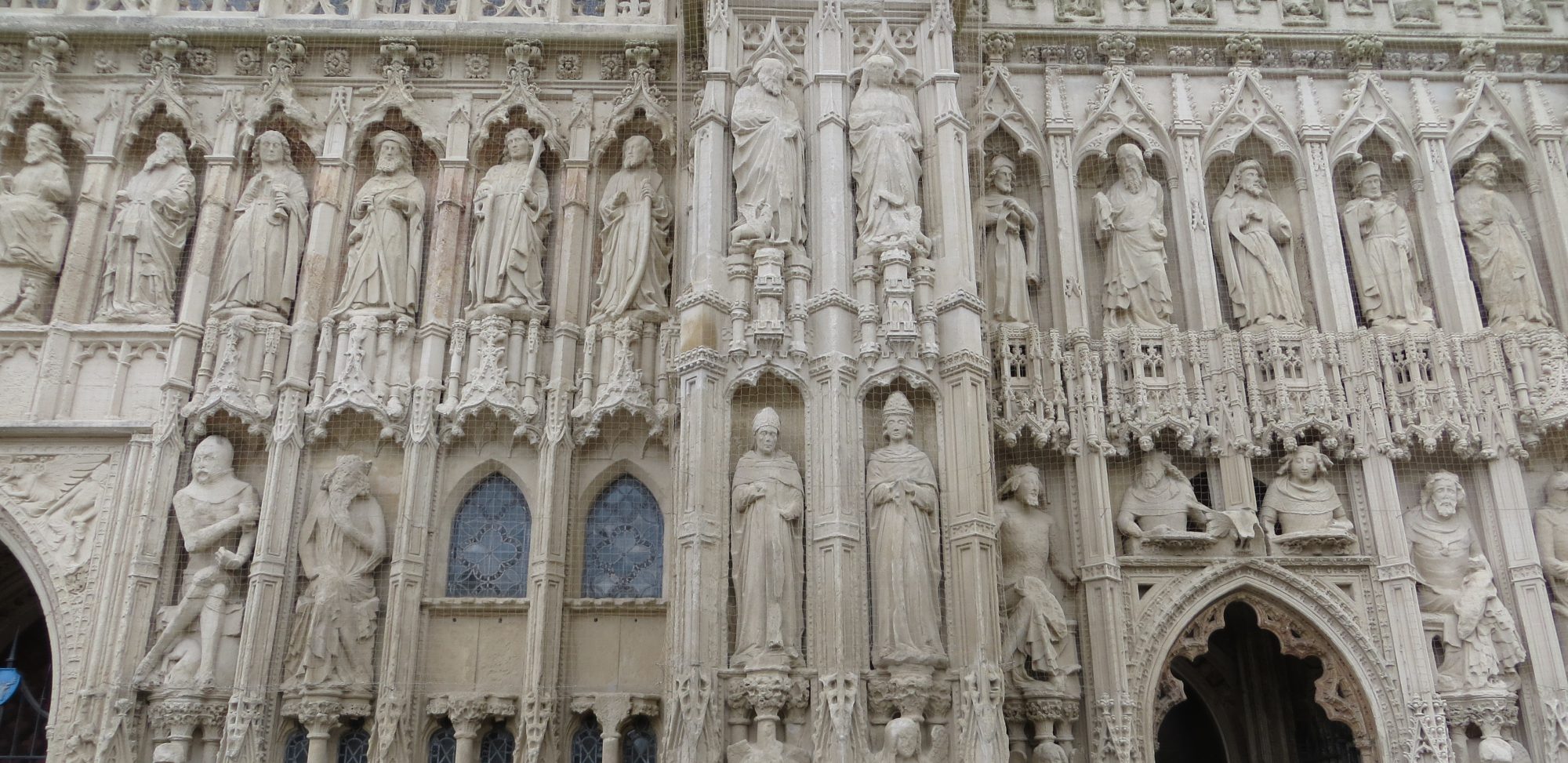
The risk-free society versus taking responsibility

Abortion is not simply about abortion, however; it is the foundation stone of the risk-free societyâ??from bedroom to boardroomâ??that these once-youthful liberals believe America owes them and the world.

The fact is, responsible people will be responsible, and the socially responsible thing is to allow the rest to take responsibility for their own messes. Adolescents were once trained in that way to become successful adults. As bright, liberal Boomers came of age in the seventies, however, they threw overboard all the habits by which they themselves became successful and, indeed, by which our forefathers passed on social capital to the next generation. Moving through the media, the law, and the courts, they institutionalized the practices of their youth, namely, â??do your own thing,â?? starting with abortion. Every single liberal program that has been instituted is predicated on a basic adolescent fantasy: You shouldnâ??t have to suffer, much less pay, for your mistakes. In the process, self-reliance, self-control, indeed responsibility, have been rechristened as repressive if not racist. As American society has become increasingly affluent, avoidance has infected a large portion of the population, Republicans included. It was hardly to be expected that they would lead us from the wilderness of fiscal irresponsibility and personal insolvency. In the meantime, abortion continues to be the ultimate safety net for avoiding responsibility while having fun, even, or especially, among the most educated, so that adolescence now extends to late middle age.

The Boomer generation inherited a thriving economic system created by the labor of our fathers, but it has grown to adulthood and beyond while overlooking the most basic obligation of adults: to train the next generation in the habits and standards that will renew the nationâ??s material and intellectual resources. Republicans have made their case badly, but the insouciance of liberals and Democrats concerning generational continuity is evident in the amount of energy they continue to devote to abortion, which is also the major reason why contemporary liberalism is doomed to extinction: Liberal Boomers and the Democrats among them are simply aging out and have not produced enough children to replicate their values.

Elizabeth Powers at First Things

'Tradition' threatens modern liberalism's fixation on individual autonomy

I have added a link to Mirror of Justice - the development of Catholic legal theory blog, where Rob Vischer is talking about MacInytre and David Mills on 'engaging modernity'. He quotes Mills:

By "imagination," I mean the faculty that controls what we, and especially children, think the world is like. It give us the map by which we plot our course. It gives us our vision of the world about which our mind thinks and on which our will works. It tells us what feels normal, average, to be expected, what feelings should go with what actions.

To the extent a child has learned it in childhood, it changes his whole life, even when he thinks he has left his childhood behind. Even if he insists on losing his faith, it limits the sort of faith he will adopt instead. If he insists on sinning, it limits the sorts of sins he can commit with (so to speak) a clear conscience. It will determine how he rationalizes his sins.

. . . . Revulsion is a much better protection from the force of the passions than an intellectual understanding by itself. To feel "This is yucky" is not a final protection from sin, but it is better than thinking "This is wrong" but feeling "This is okay." Lust offers the paradigmatic case (examples come quickly to mind), but this is true of pride, gluttony, envy, and all the rest, even sloth.

[We have an obligation to] try and form [children's] imaginations, to give them an alternative to the worldly lessons even the sheltered child absorbs as if from the air, by immersing them in books that express the Christian understanding of the world. . . . A good story will not make him good, but it should help him understand goodness a little better and make doing good a little easier by making it feel more normal. It will teach him that the world is this kind of place and not that kind.

This is why traditions - as championed by MacIntyre and by David Mills - can be so threatening to modern liberalism's fixation on individual autonomy. Christianity is not reducible to a set of propositions to be introduced to a person at an age when they are capable of critical reflection. Charting a course between fundamentalism and secularism requires, at a minimum, a recognition that Christianity shapes our minds, but not just our minds, and that while Christianity stands in tension with modern culture, it is not closed off to it. In the words of Gaudium et spes, "nothing genuinely human does not raise an echo in [our] hearts."

The public space must be broad and permeable

I take heart from a remarkable 24-hour meeting last week when Anglican and Roman Catholic bishops from England and Wales came together to spend time in shared prayer, reflection, study and recreation. Our encounter, characterised by a warm sense of fraternity, was hugely beneficial not only to the bishops, but also to the development of a shared vision about the public space our Churches occupy nationally. We were united in resolving to defend that space, for the sake of the common good. Standing firmly on that ground, we seek to pursue dialogue with everyone of good will.

There is an urgent need for respectful dialogue and co-operation between all interested parties, whether Christians or members of other faiths, agnostics or secularists. The dialogue needs to be well-informed: the easiest but not the most honest way to dismiss an idea one does not agree with is to misrepresent it, as Professor Dawkins does.

Pope Benedict XVI, in his well-publicised address in Regensburg, spoke of the crucial link between faith, reason and culture. He was stating that the only honest basis for dialogue is reason rooted in goodness and love. This applies not only to dialogue with religious believers whose understanding and spiritual traditions are different from Christians, but also to secular Europe.

Shallow multiculturalism that fails to appreciate the basis of culture in faith, leads us away from social cohesion. In its deeper meaning, multiculturalism is about mutual respect and understanding for those of different beliefs. It is not about fulfilling the secularist dream of banishing faith from the public square, but about admitting new varieties of faith and inviting them to join the public conversation and valuing what they have to say.

I am becoming tired of the mockery of those who seem to regard faith communities, especially Christian ones, as intrusive and contrary to the common good. I label them Christophobic. They wish to close off every voice and contribution other than their own. Their inability to see the Christian seed in what is noble and good in Western culture chills the possibility of a true pluralism. Sometimes it spills over into the kind of anti-Christian bigotry that has appeared on some university campuses.

The great majority of people in our country do not want the erosion of a culture that is ultimately rooted in Christianity and its values. The presence in Britain of Muslims and other faith communities is leading to a renewed interest in Christian identity, boiled down if you like to the simple proposition that if a Muslim woman may wear a headscarf, a Christian woman should be able to wear a cross.

What is lacking in the new secular aggressiveness is the very Christian virtue of doubt. Only secularists such as Professor Dawkins seem to have no doubt when it comes to faith. We cannot build a truly human society on such narrow and rigid foundations.

Religion is not safe or easy. The new presence in Britain of an angry expression of Islam is a challenge; but the right response is not an angry dismissal of faith. We will not bring about a society at greater ease with itself by attempting to declare faith-free zones. British society is not a secular fortress needing to repel boarders, but a society permeated by belief as well as non-belief. The public space must be broad and permeable if it is to be truly public.

Cardinal Cormac Murphy-Connor, Archbishop of Westminster Time to stand up for our beliefs

* * *

It is high time we heard from the Roman Catholics in the UK. So this muted and belated roar is better than nothing. There was a much more convincing roar from Vincent Nichols, Archbishop of Birmingham, but I have found only quotes from it, the speech itself has not made it to the web.

Here are excerpts:

Archbishop Nichols declared that ministers were "engaged in an intense and at times aggressive reshaping of our moral framework…. those who are elected to fashion our laws are not elected to be our moral tutors. They have no mandate or competence to be so."

"The Government must realise that it is not possible to seek co-operation with us while at the same time trying to impose upon us conditions which contradict our moral values."

"It is simply unacceptable to suggest that the resources of faith communities, whether in schools, adoption agencies, welfare programmes, halls and shelters can work in co-operation with public authorities only if the faith communities accept not simply a legal framework but also the moral standards at present being touted by the Government."

Don't impose your morality

Fewer Christian voices than there should be

On the Orthodox side, where theological differences are relatively small, the prospect of common witness is elusive. The two principal centers of Orthodoxy are Constantinople, by precedence, and Moscow, by numbers. In both cases the patriarchs are under intense pressure from their respective states, and their freedom to act on the global stage is circumscribed. The visit of the pope to the patriarch of Constantinople is, in part, an act of solidarity with a beleaguered brother under the thumb of the secularist Turkish state.

It is remarkable that the visit of the pope to Turkey would be considered a critical test of Christian-Muslim relations. Given that the patriarch of Constantinople lives in Turkey, it might be thought that there is no need to await the arrival of Rome for that interreligious encounter. Constantinople used to be Christendom’s second city; after all Bartholomew’s official title is Archbishop of Constantinople and New Rome. Yes, much has happened since 1453, but the fact that Turkey is no longer considered a place of Christian-Muslim encounter is evidence of how far Orthodoxy has been pushed to the margins.

Indeed, the last week has highlighted how it now falls to the pope to speak for global Christianity in a way that was not anticipated 40 years ago. While it was thought then that Rome would always have a certain primacy, the hope was that ecumenism would produce a stronger Christian voice, a joint voice of powerful evangelical witness. The contrary is happened; over the course of four decades Rome has declared itself irrevocably committed to the ecumenical path, and has found itself increasingly the only voice on the global stage. Who else can speak for Christianity? Call it the man in white’s burden, if you will.

Archbishop Williams confirmed the increasingly marginal role of Anglicanism in world Christianity on his October trip to China. He was permitted to visit China on the condition that he only met with people approved by the government. That the Chinese government, still a ferocious persecutor of religion, would consider Canterbury harmless enough for a visit speaks volumes. In their judgment, there was no danger of a troublesome Christian witness from Dr. Williams. He has a voice, but little to say. As for Patriarch Bartholomew, the Turkish government does not even recognize his international status as the primus inter pares of all Orthodoxy. He has something to say, but he is not permitted to have a voice.

The net result is that there are fewer Christian voices than there should be — the exact opposite of what the ecumenical project would have foreseen. This is a troublesome situation — to say the least —in a world where religious forces are growing more influential, and the challenge of religious violence is more pressing. Benedict’s trip to Turkey highlights one of the incongruities of the current situation; almost anyone can speak for Islam, but who speaks for Christians? It is usually put the other way around, observing that Islam has no central doctrinal authority. True enough, but on matters Islamic, it is customary for any Islamic head of government to speak for Islam in a way Christian heads of government do not. This reached absurd proportions in Turkey, where Benedict consented to meet with the president of the state religious-affairs bureaucracy, Ali Burdakoglu, in his own offices. No doubt a gracious olive branch after the unpleasantness of post-Regensburg, it was odd to see the pope of Rome speaking to Islam in the person of a state bureaucrat. That this was selected as the primary Christian-Muslim encounter of the trip only underscored the strangeness at which we have arrived: Only the pope is seen to speak for Christians, but anyone can speak for Islam.

This is not a good situation; the world needs more Christian voices in conversation with Islam, not fewer. But Benedict’s ecumenical week has demonstrated that those other voices are faint indeed.

Father Raymond J. de Souza The Man in White’s Burden: Who else but the pope can speak for Christianity?

For much more comment on Benedict and Bartholomew's meeting see the wonderful Amy Welborn

Marriage is not the creation of the state

Marriage isnâ??t the creation of the state or even of â??religionâ?? (as construed as a syncretistic sectarian entity). Rather, marriage is a pre-political institution with its own nature and contours; people are free to enter into a marital relationship, but people are not free to redefine and reconfigure marriage (for that is simply impossible). That religions have norms protecting marriage or elevating its status doesnâ??t undermine but further demonstrates its natural, primary status. The task of the state, then, isnâ??t to create marriage but to enshrine its nature in law accurately, and to support and promote it in policy. Attempts to redefine the contours of marriage inevitably preclude any principled argument against polygamy, polyamory, and other diverse expressions. If marriage can be between two people of the same sex, why not among three or four people? In fact, a group of prominent scholars have made just these claims, in a document titled â??Beyond Gay Marriage.â??

But there is a deeper, cultural problem. Marriage exists to bring a man and a woman together as a husband and a wife to become a father and a mother for any children their union may yield. The legal imposition of same-sex â??marriageâ?? intentionally deprives children of a mother or a father. It sends a cultural message that mothers and fathers are interchangeable or unnecessary. And just as â??no-fault divorceâ?? and widespread premarital and extramarital sex removed the cultural norms and expectations for adult sexual and reproductive lives, so too same-sex â??marriageâ?? continues this retreat from the marital ideal.

Ryan T. Anderson First Things