Robert Spaemann

Another great European about to be launched into the insular English-speaking world is Robert Spaemann, a Catholic moral philosopher who until recently taught at Munich.

Robert Spaemann Persons: The Difference between `Someone' and `Something', translated by Oliver O'Donovan, appears in the Oxford Studies in Theological Ethics series.

Spaemann has also authored Happiness And Benevolence

Wikipedia has a little about him in English and German which has a link to his Der Gottesbeweis auf Welt and two other short pieces at Project Syndicate, itself worth bookmarking.

You read it here first

Persons and communion ecclesiology

Ecclesiology is thus related to the issue of the priority of substance, or ousia, in relation to personhood, or hypostasis. If the one God were prior to the Trinity and identical with the one divine substance, then substance and oneness would precede personhood and multiplicity, in the Church as well as in God. The consequences for ecclesiology would be very serious. Not only would the local churches be subordinated to the structure of a universal Church, but equally each human person would be subject to that structure. Universal laws would be imposed upon particular personal beings, and the Church would be a totalitarian authority over the person. But such is not the case. Just as one nature of God exists, not in the abstract, but only in the three persons, so the universal Church exists only as a communion of local churches. In this respect there is a convergence between Orthodox and Anglican understandings of the Church. Orthodox and Anglicans agree in rejecting a single centralized authority in the Church. This is not for local and cultural, but for profoundly theological reasons.

The Church of Triune God - The Cyprus Agreed Statement of the International Commission for Anglican–Orthodox Theological Dialogue (Co-Chair Metropolitan John (Zizioulas) of Pergamon) Section I, 25.

Good news 2

If the first good news for the gay Christian, then, is that the "great question" - the question of the self, with all its pain and its hope, can be opened illuminatingly in the light of the righteousness of Jesus Christ, there is also a second good news. There is a neighbour with whom to explore the meaning of the contemporary homosexual situation, a neighbour who also needs, for the sake of his or her own integrity, to reach answers to questions which the gay Christian is especially placed to help search out. There is a neighbour for whom strict equality of regard and open candour - "irresponsibility", in the very best sense of that ambiguous word - makes it a primary obligation to put these questions and search for the answers with a persistent patience not to be cut short by the concerns of purely managerial efficiency. The negotiation of soft and evasive compromises will not appeal to that neighbour, because the gay Christian's true self-understanding and well-founded self-acceptance in the grace of God is a matter to be safeguarded in their relationship as securely as the integrity of the questioning itself. One name for this open and candid neighbourly relation is "friendship".

But always to rigorous judgment and censure freely assenting, man seeks in his manhood not orders, not laws and peremptory dogmas, but counsel from one who is earnest in goodness and faithful in friendship, making man free.vxz

It is this open and candid relation that a liberal Christianity has refused by its managerial juridicalisation of the gay Christian's claim, by its "laws and peremptory dogmas", designed to settle questions without exploring them, to adjust relations without justifying them, to reassure the uncomforted without comforting them, in short, to manage the situation. Liberal Christianity has interpreted the missionary challenge of the gay experience as a summons to emancipate it. Whether gays would have presented themselves as a suppressed social class in need of emancipation if the prevailing narrative fashions had not invited them to do so, is not a fruitful question to ask or a possible one to answer. What is remarkable, however, is the persistent lack of fit between what gays tend to find especially important about themselves and the role they are given to play in the liberal emancipation narrative. The peculiar quality of the gay vision is sectional rather than universal; the specialness of the gay experience is important to them. Liberals are unable to take that specialness seriously, since their starting point is that gays are no different from anyone else save as they have been arbitrarily imposed upon. When the gay experience becomes self-reflective about its own specialness, and invites interrogation in its own right, not merely as another instance of a hard-done-by under-class, its usefulness to the liberal project will be at an end, since that will open up questions that were supposed to have been settled before the campaign began. It will force us to pay attention to the fragmentation of the modern moral world, and to its insufficiency as a measure to judge the performance of the church by.

Oliver O'Donovan Good News for Gay Christians - Fulcrum Sermons on the Subjects of the Day (7)

Anxiety and confidence in London

The secular phalanx, rather like religious fundamentalists, is blinded by a certainty which conceals anxiety. The process of modernisation in the rest of the world is not following the pattern established in NW Europe. We are the exception and we are beginning to understand for example how the ecological challenge we face is a function of a way of being in the world which is arrogant and lacks reverence and awareness; and which arises from a false estimate of ourselves as masters and possessors of the earth rather than its stewards.

Yet there is no cause for religious people to be triumphalistic and try to outdo the God-deniers in shrillness. Suddenly it has also become urgent to distinguish in our country between healthful and lethal religion and to find the way to initiate the young into the former rather than the latter.

Lethal religion is one version of the idolatry which the prophets spend so much time denouncing. It is the manufacture of gods out of our own rage and impotence. A bruised ego finds a surreptitious way to re-ascend by making a god in its own image. This is a problem for all religions. When we are so sure that we have the right idea about God and want to clone or condemn all the others, then we are like the god deniers almost certainly on the wrong track. As the poet said of God, â??You have such a quiet manner of existence that those who name you with a loud insistence show that theyâ??ve forgotten your proximity.â??

Richard Charters, Bishop of London Induction of the Revd Nicholas Papadopulos

* * * Evensong at Westminster Abbey You are invited to attend Evensong in the presence of His All-Holiness Bartholomew I Archbishop of Constantinople, New Rome and Ecumenical Patriarch and of His Grace Dr Rowan Williams Archbishop of Canterbury, Primate of All England and Metropolitan John (Zizioulas) of Pergamon to celebrate the publication of:

The Church of the Triune God, the Agreed Statement of the International Commission for Anglicanâ??Orthodox Theological Dialogue, 1989â??2006.

30 January 2007, Tuesday 5 p.m. at Westminster Abbey, London

All are welcome

Pedagogy and Discipleship - the following of an open path

Much of the current understanding of pedagogy, in Britain especially, is driven by an appeal to method: the pursuit of specified goals in learning a subject will generate specified, quantifiable results and an outcome. Education, inasmuch as it is conceived as a process, will have outcomes which will both act as a measure against which differing students of differing ability can be measured and will thereby sift themselves into social roles and place. At the same time an understanding that what is to be learned is something which must be attended to, rather than grasped, in an attitude of humility and reserve, is being eroded. Modern teaching is too often underpinned by a view that everything is a ‘resource’ which can be endlessly remodelled or manipulated to satisfy immediate needs. Instead of learning as a process of assimilating something greater, and to which the one who learns must be conformed, students are increasingly being taught to see everything as series of ‘problems’ to which mere cleverness and expediency can always find ‘solutions’.

The emphasis on method in learning, and the gradual wearing-away of a model of teaching that has at its heart the apprenticeship of the student to the teacher – discipleship in learning – is yet again evidence of the disappearance of the place of the human in what it is to learn, to study, and to teach. In the face of this Christians have long known that at the heart of discovering who we are to be in God is the practice of discipleship and the witness of the disciples the Lord gathered around him. We encounter the person of Jesus the Christ through the teaching of those disciples who became Apostles, both followers and, as followers, ones who received the commission to go out and proclaim the good news to the whole world. This going out always has at its heart a personal encounter, of those at whose hands we ourselves have received the faith, and through whom we encounter the person of Jesus Christ.

The Church knows therefore, that pedagogy cannot ever be a method, but rather has to have at its heart personal encounter. The one who teaches must himself know what it is to have studied and to have been taught. In pedagogy like this, the specificity of ‘outcomes’ and ‘benchmarks’ might be present, but is only adjunct to the real task: the leading of the student into a path on which the teacher himself has journeyed...In consequence, a genuinely humanising pedagogy can emerge which questions every attempt to instrumentalise learning to outcomes and methods. Such a pedagogy becomes a genuine met' odos, the following of an open path.

The Society of St. Catherine of Siena The Vocation and Formation of Theologians and the Teaching Office of the Bishop in the British Context

* * *

I have been looking for this sort of document for fully two years. I am simply baffled as to why it and others like it are, for all intents and purposes, hidden. I suggest that it is the job of every congregation to pray and petition their bishop to read them this document from the pulpit once a year and that its pithier phrases be turned into bullet points, learned off by heart, taught to confirmation candidates and chanted through the streets of English cities every Corpus Christi. Every Anglican should find a Roman Catholic and say 'teach me this discipleship.'

Of course this 'Vocation and Formation of Theologians...', along with 'On the Holy Eucharist' and the other marvellous documents on display on the Catherine of Siena site, have their weaker moments. But inasmuch as we do not know even of the existence of these church documents, let alone start to wrestle with them, we are all the losers. Aren't we failing the people of the UK, or wherever, by failing to pass on to them the deposit of faith we have been given on their behalf? Ditto for the Anglican documents of the Inter Anglican Theological and Doctrinal Commission published on the Anglican Communion website.

Freedom and Authority in the Christian Life

The Annual Conference of the Center for Catholic and Evangelical Theology June 10-12, 2007 St. Olaf College, Northfield, MN

Freedom and Authority in the Christian Life The assumption of our culture is that authority and freedom are a zero-sum game: some decry the loss of authority in an age of freedom and others lament the persistent oppression of freedom by various authorities. For the Christian, however, this assumption cannot be so, for it is the truth, the authoritative truth of Christ's gospel, that sets us free (John 8:32). Unfortunately, how authority and freedom are realized in Christian life has been a point at which Christians and churches have sharply disagreed.

The conference will focus on how authority and freedom come together in the life of the Church and the Christian: our freedom under the authority of Scripture; the authority of holiness in the saints, the liturgy, and sacraments; the authority of the pastoral (including magisterial) office. If true freedom requires true authority (and vice versa!), what is the nature of evangelical authority and evangelical freedom? How are they fostered in our churches?

Speakers will include:

Gilbert Meilaender Margaret O'Gara Ephraim Radner Michael Root

A tradition without conflict is a dying one

One clear realization to emerge from â?¦ Christianity and the Soul of the University â?¦ is that Protestants may actually have a more difficult time maintaining a meaningfully Christian university than Catholics. As Daniel Williams, a religion professor at Baylor, explains, â??antitraditionalist and antidogmatic perspectives are built into the Protestant religious ethos,â?? and an emphasis on private judgment and personal experience â??as an arbiter of ultimate meaningâ?? render articulable institutional boundaries elusive. This skepticism of tradition and community can leave Protestants rudderless on issues not addressed explicitly by Scripture, which may help explain why Protestant schools that do achieve a robust religious identity tend to rely on rigid codes of conduct.

Judging by the contributorsâ?? frequent invocations of John Paul IIâ??s Ex Corde Ecclesiae as a helpful statement of the Christian universityâ??s mission, Protestants may have realized that Catholics have some insight on how to weave the Gospel into the fabric of a community. But Catholics also stand to learn from Protestants, who can bring a fresh focus on the simplicity and centrality of the Christian story. In this regard Steven Harmon, a theology professor at Campbell University, urges academics to reclaim the story â??as the first-order foundation of Christian intellectual communityâ?? in order to provide â??common ground on which faculty from multiple denominational traditions and theological perspectives may stand together while making their own distinctive contributions to the second-order argument that the integration of faith and learning entails.â??

Perhaps the bookâ??s most helpful contribution is its identification of essential qualities that will mark an intellectual community founded on the truth claims of Jesus Christ. Three in particular stand out.

First, the Christian virtue of hospitality, according to Aurelie Hagstrom, a theology professor at Providence College, â??reflects a radically different and compelling alternative to tolerance.â?? While tolerance is a â??false sort of engagementâ?? given its tendency â??to trivialize what is most important to us,â?? hospitality demands â??a personal, authentic encounter that is self-emptying and open even to those with whom we have deep philosophical, theological, and political disagreements.â?? Under this view, the universityâ??s sponsoring religious community acts as host, and community members from other religious traditions are welcomed as guests. In todayâ??s hyper-egalitarian campus environment, attaching the â??guestâ?? label to non-Christians will smack of paternalism, but the host-guest paradigm may be inescapable if the Christian story is to have a privileged role as a shaper of the institution and its mission.

Second, if the personal engagement contemplated by hospitality is to be authentic, conflict must be embracedâ??even facilitatedâ??at a Christian university. Steven Harmon insists that Christian identity is hindered by a fear, â??not of communal theological reflection per se, but rather of the intellectual conflict arising from this much-needed conversation.â?? Borrowing from the work of the noted philosopher Alasdair MacIntyre, Harmon reminds us that a vital tradition will embody continuing conflict, and that a tradition without conflict is a dead or dying one. This can help reframe our orientation. Passionate debates over the implications of a universityâ??s Christian heritage are too often taken as signals that the heritage is in jeopardy; instead, they may be signs of life.

Third, if the Christian story is to be at the center of the communityâ??s identity, Christian worship must be at the center of the communityâ??s life. Several contributors point out the feebleness of any Christian community that lacks a shared worship experience. Especially for a faculty that purports to be more than the sum of its parts, a regular opportunity to participate in worship together is an essential ingredient. A Christian intellectual community must build up more than the intellect.

Robert K. Vischer Review of Douglas Henry & Michael Beatty (eds) Christianity and the Soul of the University: Faith as a Foundation for Intellectual Community

And see also John Sommerville The Decline of the Secular University: Why the Academy Needs Religion

A Day for the Lord - conference

I have found another place I want to be next summer.

A Day for the Lord: A Sign of Contradiction? June 11 - 13, 2007 at the University of Notre Dame

The thirty-fifth annual conference of the Notre Dame Center for Liturgy will address the relationship between cult and culture by considering what it means to keep a "day holy to the Lord." What does it mean to take seriously the obligation to keep the Lord's Day?

Toward that end, our plenary addresses will draw on the five dimensions of the Lord's Day described in John Paul II's 1998 apostolic letter, Dies Domini. Each of these headings can be treated as a starting point for considering how keeping the Lord's Day implies a stance vis-a-vis elements of contemporary culture.

Session titles

1. Dies Domini - The Celebration of the Creator's Work Hindy Najmann, University of Toronto

2. Dies Christi - The Day of the Risen Lord and the Gift of the Holy Spirit Rev. Hieromonk Dr. Calinic Berger, Holy Cross Church & St. Vladimir's Orthodox Seminary

3. Dies Ecclesiae - The Eucharistic Assembly: Heart of Sunday Owen Cummings, Mt. Angel Seminary

4. Dies Hominis - Sunday: Day of Joy, Rest and Solidarity Frederick Bauerschmidt, Loyola College in Maryland

5. Dies Dierum - Sunday: The Primordial Feast, Revealing the Meaning of Time Larry Cunningham, University of Notre Dame

And as if that wasn't enough, Notre Dame Campus ministry says:

One thing is for sure at Notre Dame: we know how to pray, and we do it well!

Well! I have been looking for someone in London to teach me to pray. No more. I'm off to Indiana.

Secularity and secularities

The concept of secularity, said the Holy Father in his address to the group, originally referred to "the condition of simple faithful Christian, not belonging to the clergy or the religious state. During the Middle Ages it acquired the meaning of opposition between civil authorities and ecclesial hierarchies, and in modern times it has assumed the significance of the exclusion of religion and its symbols from public life by confining them to the private sphere and the individual conscience. In this way, the term secularity has acquired an ideological meaning quite opposite to the one it originally held."

Secularity today, then, "is understood as a total separation between State and Church, the latter not having any right to intervene in questions concerning the life and behavior of citizens. And such secularity even involves the exclusion of religious symbols from public places." In accordance with this definition, the Pope continued, "today we hear talk of secular thought, secular morals, secular science, secular politics. In fact, at the root of such a concept, is an a-religious view of life, thought and morals; that is, a view in which there is no place for God, for a Mystery that transcends pure reason, for a moral law of absolute value that is valid in all times and situations."

The Holy Father underlined the need "to create a concept of secularity that, on the one hand, grants God and His moral law, Christ and His Church, their just place in human life at both an individual and a social level, and on the other hand affirms and respects the 'legitimate autonomy of earthly affairs'."

The Church, the Pope reiterated, cannot intervene in politics, because that would "constitute undue interference." However, "'healthy secularity' means that the State does not consider religion merely as an individual sentiment that can be confined to the private sphere." Rather, it must be "recognized as a ... public presence. This means that all religious confessions (so long as they do not contrast the moral order and are not dangerous to public order) are guaranteed free exercise of their acts of worship."

Hostility against "any form of political or cultural relevance of religion," and in particular against "any kind of religious symbol in public institutions" is a degenerated form of secularity, said the Holy Father, as is "refusing the Christian community, and those who legitimately represent it, the right to pronounce on the moral problems that today appeal to the conscience of all human beings, particularly of legislators.

"This," he added, "does not constitute undue interference of the Church in legislative activity, which is the exclusive competence of the State, but the affirmation and the defense of those great values that give meaning to people's lives and safeguard their dignity. These values, even before being Christian, are human, and therefore cannot leave the Church silent and indifferent, when she has the duty firmly to proclaim the truth about man and his destiny."

The Pope concluded by highlighting the need "to bring people to understand that the moral law God gave us - and that expresses itself in us through the voice of conscience - has the aim not of oppressing us but of freeing us from evil and of making us happy. We must show that without God man is lost, and that the exclusion of religion from social life, and in particular the marginalization of Christianity, undermines the very foundations of human coexistence. Such foundations, indeed, before being of the social and political order, belong to the moral order."

Benedict to the Union of Italian Catholic Jurists, which is being held in Rome on the theme: "Secularity and secularities."

Good news

There is an elementary point about Christian ethics that I have sought to emphasise ever since the opening pages of my Resurrection and Moral Order published twenty years ago: there is no Christian ethics that is not "evangelical", ie good news. There can be no change of voice, no shift of mood, between God's word of forgiveness and his word of demand, no obedience-without-gift, no gift-without-obedience. The gift and the obedience are in fact one and the same. They are the righteousness of Jesus Christ, encompassing and transforming our own lives, past, present and future. To preach the good news, then, is precisely what we do in expounding Christian ethics, if we expound Christian ethics faithfully. Preaching the good news is the only form of address of which the Christian church as such is capable, whether speaking to Christians or to non-Christians. When we use any other form of argument - quoting opinion-poll statistics, for example, or reporting the result of scientific experiments, or suggesting some practical compromise - the relevance of what we say depends on how well it is formed to serve the evangelical message. If the church speaks not as witness to God's saving work but as a pundit or a broker of some deal, it speaks out of character.

Yet to preach the Gospel, whether to Christians or non-Christians, is not a simple matter of offering reassurance and comfort. The Gospel, too, has its "hard words". The righteousness of Jesus Christ is not comfort without demand, any more than it is demand without comfort. It is never less than that demanding comfort by which God makes more of us than we thought it possible to become. And from this there seems to follow an important implication: the Gospel must be preached to the gay Christian on precisely the same terms that it is preached to any other person.

Oliver O'Donovan Good News for Gay Christians Fulcrum Sermons on the Subjects of the Day

Where is the Catholic theology for me?

There is some remarkable Catholic institution-building going on around the world.

In the States I see Thomas International with its McInerny Center for Thomistic Studies. I see the University of St Thomas Center for Catholic Studies, the Catholic University of America (where more effort rightly goes into theology than into the faculty website), and the ever-burgeoning institutes for Ethics and Culture, Liturgy, Christian Life and theology at Notre Dame. I see the International Theological Institute for Studies on Marriage and the Family at Gaming in Austria. This blog has links to all of these.

In Australia I see The John Paul II Institute for Marriage and the Family in Melbourne with Tracey Rowland, whose Culture and the Thomist Tradition after Vatican II is the best discussion of the challenge that contemporary Catholic theology is taking on. The John Paul II Institute is headed worldwide by Cardinal Camillo Ruini and Livio Melina, both worth googling.

I have linked to other Catholic theological institutions in the 'theology and the university' category of this blog and there is a longer list under the catholic and academic tags at douglashknight at deli.cio.us

Now you UK Catholics, tell me this:

When is this new Catholic theological institution going to appear in London? I see Heythrop College with its Institute for Religion, Ethics and Public life. I see Second Spring (Oxford) and the Society of St Catholic of Siena (UK-wide) - not, I hope, attempting any simple u-turn to tridentine liturgies.

I see the new ecclesiological institutes at Liverpool and the Durham (neither very near London). Much has been promised. I hope that these will not be so in hock to sociology of religion that they cannot offer the church the theological leadership it needs. I hope they simply relay to Catholics and Catholic theology in the UK the real theological leadership the Church is receiving from Pope Benedict.

I am looking for any theological institution in the UK examining constructively the remarkable theological teaching that has been coming from Rome for the last twenty-five years, and which has very noticeably increased the last two years. Time for you Catholics to hold yours heads up, I would say, and stop aping us Protestants. Can't you see the trouble we have got ourselves into? Don't look at us. We are looking to you.

Praying together

I never had a very high view of the Week of Prayer for Christian Unity. I have just read some of the teaching material on the unity of the Church offered by The Pontifical Council for Promoting Christian Unity and had a change of mind.

The traditional date for the Week of Prayer for Christian Unity is 18-25 January. Those dates were proposed to cover the days between the feast of St Peter and the feast of St Paul, and therefore have a symbolic meaning. In the southern hemisphere churches often find other days to celebrate the week of prayer, for example around Pentecost which is also a symbolic date for the unity of the church.

This year the Week of Prayer for Christian Unity "brings together two themes, two invitations extended to Christian Churches and people: to pray and strive together for Christian unity, and to join together in responding to human suffering. These two responsibilities are deeply intertwined. Both relate to healing the Body of Christ (the Church), hence the principal text chosen for this year's week of prayer is a story of healing."

January 18: In the beginning was the Word. "And God said..." (Genesis 1).

January 19: The Saving Word of Christ. "He makes the deaf to hear and the mute to speak" (Mark 7: 31-37).

January 20: The Holy Spirit gives us the Word. "The Spirit ...will testify on my behalf" (John 15: 26).

January 21: The silence of the forgotten and the cries of the suffering. "If one member suffers all suffer together" (1 Corinthians 12: 26).

January 22: God's judgment on our silence. "Just as you did not do it to one of the least of these..." (Matthew 25: 45).

January 23: Empowered to speak out. "But the woman ... came in fear and trembling ... and told Him the whole truth" (Mark 5: 33).

January 24: Forsakenness. "Why are You so far from helping me?" (Psalm 22:1)

January 25: Resurrection - glorification. "Every tongue should confess that Jesus Christ is Lord" (Philippians 2:11).

This Vatican website is one non-stop online bible study. The pope is an evangelical. But you all knew that already. Once again, I am the last one to realise, aren’t I?

Catholicity 12

The Christian is a member of an assembly that participates in the future assembly of all things. Under the instruction and supervision of that assembly the Christian begins to grow into their place and role, and to learn that this assembly has more in store for him or her. However the individual Christian may delay taking up their identity, this assembly refuses to let him or her become less, or become an object, they do not allow that everything has been said about them. To know them we have to open ourselves to the point at which we can let them surprise us.

The completion and catholicity depends on our Amen, which is the public event of the acknowledgment, which we give in freedom. As we give this Amen, we grow, our ability to grant the freedom of others, and with it our own freedom, grows.

The basis of knowledge is communion, and bound by love, in which we participate in one another in friendship, brotherhood and many other forms. It is as we respond to people, and they to us, that we know people. To come to know them more fully we have to respond them, and wait for them, and receive their response gladly, and learn to give them whatever will direct them towards their fulfilment. We have to give them Christ and all his hospitality and its truth, and not thank them for anything but Christ and all his truth. There is no knowledge without love. This love is that fellowship which is the whole loaf of Christ and his people. Thus catholicity, of which the eucharist is the event, is the origin of the universality of knowledge. It is this catholicity and comprehensiveness to which all the sciences of the university aspire. The university is universal to the extent that it participates in the catholicity that derives from the eucharist and observes the anticipatory character and so observes the proper limits of our knowledge.

Other Catholicity posts

The Vocation and Formation of Theologians

In 1997 the Bishops of England and Wales reminded us that â??the basic understanding of education [is] human development . . . at the heart of it is a human being within whom as far as human willfulness allows, the creator will perfect the image of his divine Sonâ??. At the same time we have been reminded that â??manâ??s nature calls him to seek the truth while ignorance keeps him in servitudeâ??. In the struggle to discern and make plain the truth, the theologian, as the one entrusted with the task of theology, is entrusted to the searching out of truth in a special way. If, as John Paul II has said, truth â??is the precondition for a true and sincere dialogue among men and womenâ??, he has added that in the context of this quest for truth â??the principal task of theology consists in this, to provide both an understanding of Revelation and the teaching of faithâ??.

The theologian is entrusted to the truth in a particular way, therefore, entrusted both to its discernment and the discovery of its being and causes and to its becoming and being made manifest. It is this double nature of truth that the theologian has a special calling to witness to â?? truth insofar as it is wisdom, insofar as what it is that thinking (or what is often called reason and the artes or sciences) discovers and unfolds; and truth as it is manifest in being called in the activity of the Spirit to discover through the person of Jesus the Christ an encounter with the Father. These are then the two wings â??by which the human spirit is raised up toward the contemplation of truthâ?? which, as it were, the theologian is called in a particular way to assume and become skilled in the use of, and by which the theologian both rises and draws others up to assume.

Yet the theologian, as the one so entrusted, finds himself especially at risk in this task. If â??theology has importance for the Church in every ageâ?? and if it is â??also exposed to risks since it must strive to â??abideâ?? in the truthâ?? in taking account of the new problems which confront the human spirit, it is the theologian who must often bear the anguish of this exposure to risks whilst at the same time striving to remain in the truth and pointing, both in his teaching and in his life, to where the truth remains and is yet again to be found.

Properly have the greatest amongst the theologians been declared doctors of the Church, and have been called from among all of the ranks of the People of God, from the Martyrs, the Apostles, the lay and the ordained, the secular and professed. If some have been proficient in the schools, some have rightly claimed as their first and only teacher Christ the Lord himself (this has been particularly true of those women who stand among the doctors of the Church), since those who are doctores are first doctus, ones taught, and so schooled in the Lordâ??s service, and in the service of his Church. Those among us who would teach must then be first among those who would be taught. In this, the theologian, though often experiencing his vocation as a lonely task, is never alone, since he is called always to share in the life of the Church, and to share with the Church the fruits of his learning and teaching. Called to be conjoined to the body of Christ in the sacraments, and nourished also by contemplation of the word, he manifests his vocation in a special relation to the Magisterium and in the particular or local situation, to the Bishop.

The Vocation and Formation of Theologians and the Teaching Office of the Bishop in the British Context (large PDF) â?? A Discussion Sponsored by the Society of St. Catherine of Siena (UK)

Shouts of joy

Acclamations 53. The acclamations are shouts of joy which arise from the whole assembly as forceful and meaningful assents to God's Word and Action. They are important because they make some of the most significant moments of the Mass (gospel, eucharistic prayer, Lord's Prayer) stand out. It is of their nature that they be rhythmically strong, melodically appealing, and affirmative. The people should know the acclamations by heart in order to sing them spontaneously. Some rite is abbreviated in accord with the General Instruction on The Liturgy of the Hours.

The Liturgy of the Word 45. Readings from scripture are the heart of the liturgy of the word. The homily, responsorial psalms, profession of faith, and general intercessions develop and complete it. In the readings, God speaks to his people and nourishes their spirit; Christ is present through his word. The homily explains the readings. The chants and the profession of faith comprise the people's acceptance of God's Word. It is of primary importance that the people hear God's message of love, digest it with the aid of psalms, silence, and the homily, and respond, involving themselves in the great covenant of love and redemption.

The Alleluia 55. This acclamation of paschal joy is both a reflection upon the Word of God proclaimed in the liturgy and a preparation for the gospel. All stand to sing it. After the cantor or choir sings the alleluia(s), the people customarily repeat it. Then a single proper verse is sung by the cantor or choir, and all repeat the alleluias

Responsorial Psalm 63. This unique and very important song is the response to the first lesson. The new lectionary's determination to match the content of the psalms to the theme of reading is reflected in its listing of 900 refrains. The liturgy of the Word comes more fully to life if between the first two readings a cantor sings the psalm and all sing the response. Since most groups cannot learn a new response every week, seasonal refrains are offered in the lectionary itself and in the Simple Gradual. Other psalms and refrains may also be used, including psalms arranged in responsorial form and metrical and similar versions of psalms, provided they are used in accordance with the principles of the Simple Gradual and are selected in harmony with the liturgical season, feast or occasion.

Committee on the Liturgy, US Conference of Catholic Bishops – Music in Catholic Worship

London Theology of the Body

The Theology of the Body lectures continue on Friday evenings St. Patrickâ??s Soho Square, London. The lectures are going through the theological teaching on marriage given by Pope John Paul II in his general audiences (GA)

II. Blessed are the Pure of Heart Jan 12 Rod Isaacs: â??The Heart â?? A Battlefield between Love & Lust.â?? (GA July 23rd 1980) Jan 26 Matthew Nichols: â??Establishing the Ethical Sense.â?? (GA Oct 1st 1980) Feb 2 Fr. Mark Withoos: â??The Human Body, Subject of Works of Artâ?? (General Audience April 15th 1981)

III. The Theology of Marriage & Celibacy Feb 23 Robert Colquhoun â??To be Imitators of God & to Walk in Loveâ?? (GA Aug 4th 1982) Mar 2 Fr. Mark Withoos: â??Virginity or Celibacy for the sake of the Kingdomâ?? (G A. March 10th 1982) March 23 Jane Deegan: â??Love is Victorious in the Struggle between Good and Evilâ?? (GA June 27th 1984)

IV. Reflections on Humanae Vitae April 27 Edmund Adamus: â?? The Churchâ??s Position on the Transmission of Lifeâ?? (GA August 22nd 1984) May 11 Dan & Anne Hill: â??A Discipline that Ennobles Human Love.â?? (GA Aug 28th 1984) May 25 Alison Gray â??The dignity and vocation of woman and her role in the Churchâ?? June 8 Love and Responsibility â?? Theology of the Body

Pope John Paul II Man and Woman He Created Them: A Theology of the Body

Meanwhile, from the basement of that very same St Patrick's in Soho, London, Nicole Syed provides advice on Natural Fertility Management. Nicole says this:

Through the content of the course and a lot of my own reading of John Paul IIâ??s Theology of the Body, I found the holistic way of life that I had been looking for, integrating every aspect of our lives, physical, emotional, sexual and spiritual. I realised that promoting this message was what I wanted to do to help transform the lives of those around me. It became increasingly clear to me from a health perspective, that the contraceptive industry had manipulated the way people think about fertility, treating it as an illness that needs to be suppressed and controlled at all costs. Because of my nursing background I could see how the pill and most other artificial contraceptives were physically destructive to the body, but as I studied more of the theology, I could also see how contraception was spiritually and relationally damaging to couples on a totally different level â?? one that was subtle and often undetected.

Many young couples who are interested in NFP, tell me itâ??s really difficult to find out about it now, because most priests are too embarrassed or afraid to mention it, and it seems it is rarely talked about on marriage preparation courses any more. Itâ??s just assumed that if people are interested they will find out about it themselves, but often they donâ??t know where to look, so they just end up using artificial means because thatâ??s all they know about and no one has explained to them what the Church teaches and why. The contraceptive industry is a massive money making industry and its propoganda has really formed the way our whole society thinks about this issue, so if we are going to challenge this, the Church really needs to get its act together.

And see the Couple to Couple League or Couple to Couple League (UK). Don't say I don't provide you with a service.

Toward an Anglican Theology in the Spirit of Windsor

I am in the wrong London. It is all happening in London, Ontario, today at Huron University College

Faith Seeking Understanding: The Windsor Report, the St. Michael Report, and the Challenge Ahead

Much has been said and written about the conflicts that have arisen over the past decade in the Anglican Communion and the Anglican Church of Canada. This two-day conference for Canadian Anglicans about Anglicanism in Canada will provide an opportunity for clergy and laity to learn, discuss and understand the reality and rhetoric of the recent public documents such as "The Windsor Report" and Canada's own "St. Michael's Report," as well as to discuss such related larger issues as the use of scripture, the theological dimension of human sexuality, and the nature of authority in the Church. As the intent is understanding and not advocacy, the conference will close with a Eucharistic gathering.

Some great papers are promised:

Timothy Connor & George Sumner Toward an Anglican Theology in the Spirit of Windsor

Gary D. Badcock What is a Communion, Anyway?

and in particular

Darren C. Marks Overcoming the New Gnosticism: Re-founding Theological Anthropology

Over the course of modernity embodiment has become a major theme of theology and as such has introduced a theological anthropology that is at variance with its origin in Christology or Christ as the pneumatic human. As a result of this morphing of theological anthropology, sexuality, as echoed in the work of Foucault, has become a dominant dialogue partner in identity let alone theological anthropology by assuming nature as antithetical to spirit. This, I argue, introduces a host of issues that are centripetal to the hope of dialogue with a Christian culture in the Global South that has not undergone this morphing of [sexuality] identity and embodiment. Instead, a re-founding of theological anthropology in Christology, and specifically in the concept that God only knows the human person as sinner (Bonhoeffer), might provide a way forward that proves acceptable to both Western and Global minds, or at least provide a place from which a theological anthropology can initiate a dialogue. Finally, and tethering to the St Michael Report, I suggest that just such a theological assumption resolves the centripetal forces in the document’s conclusions and mixed message on the nature of adiaphora and core doctrine.

Is this the Darren Marks of 'The Windsor Report: A Theological Commentary' (Journal of Anglican Studies Vol 4.2 pp157-76)? It is 'a profound piece of writing influenced greatly by John Webster' according to my informant. Now I am really am interested - John Webster is one of the UK's finest - Anglican of course, but I hadn't noticed a lot of ecclesiology from him yet. Please rush me a copy.

Catholicity 11

This theological doxological mode of knowing enables all other forms of knowing, amongst them natural science. It provides the framework which prevents science from imposing an unlimited power over its object. This framework guarantees that we are distinct from what we know, that the world and other creatures are distinct from us. It is the assurance that neither the world nor any object in it are divine, and that they are not constructed by us, and thus we are not divine. The acknowledgment that we are not God is the real foundation that we may have real knowledge of anything, and thus it underwrites and enables science.

For the human without God however, the highest form of mastery is that of the scientist who can place before them the object of their enquiry before them. Whether this object is a thing or a person, the form of scientific knowing, makes an inert object of it. This object of enquiry is not expected to introduce itself, to speak back or to play any part in the process by which it becomes known. The scientist can control it so that it cannot become anything that it is not already. To such science the object is inert so that it will never be able to surprise or threaten the knower. Such knowledge will require the regular re-assertion of the mastery of the knower, and this act of subjugation will impoverish the knower as well as the known.

But this is not an adequate form of knowing. Knowledge, or science, without love, is just an act of control and mastery. Knowledge without love means that we never have the confidence or self-mastery to be not only a master, controller and manipulator, but also a friend and even a servant.

To cast ourselves on novelty

It is, of course, right that philosophers should speak as believing Christians. It is right that they should do their philosophising in a conscious openness to theology... But it is not good that they should confuse the philosophical task of understanding the world as it presents itself with elements randomly introduced from Christian proclamation. The result of that will be a deformation both of theology and philosophy. Theology needs the philosopher's reflection on the moral sense of the world, in order to think seriously about the fulfilment of creation. For without the love of what is, the "new creation" is an empty symbol - or is it a clanging cymbal? New creation is creation renewed, a restoration and enhancement, not an abolition. Not everything that can be thought of as future can be thought of as the Kingdom of God. A brave new world of cyborgs is not a Kingdom of God. God has announced his kingdom in a Second Adam, and "Adam" means "Human".

One thing that is at risk in this approach, as in a thousand less articulate and less measured approaches along the same path, is the disappearance of scientific knowledge from the criteria of moral responsibility. We are invited to set the observation of nature aside, to cast ourselves on novelty. It is, indeed, striking how scientific curiosity - inadequate, one-sided and inconclusive as much of it may have been - has come to be banished from the discussion of homosexuality. Adams has done us the service of displaying the intellectual underpinnings of this development: a concept of value that has parted company with a concept of reality, a division between the good and the real. But moral responsibility to the real is precisely what the dialectic of creation and redemption in Christian theology safeguarded.

Oliver O'Donovan Creation, Redemption and Nature

Ecumenical failures of the Reformation - Witt

My own theory is that Modernism is divine judgment on Western Christendom for the ecumenical failures of the Reformation. Because both Rome and the Churches of the Reformation were unable to recognize the face of Christ in each other, including even Reformation churches who refused to recognize that face in each other, the divine judgment is that those churches are becoming ones in which the face of Christ is no longer able to be recognized at all.

But in that case, the last thing confessing Christians in all the churches need is once again to draw lines in the sand against one another, to refuse to recognize Christ's face in those who affirm the same Scriptures and confess the same Creeds. I can only regard the voices of those who ask me to leave Anglicanism for either Rome or Orthodoxy or some other Reformation Church as asking me to deny that the face of Christ can be seen in this Church.

I believe that a sorting out is taking place—that in fact a separation must and will take place between those in the Churches who continue to affirm historic Christian faith, and those who have exchanged Christ for the world's pottage. The struggle is against apostasy and heresy, and it is both. Those who offer the safety of Rome or Orthodoxy are right about that. But in that struggle, I think it important that those who continue to confess Christ in each Church in which the divine judgment strikes, stand firm and resist the apostasy together. We stand our ground, shoulder to shoulder, where Christ has placed us in the battle.

And, of course, one of the things that Anglicanism shares with both Roman Catholicism and Orthodoxy is that, unlike many Reformation Churches, we do not stand alone, but are part of an international Communion, a Communion that has held firm to the faith.

William Witt Why not leave?

Sacrifice and Israel’s witness to the nations

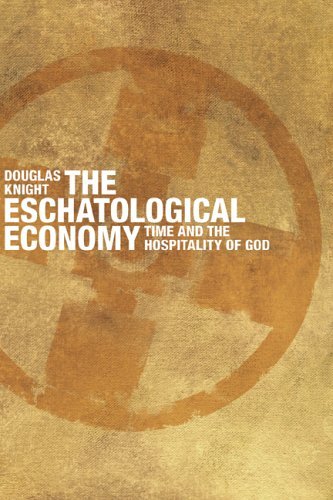
The Eschatological Economy

It is time for another in the series of little pieces on the logic of sacrifice and atonement, which I set out in the central chapters of The Eschatological Economy.

The reason we find sacrifice, along with other accounts of salvation, hard to accept is that we tend to overlook the crowd watching the event in the temple. A sacrifice is not a deal done between just two parties, man and God, but between at least three parties. The third is the crowd of onlookers – made up the whole people of Israel. In fact there are two crowds – Israel is the first and nearest, but all the rest of the world is also there, watching Israel and her God from a distance.

But modern biblical studies does not find it easy to account for the public nature of performance. In The Eschatological Economy I wondered whether this is because we assume that writing is the only valid, because verifiable, mode of communication. Do we assume that what cannot be written down is not significant? Yet publicly enacted drama, played out before vast crowds and the world’s media in public civil occasions, is significant – think of the ceremony attached to Olympics, or public acts of flag-burning. If do not concede the meaningfulness of such large scale public ceremonies, or ‘ritual’, how will we understand what was going on in the public events of sacrifice that took place in Israel’s temple at Jerusalem?

In the theology of Israel, the nations were represented by animals: Israel was represented by the lamb. The presentation of the lamb in the temple in Jerusalem was the enactment of the promise of God that Israel would triumph over all the predatory gentile nations of the world.

Though this is not directly theological work, it does build the case that modernity is in denial about crowds and plurality, and about other more embodied forms of rationality than its own, and it helps show that sacrifice does make good sense as an account of the atonement. This will help us show that the atonement makes good sense as account of the relationship of God and us, and also that it makes for a better account of relationships between ourselves. Theology makes for a better sociology than sociology itself does.

You can find out more about The Eschatological Economy at Amazon.com or at Amazon.co.uk or at Eerdmans

Ten theses on the Significance of the Episcopal Office for the Communion of the Church

Thesis Four:

The Bishop has oversight (episcope) of the household of God for the good order of the Church.

Bishops are commissioned and sent to be stewards or overseers of God’s household within their jurisdiction. They call the people of God into the full expression of the diverse gifts and ministries given by the Holy Spirit. They oversee processes of discernment and selection of candidates for holy orders, ensuring they are well prepared for their ministries, supporting them pastorally and practically, and providing for the good order of ministry in the diocese.

Oversight includes sharing of responsibilities among clergy and lay people. This involves mutual accountability, good communication and willingness to learn from one another. This reciprocity between bishop and people is reflected in the decision making processes of synodical life. This pattern of working together is empowering for all and is a gift to be nurtured at all levels of the life of the Church.

The bishop has to ensure the well-being (e.g., spiritual, social, economic) of the diocese in service of its mission. Harnessing resources, fund-raising and financial management of diocesan affairs involves complexities of oversight requiring specialized ministries. Providing episcope in this area highlights the administrative and managerial character of the work of a bishop, somewhat akin to a CEO (Chief Executive Officer) of a large organisation. Bishops ought not to underestimate the distorting effects on their oversight of management models associated with the global market economy. This can lead to a management ethos focussed on strategic plans, goal setting, tasks, competition and successful outcomes. This is appealing because it seems to offer clarity and control but the price is often loss of the personal and relational dimension of ecclesial life. The bishop who manages well is one who is aware of the danger of management becoming the basic lens through which episcope is practised. This issue raises a question of how bishops handle matters across diocesan and provincial boundaries. At these levels even koinonia may become a thing to be ‘managed’ at a distance (i.e., avoiding face-to-face relations) rather than resolutely pursued together with patience.

Inter Anglican Theological and Doctrinal Commission The Anglican Way: The Significance of the Episcopal Office for the Communion of the Church October 2006

Epiphany

Your light has come, Nations shall come to your light… Lift up your eyes and look around; they all gather together, they come to you.

This is Isaiah 60. God's coming to man represents the re-gathering of Israel, and with them all the lost, forgotten, abandoned of the world. Christ is the light and the star that guides these foreign kings into Israel, that very lowly nation, and lower, to this town, and lower still, to the cowshed out back, where the lowest of the low huddle. This is because

The LORD has remembered His mercy and His faithfulness to the house of Israel. and because

All the ends of the earth have seen the salvation of our God.

God has remembered all Israel, and all the utterly forgotten – this is Psalm 98, which we just sang.

This was well trailed by Advent – remember, the king is coming, but for us it is not clear whether this good news or a warning. Are we with the magi, these foreign kings who come to cast their crowns before this unprepossessing, almost unnoticed unit of humanity?

Or are we with Herod? 'Bring back word to me, that I may come and worship Him, or patronise and co-opt him, or sneer, deride and perhaps crush those who put their hopes in him…'

At Christmas it turns out that the arrival of the king is the birth of this child. The king seems to have put himself in no position to help us. He appears as just another little voice among the many voices in Israel and the world that have to cry for what they want. The king has replied to the complainants by becoming just another petitioner, who prays to us for justice. God help us if we do not hear them. We must become petitioners too – who pray to God, for ourselves but even more from those who petition God against us. For

he has exalted the lowly - the rich He has sent away empty.

We are Mary’s people of course, we have just sung her song, the Magnificat, and this is Mary’s time of year. Her line is

Behold the maidservant of the Lord! Let it be to me according to your word.

Maybe it is easier to understand Mary by comparing her with Abraham, who having heard God, listened out for him again and again, to find out what it was that God was promising. Abraham made no demands about delivery dates, apparently content to see what would unfold in its own time. He listens, waits and so represents all the people of the Old Testament, the named and the unnamed, all to way up to Mary. It was for us that they heard God, suffered and waited, and this makes them little intimations of Christ.

For Christ has listened to the Father, and heard him. And he has heard the cries of every last human being. And he now enables us to hear God, and to hear these cries too, and to hear one another as the creatures of God.

Now Epiphany, the slow week by week revelation of this gift who is the future of all humanity – this boy who is circumcised, bar mitzvah-ed and baptised. The gospel for this evensong is the wedding of Cana, which also appears in our morning eucharist in two Sunday’s time. Mary’s line at Cana, to the servants, is

Whatsoever he saith unto you, do it.

He said to them,

Now draw some out, and take it to the chief steward." So they took it. When the steward tasted the water that had become wine…

Now about this wine. Christ is this wine. He is wine and he has made himself water for us. The water is our humanity, in its present not entirely functional state. Of course it is only when this act is deliberately reversed, water into wine, that we notice it. But it reveals the miracle in which God becomes man, and it points towards the coming miracle in which we become humans with God.

Christ is humanity. He is the truth of us. God has defined human as being in relation, through Christ, with all other humans. So we are human to the extent that we admit all others and concede them the status as ourselves, and so are with them. On this definition Christ is the real future humanity.

Call me Herod. Left to myself I would fight this to the end. I resist being credited with only the same status as everyone else. I want to be king, and I will grant you only the status I have to concede in order that I can remain king, exclusively. But there is no way to say Yes to Christ without this being a Yes to anyone, everyone, he brings with him. Christ warns us that if we open the gate just a crack to let him in, he will bring in John, Judith, Jeremy and Jonathan, and not only those we like but those we don’t, uncle Tom Cobbley and all, stomping past our fortifications and into our well-defended courtyard.

Christ is the full measure of humankind, not as it is now, but as it will be, stretched open to the uttermost. But he does not will to be human without us. He does not consider himself to be entirely himself without us, all of us, the arrogant and smug, and the meek and broken together.

The project of God is to make human beings – that is, those freely able to hear one another without limit, to speak back to God, and thank him for one another. Week by week, in a huge gamble God, is attaching his name and reputation to us. He makes us human, or rather he invites and he enables to become human – by being with him. By the long slow process of sanctification we are being turned into humans on this definition, no longer in-turned, defending ourselves against the world and dictating terms to it, but able to receive every other human creature as the kindness of God to us, and so to take them for our own.

By the weekly addition of the wine of Christ, humanity-with-God, we are being turned from water into wine. This water has no other purpose than that it become wine, but holiness has to be added to us, externally, week by week, by eucharistic dosing. The Holy Spirit adds himself to virgin humanity, drop by drop. So each week one of the servants draws some wine out and brings it to us, as though we were chief steward. Shall we send tell him this water tastes funny, or that it is not what we ordered? Or shall we say that we can definitely taste the wine in this water? Shall we catch on, and get him and all the servants of God to bring us more, because we know that each ladleful will be more wine than the last?

When the wine becomes perceptible we are getting a foretaste of the future, and of our own future reality, when humanity is joined with God, the mortal with the eternal. Then each of us will be joined to all others – and so we will be human at last. So the birth of Jesus is the beginning, of the beginning, of the whole human race. Let us attach our name and reputation to Christ, and declare publicly, hearts in mouth, that we are his holy-people-in-process. There is nothing for it but to become this holy, catholic people. Let us join Christ in hearing God, and saying Amen, Come Lord Jesus.
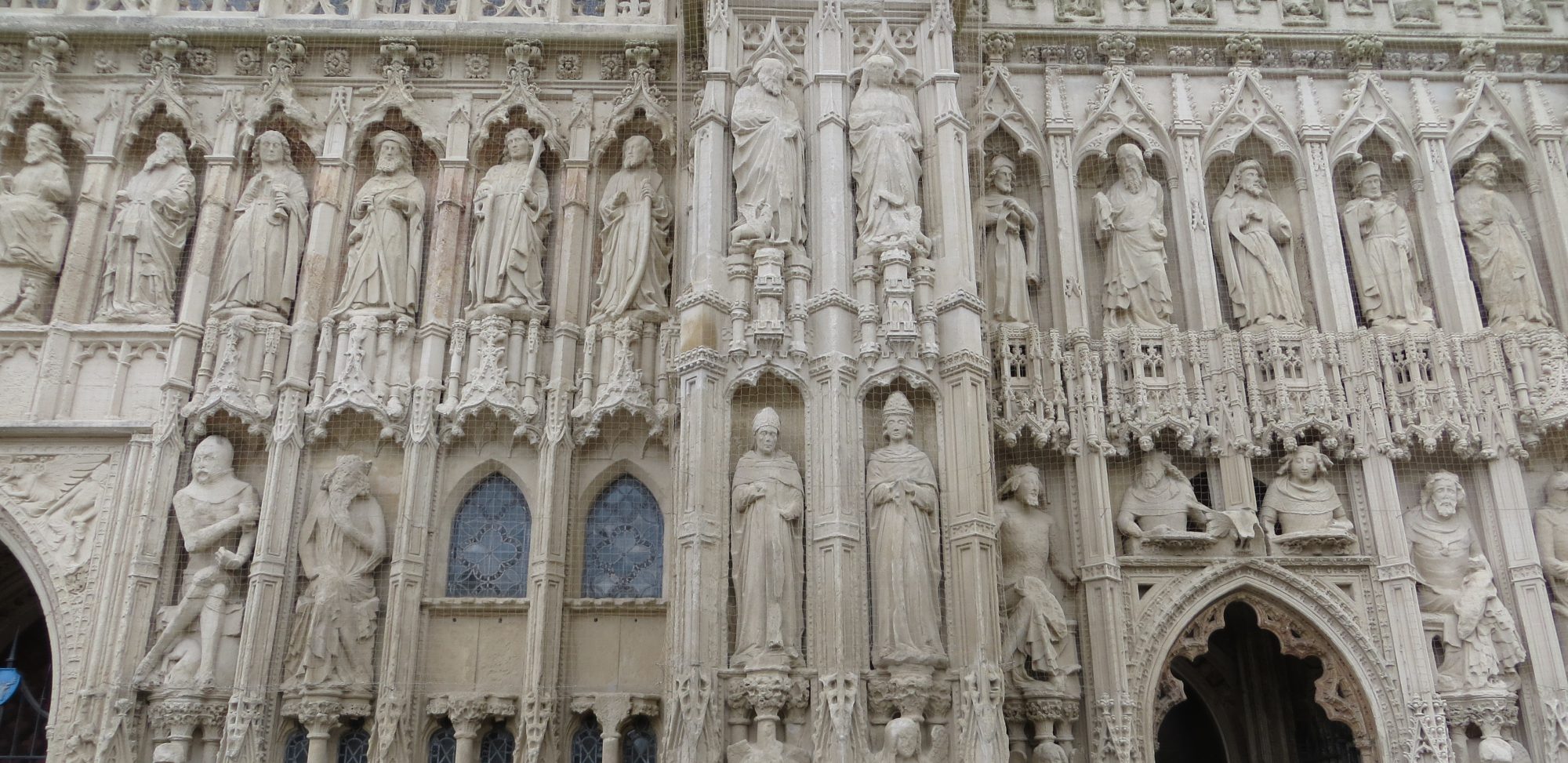
Epiphany

One of the great things about my church is that they don’t ever let lay people preach in the main Sunday morning eucharist. One or two lay people are allowed to conduct the very much smaller Evensong, which is from the Book of Common Prayer. You lead the service, sing a couple of bits (O Lord, open thou our lips - And our mouths shall shew forth thy praise), read the collects, then provide intercessions and a sermon.

It is my turn this Sunday, so I am having to get to grips with Epiphany. So I have been wondering about the odd transitions – lurches back and forth – between the Magi, the wedding at Cana, the presentation of Jesus in the temple and baptism which appear in the readings for different services between Christmas and Epiphany in the Revised Common Lectionary (The Anglican version of the RCL is only sometimes the same as the RCL for the rest of you).

So, Epiphany.

I have taken a look at the wonderful Dennis Bratcher on Epiphany

In traditional Christian churches Christmas, as well as Easter, is celebrated as a period of time, a season of the church year, rather than just a day. The Season of Christmas begins with the First Sunday of Advent, marked by expectation and anticipation, and concludes with Epiphany, which looks ahead to the mission of the church to the world in light of the Nativity.

I have read the splendid Ken Collins on Epiphany

There was a common belief, which ancient Christians inherited, that the prophets of Israel died on the on the same date as their birth or conception. According to ancient western calculations, Jesus was crucified on 25 March, so they assumed that 25 March was the date of Jesus’ conception. The Annunciation is still commemorated on that date to this day. Nine months after 25 March leads to 25 December, which would be the birthday of Jesus Christ if all those assumptions and calculations were correct. They aren’t correct, but the fact remains that the date has a Christian origin.

Meanwhile, back in the east, Christians calculated the date of the crucifixion independently and came up with 6 April. Nine months after April 6 is January 6. So the birth of Christ was celebrated on that day.

Christmas spread to the east and Epiphany spread to the west and the two days became differentiated. Today, Christmas is the celebration of the Nativy and the Epiphany is the celebration of Jesus’ ministry to the Gentiles.

The purpose of the liturgical calendar is to relive the major events in Jesus’ life in real time. If Jesus were born on 25 December, then He would have been circumcised and given His name on 1 January, the eighth day of His life on earth. Therefore, 1 January is known in the historic church as The Circumcision of Our Lord (See Luke 2:21 and Leviticus 12:3.)

Of course I have looked back to see what Benedict (no epithet required) said at Epiphany last year

The light that shone in the night at Christmas illuminating the Bethlehem Grotto, where Mary, Joseph and the shepherds remained in silent adoration, shines out today and is manifested to all. The Epiphany is a mystery of light, symbolically suggested by the star that guided the Magi on their journey. The true source of light, however, the "sun that rises from on high" (cf. Lk 1: 78), is Christ.

In the mystery of Christmas, Christ's light shines on the earth, spreading, as it were, in concentric circles. First of all, it shines on the Holy Family of Nazareth: the Virgin Mary and Joseph are illuminated by the divine presence of the Infant Jesus. The light of the Redeemer is then manifested to the shepherds of Bethlehem, who, informed by an Angel, hasten immediately to the grotto and find there the "sign" that had been foretold to them: the Child, wrapped in swaddling clothes, lying in a manger (cf. Lk 2: 12).

The shepherds, together with Mary and Joseph, represent that "remnant of Israel", the poor, the anawim, to whom the Good News was proclaimed.

Finally, Christ's brightness shines out, reaching the Magi who are the first-fruits of the pagan peoples...

In the mystery of the Epiphany, therefore, alongside an expanding outward movement, a movement of attraction toward the centre is expressed which brings to completion the movement already written in the Old Covenant. The source of this dynamism is God, One in Three Persons, who draws all things and all people to himself. The Incarnate Person of the Word is presented in this way as the beginning of universal reconciliation and recapitulation (cf. Eph 1: 9-10).

He is the ultimate destination of history, the point of arrival of an "exodus", of a providential journey of redemption that culminates in his death and Resurrection. Therefore, on the Solemnity of the Epiphany, the liturgy foresees the so-called "Announcement of Easter": indeed, the liturgical year sums up the entire parable of the history of salvation, whose centre is "the Triduum of the Crucified Lord, buried and risen".

In the liturgy of the Christmas season this verse of Psalm 98 frequently recurs as a refrain: "The Lord has made his salvation known: in the sight of the nations he has revealed his justice".

But I might just lift Kim Fabricius' list of Ten Propositions on Worship, from Ben Myers' Faith and Theology.

1. Why worship God? Because God is to be worshipped. Worship is a holy tautology.

2. Does worship make God present? No, worship presupposes God’s presence.

3. Is worship necessary? Not for God it isn’t. God does not need our worship – because God is worship, the perichoretic adoration of Father, Son, and Holy Spirit. Worship is, however, necessary for us, for it is only as homo adorans, participating in the very life of the Holy Trinity, that we become truly human.

Not bad, not bad at all.

Now you see why we Anglicans don't try to improvise. We collect the best of what the whole church offers and simply read it out in public.

An apostle for us

You must be wondering why I don't just do a re-direct from this blog to the Vatican. The reason I want to hear from Benedict again and again is that he tirelessly sets out this gospel for us. I have to have the words of the gospel dinned into me, and the power of the gospel got into me, direct via eucharistic transfusion. These two go together: preaching – the laying out of this gospel – is essential to the eucharist, for the eucharist is not an act without words.

Benedict never speaks over the head of the church, addressing just city and world (urbe et orbi). First and last he speaks to the church, teaching it about its Lord, and therefore about its own identity, and about its calling and its luck.

Now I want to receive this eucharist-and-gospel with my own people here in my own church, and in an English accent please. I want this combined dose for head and body, dispensed to me and the people I pray with here in London. I know I stand no chance as a merely individual Christian, receiving my nourishment via the library or internet, intellectually – words, unaccompanied, are not enough. I want to be a member of a church happy to be under the authority of Christ, led by clergy who dispense that full words-and-power eucharist with the generosity and authority of Christ, and who are therefore able to exercise discipline and tell us not to go snacking from any other worldly sources. My salvation depends on this church and clergy.

So this gospel laid out by Pope Benedict (and Archbishop Rowan, and Patriarch Bartholomew) is what I want to receive also from bishops Richard (of London) and Stephen (of Stepney, my part of London) and from my priest. I want my church, and these clergy, to feast on this gospel-and-eucharist and then to pass it on to us, all of it. If it is Benedict laying out the feast, that’s fine, isn't it? We are Anglicans, so surely not too proud to snatch food from Christ’s table even if it is chiefly Benedict who is bringing it out of the kitchen at the moment, right? I want the full gospel, some of which always has to be imported, and I want it served up here for us in England.

So for the clergy and people of Stepney and London I am pointing to Benedict. When they and I have learned everything there is to be learned from Benedict, we will look elsewhere. Of course the clergy of London are the last to read and receive any of this. Which leaves the rest of you with a little intercessory job to do.

The eucharist the centre of the cosmos and of history

We are meeting just before Christmas, which is the feast of gifts, as I recalled last Sunday when I visited the new Roman parish dedicated to Our Lady Star of Evangelization. Christmas gifts evoke the gift par excellence which the Son of God made of himself and offered to us in the Incarnation.

For this reason, Christmas is appropriately emphasized by the many gifts that people give to one another in these days. But it is important that the principal Gift of which all other gifts are a symbol not be forgotten. Christmas is the day on which God gave himself to humanity, and in the Eucharist this gift of his becomes, so to speak, perfect.

Under the appearance of a little piece of bread, as I said to the children of the above-mentioned Roman parish who are preparing for First Communion and Confirmation, it is really Jesus who gives himself and wishes to enter our hearts.

Dear young people, this year you are reflecting precisely on the theme of the Eucharist, as you follow the spiritual and pastoral programme prepared by the Diocese of Rome.

The Eucharistic mystery is the privileged point of convergence between the various contexts of Christian life, including that of intellectual research.

Encountered in the liturgy and contemplated in adoration, Jesus in the Eucharist is like a "prism" through which one can penetrate further into reality, in the ascetic and mystical, the intellectual and speculative, as well as the historical and moral perspectives.

In the Eucharist, Christ is really present and Holy Mass is a living memorial of his Pasch. The Blessed Sacrament is the qualitative centre of the cosmos and of history. Therefore, it constitutes an inexhaustible source of thought and action for anyone who sets out to seek the truth and desires to cooperate with it.

It is, so to speak, a "concentrate" of truth and love. It not only illumines human knowledge, but also and above all human action and human life, in accordance with "the truth in love" (Eph 4: 15), as St Paul said, in the daily task of acting as Jesus himself did.

Thus, the Eucharist fosters in those who nourish themselves on it with perseverance and faith a fruitful unity between contemplation and action.

Dear friends, let us enter into the mystery of Christmas, now approaching, through the "door" of the Eucharist; in the grotto of Bethlehem let us adore the Lord himself who, in the Sacrament of the Eucharist, desired to make himself our spiritual food to transform the world from within, starting with the human heart.

Pope Benedict To the teachers and students of Roman universities

Two different evaluations of time confront each other

On this evening of 31 December, two different perspectives intersect: one is linked to the end of the civil year, the other to the liturgical Solemnity of Mary Most Holy, Mother of God, which concludes the Octave of Holy Christmas. The first event is common to all, the second concerns believers. Their intersection confers a special character upon this evening celebration, in a particular spiritual atmosphere that is conducive to reflection.

The first, most evocative, theme is linked to the dimension of time.

In the last hours of every solar year we participate in some worldly "rites" which in the contemporary context are mainly marked by amusement and often lived as an evasion from reality, as it were, to exorcise the negative aspects and propitiate improbable good luck. How different the attitude of the Christian Community must be!

The Church is called to live these hours, making the Virgin Mary's sentiments her own. With her, the Church is invited to keep her gaze fixed on the Infant Jesus, the new Sun rising on the horizon of humanity and, comforted by his light, to take care to present to him "the joy and the hope, the grief and the anguish of the people of our time, especially of those who are poor or afflicted" (Gaudium et Spes, n. 1).

Consequently, two different evaluations of the dimension of "time" confront each other, one quantitative and the other qualitative. On the one hand, the solar cycle with its rhythms; on the other, what St Paul called the "fullness of time" (cf. Gal 4: 4), that is, the culminating moment of the history of the universe and of the human race when the Son of God was born in the world. The time of the promises was fulfilled and, when Mary's pregnancy reached its term, "the earth", a Psalm says, "yielded its increase".…

The fundamental truth about Jesus as a divine Person who fully assumed our human nature is condensed in the phrase: "God sent forth his Son born of woman". He is the Son of God, he is generated by God and at the same time he is the son of a woman, Mary. He comes from her. He is of God and of Mary. For this reason one can and must call the Mother of Jesus the Mother of God.

Pope Benedict Thanksgiving and Vespers

The Son of God has in some way united himself with each man and woman

"Salvator noster": this is our hope; this is the message that the Church proclaims once again this Christmas day. With the Incarnation, as the Second Vatican Council stated, the Son of God has in some way united himself with each man and woman (cf. Gaudium et Spes, 22). The birth of the Head is also the birth of the body, as Pope Saint Leo the Great noted. In Bethlehem the Christian people was born, Christ’s mystical body, in which each member is closely joined to the others in total solidarity. Our Saviour is born for all. We must proclaim this not only in words, but by our entire life, giving the world a witness of united, open communities where fraternity and forgiveness reign, along with acceptance and mutual service, truth, justice and love.

A community saved by Christ. This is the true nature of the Church, which draws her nourishment from his Word and his Eucharistic Body. Only by rediscovering the gift she has received can the Church bear witness to Christ the Saviour before all people. She does this with passionate enthusiasm, with full respect for all cultural and religious traditions; she does so joyfully, knowing that the One she proclaims takes away nothing that is authentically human, but instead brings it to fulfilment. In truth, Christ comes to destroy only evil, only sin; everything else, all the rest, he elevates and perfects. Christ does not save us from our humanity, but through it; he does not save us from the world, but came into the world, so that through him the world might be saved (cf. Jn 3:17).

Dear brothers and sisters, wherever you may be, may this message of joy and hope reach your ears: God became man in Jesus Christ, he was born of the Virgin Mary and today he is reborn in the Church. He brings to all the love of the Father in heaven.

Pope Benedict XVI Christmas Urbe et Orbi

The way of charity dictates a willingness to forgo for the sake of the church as a whole

The current debate over the suitability of women bishops is one which finds equally sincere people holding opposing and incompatible views. The minority traditionalist ‘integrity’ knows that it has little chance of persuading the majority, but continues to hope that time will show that it has been right to maintain its stand. Its position is rooted in an understanding of Scripture and tradition which is not eccentric or cantankerous, and may yet succeed in winning over the majority to its views. Certainly there is little sign of its dying out in the course of time, or of its becoming restricted to one group or type of churchmanship. Traditionalism on this issue is widely spread across the church, and is present among women as well as men. If it is wrong, as those who favour the consecration of women as bishops clearly think it is, it should be allowed to die of its own accord (as Jewish Christianity did) and not be expelled from the church by a majoritarian imposition of a form of leadership which the minority cannot accept. This willingness to wait for a consensus to emerge is known in theological parlance as ‘the process of reception’. As long as there are two integrities officially recognised in the Church of England, the process of receiving women’s ordination must be regarded as incomplete, and in those circumstances, the consecration of women bishops can do nothing but divide the church still further. The way forward is unclear, but supporters of women bishops should at least understand that unless and until they can persuade the other integrity of the rightness of their own position, the way of charity dictates a willingness to forgo it for the sake of peace in the church as a whole.

Gerald Bray Bishops, Presbyters and Women

The eternal Word became small

We have just heard in the Gospel the message given by the angels to the shepherds during that Holy Night, a message which the Church now proclaims to us: "To you is born this day in the city of David a Saviour, who is Christ the Lord. And this will be a sign for you: you will find a babe wrapped in swaddling clothes and lying in a manger" (Lk 2:11-12).

God’s sign is simplicity. God’s sign is the baby. God’s sign is that he makes himself small for us. This is how he reigns. He does not come with power and outward splendour. He comes as a baby – defenceless and in need of our help. He does not want to overwhelm us with his strength. He takes away our fear of his greatness. He asks for our love: so he makes himself a child. He wants nothing other from us than our love, through which we spontaneously learn to enter into his feelings, his thoughts and his will – we learn to live with him and to practise with him that humility of renunciation that belongs to the very essence of love. God made himself small so that we could understand him, welcome him, and love him. The Fathers of the Church, in their Greek translation of the Old Testament, found a passage from the prophet Isaiah that Paul also quotes in order to show how God’s new ways had already been foretold in the Old Testament. There we read: "God made his Word short, he abbreviated it" (Is 10:23; Rom 9:28). The Fathers interpreted this in two ways. The Son himself is the Word, the Logos; the eternal Word became small – small enough to fit into a manger. He became a child, so that the Word could be grasped by us...

Yet now further questions arise: how are we to love God with all our mind, when our intellect can barely reach him? How are we to love him with all our heart and soul, when our heart can only catch a glimpse of him from afar, when there are so many contradictions in the world that would hide his face from us? This is where the two ways in which God has "abbreviated" his Word come together. He is no longer distant. He is no longer unknown. He is no longer beyond the reach of our heart. He has become a child for us, and in so doing he has dispelled all doubt. He has become our neighbour, restoring in this way the image of man, whom we often find so hard to love. For us, God has become a gift. He has given himself. He has entered time for us. He who is the Eternal One, above time, he has assumed our time and raised it to himself on high. Christmas has become the Feast of gifts in imitation of God who has given himself to us. Let us allow our heart, our soul and our mind to be touched by this fact! Among the many gifts that we buy and receive, let us not forget the true gift: to give each other something of ourselves, to give each other something of our time, to open our time to God. In this way anxiety disappears, joy is born, and the feast is created...

And so, finally, we find yet a third meaning in the saying that the Word became "brief" and "small". The shepherds were told that they would find the child in a manger for animals, who were the rightful occupants of the stable. Reading Isaiah (1:3), the Fathers concluded that beside the manger of Bethlehem there stood an ox and an ass. At the same time they interpreted the text as symbolizing the Jews and the pagans – and thus all humanity – who each in their own way have need of a Saviour: the God who became a child. Man, in order to live, needs bread, the fruit of the earth and of his labour. But he does not live by bread alone. He needs nourishment for his soul: he needs meaning that can fill his life. Thus, for the Fathers, the manger of the animals became the symbol of the altar, on which lies the Bread which is Christ himself: the true food for our hearts. Once again we see how he became small: in the humble appearance of the host, in a small piece of bread, he gives us himself.

All this is conveyed by the sign that was given to the shepherds and is given also to us: the child born for us, the child in whom God became small for us.

Pope Benedict XVI Christmas Eve