Colin E. Gunton

Colin E. Gunton

The truth of the God of Jesus Christ is its own reward. Communication of that truth makes for joy and a life well-lived – a second reward. Colin Gunton taught me this.

Colin Gunton showed that the doctrine of God is not only about the truth of God. It also secures our own identity, our worth and our responsible freedom as children of God. The temptation to aspire to something we mistakenly identify as greater than created humanity makes us less than human. The truth that we are not God, but creatures of God - the doctrine of creation - is the really great gift of the Christian faith to the world. This is why Gunton focused on these two doctrines: God and creation.

Gunton taught that we creatures are able to know God because the Holy Spirit enables us to confess Jesus, who confesses God the Father. Often quoting Irenaeus to say that the Son and the Spirit are the two hands of the Father, Gunton showed that the doctrine of the Trinity provides us with a doctrine of mediation - God himself is not only the (christological) content but the (pneumatological) medium and bearer of that content. He argued that God is now at work making possible not only our worship and knowledge of him, but also our recognition of one another. God is the means by which I may see you for who you are, and let you become what God intends you to be – a unique and particular person.

In the years Colin Gunton taught systematic theology at Kings College, London, worldwide interest in trinitarian theology grew dramatically. Postgraduates would come to Colin to study Barth and other heroes of the Reformed tradition, but with him they also discovered the Church Fathers and learned how to think across the whole Christian dogmatic tradition.

In the weekly seminar, Colin hosted an intense encounter of ideas. With the first-timers he always wrestled through the issues again and found better ways to frame them, forever expressing delight in the richness of the Christian tradition. We would arrive with the patronizing assumption that we moderns have discovered crises of previously unknown complexity, but in seminar after seminar Colin would enable us to see that such self-consciously 'modern' theology was self-deluding. It is much more likely that we have to catch up with the intellectual rigor of previous generations of Christian thinkers. The result was not only Gunton's powerful written work, but students who could think for themselves precisely because they could faithfully listen to what many generations of Christians had been saying. We who knew Colin Gunton are grateful to God for him.

Sacrifice in the Old Testament 1

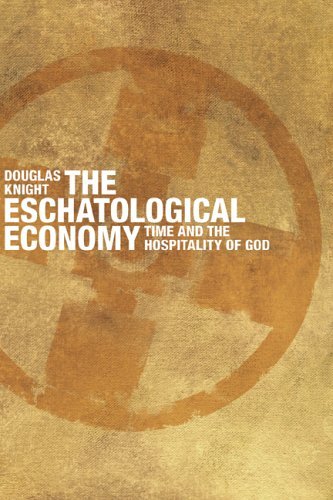
The Eschatological Economy

In The Eschatological Economy I wanted to show that when we talk about sacrifice, in the bible or in ancient pagan world, the first question we have to ask is whose sacrifice? Do we mean Israel’s, or the sacrifices of other nations? The difference between sacrifice in Israel, and sacrifice in the rest of the (pagan) world is the difference between the true God the false gods. Failure to make this distinction confuses everything said about the topic of sacrifice.

I argued that, for Israel, the decisive point about a sacrifice was not that something was killed, but that something was presented – to God and to his people. Sacrifice was a public act so the animal admitted to the temple is a public demonstration that Israel, and the individual Israelite, is admitted by God.

It was also a double act. The sacrifice is coming from God to Israel, and from Israel to God in thanks and recognition of God’s initial gift. God gave Israel gifts and he did so publicly, before the watching world - Thou hast prepared a table for me before the face of mine enemies… (Psalm 23). So sacrifice serves to sustain the relationship of the people with their God, and to show Israel and the gentile world beyond, what that relationship was.

You can find out more about The Eschatological Economy at Amazon.com or at Amazon.co.uk or at Eerdmans

Coming up on DK

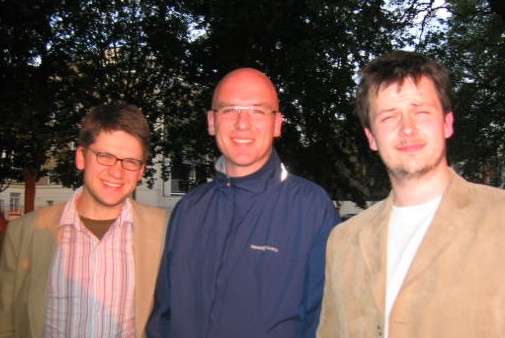
Mihail Neamtu  Lincoln Harvey  Alan Brown

My picture shows the Orthodox are doing all the talking and the Anglicans all the listening.

Let me remind you of the theologians whose work I have been posting (find them in the ‘Contemporaries’ section) –

Christopher Seitz, Ephraim Radner, Oliver O'Donovan, Augustine DiNoia, R.R. Reno, Reinhard Hütter, Douglas Farrow, Oswald Bayer, Gavin D’Costa, Stephen Long, TF Torrance, along with the others whose books are displayed in the ads on this blog – Robert Wilken, Robert Jenson and John Webster.

People always ask about books to read, and in the case of diploma students and undergraduates just starting out on this subject I don't know what to suggest. I have make lists of books for students and lost them again. You can see my latest efforts to compile book lists on my Amazon page – please make suggestions, or alternative lists. Anybody can get an Amazon page, by the way, just by posting a book review.

But after teaching Anglican ordinands – always the most lost on the subject of the Christian faith – it occurred to me that there are no good introductions to Christian theology. So I have decided to write one – it is called The Apprenticeship. I did promise you that I would post pieces for this as I went along, and I really must make more effort on this.

Coming up on the DK blog:

Servais Pinckaers, George Weigel, Benedict XVI and the whole mountain of John Paul II’s papal teaching – Fides et Ratio, Veritatis Splendor, Evangelium Vitae, Ut Unum Sint. And we should have a look at the Catechism and Compendium. You are not Catholic? Neither am I, but when your neighbour comes up with a good idea, don't you ‘borrow’ it?

More on the issues of Christology, sacrifice, atonement, Israel and the Old Testament, supersessionism, history and modernity – and on why I wrote The Eschatological Economy.

Colin Gunton

Matthew Baker on reasonable worship and Christ our great high priest (Matthew has very kindly started to take my education in hand. Solly and Alan Brown will be relieved).

And there will be more from the Anglicans, particular from Ephraim Radner and the Anglican Communion Institute.

James Merrik provides much more intelligent comment on the Anglican crisis than I can, while the Anglican Communion website formally and Kendall Harmon at Titus 1.9 conveniently channels the torrent of statements that issue from all parts of the Communion.

We are bound to each other

No member Church can make significant decisions unilaterally and still expect this to make no difference to how it is regarded in the fellowship; this would be uncomfortably like saying that every member could redefine the terms of belonging as and when it suited them. Some actions – and sacramental actions in particular - just do have the effect of putting a Church outside or even across the central stream of the life they have shared with other Churches.

We now face some choices about what kind of Church we as Anglicans are or want to be. Some speak as if it would be perfectly simple – and indeed desirable – to dissolve the international relationships, so that every local Church could do what it thought right. This may be tempting, but it ignores two things at least.

First, it fails to see that the same problems and the same principles apply within local Churches as between Churches. The divisions don’t run just between national bodies at a distance, they are at work in each locality, and pose the same question: are we prepared to work at a common life which doesn’t just reflect the interests and beliefs of one group but tries to find something that could be in everyone’s interest – recognising that this involves different sorts of costs for everyone involved? It may be tempting to say, ‘let each local church go its own way’; but once you’ve lost the idea that you need to try to remain together in order to find the fullest possible truth, what do you appeal to in the local situation when serious division threatens?

Second, it ignores the degree to which we are already bound in with each other’s life through a vast network of informal contacts and exchanges.. These are not the same as the formal relations of ecclesiastical communion, but they are real and deep, and they would be a lot weaker and a lot more casual without those more formal structures. They mean that no local Church and no group within a local Church can just settle down complacently with what it or its surrounding society finds comfortable. The Church worldwide is not simply the sum total of local communities. It has a cross-cultural dimension that is vital to its health and it is naïve to think that this can survive without some structures to make it possible. An isolated local Church is less than a complete Church...

The idea of a ‘covenant’ between local Churches (developing alongside the existing work being done on harmonising the church law of different local Churches) is one method that has been suggested, and it seems to me the best way forward. It is necessarily an ‘opt-in’ matter...

The idea of an Archbishop of Canterbury resolving any of this by decree is misplaced, however tempting for many. The Archbishop of Canterbury presides and convenes in the Communion, and may do what this document attempts to do, which is to outline the theological framework in which a problem should be addressed; but he must always act collegially, with the bishops of his own local Church and with the primates and the other instruments of communion.

Archbishop Rowan William Reflections on the Anglican Communion

Anglican Covenant

A well-written and concise covenant would clarify the identity and mission of the Churches of, or in association with, the Anglican Communion. By articulating our ecclesiological identity, a covenant will also help the Anglican Communion in self-understanding and in ecumenical relationships. A covenant could provide, for all provinces and/or national churches, a fundamental basis of trust, co-operation and action in relationship with one another and in relation to the whole Communion. A covenant could express what is already implicit, by articulating the â??bonds of affectionâ??, that is, the â??house rulesâ?? by which the family of Anglican churches wishes to live together . These would be intended to develop a disciplined and fulfilling life in communion.

It could also become a significant educational tool within the Communion, enabling Anglicans worldwide to understand and deepen their commitment to the beliefs, history and practices they share in common and their development of these as they engage together in Godâ??s mission in the world.

Any covenant also has the potential of providing what is currently lacking - an agreed framework for common discernment, and the prevention and resolution of conflict. It could do this by bringing together and making explicit much that until now has been a matter of convention within the Communionâ??s common life.

The Proposal for an Anglican Covenant

Solly on 'The Eschatological Economy'

Recapitulation – God's reverse engineering of creation. Eschatology has tended to mean that which is to come. Then it meant that which is to come which has actually come in Christ, the proleptic future. Now it means the bow wave of God's work of recreation, coursing through the created order, renewing everything in line with the end. It's quite an image, and an idea, and in one sense challengeable at every point, yet we see by faith not be sight. The Church is on the crest of that bow wave, or it should be. Sometimes it isn't. The world seeks to resist that bow wave, puts up its sand banks, and storm walls. But God just does a new thing, outflanking the world. A crucified God: who'd have thought it?

Douglas Knight reminds us, once again, that we are grafted into Israel, not the other way around. We then partake of Israel's paideia. We are in the same school as them. Yes, things are different, for Christ has come, who has summed up Israel in himself, yet also, the people of Israel are still being formed. Their story is not a handy source of illustrations, much as we might refer to Shakespeare, or Dickens for illustrations; their story is our story, which is God's story, his narrative. Israel is still central to God's plans. This is the election of God, through which the world is blessed.

Pay a visit to the all-new Solly Gratia.

You can find out more about The Eschatological Economy at Amazon.com or at Amazon.co.uk or at Eerdmans

The episcopate is one, each part of which is held by each one for the whole

So koinonia / communio is a foundational term which gained fundamental significance for the early church, and which in the eyes of many once more occupies a pre-eminent place in defining the essence of the Church today. The Church is shared participation in the life of God, therefore koinonia with God and with one another (1 Jn, 1,3).

So from the beginning the episcopal office was ‘koinonially’ or collegially embedded in the communion of all bishops; it was never perceived as an office to be understood or practised individually. In his history of the Church Eusebius describes in detail the endeavours to maintain peace, unity, love and communion during the violent conflicts of the second century regarding the correct fasting practices and the dating of Easter (Hist. eccl., v,23f; cf. vii,5). The collegial nature of the episcopal office achieves its most impressive expression in the consecration of bishops.

‘The episcopate is one, each part of which is held by each one for the whole’ (Cyprian of Carthage De ecclesiae catholicae unitate, 1,5). Such statements and admonitions recur again and again in Cyprian’s letters (Ep., 55,21; 59,14 et al.). Most familiar is the statement that the Church is the people united with the bishop and the flock devoted to its shepherd. ‘The bishop is in the church and the church is in the bishop, and if anyone is not with the bishop he is not with the church.’ But Cyprian goes even one step further: he not only emphasises the unity of the people of God with its own individual bishop, but also adds that no one should imagine that he can be in communion with just a few, for ‘the Catholic Church is not split or divided’ but ‘united and held together by the glue of the mutual cohesion of the bishops’ (Ep., 66,8).

Cardinal Walter Kasper An address given to the Church of England Bishops’ Meeting (5 June 2006)

The holy community forms Scripture, and is formed by it

The action of Israel that we have received in the form of scripture and liturgy topples the alternative constructions of the gentiles, and prevents the world knitting itself together into any form other than the form of Christ. It is the one action that keeps the world open, reminding us that the Messiah is not here, and that what the world presently is, is not the end. True reading produces the transformation of the readers, so hermeneutics is ethics, the reading of people into the Church.

The Church is the history of the Lord writ small and long

Ephraim Radner

One way of looking at the present conflict within our own churches is to see it as an insistence, on the part of the various players, to heal that sickness and to rewrite the plot of the drama of which they are parts so as to exclude the length and detail of its anguished elaboration. In contrast, the history of the Church, which is the history of the Lord writ small and long, proclaims: It is for the sake of charity that we suffer our disagreements; it is for the sake of truth that we love the liar; it is for the sake of the bride that it receive as her gift her beloved’s body as her own. The irony of Christian patience is that it is an eternal hastening into the midst of this story, rather than one that hurries to break out of it. And we are perhaps called to judge our practical reactions to the array of our ecclesial anxieties – over incompetent and unfaithful bishops, over corrupted prayers and unjust stewards, over shallow understandings and venal missions, over uncaring guardians and unheeding tenants – judge them according to the standard of such a passion.

No clear directives emerge from such a judgment. Those who wish to know if they must follow this line, or resist along that, or compromise upon this other, are given no certainties in their choices simply because they subject themselves to the scriptural shape of Jesus’ life. But at least they know that they cannot run away – and because it is ultimately his life, that there is even redemption in staying put! There are not many bodies, some true and some false, some loving and some uncharitable. These are distractions from the one story, and the embrace of this story cannot sustain the parsing of proprieties that today so grips our distorted sense of integrity. Readiness for love – truth bound in unity – is a single and extended temporal exertion. It is embodied in God's subjection to time in Christ Jesus, and the Church finds its own readiness in this form. There is no escape from this particular fate and promise. And therein are the kisses of God's peace for his people enjoyed.

Ephraim Radner ‘The Figure of Truth and Unity’ in Hope Among the Fragments: The Broken Church and its Engagement of Scripture

Changes that have a future - George Ille on The Eschatological Economy

The Eschatological economy makes daring and provocative claims:

`Christian thought is political. It contradicts other systems of ideas and creates a real encounter and contest of world-views...'

`Modernity is a religion... Modernity and Christianity are both forms of enlightenment, but modernity is the counterfeit version, Christianity the real one...'

`The Word of God identifies Western being as a failure of action and of relatedness, and thus as a failure of being... `

Such bold claims require a radical approach and in an important sense Douglas Knight's book is about the totality of the real: about God and God's action and about time and history.

`Modern thought [was] ever ready to take things apart but [was] unable to put them together again'.

Yet, while making bold claims about things theo-logical, the book is also about humanity, perhaps profoundly about humanity. After all, God's action and being are deeply bound to humanity and there is no knowledge of the Creator God without knowledge of his creature.

From this perspective the book is about personhood, about sanctification and transformation, that is, about paideia, which becomes, in Knight's use, a key theological term. Special attention is accorded to the `stage' of this transformation and especially to the role of Israel in this process.

`A Trinitarian and Irenaean view of Israel's anthropology puts human beings in touch with the creation of which they are members. Humankind is hosted by God and brought up by him into the practice of God's hospitality.'

The sacrifice of the Son, the event of the cross is shown to be the apex of God's labour for and with the world, through which we are integrated into the person of the Son through the Holy Spirit, becoming thus members of his body, the Church. All these things are spelled out in conversation with the contemporary (post)modern world, its claims and proposals, systems of ideas, dichotomies, utopias and above all, its idols. It is a conversation to be sure, but it is also a contest and a battle against falsehood and pretense, an affirmation of what really `is' and what `is to come', against a rhetoric of `being' and self-made existence.

In this sense, the book is also about method and sources, as it advocates reflection that listens to the Scriptures and acknowledges the richness of church doctrine and tradition. Indeed, Christianity can and must tell the difference between constructive change and mere decay since `one way of being human is very considerably better than other ways'... Knight modestly claims that there's nothing really new in his book (This reminds some of us of Zizioulas' modest stance!)...

Yet the book offers a genuine experience of the `new', just confirming, perhaps, an underlying theme in Knight's book: It is only as we respond to God in obedience and praise that we allow him to do new things; we allow Him to labor `changes' that have a future, changes that conform us to the image of His Son.

After all, the Gospel, as Knight reminds us, `is the most exhilarating thing in the marketplace'... Getting a taste of this pathos alone makes the book worth studying. A must read for all Theology students and preachers but also for philosophers, sociologists and political theorists who engage themselves in `descriptions' or `prescriptions' of the contemporary world.

George Ille's Amazon review

The discipline of the whole Church

What is a bishop?

A bishop is the discipline of the whole Church on us - which is nothing other than the Lordship of Christ effective for us - packaged in the form of one person. The bishop represents, and makes available to us, the discipline of all other parts of the Church - geographically, historically, eschatologically. The bishop is the whole Church in one person. We can go and complain to him, seek explanations from him, and we also have to encourage and to pray for him. We always have to ask - beg, demand - the bishop to give us the whole Christ, through all discipline and in all the Scriptures (This is apparent from the paragraphs of the Windsor Report I have posted). We have to remind the bishop to love and care for us. And of course each bishop has to be under the discipline of all the ecumenical councils of bishops, across the world and across the whole history of the Church.

We are under the discipline of the whole Church. If we believe that the Roman Catholic and Eastern Orthodox churches are mistaken to believe that bishops, and clergy, can only be male, nevertheless we cannot ignore them or defy them. To do so would be lack of love, and neglect of what the whole Church has always held to be good. Roman Catholics and Orthodox are sure that they are preserving the tradition of the Church on this matter. What if they are right? Once again, the issue is not so much the ordaining of women or homosexuals, or any new self-identifying minority, but just of doing of what the Church has never done before, and doing it without it being the act of the whole Church. If we make new rules, whether about ordination or about anything else, we have failed to understand that the Church is the reconciliation of all opposing parts, and so the costly unity won by Christ, that now enables our mutual subordination and love, in which we consider each better than ourselves. Our talk about making new rules for ourselves is a deliberate walking away from the Roman Catholics and Orthodox. We can not act without the rest of the Church and still be Church ourselves. If we walk from the unity of the Church the truth of the Church leaves us too.

DiNoia on Christian Humanism 3 – defending reason against unreason

There are four areas where recent papal teaching has articulated a variety of propositions that need to be affirmed. Veritatas Splendor teaches that there's no freedom outside of truth, There is a slim chance that human beings could find happiness outside of some proper understanding of what it is to be human. This does not mean that there are no truths that human beings can know about themselves, it just means we owe the world to proclaim the fullness of that truth. We owe it to the world, not to come to the table, in the spirit of a pluralism of religions, or the pluralism of ideology as simply equal partners, but with conviction that we have something to contribute to shape the development of a consensus. If you've read these encyclicals, you know they stand on their arguments.

Evangelium Vitae tells us, contrary to what modernity thought, that the eclipse of belief in God has turned out to be the greatest threats to the human, not the exultation of the human. The fact that God was eclipsed, has not made human life safer, but more dangerous. The message of Evangelium Vitae, that God is the greatest friend of the human must be proclaimed without obsessing about this. Without a sense of the transcendent dimension of the human, you have what our Holy Father calls of "the culture of death." The great irony at is that at the end of the 19th century the pope had to defend faith against reason, but here at the end of the 20th the pope has had to defend reason against unreason.

Augustine DiNoia Divine Wisdom and Christian Humanism

Broken Church

Christopher Wells, writing for the ever-excellent Anglican Communion Institute, is wondering what the Archbishop of Canterbury makes of the debacle of the just-finished General Convention of the Episcopal Church of the United States. Wells suggest we read Archbishop Williams' lecture on a previous great Archbishop of Canterbury, Michael Ramsey.

'Williams seized Ramseyâ??s suggestionâ??enshrined in his classic of the 1930s, revised in the 1950s, The Gospel and the Catholic Church â??that the center of Anglicanism, her primary vocation, is to witness to the perpetual passion of Christâ??s body which must lead ineluctably, according to divine providence, into the heart of the gospel. In this perspective, the peculiar â??lightâ?? of Anglicanism within the wider oikumene will be provisionality itself, following on a proper penitence: a readiness to go willingly, and perhaps be lifted up, to suffer whatever further sacrifices may be necessary for the visible reunion of the one Church.'

Christopher Wells Wounded in Common Mission: The Term of Inter-Christian Divisiveness

Here is Rowan Williams himself, turning from Michael Ramsey to Ephraim Radner:

'The situation is made harder by our cultural setting. The unhappy irony of the Reformation legacy is the steady slippage from the confessional protest of Luther to the consumer choices of modern Christianity in the West - the search for the Church of your taste and preference. Ephraim Radner, one of the most exacting and rigorous of contemporary American theologians, has outlined the irony in a recent book, Hope Among the Fragments. The Broken Church and its Engagement of Scripture, in which he insists that the Church is only itself if it engages with the specific form of Christ as Scripture proclaims it; but also that a movement for reform, purity or separation in the name of this engagement always drifts towards that typically modern pluralism which fails in the long run to do any justice to the utter givenness of Godâ??s initiative, fails to think the Church theologically.

â??As institutional churchesâ??, he writes, â??as formal Christian communities, we now stand in the same condition as that of the first Christians after the resurrection. We have no articulated theology, we have no proven structures of authority, no experienced framework for the reading of Scripture that is common to us as a churchâ?? (p.175). This may be optimistically presented as great opportunity; but it should first be recognised as â??the judgment of Godâ??s historyâ?? - that is, as the result of long-engrained habits of unfaithfulness in our practice. We have forgotten how to be churches. Starting new ones will only compound the problem: the traditionalist is in the same boat as the liberal to the extent that both are prisoners of a denominational market (p.205), even when appeal is constantly being made to the model of Reformation confessio - or even early Christian martyrdom. The only theologically honest response is to acknowledge that Godâ??s providence has placed us in a divided and in various ways unfaithful Church, and that we have to learn there a form of repentance (individual and corporate) that is our best route towards the form of Christ: â??That God has placed us in this church at this time must mean that he would have us grow in the from of life that bespeaks the Churchâ??s repentant readiness to be healedâ?? (208).

Radner goes on to elaborate what is involved, practically and theologically, in â??staying putâ?? - bearing with the contradictions of the visible institution, â??faithfully navigating a hostile church while remaining in communion with itâ?? (212). It is the most accessible contemporary form of being a fool for Christâ??s sake in a â??Church of fools, filled with waiting, filled with patience, filled with perseverance, filled with prayer, filed with endurance, filled with hopeâ?? (214). But at the larger structural level, this means a polity and policy for our churches - and Radner speaks about Anglicanism in particular - that â??hold dependencies in orderâ??: we are bound up in so many relations of dependence - to Scripture, to our past, to our present partners and our present members - but we have to find a way of keeping them in tension, not seeking to relieve the pressure by removing whatever ones we currently find hardest or most offensive (229). And this in turn means a call to the churches to discover a form of holiness that effectively challenges the localisms and self-assertive separatisms that are the most effective cultural captivity of the modern Church. It is no surprise that Radnerâ??s last paragraph but one in this difficult and necessary book takes us back to Ramsey, and to The Gospel and the Catholic Church.

The Anglican Churchâ??s embrace of incompleteness, which Radner sees as central to Ramseyâ??s vision (218), is grounded in a description of the Church â??in terms of the fate of Christâ??s body in passion and self-giving - an incompleteness divinely opened to the divine gift of new lifeâ?? (233). Here is the Churchâ??s task, its one task that is truly its task as Church. We may not know where the â??realâ?? Church is in abstract terms - and if Radner is right, the question itself is going to lead us in the wrong direction in our present climate. But we may still know where the event of Christ is going on, and we may still know what we must do to align ourselves with it. Thereâ??s the problem, of course: it is more attractive to go in quest of the real Church than to seek for the pattern of cross and resurrection in the heart of where we happen to find ourselves. But Ramsey implicitly warns us that the quest can be a way back to the self-defining and self-protective religious institution that always distorts or stifles the gospel.

Somewhere in this is a very substantial paradox - that the harder we search for a church that is pure and satisfactory by our definition, the less likely we are to find it. Embracing the incompleteness is not a recipe for passive acquiescence in a Church that is corrupt, implicitly heretical or indifferent to the gospel; it is a recognition that the Church is always at best on the edge of all these things and that the self-seeking individual who believes that the Churchâ??s problems are always in the souls of others has the capacity to tilt the community further towards its perennial temptations. We have to be Lutherans after all, in the sense of refusing any model of the Church that allows us to think of the Church as a body to which we choose to give our allegiance so long as our individual spirituality is nourished by it - rather than as the very form of our Christian being. As Lutherâ??s example shows, this is far from being a passive acceptance of the concrete tyrannies or infidelities of the Church in history; but it demands a theological vision of those failures. And it also requires a difficult spiritual discernment as to how, in an unfaithful Church, we try to live our way into the one event in which the Church actually subsists.'

Archbishop Rowan Williams The Ramsey Lecture
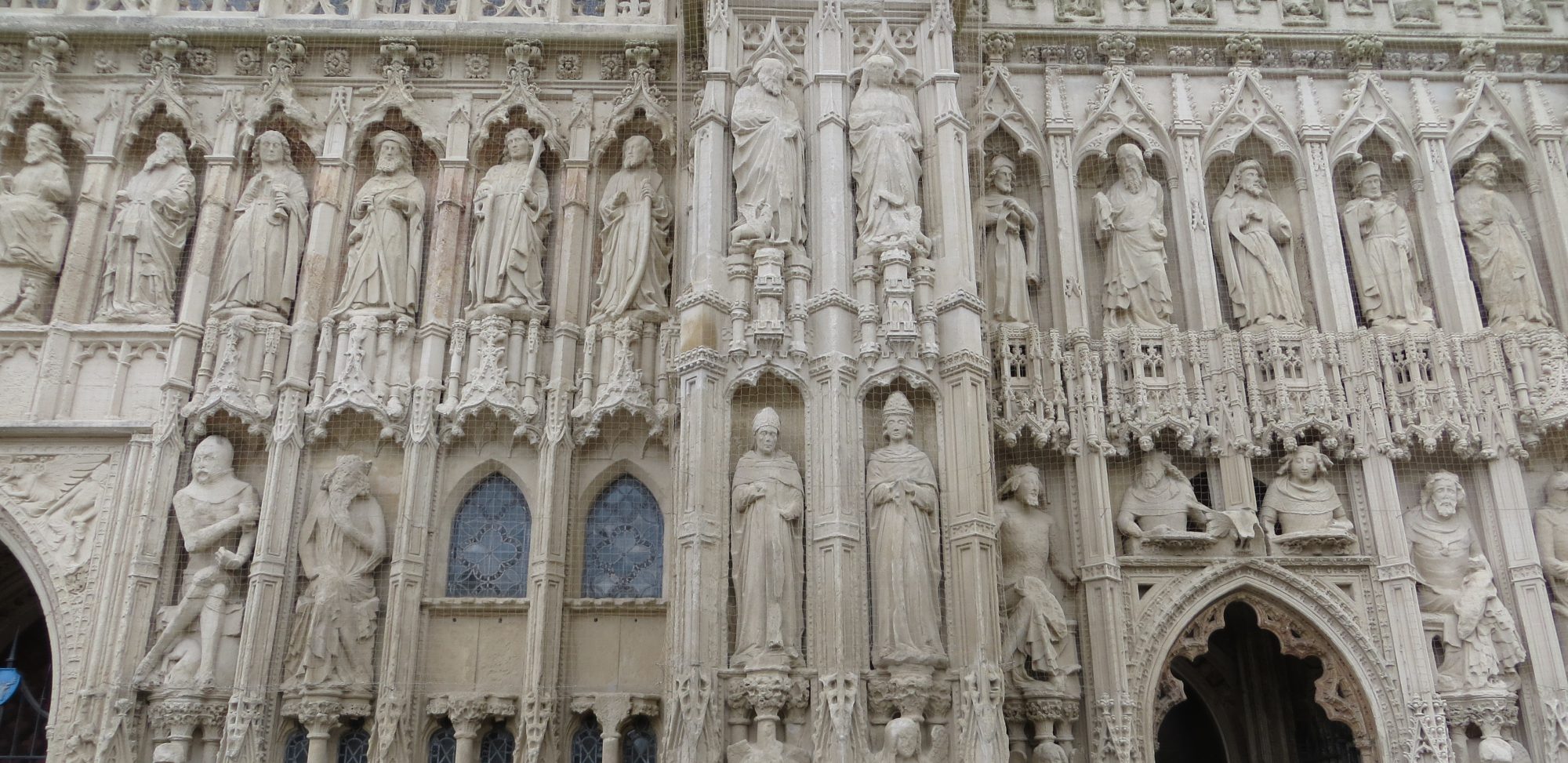
Bishops of the Church of God in the Anglican tradition guard the faith, unity and discipline of the Church

This General Convention has now given its response to the recommendations of the work of that Commission, known as the Windsor Report….The responses which the Convention has given to the clear and simple requests of the Lambeth Commission, the clear and simple requests indeed of the Anglican Communion, are clearly and simply inadequate. We reaffirm our conviction that the Windsor Report provides the way forward for the entire Anglican Communion, the ecumenical relationships of the Communion, and the common life of a faithful Episcopal Church. Further, we have agreed to submit ourselves to the Windsor Reports requirements, both in what it teaches and in the discipline it enjoins. We have not changed in our commitment. …

It is our intention not only to point to the inadequacies of the General Conventions responses, but to declare to our brothers and sisters in Christ throughout the Communion that we continue as The Episcopal Church in this country who uphold and propagate the historic faith and order we have come to know through the Anglican heritage of apostolic teaching and biblical faith; who desire to be fully a constituent member of the Anglican Communion; and who are ready to embrace and live under the Windsor Report without equivocation. Accordingly, we repudiate the actions of the General Convention of 2003 which have breached the bonds of affection within the Communion. We bishops have committed to withhold consents for any persons living in same gender relationships who may be put forward for consecration as a bishop of the Church. And we have refused to grant authority for the blessing of sexual relationships outside Christian Marriage in our jurisdictions. We intend to go forward in the Communion confidently and unreservedly.

Our chief concern now is to fulfill our charge as bishops of the Church of God in the Anglican tradition to guard the faith, unity and discipline of the Church. Pastoral care and apostolic teaching must not only be given to our own dioceses, but to all the faithful in this country who seek apostolic oversight and support. We will take counsel together to fulfill our service on behalf of faithful Anglicans in this country, both clergy and laity, and to proclaim the Gospel and build up the Church of our Lord Jesus Christ, and we seek the support of the Archbishop of Canterbury and the Primates and Bishops of the Anglican Communion as we do so.

Bishops' Statement - General Convention Actions Inadequate - Anglican Communion Network

The ‘strong' and the 'weak'

If we Westerners are the ‘strong’, and the South are the ‘weak’, we ought to ‘bear with the failings of the weak and not to please ourselves.’ That we bear with them is the only possible sign that we are indeed the mature and the strong.

Even if we sophisticated modern Protestant Westerners are more mature in the faith than all the poor backwards Christians of the Third World, with their patriarchal views of gender and sexuality, they are the gift of God to us (and we to them). God has generously bound them to us. We are, as it were, married – the ‘sophisticated’ to the ‘backward’, the liberal to the fundamentalist.

We cannot decide to make changes in our corner of the Church, because our corner does not belong to us only, but to the whole Church. Unilateral decisions show not only indifference, but antagonism to them. Our salvation consists in our being joined to them in Christ, so separation from them tugs against our salvation.

Do those who want to ‘go forward’ into new, ostensibly more inclusive, forms of church life, really don't mind if they leave others, traditionalists, Africans and Asians, behind? They want to go a little more quickly, but do they want to leave others behind? But in the wilderness if we do not go at the pace of the very slowest, we will be abandoning the slowest and weakest, so the body will break up and never arrive. The whole point of our time in the wilderness is not to arrive anywhere in particular, but to learn to serve and hold on to one another, the strong serving the weak and waiting for them. Fast finishers don't get earlier admission, for admission to the land promised to us is only for the whole Church, the strong bound to the weak.

Of course if these other churches are wrong about who may be ordained, we have to tell them so, and if there are churches who belive we are wrong about this, we have to listen to them and examine ourselves. We have to talk to them, and either be corrected by them and return to them, or to correct them and beg them to come back to us. We have to serve them in this way, or be served by them. Our readiness to do is the proper demonstration of our maturity. Any division in the Church makes it hard to pray, but our present acts that widened our separation from the rest of the Church, mean that we must pray and lament.

Solly on 'The Eschatological Economy'

God is judge. This is an idea that has undergone a metamorphosis in my mind. Too often 'God is judge' means he is like those guys in red dispensing retributive justice in our British court system. This was Luther's apprehension of God before he understood things better, but it is an apprehension that seems to creep easily back into Reformed thought on the ground - and possibly Catholic thought too. God is out to punish sins, so watch out. God is a judge, and a judge gives you what you deserve. Okay, he actually gave Jesus what you deserve, as the doctrine goes, but after that, you had better watch out, cos THEN he will give you what you deserve if you don't behave. Legalism goes hand in hand with this. Of course, it's not God's fault at all but the use humans make of the idea.

This would seem to mitigate against the idea of God as punishing judge rather than saving judge, since Christians can be all to quick to judge others, including their salvific position before God - check any Christian debate forum - and I don't think that that is what is meant. We need a word that covers action on behalf of those in trouble as well as conveying the thought of discernment. Not that God did not punish, but the glee with which people, including Christians, will cut another off for some transgression, is surely not an imitation of God's actions. No wonder Jesus said forgive seventy times seven times…Something more is intended. Remember, The Eschatological Economy is about paideia, about God training up a dysfunctional houseful of delinquents and outcasts to be a mature family carrying on their father's work. Is this also where a renewed Protestant thought touches base with Eastern Christianity and its doctrine of theosis, if one sees such a thing from a vocational angle, rather than just a 'spiritual' one?

In addition to writing the world's longest and most charitable book review, Solly blogs perceptively about Israel and Atonement. Visit Solly Gratia.

You can find out more about The Eschatological Economy at Amazon.com or at Amazon.co.uk or at Eerdmans

DiNoia on Christian Humanism 2

The criteria then for thinking about the faith and about the relation of faith to culture are the criteria that come from the classical view of theological inquiry which is to see the intelligibility of what is intrinsically intelligible, naturally using all of the capacities and rigor that human reason supplies. It's not a question of being unreasonable. Intelligibility is not the opposite of reasonability, but it's the tool of reason that is applied to the reflection on a mystery that itself draws the human mind and challenges it at every point.

Not everyone coming out of our institutions have to be theologians. But it is the case, and you've all experienced this, that the people with highly sophisticated knowledge of economics, politics, physics, astronomy, law are traveling with an almost infantile level of knowledge of their faith. I've encountered them. They are traveling on the knowledge of their faith that they might remember from a 3rd grade class, or perhaps at 5th grade with their confirmation. After that they haven't learned a single thing. This makes them incapable of withstanding not only incorrect versions of Catholicism, but also versions of any kind of spirituality that are mad. The danger of irreligion is not skepticism, but credulity. People are prepared to believe anything in the name of religion, as you know.

This is why Ex Corde Ecclesia is so central, so important, so absolutely essential. Our institutions of higher learning must turn out people who know something about their faith and who are capable of articulating the ways in which it relates to whatever area of professional life, politics, science, philosophy, they are in, because God knows the clergy can't and are unlikely to do so.

Augustine DiNoia Divine Wisdom and Christian Humanism

Ex Corde Ecclesia is John Paul II's Apostolic Constitution on Catholic universities. It begins ‘Born from the heart of the Church, a Catholic University is located in that course of tradition which may be traced back to the very origin of the University as an institution…’ . My respect for Ex Corde Ecclesia and Fides et Ratio has grown and grown. When I explained to a 'Catholic' educational institution last year why I thought that Ex Corde Ecclesia was binding on it and that this was good news, my relationship with that institution was terminated. These Papal documents have real evangelical power, and our administrators certainly feel the challenge, or threat, these documents represent to the secular agenda.

Catholicity is not an extra

Catholicity, sometimes also called ecumenism, is not an extra. It is the centre of the gospel. It is an evangelical imperative. Without reconciliation with the rest of the Church, there is no salvation for us. If the Church of England, and its Synod, does not feel the absolute priority of ecumenical reconciliation with all other churches, this is not merely negligence, it is culpable, it is sin. But we may not forget that we are sinners forgiven, and so in humility we must consider these others better than ourselves. We are the bloody-minded, schismatic, divisive ones, now brought by baptism into the Body of Christ and so calmed and reconciled. Our reconciliation, and our reception of our reconciliation, is our being reconciled to all others. But if we are still holding out against other Christian churches, through ignorance or indolence or because we don't care, we are pushing that the reconciliation and forgiveness away. We are pushing our Lord away, and with him our salvation

Catholicity means deference to the whole Church

Catholicity means we do not make our own rules. Our Anglican readiness to make new rules about who may be ordained a bishop shows that we have lost touch with the church in any part of the world. Our lack of concern for the rest of the world is a lack of love. Is it really all the same to us if we do kiss goodbye to the Roman Catholic and Orthodox Church? For Rome, Cardinal Walter Kasper is saying that Anglicans and Episcopalians have put the movement we were making towards the unity of the Church into reverse because the started making new rules for Church order. We think we can make new rules, just for ourselves. But we may not make unilateral decisions for our corner of the worldwide church. The Episcopal Church of the USA (ECUSA) is only the Church when it is connected, not just to the United States, but to all the rest of the Church catholic - worldwide, historic and eschatological. In England, the Church of England is only the Church when it is connected to the rest of the Church not in England, and the Anglican church is only the Church by being connected to the non-Anglican Church. Our salvation is our being tied together, our connection, to these others, so that with them we make the whole universal body of Christ. If we loosen our connections to the rest of the Church, it is not just that we float away from the rest of body, but that the whole body starts to break up, and ceases to be that universal community of witness to God. By leaving we threaten the life even of those we leave, never mind what this does to our own life.

DiNoia on Christian humanism 1

DiNoia

We are not talking about revealing arcane truths in talking about the Trinity, we are talking about love, pouring itself out so that love will be returned. That is what the theology of the Trinity is about. Love will be returned in a way that is mutual, that is, it's not a matter of simply us loving God, it's a matter of us, altogether loving God and loving each other in God. This is the divine wisdom we have to proclaim: God wants to share the communion of the Trinitarian life with persons who are not God in Christ and the Holy Spirit.

From the perspective of the Church, this completely defines what it means to be human. That is, in view of that destiny we now understand how immense and magnificent a thing it is to be a human being. Commenting on Vatican II, the message John Paul II has affirmed over and over again to the world stresses that only Christ knows what is in man. We find the vision of what it means to be human only when we take a God's eye view.

Short of the God's eye view, we have nothing of the truth of the human person. I'm exaggerating, but we have only a very small core of the truth of what it means to be human. Only when we know that it is possible for human beings to share communion of the Trinitarian life, do we understand what being human is.

Augustine DiNoia Divine Wisdom and Christian Humanism

Windsor: mature study, wise and prayerful discussion

The current crisis thus constitutes a call to the whole Anglican Communion to re-evaluate the ways in which we have read, heard, studied and digested scripture. We can no longer be content to drop random texts into arguments, imagining that the point is thereby proved, or indeed to sweep away sections of the New Testament as irrelevant to today’s world, imagining that problems are thereby solved. We need mature study, wise and prayerful discussion, and a joint commitment to hearing and obeying God as he speaks in scripture, to discovering more of the Jesus Christ to whom all authority is committed, and to being open to the fresh wind of the Spirit who inspired scripture in the first place. If our present difficulties force us to read and learn together from scripture in new ways, they will not have been without profit.

Windsor Report on the future of the Anglican Communion paragraph 61

Crux

Dear Paul

Your Luther chapter is wonderful. It is particularly wonderful when you get out of the secondary lit and into John and the Catechism. What a star Luther is. I think there is more you could quickly pick up from Jenson on Luther speech-act approach to the theology of the Word - Jenson ST2 295 'According to Luther the soul becomes what it hearkens to. Luther : 'Do not be surprised that I said we must become the Word.' The old notion was that the mind is formed by what it sees. Luther makes the mind to be formed instead by what it hears.'

But there is something much more important to say at this juncture. You are nearly out of time. If you do not submit in time those years you spent with us in London and in Germany, and the hope and effort of Colin will have been for nothing. You may not feel this as a act of judgment – and of self-harm – now, but in the long term you will. You cant help anybody outside the immediate parish without this doctorate, so if you don't make a great lunge for it right now, you will be confining yourself to the parish for the next thirty years, unable to help the rest of us.

You have no time for anything new. So don't bother with a final Gunton chapter. Gunton is probably everywhere in this thesis. You must now very speedily and drastically hack everything down into a smooth product. It is great to have a sense of your authorial voice, but not your talking voice – don't be chatty, get more terse. You must understand that you now have to produce a thesis-lite. You are writing for just two people who will give it a rushed reading on the train to your viva, have a bad conscience about it, and who only want to be confident that you are competent (not be troubled by having to judge whether you are brilliant or wayward). Safety first. Throw away everything that you cannot instantly clarify. None of it will be lost and whatever you throw away now can be re-included and developed later. You must finish this by kissing your summer goodbye, closing the door on the church and the family and accelerating away to the end of this thesis. You are good at winging it. Do so now. You should email every chapter at the end of every week between now and September – to Lincoln or Chris or me or anyone – just to give yourself the sense of urgency and progress you need. Don't feel detached from the rest of us – we all feel this urgency in a much more hostile environment, and not having you around doesn't make it any easier. I hope you will send me frequent new instalments, starting with conclusion and introduction.

Your server has bounced this mail back six times now, so I'll post it here and hope you find it.

Good luck

DK

You renew the face of the earth

Praise the LORD, O my soul. O LORD my God, you are very great; you are clothed with splendor and majesty. He wraps himself in light as with a garment; he stretches out the heavens like a tent and lays the beams of his upper chambers on their waters. He makes the clouds his chariot and rides on the wings of the wind. He makes winds his messengers, flames of fire his servants. He set the earth on its foundations; it can never be moved.

These all look to you to give them their food at the proper time. When you give it to them, they gather it up; when you open your hand, they are satisfied with good things. When you hide your face, they are terrified; when you take away their breath, they die and return to the dust. When you send your Spirit, they are created, and you renew the face of the earth. May the glory of the LORD endure forever; may the LORD rejoice in his works- he who looks at the earth, and it trembles, who touches the mountains, and they smoke. I will sing to the LORD all my life; I will sing praise to my God as long as I live

Psalm 104 Pentecost Revised Common Lectionary

Pentecost

The Father gives the Son to the world. God presents the world with this gift of himself in the person of the Son. Then, when many ages have passed, the perfected world presents the Son to the Father, by the Spirit. The Son will present the world, in the form of the church, to the Father, to receive his inspection and approval. But the Son also continually presents the first installments of the future world, the perfected creation, to the Father. The future world is entirely present to the Father in the Son. It is created by that conversation and continuously opened by the Spirit who sustains their conversation. The future and completed world is continually given to the present world by the Spirit in the church, which is itself the body of the Son for the world. The Spirit stands in for the future act of the world. Where the world is going to be one day established in its own free and joyful activity, there the Spirit is now, representing it and preparing it for this future. The someday competent world will accompany the Spirit; it will take the action the Spirit gives it and, in the company of the Spirit, it will take what is the Spirit’s and return it via the Son to the Father. In that joint act of Spirit and world, the world will become living, active, and free.

The church is the visible tip of the not yet visible company of heaven. This company is held together by God, and made visible by him to us on earth. The church understood on this eschatological definition, holds together what would otherwise drift apart. The church sustains the world, which has no unity of its own, and so the church represents that future in which the world will be spacious and free. In raising Jesus Christ, and calling out the church, God has elected the human race. He has made the church to be the body that embodies and guarantees both plurality and unity for the world. As the church is itself the work of the Spirit, it works this priestly task of bringing the world together around the Son.