Fan mail

EE

Dear Dr Knight:

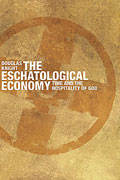
Last night a group of us (the others are Protestant pastors and I am an Orthodox priest) here in Des Moines, Iowa, decided to read your book - The Eschatological Economy - as a group. It fits with some other things we have been reading, and they are as interested as I am in what you have to say about Metropolitan John (Zizioulas). Indeed, his Being as Communion may be our next book. I am eager to read your forthcoming work on his theology.

Are you an Anglican?

If we become perplexed at some point in our reading of your book, I may email you for a clarification!

In the peace of Christ, +Lev

* * * *

Dear Father Lev and friends

I am honoured that you have picked The Eschatological Economy for your reading group. Now I really do wish it was a better book.

I wrote it as I was looking around for a systematic theology that could help us diagnose our present church situation, and to explore what Metropolitan John Zizioulas meant by ‘eschatological ontology’, and to get clearer in my own mind how Christ died and lives for us – so three different motives.

Much theology is written in a panic about our present situation. Theologians seem to be waiting for permission from someone before they say anything too Christian – so they don't seem to be our teachers any more. I think we should give them this permission by praying for them, and writing to them to encourage them to teach us to be disciples. If they do so, the panic will subside and we can start to lay the Christian proposal before the world with a bit more patience and reason.

The life of the Church must be sourced from the whole Christian theological and historical experience, because only the whole deposit of faith makes us the distinct – holy – community of witness, able to communicate this faith and so to be of some use to the world. So The Eschatological Economy reads like a set of demands, made to any theologian who is prepared to receive them, to pass on the whole deposit of faith. I have learned how to make more demands, or pray more prayers, since I wrote it.

I am an Anglican – a ‘catholic evangelical’, I think – with various friends trying to tug me in more Catholic or Orthodox directions. My theology is Reformed and Barthian, but I have learned from TF Torrance and Robert Jenson that we can grow out of the worst of our Western problems if we go back to the Fathers. This is what I have tried to do by making Irenaeus' account of the formation of man the main narrative, and making all the Augustinian fall-and-sin issues subordinate to this. Then comes the Protestant part of my agenda, which is to set out a good account of the atonement by properly relating ideas of representation, substitution and sacrifice, and to make a decision about penal substitution, and that is what is going on in chapters 3 & 4.

Of course I would like to hear your reactions to The Eschatological Economy, but there are probably other people who would like to know what you make of it too, so I would be especially grateful if you would also copy your questions and reactions into the comment box on the book’s Amazon page, or the DK blog. Then I will not be the only one to be grateful to you.

Best wishes Douglas Knight
Reno grades theology graduate schools

At the top of my list is Duke. Richard Hays and Ellen Davis are leading a strong cohort of biblical scholars toward the recovery of a theological voice in biblical interpretation. Add to that the creative mind of Stanley Hauerwas, the rigorous mind of Reinhard Huetter, the learned mind of Geoffrey Wainwright, and the outspoken voice of David Steinmetz, as well as some excellent younger faculty (Amy Laura Hall, Warren Smith, Steve Chapman, and others), and you have a program firing on all cylinders. Three cheers for the Dean, Gregory Jones. He has done wonders in bucking the trends toward the banality and post-Christian distraction that afflict other mainline institutions. It isnâ??t perfect, but itâ??s as good as we have now in the United States.

In the No. 2 spot, I put Notre Dameâ??s Department of Theology. Itâ??s not firing on all cylinders. The biblical scholars pretty much follow the tired old distinction between â??what it meant for themâ?? and â??what it means for us.â?? This guarantees their marginal relevance to the study of theology. Most of the systematic theologians are still living in the 1970s and 1980s. But this is a huge department with some great people. Notre Dame is the best place to study the Church Fathers (Brian Daley, John Cavadini, Robin Darling Young). Gary Anderson and Cyril Oâ??Regan are first-rate Christian intellectuals capable of inspiring a wide range of doctoral students toward genuine vocations in theology rather than careers of expertise. Jean Porter and Jennifer Herdt have creative things to say in moral theology. Itâ??s a strong program, and it is getting better every year.

* * * *

Ephraim Radnerâ??s extraordinary book The End of the Church is the most creative, erudite, and important book of historical theology since Henri de Lubacâ??s Surnaturel. David Hartâ??s The Beauty of the Infinite is a bold (and to my mind brilliantly successful) theological campaign that carries the fight for truth into the deepest reaches of our sad, failing, postmodern academic culture.

These two remarkable theological minds are not just in less-than-ideal places for an aspiring, adventuresome graduate student interested in serious theology in the service of the Church, as is the case with Marshall. Radner and Hart are totally inaccessible. Radner is a parish priest in an Episcopal church in Pueblo, Colorado. Hart has a temporary, one-year appointment at Providence College. For all intents and purposes, both have been excluded from academia. It is a sign of the times. The United States, a wealthy country with vibrant churches, has only two graduate programs in theology that get even a relatively strong thumbs up.

R. R. Reno at First Things

Reno's is an apocalyptically short list. But, even taking into account the relative sizes of the US and UK, the UK list would be shorter still. Since Reno is asking about theology faculties as a team, with a team ethos, it is a very good question whether we could come up with a list for the UK at all. So I will be trying to bring to your attention whatever good work I can find in the UK, and, more of a challenge, in London.

And on a related subject see Jason Byassee's Going Catholic: Six journeys to Rome (the six include Reinhard Hütter, Bruce Marshall, Russell Reno and our very own Douglas Farrow).

The checklist as gracious act

It is a rule of this blog that stating the blooming obvious is a valuable public service. It is a very useful thing to put the basics in writing. And this is just what Theological Education for the Anglican Communion (TEAC) has been doing. It has just published a set of outlines of what Christians - and Christian leaders, clergy and bishops – can expect, what help they can ask for, and what is expected of them.

It is much easier to point out what is missing if we have a written account of what we can expect in the first place. Then we can ask whether the proper expectations of Christians, set out in these public documents, are being met.

Let us use the non-Christian language of rights and talk like consumers for a moment. It is the right of Christians to be taught. Those who are not being taught are being short-changed – robbed, even. If Christians have their 'rights' written down, perhaps displayed prominently at the back of church, they can complain to the management when too much of the listed service is not made available. If they do not get satisfaction there they can ask to have their case referred to some Church ombudsman, or bishop.

We have inspection of every public institution and monitoring of public satisfaction of every other aspect of life. Our schools and universities are inspected and their reports published on the internet. How about the same in the Church of England? Then with our simple TEAC check-list we can ask: Is catechesis taking place ?

Are all being:

‘taught key Bible stories: Creation, the Patriarchs, Moses and the Law, key players in Israel’s story; the life and teachings of Jesus; key incidents from Acts, and other New Testament writings’

YES or NO?

Are all

‘encouraged and helped to explore further basic Christian doctrines at an appropriate level (eg. Apostles’ Creed, Commandments and Lord’s Prayer)’

YES or NO?

Are all

‘helped by consistent preaching, teaching and reflection to interpret the Scriptures with relevance, and to listen for the word with faithfulness and a thirst for learning’

YES or NO?

All right, that is enough worldliness now. The point is that documents such as these produced by ‘Theological Education for the Anglican Communion’ provide a very handy charter or covenant. The next step is to make these documents well known in churches, and hope that they are welcomed as an aid to honest talk, and so as good for us all. Can we have such documents introduced in bishop’s letters, read from every pulpit, and displayed at the back of every church please?

Pelikan - Continuity and Creativity 2

It is into that ongoing life and history that we were baptized, and into its preservation, transmission, and communication that you, as priests of the Church, are to be sent. Your priestly ministry will be the daily re-enactment of the story of salvation, the daily repossession of the heritage. It will become a truly creative re-enactment and repossession not by cutting itself off from dogma and liturgy and discipline, but by having the courage to assert what the faith means as well as what it has meant. Those of us who have had the privilege of growing up in immigrant communities know the problems, but also the gratifications, of being bilingual: sometimes it is language A that best expresses what we want to say, and at other times it is language B, but one of our tasks was always to foster communication between those who, unlike ourselves, were so unfortunate as to be able to speak only one language. The priesthood of the Church is, in a sense, called to be bilingual, speaking the language of the tradition and maintaining continuity with it, but then creatively bridging the gap of communication with those who speak only "modernese." This is a risky enterprise. It is much easier to live in the past or, on the other hand to capitulate to modernity and, as the saying goes, to "let bygones be bygones."

It is to neither of these that we have been called, but to discipleship and to faithfulness and to continuity with the faithful disciples of the Church in all ages. Grounded in that continuity and making that tradition our own, we are set free to speak and to work as those who, through the Incarnation, have been privileged to share in the very nature of God the Creator and in His freedom.

The charter of this continuity and of this creativity is the summons and the promise of Our Lord Himself: If ye continue in my word, then are ye my disciples indeed, and ye shall know the truth, and the truth shall make you free" (John 8:31.32).

Jaroslav Pelikan Continuity and Creativity

Non-theological non-political ethics

wadham

Your correspondent is just back just back from the Society for the Study of Christian Ethics annual conference in Oxford. This is usually a sleepy English affair, but this year the SSCE held a joint conference with the Europe-wide Societas Ethica on 'Political Ethics and International Order'.

But, oh dear, what happened to Christian ethics, Christian theological ethics? I heard studies on international affairs, and calls for more studies of international affairs.

But what we want is surely not more studies in the sense of more information, for there is already a vast mud-slide of scholarship from the international relations departments of universities. We want to learn how to judge all this scholarship of international political relations, don't we? We want to learn our own (Christian) tradition well enough to be able to comment intelligently – theologically – on all this information, so we can offer more than a crock of platitudes on international political affairs.

Christian ethics seems to me to be a great righteous clucking that occurs whenever nice people get together to be enraged because other people are not nice.

What can save Christian ethics from Pelagianism is gratitude to God, expressed in worship of God (theology as doxology) and discussion of the cost to the Christian community of saying, and in its own community life showing, what is the cost of the peace and justice we commend, nationally and internationally.

So I was hoping to learn something about the distinctive voice of the Christian community and its witness to the great geo-political circus, by pointing towards an alternative, counter-cultural, way of life. I wanted to hear a little about the cost of this witness, because this witness is not always popular, and some times and places it is even opposed. I think the best way to talk about international politics is to talk about how churches exchange information and practices across continents and cultures. By this exchange the churches, and their discourse on justice and forgiveness, sustain and support the rule of law, pioneering the way for other international institutions, legal frameworks, courts of justice and commissions of peace and reconciliation. In this way churches support any institution anywhere (not just states) which wants to provide justice and security for their citizens.

Christians can point out the social and environmental costs of fossil fuel industries in places where the state is too weak to protect its own citizens from the multinationals intent on serving my demand for cheap fuel. They can point out where a severe labour discipline imposed by some regimes on their workers in order to satisfy my demand for cheap goods. They can even drawn attention to the violence that some states mete out on those Christian leaders that become too articulate on such subjects. And they can remember those Christian leaders in their prayer and vigils. They can point out the temptations for states (and not only other people's states) to become kleptocracies, robber-gangs (I was listening to Michael Northcott and Luke Bretherton at this point. You see, I do pay attention).

I wanted to hear how the Christian community can explain to our (Western) societies how to receive the challenge and rebuke of international legal bodies. Are we are aiding the illegal detention of suspects without trial, the import of war material into conflict zones, supporting Israel’s occupation of territory that is not its own, in defiance of UN resolutions? (I wish the Church in the UK was more in touch with the Church in the Middle East – Lebanon, Iraq, and Israel-Palestine. I have been meaning to find links from this blog to churches in Lebanon.) You see, I don't want to hear about what other people should do, without learning the cost to ourselves of our political-ethical prescriptions, and understanding that the Christians bear these costs gladly - because they know that they are really borne by their Lord. That is how Christian politics begins.

Bonhoeffer got a regular mention, but there was no interaction with the very considerable Catholic and Papal contribution to thinking on international relations, all of it very accessible and better than any of the papers I heard at this conference.

But the company was good and Oxford, in the sunshine, is still beguiling…

Teaching Christians - TEAC takes the initiative

Anglican compass rose

Theological Education for the Anglican Communion (TEAC) has just published a set of outlines of training in Christian life. Each outline lists the Christian competencies we can hope to learn and the teaching in discipleship that will promote these competencies.

The outline for the ‘laity’ distinguishes four categories of Christian:

candidates in baptismal catechesis (and Godparents or sponsors)

those recently baptized – and in post-baptismal nurture

adult Christians – for growth in faith

Anglican Christians – for renewal and mature life

Then it distinguishes five areas of the Christian life: commitment, discipleship and mission, biblical knowledge and doctrinal understanding, spiritual growth, worship. The following competencies are (mostly) from the ‘adult Christian’ column:

* All should understand that Christian commitment may be costly in terms of a person’s integrity, relationships and witness.

* All should be aware that Christian commitment may involve going against what others perceive to be the truth.

* All should know that commitment to Christ is sacrificial, life-long and lived out in daily life.

* All should be prepared for commitment of life in obedience to God’s will, and be open to accepting new revelation which may require changes in that commitment.

* All are taught key Bible stories: Creation, the Patriarchs, Moses and the Law, key players in Israel’s story; the life and teachings of Jesus; key incidents from Acts, and other New Testament writings.

* All are encouraged and helped to explore further basic Christian doctrines at an appropriate level (eg. Apostles’ Creed, Commandments and Lord’s Prayer).

* All should be encouraged and helped to develop a rule of life which includes a sustainable pattern of praying and listening to God daily; and also to learn to pray through reading the Bible.

* All seek to grow into the likeness of Christ

* All should be formed in a pattern of regular worship, self-examination and participation in the sacraments of the church.

THEOLOGICAL EDUCATION FOR THE ANGLICAN COMMUNION - LAITY ‘TARGET GROUP’

It seems to me the best reply to this is:

Amen. Lord, have mercy upon us and incline our hearts to keep this law. Well done, TEAC working party, that is not a bad little start.

Maximus: The physical creation is the garment of the Word

According to Maximus it was not, properly speaking, Christ who was transfigured when he was seen in glory; it was the disciples, who were momentarily enabled to see him as he truly is. "They passed over from flesh to spirit before they had put aside this fleshly life, by the change in their powers of sense that the Spirit worked in them, lifting the veils of the passions from the intellectual activity that was in them." Again it is the passions that must be overcome before true vision can occur-though in this case "the veils of the passions" are removed momentarily by a miraculous intervention of the Spirit. Of the many layers of meaning in the vision itself, the one that concerns us here relates to the garments of Christ. Maximus finds in these a symbol "of creation itself, which a base presumption regards in a limited way as delivered to the deceiving senses alone, but which can be understood, through the wise variety of the various forms that it contains, on the analogy of a garment, to be the worthy power of the generative Word who wears it." The physical creation is the garment of the Word, from which the Word itself shines forth to those who are able to see.

I hope it will be clear from these two passages that the Greek Fathers' view of nature is very different from our own. We tend to think of nature as an autonomous system that can be understood largely in its own terms. It may need grace to complete or fulfill it, as Aquinas taught; nonetheless, as the very notion of "completion" shows, the starting point is nature. That is why Aquinas begins the Summa by discussing at length what can be known of God based on natural reason.

The view of Maximus is different. He does not think of nature as an autonomous system; it is more like a bush burning with divine fire, or a garment worn by God and shining with uncreated light. Another metaphor Maximus offers makes his view clearer. He says that physical things are to God as printed words are to their meanings. To study the physical world as an autonomous system would make as much sense as scrutinizing the marks on a piece of paper as if they were mere physical objects. The marks are not there to be studied in their own right, but to be read through, as it were, so as to discern the meaning behind them. If they seem to make no sense, then the solution is not to scrutinize them more and more closely; it is to learn the language in which they are written. The way one "learns the language," however, is not by intellectual effort. It is by purifying oneself from the passions through ascetic struggle and obedience to the divine commandments.

David Bradshaw Christianity East and West: Some Philosophical Differences

Pelikan - Continuity and Creativity

For what we have received as a heritage from our Fathers, we must earn if we are really to possess it. Each generation of the Church has had to learn this lesson anew. Continuity is not the same as archaism, and over and over the Church has reacted to the challenges of heresy and unbelief by stating its historic faith and restating it, and, as Maximus Confessor says, "giving it an exegesis and working out its implications" (PG 91:260). It, in response to Christological heresy or to attacks upon the holy icons, it was appropriate for the Fathers to recite the Nicene Creed with an extended paraphrase that spoke to these false teachings, then it remains appropriate for us also to locate ourselves within the continuity of the faith of our Fathers and, in the name of that continuity, to speak the Word of God to the world of today. For what a world intoxicated with each fleeting moment needs to sober it up is the message of the apostolic faith, but we are not simply pipes and conduits through which that message passes, but living, responsive, and, yes, creative participants in its ongoing life and history.

Jaroslav Pelikan Continuity and Creativity with thanks to Matthew Baker

Truth in its wholeness

The doctrine of the life shared in Christ is brought into relation to the doctrine of the Body of Christ. The life shared is embodied. The Church is related to Christ as his mystical complement in the one organism of the new creation.

Today men desire the integration of life upon a new basis. But the rival solutions offered cancel one another out; for none of them represents the whole which corresponds to human nature as God individualism it. More serious, however, is the fact that this situation is the counterpart of disunity amongst Christians and is closely connected with that disunity. Moreover our present dilemma is one which would seem to involve us in a vicious circle. Truth in its wholeness can be rightly apprehended only within a common order of life…the principle signifies that the broken mirror of Christendom cannot without grave distortion reflect the glory of God in the face of Jesus Christ.

L. S. Thornton The Common Life in the Body of Christ (1941)

Witnesses

You can’t make sense of Christian ethics apart from Christian life. You can’t make sense of Christian 'principles' apart from the Christian community or apart from the practicalities that are the outworking of the love that holds that community together and makes it a public body that witnesses to God.

The discipline laid on Christians is not meant for other people. You may have heard the Christians talking about how to lead the Christian life, but that was meant for them to hear, not for you – unless you want to become one of them.

Christian ethics is not a sub-division of ethics: its first loyalty is to the whole Christian faith, life and people. The Christian ethic serves the unity and integrity of the Christian people. The Christian people are witnesses of God for the world. They are God’s first bystanders, to fill in all those who will become bystanders in the future on the action that they have missed. They are the community taught the skills of witness to God, and taught by God: ‘witness skills’ are not very different from ‘leadership skills’.

The Christian community is being taught the witness of God in order to lead the world out of its own self-preoccupation and to point towards the preoccupation of God with, and love of God for, the world. They are made demonstrators of the love and service of God to man. They are on display to the world, their job to be embarrassed and humiliated publicly before the world by their Lord, as an illustration of his compassionate condescension. They are something special, even unique. Of course much of the time the special thing is that they are misrepresenting God, a picture of the misery of man without God. But they are also the demonstration of the readiness of God to hear that man.

Sacrifice in the Old Testament 2

In The Eschatological Economy I argued that the community of Israel brings animals to the temple for their God to inspect and pronounce good (or not), and thus publicly to assess and agree on the progress of this sanctification. It is not that animals are made holy, but that the whole people is being made holy. Its animal gifts are shown as samples for the public inspection of the progress towards this promised transformation. So then it is this transformation, which makes sense of this public demonstration-and-inspection process. God is forming and teaching his people. Within this process God insists that his people report back to him at intervals with demonstrations of their progress, by bringing him samples of their husbandry.

Israel's action – sacrifice – is also a public parody and demythologisation of the nations. Israel is demonstrating to other nations that their worship is all about propitiation and killing because their gods are needy and tyrannical, and thus not gods at all.

You can find out more about The Eschatological Economy at Amazon.com or at Amazon.co.uk or at Eerdmans

Liturgy is an action of the whole Christ 2

1144 ‘In the celebration of the sacraments it is thus the whole assembly that is leitourgos, each according to his function, but in the ‘unity of the Spirit’ who acts in all.

1154 The liturgy of the Word is an integral part of the sacramental celebrations.

1155 The liturgical word and action are inseparable both insofar as they are signs, and instruction insofar as they accomplish what they signify.

1187 The Liturgy is the work of the whole Christ, head and body. our high priest celebrates it unceasingly in the heavenly liturgy, with the Mother of God, the apostles, all the saints and the multitude of so who have already entered the kingdom.

1188 In a liturgical celebration the whole assume is ‘leitourgois’ each member according to his own function. The baptismal priesthood is that of the whole Body of Christ. but some of the faithful are ordained through the sacrament of Holy Orders to represent Christ as head of the Body.

1195 By keeping the memorials of the saints – first of all the holy Mother of God, then the apostles, the martyrs and other saints – on fixed days of the liturgical year, the Church on earth shows that she is united with the liturgy of heaven. She gives glory to Christ for having accomplished his salvation in his glorified members; their example encourages her on her way to the Father.

1196 The faithful who celebrate the Liturgy of the Hours are united to Christ our high priest, by the prayer of the psalms, meditation on the Word of God, and canticles and blessings, in order to be joined with his unceasing and universal prayer that gives glory to the Father and implores the gift of the Holy Spirit on the whole world.

The Catechism of the Catholic Church - Part Two, Section One, Chapter Two online at the Vatican and at Amazon

Keep The Catechism close to hand. All theological discussion improves when it refers explicitly to the documents produced by Church bodies. We can all learn from this document. We can use in discussions with Roman Catholics and it will enable us to make our disagreement with some of their positions clearer. To give the whole Church a document as strong as this is a truly charitable act.

O'Donovan The Failure of the Liberal Paradigm 3

A series of conflicts over sectional emancipations and inclusions [meant that] there were some very good stories of emancipation to be told, testimonies to the liberating implications of the Gospel and the pastoral involvement of the church, the enormously influential struggle for civil rights in the USA, for instance, and the Latin American base ecclesial communities that gave new energy to Catholic witness in the face of poverty and economic injustice. These threw a lifeline to a floundering liberal imagination, offering a matrix by which the present could be presented as standing in perpetual judgment on the past, allowing the Western hegemonic tradition of modernity to re-brand its anti-conservative appeal.

In grasping the lifeline, however, Western liberalism paid its price. From that point on, it became identified with one kind of moral cause to the exclusion of others. It became a church-party proper, a specific agenda to pit against other agendas.

The whole storehouse of what gay Christians have felt and thought about their lives should become a matter of wider reflection, reflected on by those who are called to live this experience, by those who are called to accompany them in their living, by all who share their understanding of living as something they owe an account of to God.

The St Andrews Day Statement addressed questions quite specifically to gay Christians, not to liberals, and about the essentials of Christian faith. Its authors thought there was an exploration to be had, which, if undertaken in good faith, might yield a common discussion over what it could mean to be both homosexual and Christian. …Is the gay Christian movement still attached to the wheels of the liberal chariot, content with the victim-mentality that the liberal programme prescribes for it? Or can it present itself as the bearer of an experience of the human that is, at the very least, of irreplaceable importance for our understanding of our own times?

Oliver O'Donovan The Failure of the Liberal Paradigm

Metropolitan John

Douglas Knight John Zizoulas Alan Brown

Alan Brown (right) and I met Metropolitan John Zizioulas in London at Heythrop last Friday. It was wonderful to see the Metropolitan again. We have both got older, but I was more polite about this than he was. We talked about Rome and Constantinople, and then relieved to get off these vexed questions, we talked about books.

Apparently Archbishop Rowan Williams has written an embarrassingly fulsome preface to the Metropolitan’s book Otherness and Communion. The Metropolitan wishes he hadn’t been rushed into this book, though I suspect the rest of us think that the twenty-two years between 1985 and 2007 is a decent enough interval and doesn't look like a rush into print. Its publishers T&T Clark have been hoping to launch this book at the AAR in November, but the Metropolitan has other things on then.

We talked about Aristotle Papanikolaou’s new book Being with God, which is a wonderful comparison of the theology of Vladimir Lossky and John Zizioulas, the two giants of twentieth century Orthodox theology. Papanikolaou is scrupulously fair, but Zizioulas clearly has the best of it, though Papanikolaou suggests that Zizioulas himself has been too severe on Lossky. It is thorough, meticulous, and works well as an introduction to Orthodox theology, and since it very ably discusses some major issues of systematic theology, it is a gift to the Church as a whole. I have been meaning to review this, but now Liviu Barbu has borrowed my copy – but then that is a commendation.

The Metropolitan told us a bit about his three writing projects. The first of them is on his favourite theme of ecology and man as priest of creation. Secondly, he wants to continue to develop his work on an eschatological ontology, and finally there is his Dogmatics. The Metropolitan gave his Dogmatics lecture notes to the people of the Orthodox Outlet for Dogmatic Enquiries, who have been working hard to make these lectures available on the internet, and we must be very grateful to them, in particular to A.N. who has been doing the translating. They appear to be half way through this important work, so we hope they persevere.

Then we also talked about The Theology of John Zizioulas: Personhood and the Church, and at the insistence of Liviu, gave him a typescript of book and talked through its individual chapters. The Metropolitan was pleased, and I am relieved, that the book has got to this point at least. I gave him a copy of The Eschatological Economy, and we took some photos (but I am no photographer – sorry) and we all promised to stay more in touch from now on.

In person, there is a gentle but really evangelical authority about Zizioulas. I agree with Liviu that he is one of our contemporary ‘spiritual fathers’. I have always been very lucky in the teachers I have had, I don't know why. Many thanks to Liviu for hosting the meeting.

Douglas Knight, Metropolitan John Zizoulas, Liviu Barbu

Rowan Williams The truth of Christ

I have found these three dicta from our Archbishop in from a speech on Dietrich Bonhoeffer. They are not trite.

1. Christ equips us to say no to those falsehoods which allow us to ignore the places where he is to be found.

2. The Bible is not interested in resolving personal dramas of choice. What matters is that what we say or do or choose points to the truth of Christ.

3. Christ will find us as and when we are ready to be found by him, and not when we are certain that we can make him speak for our party or our programme.

Here are the paragraphs in which they appear:

The temptation is that we borrow Bonhoeffer’s language to give dignity and seriousness to some of our current controversies, when the truth is that it is only in the face of a real anti-church that these matters come fully into focus, when there is an active programme aimed at destroying the Church’s integrity and expelling or silencing those who hold to that integrity. And Bonhoeffer himself warns us about being too ready in advance to spell out what would constitute an anti-church. What is essential is the work that prepares us for discernment: the common life of adoration and confession, the struggle to bring acts and policies to the judgement of Scripture, the freedom, above all, to stand against what actively seeks, inside or outside the Church, to prohibit the proclamation of the Gospel, confident in what God has irrevocably given to the community of faith.

In October 1938, Bonhoeffer addressed a conference of younger pastors associated with the Confessing Church and serving in illegal pastorates; his subject was the question of what obedience to Scripture meant. He warns against using Scripture to demonstrate the rightness of an action or policy, making Scripture serve a programme of our own, a conception of our righteousness. It is not that we can solve the dramatic personal question, ‘What shall I do?’ by a simple appeal to the Bible, so that we are relieved of the burden of human ambiguity and even human sinfulness and error. The Bible, says Bonhoeffer, is not interested in resolving personal dramas of choice. What matters is that what we say or do or choose points to the truth of Christ. In itself it is always going to be in some degree in need of forgiveness; but it is ‘right’ to the extent that it displays the truth of Christ. ‘It is our way to let Jesus Christ find us in this way. Christ is the truth. The sole truth of our way is that we should be found in this truth’ (The Way to Freedom, 176).

As a programme, as a set of solutions, this is not going to be the answer to our divisions and quarrels as churches today. But if this is the language in which we are prepared to think about and pray about our struggles, we shall have learned from Bonhoeffer what above all he has to teach us: Christ equips us to say no to those falsehoods which allow us to ignore the places where he is to be found. Christ can lead us through culture and piety and ecumenism to a place where we must say no to any aspects of them that make falsehoods easier. Christ will find us as and when we are ready to be found by him, and not when we are certain that we can make him speak for our party or our programme, left or right. Inexorably, we are led to that twofold commendation of prayer and justice with which the Prison Letters leave us – a commendation not of abstract spirituality and busy activism, but of immersion in Christ through Scripture and the struggle to act so that God’s act will be visible. It is a legacy that will not easily let us be satisfied with ourselves; which is why it is a gift from Bonhoeffer’s Lord and ours.

Archbishop Rowan Williams Speech at the opening of the International Bonhoeffer Congress, University of Wroclaw, Poland

O'Donovan The Failure of the Liberal Paradigm 2

Liberalism fails to bring a critical practical reason to bear on the present world. In its pursuit of doctrinal reconstruction it treats the moral questions of the age as moral certainties, it views the indeterminate shapes of the present as sharp outlines. It may even imagine that in the present it can find some kind of speculative counterweight to correct a bias in past and transcendent reality. Instead of looking to the world as a frame within which to serve God and neighbour, it looks to it for a demonstration that in the past reality was misunderstood. Thus is crystallised the "modern world", an artificial entity with no existence in real time, achieving its dominion over thought only as we allow the world of action, for which we should have our loins girded ready for adventure, to be permafrosted into a world of pseudo-fact.

The tragic fault of liberal Christianity was to have no critical purchase on moral intuitions comparable to that which it had on doctrinal judgments. Precisely for that reason liberalism proved vulnerable when twentieth-century society began to be riven through with deep moral fissures. In affirming the world, liberal theology condemned itself to shipwreck on the same rocks where a unified modern civilisation broke up.

Oliver O'Donovan The Failure of the Liberal Paradigm

Affluence is not the same as happiness shock

Offer book

In the Oxford University Press Economics catalogue I found Avner Offer's The Challenge of Affluence. His opening sentence: ‘Affluence breeds impatience, and impatience undermines well-being.’ Offer 'critiques' the 'assumption that freedom of choice necessarily maximizes individual and social well-being.' Here is OUP's blurb for the book:

Since the 1940s Americans and Britons have come to enjoy an era of rising material abundance. Yet this has been accompanied by a range of social and personal disorders, including family breakdown, addiction, mental instability, crime, obesity, inequality, economic insecurity, and declining trust.

Avner Offer argues that well-being has lagged behind affluence in these societies, because they present an environment in which consistent choices are difficult to achieve over different time ranges and in which the capacity for personal and social commitment is undermined by the flow of novelty. His approach draws on economics and social science, makes use of the latest cognitive research, and provides a detailed and reasoned critique of modern consumer society, especially the assumption that freedom of choice necessarily maximizes individual and social well-being.

Consistent choices are difficult to achieve, eh? Freedom of choice does not maximise individual and social well-being, eh? The entire conceptual basis of the last two hundred years of this 'science' of economics turns out to be faulty, eh?

Economics is a blessed naivety. It is as though Aquinas and a long tradition of Christian political and ethical thought had never been, as though before utilitarianism and the marginal revolution there was... just nothing at all. Social scientists are people without memory or historical awareness. I thought I would share my amazement with you.

I am so sure that Offer's The Challenge of Affluence is well worth a read that I have put it on my Amazon wish list. (But remember, this is just a wish list, and the self control that keeps my wishes just wishes makes me at least as happy as acquisition of these titles).

ECUSA’s Relationship to the Anglican Communion

The Anglican Communion Institute has done a detailed compare-and-contrast job to analyse whether the resolutions of the General Convention of the Episcopal Church of the United States (ECUSA-TEC) meet the demands of the Windsor Report. Here is the ACI's conclusion:

'It cannot be disputed that many people, especially those on the Special Commission and the General Convention Committee, worked hard to frame a response to Windsor from ECUSA. Many of them aware of the importance of a clear and faithful answer to Windsor’s carefully worded analysis and recommendations. Although the three general resolutions from GC clearly express a desire to be committed to the Communion and to Windsor, the responses to the three specific questions asked of ECUSA (along with the treatment of other resolutions by GC) make clear that such a commitment is being made only on ECUSA’s own terms and these fall significantly short of those sought by the Communion as a whole. Astonishingly, the answers given in the resolutions passed at GC 2006 at no point explicitly refer to any of the specific actions which violated Communion teaching, led to the Lambeth Commission, and were explicitly addressed in the Windsor Report and its requests to ECUSA.

Archbishop Rowan Williams in his recent reflection spoke of the fact that ‘no member Church can make significant decisions unilaterally and still expect this to make no difference to how it is regarded in the fellowship; this would be uncomfortably like saying that every member could redefine the terms of belonging as and when it suited them’. Having undertaken such unilateral action in 2003, GC 2006 appears now to wish to redefine the terms of walking together which the Communion has articulated and commended in the Windsor Report as a remedy for the earlier unilateralism.

Despite the claims and wishful thinking on the part of some, there is therefore only one conclusion that can be drawn: ECUSA has ‘walked apart’, and the Archbishop of Canterbury and the Primates must say so and likely will say so early in 2007, if not before. The Instruments of Communion must also take the consequent actions, however difficult, which will enable those within ECUSA who wish to remain loyal to Windsor , and hence to the Communion, to be recognised as full constituent members of the Communion. In preparation for that response it is important that those bishops and parishes loyal to Windsor clearly declare their allegiance and commit themselves to the disciplines of life together in communion with one another and with Anglicans around the globe.'

The Anglican Communion Institute General Convention, The Windsor Report and ECUSA’s Relationship to the Anglican Communion

What Christianity gave the West

George Weigel on Michael Burleigh Christianity gave the West cosmopolitanism and egalitarianism, for it recognized â??neither Jew nor Greek, neither slave nor freeâ?? as relevant social categories â?? and thus blazed a path beyond tribalism and toward the end of slavery, that ubiquitous human institution. Modern feminism notwithstanding, Christianity also gave the world ... feminism, for St. Paul completed his instruction on Christian egalitarianism by reminding the Galatians that, in Christ Jesus, neither â??male nor femaleâ?? had a superior dignity â?? which, in that context and in much of the world today, means that Christianity is the great liberator of women.

Christianity, as Pope Benedict reminded us recently, gave the West the idea of charity as a personal and social obligation; think of the world of cruelty graphically captured in Gladiator and youâ??ll see the point. Christianity also gave the world a politically viable concept of peace, the peace that St. Augustine first defined in the fifth century as the â??tranquility of order.â??

Christianity taught that rulers were responsible, not to themselves alone (as so many rulers liked to think, then and now), but to transcendent moral norms. Would the concepts of the rule of law, and of rulers responsible to the law, have evolved in the West if, as Professor Burleigh reminds us, â??the redoubtable Ambrose, archbishop of Milan ... [had not] tamed the Emperor Theodosius?â?? Or, to cite the more familiar example, if Gregory VII had not confronted Henry II and forced him to recognize the freedom of the Church â?? a freedom that implies limits on state power? It seems unlikely, not least because these ideas didnâ??t gain currency in the rest of the world until they were brought to the rest of the world by Christians.

Why was this insistence on the Churchâ??s liberty so socially, and ultimately politically, important? Because the freedom of the Church meant that the state (or some other form of concentrated political power) would not occupy every available social space â?? that there would be room in society for other institutions and other loyalties. And that, in turn, made both civil society and the limited, constitutional state possible...

Christianityâ??s contributions to the civilization of the West have been ignored or caricatured as â??divisive, fraudulent, or oppressiveâ?? ... This caricature of a vibrant public Christianity as inherently dangerous for democracy is a caricature in service to the idea that secularism is the only possible â??neutralâ?? ground on which a democratic political community can conduct its life.

George Weigel What Christianity gave the West

O'Donovan The Failure of the Liberal Paradigm

Fulcrum is running the first of a seven-part series by Oliver O'Donovan, which promises to be a substantial diagnosis of the present environment in which the Church must offer its witness.

In this excerpt, O'Donovan describes the stance that theological liberalism takes towards the witness represented by the teaching of the Church:

'For the theological liberal, on the other hand, the substantive content is indeterminate, and what is wrong with conservatism is precisely that it clings to the past, holding back in reserve from the God-destined character of the present cultural moment. At which point the distinctive character of liberal ecclesiology comes into view; for what can hold us back, if not the stubborn antithesis of church and world? The self-validating ethical convictions of modern civilisation are the final criterion for judging all else; they are the very image of God it bears anonymously as its birthright. Resistance to the image of God may come from any source, but most typically it comes from where the antithesis is most upheld, which is to say, the church. All that is institutional and naturally sluggish about the church is a standing problem, a regressive obstacle in the way of its incarnational mission. Ecclesiology begins and ends with the semper reformanda, the casting off of the fossilised deposit of an outworn past.

There certainly has been strength in the programme of reviewing doctrine critically in the light of ethics. Hopeful attention to the present as the theatre of God's action has proved to be an absorbent and reconciling catalyst. Liberal thought in Anglicanism has woven itself in and through other strands of thought, balancing and qualifying angular postures and attitudes and so negotiating institutional Anglicanism's self-effacing way through the world. When the thread was strong, it knit the church together. Why, then, did it snap?

In the interests of finding the modern world God-enchanted, the liberal tradition closed down on the serious deliberation with which Christians ought to weigh their stance of witness in the world. Potentially world-critical questions were suppressed. Liberal moral commitments, though sometimes urged with a passion verging on outright moralism, were not steered from the helm of discursive enquiry, but set adrift on the moral currents of the day.'

Oliber O'Donovan The Failure of the Liberal Paradigm