There are some good new pieces over at Fulcrum, on Blessing by Ephraim Radner, two perceptive pieces by Jordan Hylden****, and more commentary on Archbishop Rowan's latest statement by Bishop Tom Wright. Who would have thought it? Occasionally we Anglicans can be calm, measured, even faithful...
Knight in America
I had a great ten days in the US. It started with the SBL at Boston, bumping into the usual serendity of people – Tom Wright, Neil MacDonald, Doug Campbell, Alan Garrow, Mark Elliott, caught up with Murray Rae, roomed with Luke Tallon and Dan Driver and met some of their talented St Andrews mates. Lots of theological exegesis going on: I was impressed by Edith Humphrey and then by Peter Leithart on typological exegesis of the Book of Ruth. Ephraim Radner was there but gave me the slip.
Then on to Justyn Terry at Trinity Evangelical School for Ministry at Pittsburgh for Thanksgiving. The college was quiet so didn't get to meet local heroes Bill Witt or Leander Harding, but I’m hoping they will invite me back. We went to service for Pittsburgh’s 250 year anniversary at the Cathedral Church with Bishop Bob Duncan, apparently not ‘deposed’ so no unseemly fight between bishops for the throne. From Justyn’s account both sides of the Episcopalian ruck seem to understand the Church as a corporation, with Presiding Bishop as CEO, bishops as the branch managers that can be sacked – so the churches, that is, actual Christians, would then be employees perhaps, or consumers? A properly ‘episcopalian’ church would understand that a bishop is king in his own diocese, his relationship with the people of the church in his city indissoluble, so that any other jurisdiction such as province or national church is not higher but simply honorary. Anyway, a wonderful time with the Terry family, while writing my piece for Princeton
Then Princeton and the new Institute for Theological Inquiry which had set us the task of talking about Covenant and the Human Future. Supper and (Episcopalian) Church with the Jensons. I was crushed to find that Jean Bethke Elshtain had withdrawn: her vast output anticipates most of my proposal. I want to produce my theological economics book along with new stuff, on the long-term political-and-demographic result of the dissolution of marriage, which Allan Carlson of the Howard Center is doing, as is Elshtain. A very mixed but also quite elderly company, Darlene Weaver and Gerald McDermott the exceptions, and one of the rabbis one was certainly impressive, but it is not easy to see what will emerge from this. Saw a lot of Rusty Reno, who was being extra-irenic and refused to reveal the identity of Spengler, my new hero, and on to a Madison symposium chaired by Robert George on Eric Cohen’s In the Shadow of Progress
Why are the wealthiest people in human history the least likely to want children? What kind of civilization will we become if we seek cures for the sick by destroying human embryos?
Also found Ben Myers, who has been working away on the Jenson book after all, I was very relieved to find. All in the US were very relaxed about political and economic developments, but here it feels as though we are about to disappear into the maelstrom, so not at all relaxed, but dithering between continuing the effort to interest London diocese clergy in their faith while working towards a marriage institute, and running away to Scottish island monastery.
Radner to bishops at Lambeth
You must pray, you must reflect, you must listen. You must also act. Let me suggest four central actions you must come to a common mind about. In all these cases I use the term â??mustâ??, not because I am absolutely certain of these matters, but because I believe that God is indeed calling you to act, and this belief is buttressed by the discernment of countless others around the Communion.
1. You must state clearly that the actions of TEC as an official body, and of certain Canadian dioceses, are unacceptable to you as bishops of the Communion. And you must decide, resolutely, that those bishops from these churches who are in agreement to press forward in ways the Communion has now clearly and consistently repudiated no longer partake in your common councils. I am not eager to state this; but I know of no other reasonable course to take at this point. This is not a matter of punishment, or even â??disciplineâ?? in any technical form: it is a matter of common Christian sense. TEC (to use this example) has demonstrated clearly, and with increasing hard-heartedness, that it does not wish to respect the common recommendations and pleas and even hopes of the Communion as a whole.
2. You must call back into your midst those who have stayed away from this Conference, not simply as a sign of continued fellowship, but in order to meet face to face again to resolve and heal the breaches that are widening among you month by month. There is much speaking of the truth, repentance, and reconciliation that needs to be done among you and with them. But it is not right simply that declarations be made or statements offered or private counsel kept in the face of the present estrangements, irregular episcopal acts, and hostile words. There is scandal on every side: confront it and heal it among yourselves, armed with powers of Christâ??s spirit.
Ephraim Radner Open Letter to the Bishops gathering for the Lambeth Conference
Between two thieves
Theological leadership is raised up in due season. We have no comparable tomes such as Jewel’s Defensio Apologia Ecclesiae Anglicanae or Hooker’s Of the Laws of Ecclesiastical Polity, but the Reformed English Church persists because there is no better expression of English identity: it is the Ecclesia Anglorum. If it is ‘crucified between two thieves’ – the Puritans and the papists - it is because it has tasted the unmerited grace of God in Jesus Christ and maintains continuity with the Church of the Middle Ages and the early Fathers. It is catholic and reformed; moderate and reasonable; rigorous yet pastoral. And these are held in tension, in the brokenness of the cross, and there are undoubted frequent imbalances, in the imperfection of our fallenness. The Ecclesia Angliae has endured through numerous threats – the Roman Catholic Church, the Puritans, the Enlightenment and science, and ecumenism. So Cranmer is sure that it can survive feminism and pluralism.
Cranmer Knight is not quite so sure the Church of England can survive but, when in the dark, whistle.
The very special visibility of the Church
For a host of historical and theological reasons Anglicans have routinely overplayed an understanding of visibility which associates it too strictly with ordered externality, and underplayed what that stout ecumenist Karl Barth called the ‘very special visibility’ of the Church. By that, Barth did not intend to deny that the Church of Jesus Christ has concrete, historical form; he simply sought to affirm that the Church has visible form by virtue of the presence and action of Jesus Christ through the Holy Spirit; and he wanted to deny that any contingent historical ordering could guarantee or ensure the essence of the Church, since to say that would be to pass the Church from the hands of its Lord to the hands of its human members. Visibility is thus a spiritual event, describable only by talk of the presence and action of God, and not convertible without residue into forms. Again, this is not a denial of externality, but an attempt to spell out how the Church’s externality is a function of present divine action, of which the externality of the Church is a witness. Hence the principle: ‘The visible attests the invisible’ – ‘invisible’ meaning ‘spiritually visible’, perceptible by faith in the work of God. Perhaps the most crucial bit of dogmatic work which Anglicans need to undertake here is to spell out full, visible unity in such a way that the necessary concrete forms of unity (apostolic confession, common sacraments and ministry, and episcope) can credibly be shown to attest the invisible rather than replace the invisible with contingent structures or order.
John Webster The goals of ecumenism - full visible unity? in Paths to Unity (large PDF) in Synod papers
Archbishops
The Archbishops of Canterbury and York are in Cambridge next week. This should become a roadshow. Thanks to Maggi Dawn.
The long traditions of catholic order
There are difficult and maddeningly slow formal attempts unfolding, yet unfolding nonetheless, within the Anglican Communion as a whole to begin to identify a means of getting through this adjudicatory impasse. It involves a host of synods, including the Lambeth Conference, and a proposed "covenant", among other things. Since no one has offered an agreeable alternative to these unfolding attempts, they remain the primary means, indeed the only means available to all parties in the dispute to move forward. They are, furthermore, in keeping with the long traditions of catholic order and deserve a presumptive respect. Yet because they are both slow, still imperfectly defined, and legally of untested strength, the ultimate usefulness of these unfolding attempts must depend on a host of other Christian realities that - most would agree - actually define the Church of Jesus Christ far more essentially, primarily, and profoundly than do simply the Constitution and Canons of this or that province or diocese (indeed, that latter are, in a Christian sense, legitimate only to the degree that they embody these prior realities). These realities touch upon the gifts and fruit of the Holy Spirit and the powers thereof that permit a clear following of the Lord Jesus Christ's own straightforward calling to specific forms of relational behavior. They touch upon matters of humility, patience, longsuffering, honesty and transparency, self-control, and much more. That is, both the Episcopal Church and the Anglican Communion of which it is still a part and which it has, rightly or wrongly, so disturbed through its executive actions, have been thrown upon a complete dependence upon these gifts and fruit, in a way that must transcend, even while respecting for the sake of the world's order, particular rules and regulations.
Ephraim Radner Discipline and the Bishops in a Time of Confusion and Discernment
Refusal to meet - refusal of the cross
How then should the Lambeth Conference be viewed? It is not a canonical tribunal, but neither is it merely a general consultation. It is a meeting of the chief pastors and teachers of the Communion, seeking an authoritative common voice. It is also a meeting designed to strengthen and deepen the sense of what the episcopal vocation is.
Some reactions to my original invitation have implied that meeting for prayer, mutual spiritual enrichment and development of ministry is somehow a way of avoiding difficult issues. On the contrary: I would insist that only in such a context can we usefully address divisive issues. If, as the opening section of this letter claimed, our difficulties have their root in whether or how far we can recognise the same gospel and ministry in diverse places and policies, we need to engage more not less directly with each other. This is why I have repeatedly said that an invitation to Lambeth does not constitute a certificate of orthodoxy but simply a challenge to pray seriously together and to seek a resolution that will be as widely owned as may be.
And this is also why I have said that the refusal to meet can be a refusal of the cross – and so of the resurrection. We are being asked to see our handling of conflict and potential division as part of our maturing both as pastors and as disciples. I do not think this is either an incidental matter or an evasion of more basic questions.
Covenant communion
Another Anglican forum has just launched
We are a gathering of evangelical and catholic Christians, seeking to renew the center of the Christian tradition in North America and particularly within Anglicanism, acting as a point of balance within the diversity that is Anglicanism in North America. We embrace a historic orthodoxy that is generous in spirit, confident in the contribution evangelical-catholics can make to Anglicanism, and welcoming of the diversity of traditions within North American Christianity.
Daily public prayer
1. Morning and Evening Prayer shall be said or sung in every parish church at least on all Sundays and other principal Feast Days. Each service shall be said or sung distinctly, reverently, and in an audible voice.
2. On all other days the minister of the parish, together with other ministers licensed to serve in the parish, shall make such provision for Morning and Evening Prayer to be said or sung either in the parish church as may best serve to sustain the corporate spiritual life of the parish. Public notice shall be given in the parish, by tolling the bell or other appropriate means, of the time and place where the prayers are to be said or sung.
Canons of the Church of England - B 11 Morning and Evening Prayer in parish Churches
Well-ordered worship - Anglican canons
1. All persons present in the time of divine service shall audibly with the minister make the answers appointed and in due place join in such parts of the service as are appointed to be said or sung by all present.
2. They shall give reverent attention in the time of divine service, give due reverence to the name of the Lord Jesus and stand at the Creed and the reading of the Holy Gospel at the Holy Communion. When the Prayers are read and Psalms and canticles are said or sung, they shall have regard to the rubrics of the service and locally established custom in the matter of posture, whether of standing, kneeling or sitting.
Canons of the Church of England - Divine Service B 9 Of reverence and attention to be used in the time of divine service
Canons, you ask? What are canons? Canons are the rules that enable Christian discipleship and the freedom that results from it. They enable learning, formation, discipline and the mutual service of Christian love. Ask your clergy how the canons enable us to learn mutual love, and whether they are grateful for the good ruling, practices and traditions of the faith they have received. We don't need to make this faith up, you see, because it has been given to us. It is a gift, and as we recognise it for what it is, we also pass this gift on, undefaced.
Transformation
In the Church of Uganda, Anglicanism has been built on three pillars: martyrs, revival, and the historic episcopate. Yet each of these refers back to the Word of God, the ground on which all is built: The faith of the martyrs was maintained by the Word of God, the East African revival brought to the people the Word of God, and the historic ordering of ministry was designed to advance the Word of God.
So let us think about how the Word of God works in the worldwide Anglican Communion. We in the Church of Uganda are convinced that Scripture must be reasserted as the central authority in our communion. The basis of our commitment to Anglicanism is that it provides a wider forum for holding each other accountable to Scripture, which is the seed of faith and the foundation of the Church in Uganda.
The Bible cannot appear to us a cadaver, merely to be dissected, analyzed, and critiqued, as has been the practice of much modern higher biblical criticism. Certainly we engage in biblical scholarship and criticism, but what is important to us is the power of the Word of God precisely as the Word of God - written to bring transformation in our lives, our families, our communities, and our culture. For us, the Bible is "living and active, sharper than a double-edged sword, it penetrates to dividing soul and spirits, joints and marrow, it judges the thoughts and attitudes of the heart" (Heb. 4:12). The transforming effect of the Bible on Ugandans has generated so much conviction and confidence that believers were martyred in the defense of the message of salvation through Jesus Christ that it brought.
Archbishop Henry Orombi What is Anglicanism?
Bishops lead the liturgy
5.1.7 Bishops cannot exercise their responsibility for liturgical leadership effectively without support and advice. We recommend that every diocese should have a Diocesan Liturgical Committee or equivalent group, which should relate directly to the Bishop. Its task is to hold an overview of the liturgical life of the diocese, to offer advice to the Bishop and others on liturgical matters when needed, and to work closely with diocesan CME departments in providing training opportunities for clergy, Readers, and other ministers. It may be asked to help the Bishop in his oversight of Fresh Expressions of church within the diocese (cf. para. 6.5.1 below). It may also be tasked with planning special diocesan services (e.g. for diocesan conferences), but its role is more strategic than tactical. In general, it should seek out good practice, inside and outside the diocese, and help it to be followed more widely. Within the DLC, it may be helpful to have an individual who is identified as the Bishop’s Adviser for Liturgy, or as Diocesan Worship Development Officer.
Transforming Liturgy - report to the General Synod of the Church of England
We must not let our poor beleagured bishops feel that they are on their own, so they must have good advisors and teachers. But equally, something as central to the office of bishop as the liturgy cannot be delegated
An Anglicanism in which every one does what is right in their own eyes
The Communion has grown and developed through the missionary vision and labours of, among others, Evangelical Anglicans in the Church of England. Evangelicals have never understood the Church of England as simply the national church of the English people but part of the worldwide church of Christ sharing in his mission. We should have a vision for a global communion committed to mission and to partnership together in mission with other provinces. The covenant process provides a means of developing structures for such a missional vision. It also offers the hope of being able (in a theologically rich and biblically based form of a covenant) to express biblical and creedal faith and to develop the structures of a distinctive global Anglicanism which is both Catholic and Reformed and which will help us work for the unity among all his disciples for which Christ prayed. Conclusion
There are no solid reasons - either in principle or pragmatically in the current political context - for evangelicals or anyone else to object to Synod making a commitment to positive participation in the covenant process. There are many reasons - theological and political - why evangelicals and others who share our commitments to world mission, to learning from Anglicans around the globe, to safeguarding biblical faith and to facilitating harmony among Anglicans should wish the Church of England wholeheartedly to support the covenant process. Indeed, in terms of our life together as a Communion, the covenant process is - like the Windsor Report in which it originated - now 'the only poker game in town'. If the Communion is to have a future together then the form of this will be discerned in and through this covenant process. For the Church of England to abandon that process through non-participation, or destructive participation, would therefore be for the eye to say to the hand 'I don't need you' and for us as a province to embrace a vision of Anglicanism in which every one does what is right in their own eyes.
Andrew Goddard The Anglican Covenant
The faith of the Church through the ages - Kasper on Windsor
Though we are fundamentally encouraged by the Windsor Report, and note that its recommendations reflect the major insights of our common ecumenical documents, there are two points also found in the ARCIC [Anglican Roman Catholic International Commission] texts which we hope can be more clearly articulated and directly addressed in the ongoing reception and implementation of the Windsor Report.
The first point concerns the textâ??s ecclesiological approach itself. While the Report stresses that Anglican provinces have a responsibility towards each other and towards the maintenance of communion, a communion rooted in the Scriptures, little attention is given to the importance of being in communion with the faith of the Church through the ages. In addressing the exercise of authority in the Church, â??The Gift of Authorityâ?? speaks not only of the necessity of a synchronic communion of churches but also of a diachronic consensus; in fundamental matters of faith and discipline, the decisions of a local or regional church must not only foster communion in the present context, but must also be in agreement with the Church of the past, and in a particular way, with the apostolic Church as witnessed in the Scriptures, the early councils and the patristic tradition. While the Windsor Report stresses the catholicity of the Church, we believe that in the discussion that will follow, it might be helpful for the Anglican Communion to place more stress on the Churchâ??s apostolicity. This aspect also has important ecumenical ramifications, since we share a common tradition of one and a half millennia. This common patrimony - what Pope Paul VI and Archbishop Michael Ramsey called our â??ancient common traditionsâ?? - is worth being appealed to and preserved.
Walter Cardinal Kasper Letter to the Archbishop of Canterbury - on the publication of the Windsor Report
Anglican Communion Institute
It is becoming obvious that the leadership of TEC means to move resolutely ahead with its mission of civil rights and inclusion, insisting that these are imperatives of the Gospel of Jesus Christ and a kind of brand name for American Episcopalianism. (We leave to the side whether inclusion or civil rights are being honored or thwarted by this idea.)
In the light of the failure to respond positively to the communiqué of the Primates Meeting, the course being charted is becoming increasingly clear. Apparently the Archbishop of Canterbury is prepared to hear out the leadership of TEC on an alternative plan that will deal with the problems it has created for life in Communion. But the disconnect that will result could be palpable, not least because TEC leadership does not acknowledge that it has created a problem that requires any remedy of the kind an Instrument of Unity has recently urged, with urgency. It views the problem as ‘conservatives’ out of step with the enlightened views it holds. The recent reports of Presiding Bishop Schori’s comments make this very clear indeed. She is to be commended for her candor.
The Archbishop of Canterbury will not be accused of failing to go the extra mile in this terrible mess. It might be suspected that his chief intention is to be sure he has a grasp of the facts at close hand. Proximity will in this case surely be a bracing thing.
It is becoming clear as well that a gift is only of any value if it is given and received both. Archbishop Rowan would be forgiven for being puzzled at the failure of conservative Bishops in TEC both to applaud and embrace the communiqué of Dar es Salaam and receive warmly what has been given. Not to gaze on it from afar or speak of its virtues only, but to unwrap and open and take good care of what has been given.
Efforts to delay or to seek another form of ‘peace’ can only be seen as yet another example of American unilateralism. There is nothing wrong, uncanonical, imperial, or otherwise with the communique’s requests. The requests address with clarity and charity a problem that unilateralists in the Communion have created. There is no evidence that the Primates are seeking fresh alternatives to the communiqué they crafted, and Archbishop Rowan is going the extra mile to take the pulse up close. Sadly, the patient is not only quite ill, but in denial as well.
The Anglican Communion Institute A Visit from the Archbishop
The ACI is alive and well but note the new website URL is anglicancommunioninstitute.com
Struggling for the truth, praying for adversaries in love
In general, I would counsel complete avoidance of litigation â?? in concert with the explicit teaching of the Gospel â?? and instead encourage civil disobedience in cases where Christians choose to oppose the depredations of TEC leadership. But is this even a witness we are called to make? Anglicanism has its own sorry history of intolerance and injustice within its midst â?? we remember the whole-scale driving out of clergy in and after the English Civil War by both sides â?? and these kinds of conflicts among self-styled followers of Christ have long-lasting and scandalizing results. Simply leaving, however, is something that grates, though perhaps primarily against our pride. I recall only several months ago, at the diocesan convention of Colorado, that a diocesan leader (now appointed by the bishop to a Taskforce on our â??common lifeâ??) publicly confronted me and demanded that I â??and my kindâ?? â??leave the church and let [them] get on with ministryâ??; we were nothing but â??dying embersâ?? bringing division and sowing anger within the church. Part of me would like to prove these kinds of affronts simply wrong. Such a motive, however, would be base. There is no point dying with the church, unless one is ready to struggle for the truth. But there is no point struggling for the truth if the struggle leaves one bitter and hostile, aimed against adversaries instead of praying for them in love. If one is not called to the radiancy of joyful sacrifice, it is better to leave. And hope is radiant and ready.
In the end, however, I would urge our continued hope that the larger Communion â?? and not simply this or that individual leader or group, whose own discernment is often rather limited â?? will offer the kind of encouraging and supportive direction we seek, indeed that they shall in fact come forward with a Pastoral Council capable of meeting the needs of Anglican witness within the United States such as the Communiqué recommended. This would require the kind of corporate vision and courage (not Don Quixote individualism) on the part of â??Camp Allen Principledâ?? bishops that is necessary for them to step forward, offer their own readiness to work with such a Council, and suffer the consequences of their witness and leadership. We are now in the fullness of time for such a demonstration of hope! And we shall all need to hold steady in seeking this direction and support, and come together with a common sense of its need and usefulness.
Ephraim Radner What Way Ahead?
The consensus of opinion in the national leadership of the (USA) Episcopal Church?
Leander Harding - An Open Letter to Bishops and Deputies who Participated in General Convention 2006 Below are some conclusions I have developed as a result of my observation both by following the official deliberations and through more informal conversations. I wonder if I have heard correctly, and I welcome remarks from bishops and deputies about whether I have an accurate take on the center of opinion in the national leadership of the Episcopal Church. What follows are statements that I believe reflect the consensus of opinion in the national leadership of the Episcopal Church, particularly as reflected in the General Convention that just met in Columbus, Ohio. Do I understand correctly?
As I hear it, you are saying that:
5. The recognition of the source of same-sex desire in the original intention of God for the creation and humanity is a revelation of the Holy Spirit in our time.
6. The General Conventions of 2003 and 2006 are witnesses to this new revelation of the Holy Spirit.
8. Certainty in moral or theological judgments which is based on an authoritative reading of a text, whether that is the text of the Bible or any other part of the dogmatic tradition of the church, is inherently an example of over-reaching.
9. Contemporary reports of personal spiritual experience by same-sex attracted people and their supporters affirming the spiritual blessedness of same-sex relationships provide a basis for moral and theological certainty on this question which the scriptures and the traditional teaching of the church cannot by virtue of the nature of the documents provide.
10. Christians who feel bound by the scriptures should understand that the fact that there are different interpretations of the scriptures which touch on same-sex attraction means that no single interpretation can possibly be authoritative.
11. Since the scriptures cannot possibly be authoritative on this issue and since self-reported spiritual experience provides the only reliable certainty on the subject, any objections to same-sex blessings on the basis of scripture are irrelevant a priori.
16. It is wrong for any other province of the Anglican Communion to interfere with the leading of the Holy Spirit in this province. What the Holy Spirit demands at any particular time must be determined locally.
19. A variety of interpretations of scripture can be tolerated in the church. But the canons of the church, especially with regard to the territorial integrity of Episcopal jurisdiction, allow for no variation in interpretation.
20. The proposal of the Archbishop of Canterbury for a new Anglican covenant, and for churches to choose constituent or associate status in the communion, represents a dire threat to the capacity of the church to respond to the leading of the Holy Spirit. It represents the prospect of a quenching of the Spirit.
21. The General Convention of the Episcopal Church has been uniquely privileged to hear from the Holy Spirit in a way that has been denied to the rest of worldwide Anglicanism, the Roman Catholic Church, the Orthodox churches and Protestant Evangelicalism. The Episcopal Church must at all costs maintain its witness to the unique agency of the Holy Spirit in its midst. Those who oppose the new teaching are enemies of the Holy Spirit who are making an idol of the past at the expense of the future to which God is calling us.
These numbered observations above are my take on what the dominant party in the leadership of the Episcopal Church is saying.
Leander Harding Do I understand what you are saying?
To seek a common mind
Report of the Anglican Covenant Design Group
6 Unity of the Communion (Nehemiah 2.17,18, Mt. 18.15-18, 1 Corinthians 12, 2 Corinthians 4.1-18, 13.5-10, Galatians 6.1-10)
Each Church commits itself:
* in essential matters of common concern, to have regard to the common good of the Communion in the exercise of its autonomy, and to support the work of the Instruments of Communion with the spiritual and material resources available to it.
* to spend time with openness and patience in matters of theological debate and discernment to listen and to study with one another in order to comprehend the will of God. Such study and debate is an essential feature of the life of the Church as its seeks to be led by the Spirit into all truth and to proclaim the Gospel afresh in each generation. Some issues, which are perceived as controversial or new when they arise, may well evoke a deeper understanding of the implications of God's revelation to us; others may prove to be distractions or even obstacles to the faith: all therefore need to be tested by shared discernment in the life of the Church.
* to seek with other members, through the Church's shared councils, a common mind about matters of essential concern, consistent with the Scriptures, common standards of faith, and the canon law of our churches.
* to heed the counsel of our Instruments of Communion in matters which threaten the unity of the Communion and the effectiveness of our mission. While the Instruments of Communion have no juridical or executive authority in our Provinces, we recognise them as those bodies by which our common life in Christ is articulated and sustained, and which therefore carry a moral authority which commands our respect.
* to seek the guidance of the Instruments of Communion, where there are matters in serious dispute among churches that cannot be resolved by mutual admonition and counsel:
* by submitting the matter to the Primates Meeting * if the Primates believe that the matter is not one for which a common mind has been articulated, they will seek it with the other instruments and their councils * finally, on this basis, the Primates will offer guidance and direction.
* We acknowledge that in the most extreme circumstances, where member churches choose not to fulfil the substance of the covenant as understood by the Councils of the Instruments of Communion, we will consider that such churches will have relinquished for themselves the force and meaning of the covenant's purpose, and a process of restoration and renewal will be required to re-establish their covenant relationship with other member churches.
These texts which await further study and reflection - Benedict & Canterbury
COMMON DECLARATION OF POPE BENEDICT XVI AND THE ARCHBISHOP OF CANTERBURY HIS GRACE ROWAN WILLIAMS
Forty years ago, our predecessors, Pope Paul VI and Archbishop Michael Ramsey, met together in this city sanctified by the ministry and the blood of the Apostles Peter and Paul. They began a new journey of reconciliation based on the Gospels and the ancient common traditions. Centuries of estrangement between Anglicans and Catholics were replaced by a new desire for partnership and co-operation, as the real but incomplete communion we share was rediscovered and affirmed. Pope Paul VI and Archbishop Ramsey undertook at that time to establish a dialogue in which matters which had been divisive in the past might be addressed from a fresh perspective with truth and love.
Since that meeting, the Roman Catholic Church and the Anglican Communion have entered into a process of fruitful dialogue, which has been marked by the discovery of significant elements of shared faith and a desire to give expression, through joint prayer, witness and service, to that which we hold in common. Over thirty-five years, the Anglican - Roman Catholic International Commission (ARCIC) has produced a number of important documents which seek to articulate the faith we share. In the ten years since the most recent Common Declaration was signed by the Pope and the Archbishop of Canterbury, the second phase of ARCIC has completed its mandate, with the publication of the documents The Gift of Authority (1999) and Mary: Grace and Hope in Christ (2005). We are grateful to the theologians who have prayed and worked together in the preparation of these texts, which await further study and reflection.
True ecumenism goes beyond theological dialogue; it touches our spiritual lives and our common witness. As our dialogue has developed, many Catholics and Anglicans have found in each other a love for Christ which invites us into practical co-operation and service. This fellowship in the service of Christ, experienced by many of our communities around the world, adds a further impetus to our relationship. The International Anglican - Roman Catholic Commission for Unity and Mission (IARCCUM) has been engaged in an exploration of the appropriate ways in which our shared mission to proclaim new life in Christ to the world can be advanced and nurtured. Their report, which sets out both a summary of the central conclusions of ARCIC and makes proposals for growing together in mission and witness, has recently been completed and submitted for review to the Anglican Communion Office and the Pontifical Council for Promoting Christian Unity, and we express our gratitude for their work.
Common Declaration of Pope Benedict XVI and the Archbishop of Canterbury His Grace Rowan Williams
The Church is necessary for the sake of the gospel
If Anglican evangelicals take the path forged by so many Dissenters before them, not least among them John and Charles Wesley, it will eventually result only in the endless multiplication of denominational factions, just like the Baptists, Congregationalists, and Methodists—not to mention the Plymouth Brethren and the Independents—of centuries past. The Reformation logic of faction leads only to more faction, and as the dismal present status of various denominational entities attests, it does not even necessarily lead to orthodox Christianity. An evangelical exodus would also almost assuredly tip the numerical balance among those who remain with Canterbury to theological liberalism, thus dooming those Christians for whom catholic church order is essential to a sorry fate.
The present hope is that Anglican evangelicals will realize that not only is the gospel necessary for the sake of the Church, but also that the Church is necessary for the sake of the gospel. Historically, evangelicals have not troubled themselves very much with ecclesiology, assuming that the teaching of Scripture is plain, and that the Church is essentially a group of like-minded Christians who band together in fellowship to share the gospel. Unfortunately, the problem with this has always been that people think that Scripture plainly supports all kinds of things, thus leading to a never-ending plethora of denominations. Christ’s body on earth is therefore increasingly fractured and broken, Christian witness is damaged, and our Lord’s prayer that we all may be one recedes ever further into the past.
It is here where the wisdom of the third Anglican group, the catholics, absolutely must be heard this week in Tanzania. These Anglicans, represented best by Rowan Williams and the American theologian Ephraim Radner, believe just as strongly as the evangelicals in the bedrock truths of Christianity, but also think that the Church itself is an essential part of God’s plan for us to discern truth. Being Reformation Christians, Anglican catholics know that sometimes the Church can be wrong, thus needing always to test herself by the standard of Scripture. But they point out that while Scripture itself may be clear, we Christians are sinful and perverse, so that we stand in need of the whole body of Christ to discover God’s will for his Church.
The hope of Anglican catholics, then, for today’s meeting is that Anglicans of all stripes will commit to live in unity under the authority of Scripture, prayerfully seeking the mind of Christ together as the body of Christ. While firmly supporting disciplinary action against the Episcopal Church, Anglican catholics hope to do so within the proper bounds of life together in ecclesial communion. One may hope that Anglican evangelicals will realize that the Gospel is served best in no other way.
Jordan Hylden Anglican Storm Clouds
Toward an Anglican Theology in the Spirit of Windsor
I am in the wrong London. It is all happening in London, Ontario, today at Huron University College
Faith Seeking Understanding: The Windsor Report, the St. Michael Report, and the Challenge Ahead
Much has been said and written about the conflicts that have arisen over the past decade in the Anglican Communion and the Anglican Church of Canada. This two-day conference for Canadian Anglicans about Anglicanism in Canada will provide an opportunity for clergy and laity to learn, discuss and understand the reality and rhetoric of the recent public documents such as "The Windsor Report" and Canada's own "St. Michael's Report," as well as to discuss such related larger issues as the use of scripture, the theological dimension of human sexuality, and the nature of authority in the Church. As the intent is understanding and not advocacy, the conference will close with a Eucharistic gathering.
Some great papers are promised:
Timothy Connor & George Sumner Toward an Anglican Theology in the Spirit of Windsor
Gary D. Badcock What is a Communion, Anyway?
and in particular
Darren C. Marks Overcoming the New Gnosticism: Re-founding Theological Anthropology
Over the course of modernity embodiment has become a major theme of theology and as such has introduced a theological anthropology that is at variance with its origin in Christology or Christ as the pneumatic human. As a result of this morphing of theological anthropology, sexuality, as echoed in the work of Foucault, has become a dominant dialogue partner in identity let alone theological anthropology by assuming nature as antithetical to spirit. This, I argue, introduces a host of issues that are centripetal to the hope of dialogue with a Christian culture in the Global South that has not undergone this morphing of [sexuality] identity and embodiment. Instead, a re-founding of theological anthropology in Christology, and specifically in the concept that God only knows the human person as sinner (Bonhoeffer), might provide a way forward that proves acceptable to both Western and Global minds, or at least provide a place from which a theological anthropology can initiate a dialogue. Finally, and tethering to the St Michael Report, I suggest that just such a theological assumption resolves the centripetal forces in the document’s conclusions and mixed message on the nature of adiaphora and core doctrine.
Is this the Darren Marks of 'The Windsor Report: A Theological Commentary' (Journal of Anglican Studies Vol 4.2 pp157-76)? It is 'a profound piece of writing influenced greatly by John Webster' according to my informant. Now I am really am interested - John Webster is one of the UK's finest - Anglican of course, but I hadn't noticed a lot of ecclesiology from him yet. Please rush me a copy.
Ecumenical failures of the Reformation - Witt
My own theory is that Modernism is divine judgment on Western Christendom for the ecumenical failures of the Reformation. Because both Rome and the Churches of the Reformation were unable to recognize the face of Christ in each other, including even Reformation churches who refused to recognize that face in each other, the divine judgment is that those churches are becoming ones in which the face of Christ is no longer able to be recognized at all.
But in that case, the last thing confessing Christians in all the churches need is once again to draw lines in the sand against one another, to refuse to recognize Christ's face in those who affirm the same Scriptures and confess the same Creeds. I can only regard the voices of those who ask me to leave Anglicanism for either Rome or Orthodoxy or some other Reformation Church as asking me to deny that the face of Christ can be seen in this Church.
I believe that a sorting out is taking place—that in fact a separation must and will take place between those in the Churches who continue to affirm historic Christian faith, and those who have exchanged Christ for the world's pottage. The struggle is against apostasy and heresy, and it is both. Those who offer the safety of Rome or Orthodoxy are right about that. But in that struggle, I think it important that those who continue to confess Christ in each Church in which the divine judgment strikes, stand firm and resist the apostasy together. We stand our ground, shoulder to shoulder, where Christ has placed us in the battle.
And, of course, one of the things that Anglicanism shares with both Roman Catholicism and Orthodoxy is that, unlike many Reformation Churches, we do not stand alone, but are part of an international Communion, a Communion that has held firm to the faith.
William Witt Why not leave?
Ten theses on the Significance of the Episcopal Office for the Communion of the Church
Thesis Four:
The Bishop has oversight (episcope) of the household of God for the good order of the Church.
Bishops are commissioned and sent to be stewards or overseers of God’s household within their jurisdiction. They call the people of God into the full expression of the diverse gifts and ministries given by the Holy Spirit. They oversee processes of discernment and selection of candidates for holy orders, ensuring they are well prepared for their ministries, supporting them pastorally and practically, and providing for the good order of ministry in the diocese.
Oversight includes sharing of responsibilities among clergy and lay people. This involves mutual accountability, good communication and willingness to learn from one another. This reciprocity between bishop and people is reflected in the decision making processes of synodical life. This pattern of working together is empowering for all and is a gift to be nurtured at all levels of the life of the Church.
The bishop has to ensure the well-being (e.g., spiritual, social, economic) of the diocese in service of its mission. Harnessing resources, fund-raising and financial management of diocesan affairs involves complexities of oversight requiring specialized ministries. Providing episcope in this area highlights the administrative and managerial character of the work of a bishop, somewhat akin to a CEO (Chief Executive Officer) of a large organisation. Bishops ought not to underestimate the distorting effects on their oversight of management models associated with the global market economy. This can lead to a management ethos focussed on strategic plans, goal setting, tasks, competition and successful outcomes. This is appealing because it seems to offer clarity and control but the price is often loss of the personal and relational dimension of ecclesial life. The bishop who manages well is one who is aware of the danger of management becoming the basic lens through which episcope is practised. This issue raises a question of how bishops handle matters across diocesan and provincial boundaries. At these levels even koinonia may become a thing to be ‘managed’ at a distance (i.e., avoiding face-to-face relations) rather than resolutely pursued together with patience.
Inter Anglican Theological and Doctrinal Commission The Anglican Way: The Significance of the Episcopal Office for the Communion of the Church October 2006
The way of charity dictates a willingness to forgo for the sake of the church as a whole
The current debate over the suitability of women bishops is one which finds equally sincere people holding opposing and incompatible views. The minority traditionalist ‘integrity’ knows that it has little chance of persuading the majority, but continues to hope that time will show that it has been right to maintain its stand. Its position is rooted in an understanding of Scripture and tradition which is not eccentric or cantankerous, and may yet succeed in winning over the majority to its views. Certainly there is little sign of its dying out in the course of time, or of its becoming restricted to one group or type of churchmanship. Traditionalism on this issue is widely spread across the church, and is present among women as well as men. If it is wrong, as those who favour the consecration of women as bishops clearly think it is, it should be allowed to die of its own accord (as Jewish Christianity did) and not be expelled from the church by a majoritarian imposition of a form of leadership which the minority cannot accept. This willingness to wait for a consensus to emerge is known in theological parlance as ‘the process of reception’. As long as there are two integrities officially recognised in the Church of England, the process of receiving women’s ordination must be regarded as incomplete, and in those circumstances, the consecration of women bishops can do nothing but divide the church still further. The way forward is unclear, but supporters of women bishops should at least understand that unless and until they can persuade the other integrity of the rightness of their own position, the way of charity dictates a willingness to forgo it for the sake of peace in the church as a whole.
Gerald Bray Bishops, Presbyters and Women
Ten theses on the Significance of the Episcopal Office for the Communion of the Church
Thesis One:
The Bishop serves the koinonia of the gospel into which the baptised are incorporated by God the Holy Spirit
Through the gospel God calls all people into relationship and establishes a covenant of love, mercy and justice. By baptism the people of God become participants in the visible body of Jesus Christ. The bishop is called to serve this new fellowship by actively fostering the koinonia of the Body of Christ. Just as the eucharist is the focal event which connects communities of faith together so the bishop is the focal person who links communities of faith not only to one another but to the wider Church. As a result the bishop has a universal and ecumenical role. This fundamental theological truth challenges all parochial conceptions of the episcopate that fail to transcend ethnic, social, and cultural realities in which the episcopate is, by nature, necessarily embedded.
Bishops of the Anglican Communion have primary responsibility for Anglicans. However, the nature of the episcopal office means that bishops are called to lead the Church towards a deeper koinonia amongst all God’s people, and in so doing represent the wider Christian community to the diocese. This universal and ecumenical ministry belongs to the bishop’s role as a symbol of unity. Yet this symbol is ambiguous because the Church is divided and torn. In this context the bishop is a sign of a broken Church looking to its Lord for healing and hope through the power of the Spirit.
Inter Anglican Theological and Doctrinal Commission The Anglican Way: The Significance of the Episcopal Office for the Communion of the Church
Theological scrutiny in service of the Communion
Anglicans value being part of a world Communion, but successive controversies have made it increasingly unclear what it is that they have in common. The contention of this document is that Anglican ‘communion’ will be maintained and nurtured, not just by preserving existing ecclesiastical structures but through a renewal of the theological tradition which brought the Communion into being.
To speak in this way of ‘renewal’ does not mean just a reinforcement of that tradition. As will be seen as the argument progresses, Anglicanism has developed by way of faithful responses to the gospel by churches facing concrete challenges in particular circumstances. At critical moments in their history they have been inspired to draw resources from their theological and spiritual inheritance which enabled them to address seemingly new situations in new ways. Such moments of renewal were eventually judged to be consistent with the tradition from which it was drawn, and generally won recognition and support from others who shared its patrimony. It is that sort of response which is required by the Anglican Communion at the present point of its history, as it faces circumstances threatening to disrupt its life and call into question the tradition itself....
A covenant, which rehearses the theological tradition from which Anglicanism has developed, and establishes clear commitments for the way it can maintain its cohesiveness, seems the most likely way to secure its communion for the foreseeable future. The one thing that Anglicans cannot permit at this time is for disputants to refuse to allow their opinion to be submitted to theological scrutiny. Those involved in disputes must not only listen to each other, but also attend to the wisdom of the wider Christian community.
The Anglican theological tradition cannot be content with any claim to communion which separates the gospel of Christ from the reality of his Church.
Inter Anglican Theological and Doctrinal Commission Summary Argument from the IATD's 'Communion Study' October 2006
A covenanted community
Everything about being Christian – worship, prayer, mission, fellowship, holiness, works of mercy and justice – is rooted in the basic belief that the one God who made the world has acted in sovereign love to call out a people for himself, a people through whom he is already at work to anticipate his final purpose of reconciling all things to himself, things in heaven and things on earth (Ephesians 1.10). This is what the creator God has done, climactically and decisively, in and through Jesus Christ, and is now implementing through the Holy Spirit. But this notion of God calling a people to be his own, a people through whom he will advance his ultimate purposes for the world, did not begin with Jesus. Jesus himself speaks of the time being fulfilled, and his message and ministry look back, as does the whole of earliest Christianity, to the purposes of God in, through and for his people Israel. The Gospels tell the story of Jesus as the story of how God’s purposes for Israel and the world reach their intended goal. Paul writes of the gospel of Jesus being ‘promised beforehand through God’s prophets in the holy scriptures’, and argues that what has been accomplished in Jesus Christ is what God always had in mind when he called Abraham (Galatians 3; Romans 4). The earliest Christian writers, in their different ways, all bear witness to this belief: that those who follow Jesus, those who trust in his saving death and believe in his resurrection, are carrying forward the purposes for which God called Abraham and his family long before. And those purposes are not for God’s people only: they are for the whole world. God calls a people so that through this people – or, better, through the unique work of Jesus Christ which is put into effect in and through this people in the power of the Spirit – the whole world may be reconciled to its creator.
* * *
A covenant for the Anglican Communion should reflect the memory of Anglican historical traditions and also summarise our present understanding of ‘the Anglican way’. In addition, it should provide a way forward, a way of re-committing to the whole project of an Anglican Communion understood as God’s gift and God’s commandment: a vocation to be realised rather than a fact already achieved. The covenant as a vision for mission both stresses the importance of the work to be done and binds its members to one another for greater effectiveness in accomplishing it.
Most importantly the covenant envisioned for the Anglican Communion is not static. Instead, it is a dynamic process like a marriage covenant. Just as the marriage partnership grows as it is tested by unforeseen circumstances and new situations, so the provinces of the Communion can expect to change and grow in ways they might never have expected. In a marriage, the partners grow together, walking alongside one another into the unknown future. So also in the Church ‘we walk by faith and not by sight’.
Inter Anglican Theological and Doctrinal Commission A theology for the life of a covenanted community
The call to communion springs from the reality of the body of Christ
The question of how, with whom, and to what end the Church makes decisions is not a secondary one; it gets to the core of the Gospel (not the only thing that does this, of course; but still it is an essential). Bp. Wrightâ??s vehemence is understandable, whether well or poorly expressed: he feels as if those with whom he has shared faith and ministry â?? â??my companion, my own familiar friend, with whom we took sweet counselâ?? (Ps. 55:14f.) â?? are now working to undermine the very vows of pastoral oversight to which he was asked to subject himself, and within which he has labored. He is a bishop for the whole church, after all. Something we have tried hard, with little effect, to tell TEC bishops. But that is part of his point: you canâ??t have it both ways, calling people to the accountability of the whole church, and then throwing that wholeness out when it doesnâ??t suit you.
â??Congregationalismâ?? does indeed bother many of us and deeply. There are, after all, real reasons why many of us are not â??free churchâ?? evangelicals; it is a conscious choice, in fact, since most free-church evangelicals are a lot better at hosting bible studies, mission outreach, church growth, and the rest than are evangelical Anglicans, and if those were our priorities before all else, we would certainly be in the wrong place. â??Communion orderâ??, however, is something we believe is biblical, Christ-called, and therefore a primary imperative. It is not something way down the totem pole on the list of â??nice things to do if you have the timeâ??. The call to communion â?? and the disciplines involved, which include the ordering of the Church life in common counsel, honesty, and mutual accountability, rather than simply declaring independence when things get rough â?? springs from the reality of the Body of Christ, and hence it is bound up with the essential doctrines of the Son of God. It is in this light that Paul writes what he does in Philippians 2:1-18, where â??being of the same mind, having the same love, and being in full accord and of one mindâ?? are images of the God who became the servant of those who are weak, disobedient, and dying, that we might exalt him as our Lord, and ourselves, in following His way and being transformed in His Spirit, may act as â??lightsâ?? in a perverse world. The forces pressing Anglicans into congregationalism are ones pressing Anglicans into a contradiction of the Apostleâ??s desire and command, and into a drifting away from Christ Jesus himself. So I believe, at any rate.
It continues to astonish me that so many conservative Anglicans think that their witness is so weak and so unsupported by Godâ??s promises that continued, ordered, and loving efforts at discerning and embodying â??one-mindednessâ?? in Christ with those who are in error, are leading people to hell. I suppose there is no guarantee that such engagement will not do damage; but there is just as good (better to my mind) reason to believe that the whole-scale throwing over of our common commitments to an ordered life in Communion is producing scandals that are ruining the faith of Christâ??s â??little onesâ??. I know of no conservative congregation that has scandalized the faithful by preaching, teaching, and witnessing faithfully, even within the Episcopal Church, or even more certainly, within the Church of England. There are good reasons people might give to leave TEC at this time, to be sure; but they tend either to be based on a firm conviction that Anglicanism itself (and not just TEC) is a failed ecclesial experiment, or on the personal and particular levels at which conflict can be tolerated. I do not consider â??Scriptural faithfulnessâ??, which Wright properly sees to be a wax nose in these kinds of polemics, to be such a reason, since in its substantive sense such faithfulness can be upheld even in the lionâ??s den.
Ephraim Radner - comment to Bishop Tom Wright's 'A Confused Covenant' Titus 1.9
Don't pretend it's Anglican
Bishop Tom Wright responds to 'A Covenant for the Church of England', issued by Paul Perkin and Chris Sugden and others
So to 'action'. This is divided into five areas: mission, appointments, fellowship, money and oversight. I am delighted that this document begins with mission; one of the great gains of the last decade has been to shift the whole church into a mission focus. But the six points made under 'mission' seem scatty and uneven, and turn out not to be about mission as such - indeed, it has nothing creative to say about mission at all, and appears to lack any engagement with the fresh and lively thinking on the subject that has gone on in the last decade or two - but about the politics of a 'mission' which wants to clone certain types of churches at the cost, if necessary, of driving a coach and horses through normal Anglican life. The first point, quoting the 'great commission', is fine so far as it goes, though what sort of renewed force it has in our post-Christian society is not explored. If it had been, quite different things might have emerged. Instead, we are projected at once into what appears to be the real agenda of the whole document: a break away from any normal ecclesial practice and into a free-for-all. This is justified by the claim that 'as is being increasingly recognized [by whom, we might ask?], the historic focus [clergy, buildings, etc]...is now inadequate by itself...etc' - in other words, we can't do what we want in the existing structures so we shall go elsewhere. The third point, which is put in quotation marks though without a reference ('Existing ecclesiastical legal boundaries should be seen as permeable') is not, in this context, a way of saying 'we are working within the framework of Mission-Shaped Church, but is rather, in this context, a way of saying, 'we intend to plant churches wherever we like and claim that they are Anglican'. This becomes clear in the fourth point: 'there cannot be any no-go areas for gospel growth and church planting'. Here, I'm afraid - and this is not a cynical interpretation, but the reflection of a reality I have witnessed - 'gospel growth' means 'the spread of our particular type of church'. The attempt to hook this agenda back into the official parlance of the contemporary church ('we will support mission-shaped expressions of church...') is disingenuous, as becomes clear in the final clause, 'even when official permission is unreasonably withheld.' The report in question was quite clear that mission-shaped church doesn't mean 'churches which do their own thing and cock a snook at any bishop who questions them'. But that, alas, has sometimes been the reality.
But the real shocker is the next section, 'Appointments'. This begins with a breathtaking statement of congregationalism: 'The local congregation is the initial and key seed-bed for recognizing, authorizing, raising up and releasing new leaders.' Recognising, perhaps. Raising up, quite possibly. Authorizing? Not within any recognizable Anglican polity. The authors should read Article 23 once more: 'It is not lawful for any man to take upon him the office of public preaching, or ministering the Sacraments in the congregation, before he be lawfully called, and sent to execute the same. And those we ought to judge lawfully called and sent, which be chosen and called to this work by men who have public authority given unto them in the Congregation, to call and send Ministers into the Lord's vineyard.' The rest of the Articles make it clear that 'Congregation' here cannot mean 'the local church, doing its own thing'. The following sentences (points 2-6) concede that wider recognition and authorization are needed, but say, in effect, 'since we don't trust the church to select, train and ordain, we'll do it ourselves.' Fine, if that's what you want to do; don't pretend it's Anglican, and don't be surprised when Anglicans, including a great many evangelicals, regard you as radically out of line. It is no surprise, reading the seventh point ('If the local Bishop unreasonably withholds authorization, we will pay for, train and commission the ministers that are needed, and seek official Anglican recognition for them'), that the two principal authors of this report were present and supportive at the irregular ordinations - with a bishop from the 'Church of England in South Africa', a body with whom the Church of England is not in communion - which took place in the Southwark diocese a year or so ago. Basically, this section is a way of declaring UDI and must be seen as such. Is that really what the constituency of CEEC and the other relevant bodies want? Have they reflected on the consequences of such a move - not least for those of us who don't live in the affluent parts of the country where 'we will pay for this' is a cheerful, sometimes even arrogant, statement of social status?
Bishop Tom Wright A Confused 'Covenant'
A commitment to truth that entails dialogue with the other
The communion that Anglicans share is a precious gift. The present crisis in the Anglican Communion constitutes an opportunity to re-commit ourselves to one another in renewed obedience to God’s call. A covenant which expressed that commitment would not be something entirely de novo but rather a development of the ‘bonds of affection’ which bind us to one another. In making such a covenant at the present time we would be acknowledging that in specific situations, especially situations of conflict, threat or opportunity, God calls his people to discern his will afresh and to re-commit themselves to him and to one another. There is much we can learn here from the annual Methodist Covenant Service as it has been incorporated into the Church of North India.
In a situation of conflict the discernment of God’s will for his people is not an easy task. It demands fresh study of scripture, the careful presentation of arguments, patient listening to one another and preparedness to wait in uncertainty and hope until a clearer understanding of the truth emerges. All of this will, for God’s people, be grounded in love for one another, trust that we are together committed to seeking God’s way, and hope that the Holy Spirit will indeed lead us into all truth (John 16.13). This need for patience with some person, or with an entire body, that expresses contrary views is expressed very clearly by Augustine, when he says,
Let him, again, who says, when he reads my book, ‘Certainly I understand what is said, but it is not true’, assert, if he pleases, his own opinion, and refute mine if he is able. And if he do this with charity and truth, and take the pains to make it known to me (if I am still alive), I shall then receive the most abundant fruit of this my labour. ... Yet, for my part, 'I meditate in the law of the Lord' (Psalm 1:2) ... hoping by the mercy of God that he will make me hold steadfastly all truths of which I feel certain; 'but if in anything I be otherwise minded, that he will himself reveal even this to me' (Philippians 3:15), whether through secret inspiration and admonition, or through his own plain utterances, or through the reasonings of my brethren. This I pray for … (De Trinitate 1.1.5).
Augustine speaks of a commitment to truth that entails dialogue with the other – who is my sister or my brother in Christ. He speaks of an increasing understanding of truth within the Body of Christ and of the human grasp on truth as corporate and fallible. Within the communion of the Church he looks to the other as someone through whom he may grow in knowledge of Father, Son and Holy Spirit.
In the same Spirit, Anglicans, bound together in communion, need each other in order to grow in faith, knowledge and love (cf. 2 Peter 1.5-7). We are committed to encouraging one another and to learning from one another’s experience of discipleship in particular situations. Since we are weak, fallible and living in a fallen world, there is always the need for humility and mutual forgiveness. Anglicans, like all Christians, have to face honestly the ways in which hurt has been given within the Body of Christ, for example, through colonialism, patriarchy and other mechanisms of exclusion. We know that truly to discover the mind of Christ we have to go by the way of self-emptying, humility and obedience which is also the way of the cross (Philippians 2.5-11). A re-affirmation of our commitment to one another in covenant would thereby become a re-commitment in hope of the reconciliation of all things in Christ, who has established our peace by the blood of his cross (Colossians 1.20).
Inter Anglican Theological and Doctrinal Commission Responding to a proposal of a covenant October 2006
The Spirit-guided sensus fidei of the whole body of believers
For the first time in recent memory, Anglican conservatives have something to cheer about. Ever since the Episcopal Churchâ??s general convention in June, things have been moving rapidly in the Anglican world, and this past week was no exception. There were not one but two events sure to shape the future of Anglican polity and doctrine, following fast on the heels of a major statement by Rowan Williams, Archbishop of Canterbury. But instead of the almost obligatory gloominess of conservatives in response to, well, any significant action of their church, there is today a powerful sense of hope among many of the Anglican faithful, thanks to the long-awaited convergence of Canterbury, the Global South, and a substantial number of orthodox American bishops.
The case for hope starts with Abp. Williamsâ?? pastoral letter of September 15, addressed to the global primates. Just as in his previous letter to the primates, Williams affirmed the orthodox theological position on sexual ethics, recognizing it to be the mind of the Communion. Likewise, Williams duly noted that the actions of the Episcopal Church in convention could at best be called a â??mixed responseâ?? to the requests of the Communion, thus posing some â??very challenging questionsâ?? for the upcoming primatesâ?? meeting in February. At the same time, the archbishop cautioned conservatives against impatient and hasty actions that could lead to further schism. There is, he warned, no â??rapid short-term solutionâ?? to the current crisis capable of bypassing the need for Communion-wide discernment. The long-term solution, however, he made quite clear by his appointment of Archbishop Drexel Gomez, a conservative primate from the West Indies, to chair the forthcoming Anglican Covenant design group. It bodes very well indeed for Anglican identity that the Covenant, which will ultimately become a condition of full Communion membership, is to be overseen by a primate committed both to theological orthodoxy and Communion unity. And, not least, it bodes well that the Archbishop of Canterbury firmly wishes that it should be so.
Viewed as a whole, Archbishop Williamsâ?? actions and words can only be seen as positive from the perspective of those who hope to see the catholic substance of Anglicanism preserved. The Church of England is quite clearly not willing to give up either her children or her heritage, and while many conservatives have been understandably impatient at the seemingly glacial progress of Canterbury, it must not be forgotten that Williams is unable to jump ahead of decisions that can ultimately be made only by the entire Communion. Canterbury moves slowly by its very nature, but the irrevocable logic of the Covenant process guarantees its forward motion. So long as the majority of the Communion is dedicated to the preservation of Anglican catholicity and identityâ??and it isâ??the time will come, and soon, when the Covenantâ??s promise of mutual ecclesial subjectivity will entrust orthodoxy to that upon which it has always dependedâ??the Spirit-guided sensus fidei of the whole body of believers, living prayerfully under the authority of Scripture.
Jordan Hylden First Things
How to be a bishop - TEAC
Theological Education for the Anglican Communion (TEAC) has just published a set of outlines of what Christians and Christian leaders – clergy and bishops – can expect, what help they can ask for, and what is expected of them.
The outline for bishops presents a nuanced set of expectations for bishops-elect, bishops in their first year, and over the long haul.
It asks about the vocation of the bishop, clarity about the nature of ministry, about the bishop’s spirituality and faith, about leadership and collaboration, and considers the bishop as guardian of the faith and of the mind of Christ. It gives us an idea of the sort of pressures our leaders are under.
The candidate will have a thorough knowledge and understanding of the apostolic tradition that is to be guarded, passed on, and communicated, and ability to teach it effectively with grace (1 Timothy 3. 1-7; Titus 1; Irenaeus; Tertullian)
The bishop regularly and rigorously reviews the vocation of chief pastor, re-assessing how well clergy and people have been enabled, resourced and empowered, and the role of representative of the diocese in public life and for laity assessing how effective this has been
The elected candidate’s spirituality is grounded in Anglican liturgy and in classics of devotion
The incoming bishop will become an example of holiness of life appropriate to a more sensitive and exposed role in the public arena
Holiness in word and life, love for God’s people, humility and lack of self-promotion will be seen. The candidate will be secure enough to avoid becoming defensive or authoritarian
The bishop-designate or incoming bishop will devise safeguards against any temptation to self-aggrandisement or conversely to undue feelings of inadequacy
The bishop’s personal integrity has not become sacrificed to a multiplicity of expectations or role-performances
The candidate has shown ability to share responsibility, and praise or blame with co-workers; humility to share decisions with others; and also confidence to take initiatives and to lead from the front when required. The candidate practises courageous servant-leadership.
The incoming bishop will study and reflect on the meaning of ‘apostolicity’ in the New Testament, and the growth of Patristic, Reformation and particularly Anglican views of the chief roles of bishops.
The bishop will reflect on how to hold together unity and order with diversity but within acceptable limits. It will mean also critically discerning, in collaboration with trans-provincial and other colleagues, what these acceptable limits are.
The bishop continues to follow and to live out the example of Jesus as chief pastor, servant, intercessor, friend and example, when necessary accepting shame and suffering
Many glib remarks occur, but I just don't seem to be able to put them in writing. But I suppose we could say this:
Lord, give the bishops of the Church of Christ Jesus all the virtues and gifts of the Holy Spirit to perform and fulfill their tasks.
Lord in your mercy, hear our prayer
The checklist as gracious act
It is a rule of this blog that stating the blooming obvious is a valuable public service. It is a very useful thing to put the basics in writing. And this is just what Theological Education for the Anglican Communion (TEAC) has been doing. It has just published a set of outlines of what Christians - and Christian leaders, clergy and bishops – can expect, what help they can ask for, and what is expected of them.
It is much easier to point out what is missing if we have a written account of what we can expect in the first place. Then we can ask whether the proper expectations of Christians, set out in these public documents, are being met.
Let us use the non-Christian language of rights and talk like consumers for a moment. It is the right of Christians to be taught. Those who are not being taught are being short-changed – robbed, even. If Christians have their 'rights' written down, perhaps displayed prominently at the back of church, they can complain to the management when too much of the listed service is not made available. If they do not get satisfaction there they can ask to have their case referred to some Church ombudsman, or bishop.
We have inspection of every public institution and monitoring of public satisfaction of every other aspect of life. Our schools and universities are inspected and their reports published on the internet. How about the same in the Church of England? Then with our simple TEAC check-list we can ask: Is catechesis taking place ?
Are all being:
‘taught key Bible stories: Creation, the Patriarchs, Moses and the Law, key players in Israel’s story; the life and teachings of Jesus; key incidents from Acts, and other New Testament writings’
YES or NO?
Are all
‘encouraged and helped to explore further basic Christian doctrines at an appropriate level (eg. Apostles’ Creed, Commandments and Lord’s Prayer)’
YES or NO?
Are all
‘helped by consistent preaching, teaching and reflection to interpret the Scriptures with relevance, and to listen for the word with faithfulness and a thirst for learning’
YES or NO?
All right, that is enough worldliness now. The point is that documents such as these produced by ‘Theological Education for the Anglican Communion’ provide a very handy charter or covenant. The next step is to make these documents well known in churches, and hope that they are welcomed as an aid to honest talk, and so as good for us all. Can we have such documents introduced in bishop’s letters, read from every pulpit, and displayed at the back of every church please?
Teaching Christians - TEAC takes the initiative
Theological Education for the Anglican Communion (TEAC) has just published a set of outlines of training in Christian life. Each outline lists the Christian competencies we can hope to learn and the teaching in discipleship that will promote these competencies.
The outline for the ‘laity’ distinguishes four categories of Christian:
candidates in baptismal catechesis (and Godparents or sponsors)
those recently baptized – and in post-baptismal nurture
adult Christians – for growth in faith
Anglican Christians – for renewal and mature life
Then it distinguishes five areas of the Christian life: commitment, discipleship and mission, biblical knowledge and doctrinal understanding, spiritual growth, worship. The following competencies are (mostly) from the ‘adult Christian’ column:
* All should understand that Christian commitment may be costly in terms of a person’s integrity, relationships and witness.
* All should be aware that Christian commitment may involve going against what others perceive to be the truth.
* All should know that commitment to Christ is sacrificial, life-long and lived out in daily life.
* All should be prepared for commitment of life in obedience to God’s will, and be open to accepting new revelation which may require changes in that commitment.
* All are taught key Bible stories: Creation, the Patriarchs, Moses and the Law, key players in Israel’s story; the life and teachings of Jesus; key incidents from Acts, and other New Testament writings.
* All are encouraged and helped to explore further basic Christian doctrines at an appropriate level (eg. Apostles’ Creed, Commandments and Lord’s Prayer).
* All should be encouraged and helped to develop a rule of life which includes a sustainable pattern of praying and listening to God daily; and also to learn to pray through reading the Bible.
* All seek to grow into the likeness of Christ
* All should be formed in a pattern of regular worship, self-examination and participation in the sacraments of the church.
THEOLOGICAL EDUCATION FOR THE ANGLICAN COMMUNION - LAITY ‘TARGET GROUP’
It seems to me the best reply to this is:
Amen. Lord, have mercy upon us and incline our hearts to keep this law. Well done, TEAC working party, that is not a bad little start.
ECUSA’s Relationship to the Anglican Communion
The Anglican Communion Institute has done a detailed compare-and-contrast job to analyse whether the resolutions of the General Convention of the Episcopal Church of the United States (ECUSA-TEC) meet the demands of the Windsor Report. Here is the ACI's conclusion:
'It cannot be disputed that many people, especially those on the Special Commission and the General Convention Committee, worked hard to frame a response to Windsor from ECUSA. Many of them aware of the importance of a clear and faithful answer to Windsor’s carefully worded analysis and recommendations. Although the three general resolutions from GC clearly express a desire to be committed to the Communion and to Windsor, the responses to the three specific questions asked of ECUSA (along with the treatment of other resolutions by GC) make clear that such a commitment is being made only on ECUSA’s own terms and these fall significantly short of those sought by the Communion as a whole. Astonishingly, the answers given in the resolutions passed at GC 2006 at no point explicitly refer to any of the specific actions which violated Communion teaching, led to the Lambeth Commission, and were explicitly addressed in the Windsor Report and its requests to ECUSA.
Archbishop Rowan Williams in his recent reflection spoke of the fact that ‘no member Church can make significant decisions unilaterally and still expect this to make no difference to how it is regarded in the fellowship; this would be uncomfortably like saying that every member could redefine the terms of belonging as and when it suited them’. Having undertaken such unilateral action in 2003, GC 2006 appears now to wish to redefine the terms of walking together which the Communion has articulated and commended in the Windsor Report as a remedy for the earlier unilateralism.
Despite the claims and wishful thinking on the part of some, there is therefore only one conclusion that can be drawn: ECUSA has ‘walked apart’, and the Archbishop of Canterbury and the Primates must say so and likely will say so early in 2007, if not before. The Instruments of Communion must also take the consequent actions, however difficult, which will enable those within ECUSA who wish to remain loyal to Windsor , and hence to the Communion, to be recognised as full constituent members of the Communion. In preparation for that response it is important that those bishops and parishes loyal to Windsor clearly declare their allegiance and commit themselves to the disciplines of life together in communion with one another and with Anglicans around the globe.'
The Anglican Communion Institute General Convention, The Windsor Report and ECUSA’s Relationship to the Anglican Communion
What will the ecumenical cost be?
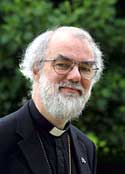
If in a few years time we are looking seriously at the practical possibility of women ordained as bishops – what will the ecumenical cost be? We know it will in many ways be heavy and serious. But granted that, what will be the ground on which we pursue ecumenical conversation and relationship from that point on. I would like to say that the ARCIC documents do give us a theology which we need to return to and try to make sense of in that long-term view, because we do there have a remarkably rich deposit of reflection on the ordained ministry, agreed between the Anglican and Roman Catholic Churches over the last thirty years…
Archbishop of Canterbury Speech given during a debate in the Church of England's General Synod on Women in the Episcopate
We have claimed to be Catholic, to have a ministry that is capable of being universally recognised (even where in practice it does not have that recognition) because of its theological and institutional continuity; to hold a faith that is not locally determined but shared through time and space with the fellowship of the baptised; to celebrate sacraments that express the reality of a community which is more than the people present at any one moment with any one set of concerns. So at the very least we must recognise that Anglicanism as we have experienced it has never been just a loose grouping of people who care to describe themselves as Anglicans but enjoy unconfined local liberties…
My commitment and conviction are given to the ideal of the Church Catholic. I know that its embodiment in Anglicanism has always been debated, yet I believe that the vision of Catholic sacramental unity without centralisation or coercion is one that we have witnessed to at our best and still need to work at.
The Archbishop of Canterbury's Address to the General Synod of the Church of England
Kimel on Wright and Stanhope's reply to Kasper
Al Kimel of Pontifications has set out the theological issues around ordination and Church unity with his usual clarity and patience.
In a recent post he takes a look at the response of the Anglican bishops of Durham and Salisbury, Tom Wright and David Stancliffe to Roman Catholic Cardinal Kasper, and explains what is at stake in this issue of who may be a bishop. In his address to the bishops of the Church of England (June 2006) Cardinal Kasper pointed out that the leaders any part of the Church chooses are leaders of the whole Church, and have to represent that wholeness of the Church, and the wholeness of its teaching. Its choice of leaders therefore demonstrates the degree to which the Anglican church understands, or does not understand, that it is its wholeness and indivisibility that makes Church's distinctive witness to the world. The Church is one, and holy, because God is one, and holy.
The context is the desire of Anglican and Episcopalian parts of the Church to operate in isolation from the Church as a whole, and to choose leaders who do not represent the wholeness and distinctiveness of the Church. But the whole Church must insist that such parts do not operate unilaterally, and so it must give these (Anglican and Episcopalian) churches and their leaders a refresher course in ecclesiology and theology, to remind them of the distinct identity of the Christian people and the extraordinary privilege it is to be that people, for the world's sake.
Here is Al Kimel:
'Bishops Wright and Stancliffe are convinced that Scripture authorizes the ordination of women to priestly orders, but they disagree with each other on whether Scripture authorizes the blessing of same-sex unions. Bishop Wright was a member of the committee that drew up the Windsor Report, a report which rebukes the American and Canadian churches for breaking from the received moral tradition before the creation of a new consensus within the Anglican Communion. But should not the same reasoning be applied to the question of women’s ordination? Should not the Anglican Communion be rebuked for moving ahead on women’s ordination before the creation of wider catholic consensus. Why, in this age of ecumenism, does the opinions of only Anglicans count? Does it not matter to Anglicans that by embracing the ordination of women to the presbyterate and episcopate they are effectively negating the possibility of ecclesial reunion with the Catholic Church and the Orthodox Church?'
Pontifications The death of Anglican/Catholic ecumenism?
The imperialism of the Roman approach to ecclesiology?
Bishops Wright and Stancliffe have responded to Cardinal Walter Kasper's request for no unilateral Anglican decisions about ordaining women bishops until a Church-wide consensus develops. But their response is not quite as rigorous as they hope:
'One of the most important points at which Cardinal Kasper seems to us to misrepresent the Anglican situation comes at the point where he indicates that he and others look to the Church of England as holding a place of decisive significance within Anglicanism, so that despite the fact that there are already women bishops in some Provinces of the Anglican Communion the decision of the Church of England would somehow be key or crucial. That may be an accurate indication of how we are perceived, but the Church of England does not occupy the place in the Communion that the Vatican does in our sister church. Indeed, that imperial model - Ecclesia Anglicana telling the colonies how to behave - is precisely what we have done our best to avoid for several generations. As set out in the Windsor Report, we have a modus operandi according to which a potentially contentious issue can come to the Lambeth Conference, to the Anglican Consultative Council, and to the Primates' Meeting. To put it simply, if the Lambeth Conference gives a green light to a proposal, it is then up to an individual province to decide whether to adopt any new development for itself. We must not for a moment collude with the impression that the Church of England occupies a position analogous to the Vatican and that the Lambeth Conference is merely an expensive piece of window-dressing. This tells heavily against the argument, sometimes advanced from within Anglicanism itself, that the decision we now face in the Church of England is the real defining moment. The Lambeth Conference has already given the green light to ordaining women to the episcopate; all we are being asked now is whether we, in our Province, want to adopt for ourselves something to which worldwide Anglicanism has already given approval, and which can therefore not be seen within our own inter-provincial polity as communion-breaking.'
Tom Wright, Bishop of Durham, and David Stancliffe, Bishop of Salisbury Women Bishops:A Response to Cardinal Kasper
My understanding of catholicity is that it involves every part of the church in subordination to every other in love, and therefore also in obedience and truth. This does involve us in waiting for one another, and so it always has a cost: it is in fact Christian suffering. None of us can just do what we want; we are not servants or priests or bishops by right: we cannot make ourselves leaders of the church; we cannot unilaterally make decisions for 'our' part of the church. We have to wait for the rest of the Church to see in us those gifts the Lord has given to us. The rest of the Church really is in authority over us. Those outside the Church might call this 'imperialism', but catholicity is what we call it.
Collegiality always requires a single authority, which involves an central office, an institution with a budget - a magisterium. This is what Canterbury (in my case) represents - despite Canterbury's own denials - and beyond Canterbury it is all the other Archbishops and Patriarchs, gathered in mutual deference and love, around some single Patriarch, which, out of habit or tradition if for no other reason, means in effect Benedict in Rome. We Anglicans should try to keep up with Benedict - and of course gently and constantly offer our Reformed and evangelical correction to the Roman curia. There is no either-or about Canterbury and the rest-of-the-Church-conveniently-represented-by Rome. Rome does not threaten our Anglican identity - it only threatens our endless readiness to endanger the catholicity of the whole Church by our pursuit of every worldly agenda.
This Christianity lark is not easy: all this controversy is part of the suffering that comes as we are formed together in Christ. Let us be thankful for one another and for all on the other side in each of these struggles for the identity of the people of Jesus Christ.
Religious bodies have to deal with the question in their own terms
Unless you think that social and legal considerations should be allowed to resolve religious disputes which is a highly risky assumption if you also believe in real freedom of opinion in a diverse society there has to be a recognition that religious bodies have to deal with the question in their own terms. Arguments have to be drawn up on the common basis of Bible and historic teaching. And, to make clear something that can get very much obscured in the rhetoric about ‘inclusion’, this is not and should never be a question about the contribution of gay and lesbian people as such to the Church of God and its ministry, about the dignity and value of gay and lesbian people. Instead it is a question, agonisingly difficult for many, as to what kinds of behaviour a Church that seeks to be loyal to the Bible can bless, and what kinds of behaviour it must warn against and so it is a question about how we make decisions corporately with other Christians, looking together for the mind of Christ as we share the study of the Scriptures.
Archbishop Rowan William Reflections on the Anglican Communion
We are bound to each other
No member Church can make significant decisions unilaterally and still expect this to make no difference to how it is regarded in the fellowship; this would be uncomfortably like saying that every member could redefine the terms of belonging as and when it suited them. Some actions – and sacramental actions in particular - just do have the effect of putting a Church outside or even across the central stream of the life they have shared with other Churches.
We now face some choices about what kind of Church we as Anglicans are or want to be. Some speak as if it would be perfectly simple – and indeed desirable – to dissolve the international relationships, so that every local Church could do what it thought right. This may be tempting, but it ignores two things at least.
First, it fails to see that the same problems and the same principles apply within local Churches as between Churches. The divisions don’t run just between national bodies at a distance, they are at work in each locality, and pose the same question: are we prepared to work at a common life which doesn’t just reflect the interests and beliefs of one group but tries to find something that could be in everyone’s interest – recognising that this involves different sorts of costs for everyone involved? It may be tempting to say, ‘let each local church go its own way’; but once you’ve lost the idea that you need to try to remain together in order to find the fullest possible truth, what do you appeal to in the local situation when serious division threatens?
Second, it ignores the degree to which we are already bound in with each other’s life through a vast network of informal contacts and exchanges.. These are not the same as the formal relations of ecclesiastical communion, but they are real and deep, and they would be a lot weaker and a lot more casual without those more formal structures. They mean that no local Church and no group within a local Church can just settle down complacently with what it or its surrounding society finds comfortable. The Church worldwide is not simply the sum total of local communities. It has a cross-cultural dimension that is vital to its health and it is naïve to think that this can survive without some structures to make it possible. An isolated local Church is less than a complete Church...
The idea of a ‘covenant’ between local Churches (developing alongside the existing work being done on harmonising the church law of different local Churches) is one method that has been suggested, and it seems to me the best way forward. It is necessarily an ‘opt-in’ matter...
The idea of an Archbishop of Canterbury resolving any of this by decree is misplaced, however tempting for many. The Archbishop of Canterbury presides and convenes in the Communion, and may do what this document attempts to do, which is to outline the theological framework in which a problem should be addressed; but he must always act collegially, with the bishops of his own local Church and with the primates and the other instruments of communion.
Archbishop Rowan William Reflections on the Anglican Communion
Anglican Covenant
A well-written and concise covenant would clarify the identity and mission of the Churches of, or in association with, the Anglican Communion. By articulating our ecclesiological identity, a covenant will also help the Anglican Communion in self-understanding and in ecumenical relationships. A covenant could provide, for all provinces and/or national churches, a fundamental basis of trust, co-operation and action in relationship with one another and in relation to the whole Communion. A covenant could express what is already implicit, by articulating the â??bonds of affectionâ??, that is, the â??house rulesâ?? by which the family of Anglican churches wishes to live together . These would be intended to develop a disciplined and fulfilling life in communion.
It could also become a significant educational tool within the Communion, enabling Anglicans worldwide to understand and deepen their commitment to the beliefs, history and practices they share in common and their development of these as they engage together in Godâ??s mission in the world.
Any covenant also has the potential of providing what is currently lacking - an agreed framework for common discernment, and the prevention and resolution of conflict. It could do this by bringing together and making explicit much that until now has been a matter of convention within the Communionâ??s common life.
The episcopate is one, each part of which is held by each one for the whole
So koinonia / communio is a foundational term which gained fundamental significance for the early church, and which in the eyes of many once more occupies a pre-eminent place in defining the essence of the Church today. The Church is shared participation in the life of God, therefore koinonia with God and with one another (1 Jn, 1,3).
So from the beginning the episcopal office was ‘koinonially’ or collegially embedded in the communion of all bishops; it was never perceived as an office to be understood or practised individually. In his history of the Church Eusebius describes in detail the endeavours to maintain peace, unity, love and communion during the violent conflicts of the second century regarding the correct fasting practices and the dating of Easter (Hist. eccl., v,23f; cf. vii,5). The collegial nature of the episcopal office achieves its most impressive expression in the consecration of bishops.
‘The episcopate is one, each part of which is held by each one for the whole’ (Cyprian of Carthage De ecclesiae catholicae unitate, 1,5). Such statements and admonitions recur again and again in Cyprian’s letters (Ep., 55,21; 59,14 et al.). Most familiar is the statement that the Church is the people united with the bishop and the flock devoted to its shepherd. ‘The bishop is in the church and the church is in the bishop, and if anyone is not with the bishop he is not with the church.’ But Cyprian goes even one step further: he not only emphasises the unity of the people of God with its own individual bishop, but also adds that no one should imagine that he can be in communion with just a few, for ‘the Catholic Church is not split or divided’ but ‘united and held together by the glue of the mutual cohesion of the bishops’ (Ep., 66,8).
Cardinal Walter Kasper An address given to the Church of England Bishops’ Meeting (5 June 2006)
The discipline of the whole Church
What is a bishop?
A bishop is the discipline of the whole Church on us - which is nothing other than the Lordship of Christ effective for us - packaged in the form of one person. The bishop represents, and makes available to us, the discipline of all other parts of the Church - geographically, historically, eschatologically. The bishop is the whole Church in one person. We can go and complain to him, seek explanations from him, and we also have to encourage and to pray for him. We always have to ask - beg, demand - the bishop to give us the whole Christ, through all discipline and in all the Scriptures (This is apparent from the paragraphs of the Windsor Report I have posted). We have to remind the bishop to love and care for us. And of course each bishop has to be under the discipline of all the ecumenical councils of bishops, across the world and across the whole history of the Church.
We are under the discipline of the whole Church. If we believe that the Roman Catholic and Eastern Orthodox churches are mistaken to believe that bishops, and clergy, can only be male, nevertheless we cannot ignore them or defy them. To do so would be lack of love, and neglect of what the whole Church has always held to be good. Roman Catholics and Orthodox are sure that they are preserving the tradition of the Church on this matter. What if they are right? Once again, the issue is not so much the ordaining of women or homosexuals, or any new self-identifying minority, but just of doing of what the Church has never done before, and doing it without it being the act of the whole Church. If we make new rules, whether about ordination or about anything else, we have failed to understand that the Church is the reconciliation of all opposing parts, and so the costly unity won by Christ, that now enables our mutual subordination and love, in which we consider each better than ourselves. Our talk about making new rules for ourselves is a deliberate walking away from the Roman Catholics and Orthodox. We can not act without the rest of the Church and still be Church ourselves. If we walk from the unity of the Church the truth of the Church leaves us too.
Broken Church
Christopher Wells, writing for the ever-excellent Anglican Communion Institute, is wondering what the Archbishop of Canterbury makes of the debacle of the just-finished General Convention of the Episcopal Church of the United States. Wells suggest we read Archbishop Williams' lecture on a previous great Archbishop of Canterbury, Michael Ramsey.
'Williams seized Ramseyâ??s suggestionâ??enshrined in his classic of the 1930s, revised in the 1950s, The Gospel and the Catholic Church â??that the center of Anglicanism, her primary vocation, is to witness to the perpetual passion of Christâ??s body which must lead ineluctably, according to divine providence, into the heart of the gospel. In this perspective, the peculiar â??lightâ?? of Anglicanism within the wider oikumene will be provisionality itself, following on a proper penitence: a readiness to go willingly, and perhaps be lifted up, to suffer whatever further sacrifices may be necessary for the visible reunion of the one Church.'
Christopher Wells Wounded in Common Mission: The Term of Inter-Christian Divisiveness
Here is Rowan Williams himself, turning from Michael Ramsey to Ephraim Radner:
'The situation is made harder by our cultural setting. The unhappy irony of the Reformation legacy is the steady slippage from the confessional protest of Luther to the consumer choices of modern Christianity in the West - the search for the Church of your taste and preference. Ephraim Radner, one of the most exacting and rigorous of contemporary American theologians, has outlined the irony in a recent book, Hope Among the Fragments. The Broken Church and its Engagement of Scripture, in which he insists that the Church is only itself if it engages with the specific form of Christ as Scripture proclaims it; but also that a movement for reform, purity or separation in the name of this engagement always drifts towards that typically modern pluralism which fails in the long run to do any justice to the utter givenness of Godâ??s initiative, fails to think the Church theologically.
â??As institutional churchesâ??, he writes, â??as formal Christian communities, we now stand in the same condition as that of the first Christians after the resurrection. We have no articulated theology, we have no proven structures of authority, no experienced framework for the reading of Scripture that is common to us as a churchâ?? (p.175). This may be optimistically presented as great opportunity; but it should first be recognised as â??the judgment of Godâ??s historyâ?? - that is, as the result of long-engrained habits of unfaithfulness in our practice. We have forgotten how to be churches. Starting new ones will only compound the problem: the traditionalist is in the same boat as the liberal to the extent that both are prisoners of a denominational market (p.205), even when appeal is constantly being made to the model of Reformation confessio - or even early Christian martyrdom. The only theologically honest response is to acknowledge that Godâ??s providence has placed us in a divided and in various ways unfaithful Church, and that we have to learn there a form of repentance (individual and corporate) that is our best route towards the form of Christ: â??That God has placed us in this church at this time must mean that he would have us grow in the from of life that bespeaks the Churchâ??s repentant readiness to be healedâ?? (208).
Radner goes on to elaborate what is involved, practically and theologically, in â??staying putâ?? - bearing with the contradictions of the visible institution, â??faithfully navigating a hostile church while remaining in communion with itâ?? (212). It is the most accessible contemporary form of being a fool for Christâ??s sake in a â??Church of fools, filled with waiting, filled with patience, filled with perseverance, filled with prayer, filed with endurance, filled with hopeâ?? (214). But at the larger structural level, this means a polity and policy for our churches - and Radner speaks about Anglicanism in particular - that â??hold dependencies in orderâ??: we are bound up in so many relations of dependence - to Scripture, to our past, to our present partners and our present members - but we have to find a way of keeping them in tension, not seeking to relieve the pressure by removing whatever ones we currently find hardest or most offensive (229). And this in turn means a call to the churches to discover a form of holiness that effectively challenges the localisms and self-assertive separatisms that are the most effective cultural captivity of the modern Church. It is no surprise that Radnerâ??s last paragraph but one in this difficult and necessary book takes us back to Ramsey, and to The Gospel and the Catholic Church.
The Anglican Churchâ??s embrace of incompleteness, which Radner sees as central to Ramseyâ??s vision (218), is grounded in a description of the Church â??in terms of the fate of Christâ??s body in passion and self-giving - an incompleteness divinely opened to the divine gift of new lifeâ?? (233). Here is the Churchâ??s task, its one task that is truly its task as Church. We may not know where the â??realâ?? Church is in abstract terms - and if Radner is right, the question itself is going to lead us in the wrong direction in our present climate. But we may still know where the event of Christ is going on, and we may still know what we must do to align ourselves with it. Thereâ??s the problem, of course: it is more attractive to go in quest of the real Church than to seek for the pattern of cross and resurrection in the heart of where we happen to find ourselves. But Ramsey implicitly warns us that the quest can be a way back to the self-defining and self-protective religious institution that always distorts or stifles the gospel.
Somewhere in this is a very substantial paradox - that the harder we search for a church that is pure and satisfactory by our definition, the less likely we are to find it. Embracing the incompleteness is not a recipe for passive acquiescence in a Church that is corrupt, implicitly heretical or indifferent to the gospel; it is a recognition that the Church is always at best on the edge of all these things and that the self-seeking individual who believes that the Churchâ??s problems are always in the souls of others has the capacity to tilt the community further towards its perennial temptations. We have to be Lutherans after all, in the sense of refusing any model of the Church that allows us to think of the Church as a body to which we choose to give our allegiance so long as our individual spirituality is nourished by it - rather than as the very form of our Christian being. As Lutherâ??s example shows, this is far from being a passive acceptance of the concrete tyrannies or infidelities of the Church in history; but it demands a theological vision of those failures. And it also requires a difficult spiritual discernment as to how, in an unfaithful Church, we try to live our way into the one event in which the Church actually subsists.'
Archbishop Rowan Williams The Ramsey Lecture
Bishops of the Church of God in the Anglican tradition guard the faith, unity and discipline of the Church
This General Convention has now given its response to the recommendations of the work of that Commission, known as the Windsor Report….The responses which the Convention has given to the clear and simple requests of the Lambeth Commission, the clear and simple requests indeed of the Anglican Communion, are clearly and simply inadequate. We reaffirm our conviction that the Windsor Report provides the way forward for the entire Anglican Communion, the ecumenical relationships of the Communion, and the common life of a faithful Episcopal Church. Further, we have agreed to submit ourselves to the Windsor Reports requirements, both in what it teaches and in the discipline it enjoins. We have not changed in our commitment. …
It is our intention not only to point to the inadequacies of the General Conventions responses, but to declare to our brothers and sisters in Christ throughout the Communion that we continue as The Episcopal Church in this country who uphold and propagate the historic faith and order we have come to know through the Anglican heritage of apostolic teaching and biblical faith; who desire to be fully a constituent member of the Anglican Communion; and who are ready to embrace and live under the Windsor Report without equivocation. Accordingly, we repudiate the actions of the General Convention of 2003 which have breached the bonds of affection within the Communion. We bishops have committed to withhold consents for any persons living in same gender relationships who may be put forward for consecration as a bishop of the Church. And we have refused to grant authority for the blessing of sexual relationships outside Christian Marriage in our jurisdictions. We intend to go forward in the Communion confidently and unreservedly.
Our chief concern now is to fulfill our charge as bishops of the Church of God in the Anglican tradition to guard the faith, unity and discipline of the Church. Pastoral care and apostolic teaching must not only be given to our own dioceses, but to all the faithful in this country who seek apostolic oversight and support. We will take counsel together to fulfill our service on behalf of faithful Anglicans in this country, both clergy and laity, and to proclaim the Gospel and build up the Church of our Lord Jesus Christ, and we seek the support of the Archbishop of Canterbury and the Primates and Bishops of the Anglican Communion as we do so.
Bishops' Statement - General Convention Actions Inadequate - Anglican Communion Network
Windsor: mature study, wise and prayerful discussion
The current crisis thus constitutes a call to the whole Anglican Communion to re-evaluate the ways in which we have read, heard, studied and digested scripture. We can no longer be content to drop random texts into arguments, imagining that the point is thereby proved, or indeed to sweep away sections of the New Testament as irrelevant to today’s world, imagining that problems are thereby solved. We need mature study, wise and prayerful discussion, and a joint commitment to hearing and obeying God as he speaks in scripture, to discovering more of the Jesus Christ to whom all authority is committed, and to being open to the fresh wind of the Spirit who inspired scripture in the first place. If our present difficulties force us to read and learn together from scripture in new ways, they will not have been without profit.
Windsor Report on the future of the Anglican Communion paragraph 61
Windsor: prayerful teaching ministry
The place of Christian leaders â?? chiefly within the Anglican tradition, of bishops â?? as teachers of scripture can hardly be over-emphasised. The â??authorityâ?? of bishops cannot reside solely or primarily in legal structures, but, as in Acts 6.4, in their ministry of â??prayer and the word of Godâ??. If this is ignored, the model of â??the authority of scriptureâ?? which scripture itself offers is failing to function as it should. The authoritative teaching of scripture cannot be left to academic researchers, vital though they are. The accredited leaders of the Church â?? within the diocese, the bishop(s); within the Communion, the primates â?? must be people through whose prayerful teaching ministry the authority of God vested in scripture is brought to bear - in mission within the world and in wise teaching to build up the Church.
Windsor Report on the future of the Anglican Communion paragraph 58
Windsor: Scripture at the heart of worship
For scripture to ‘work’ as the vehicle of God’s authority it is vital that it be read at the heart of worship in a way which (through appropriate lectionaries, and the use of scripture in canticles) allows it to be heard, understood and reflected upon as God’s living and active word. The message of scripture, as a whole and in its several parts, must be preached and taught in all possible and appropriate ways. It is the responsibility of the whole Church to engage with the Bible together; within that, each individual Christian, to the fullest extent of which they are capable, must study it and learn from it, thoughtfully and prayerfully. Within this context, the Church’s accredited leaders have a responsibility, through constant teaching and preaching, to enable the Church to grow to maturity, so that when difficult judgments are required they may be made in full knowledge of the texts.
Windsor Report on the future of the Anglican Communion paragraph 57
Act interdependently, not independently
It is an ancient canonical principle that what touches all should be decided by all. The relational nature of communion requires each church to learn more fully what it means to be part of that communion, so that its members may be fulfilled and strengthened in and through their relations with other churches. Communion obliges each church to foster, respect and maintain all those marks of common identity, and all those instruments of unity and communion, which it shares with fellow churches, seeking a common mind in essential matters of common concern: in short, to act interdependently, not independently.
Windsor Report on the future of the Anglican Communion paragraph 51
Communion and Anglicans
"Communion is, in fact, all about mutual relationships. It is expressed by community, equality, common life, sharing, interdependence, and mutual affection and respect. It subsists in visible unity, common confession of the apostolic faith, common belief in scripture and the creeds, common baptism and shared eucharist, and a mutually recognised common ministry. Communion means that each church recognises that the other belongs to the One, Holy, Catholic and Apostolic Church of Jesus Christ, and shares in the mission of the whole people of God. It involves practising a common liturgical tradition, and intending to listen, speak and act alongside one another in obedience to the gospel. In communion, each church acknowledges and respects the interdependence and autonomy of the other, putting the needs of the global fellowship before its own. Through such communion, each church is enabled to find completeness through its relations to the others, while fulfilling its own particular calling within its own cultural context."
Isn't that wonderful? Isn't that marvellous? It is the The Windsor Report on the Anglican Communion - paragraph 49. I had no idea how exciting the Christian faith is, but this Anglican material states it loud and clear - and there is loads more where this came from. Let's learn this off by heart, let us teach it to our children, let us bind it to our foreheads - 'each church recognises that the other belongs to the One, Holy, Catholic and Apostolic Church of Jesus Christ, and shares in the mission of the whole people of God.' Yup.
Anglicans, authority and charity
Theological commissions within provinces need to be made more conscious of, and conversant with, Communion-wide dimensions of theological discourse. In particular, we need to develop the habit, and thence the virtue, of that charity which listens intensely and with good will to widely different expressions of sincerely held Christian theology, at the levels both of method and of content. As a Communion, we need a common forum for debate, a common table to which we can bring our questions for a proper family discussion.
It is because we have not always fully articulated how authority works within Anglicanism, and because recent decisions have not taken into account, and/or worked through and explained, such authority as we all in theory acknowledge, that we have reached the point where urgent fresh thought and action have become necessary.
The Windsor Report paragraph 41
The long way to Anglican unity
The most articulate discussion of the struggle for discipleship in the Anglican Communion has been going on over at Titusonenine. Here are excerpts from comments by Ephraim Radner and IRNS -
"Windsor itself is not just about practical actions, taken within some vacuum of public affirmation and meaning. There is an entire theology about the church, however broad, that upholds its recommendations, and this theology includes the character of teaching, witnessed life, and the place of Scripture as informing and even directing thisâ?¦ there is every reason to believe that â??bare actionsâ?? are and will be considered inadequate if they are not tied to clear and clearly-interpreted commitments. The matter of trust for the Communionâ??s future life is at stake in this.
No one can underestimate the destructive degree to which ECUSA has thrown a poisoned apple into the everyoneâ??s midst. There is every sign that Rowan Williams knows this, and may well realize that the poison has already been ingested by everyone. There is little cause for optimism here, and every cause for pleading with the Almighty." Ephraim Radner
"In my own diocese, a reappraiser and I asked the bishop the same question on the same day and received answers to suit our own particular reappraiser/reasserter positionsâ??in other words opposite responses from the same mouth. That is not leadership and is precisely why we are in the mess we are in." SD
"By remaining neutral as regards Lambeth 1.10, TWR [The Windsor Report] implicitly OKâ??d the idea that one could remain neutral, or even opposed. There is no question that Lambeth 1.10 is the present teaching of the Anglican Communionâ??thank God!â??but there is equally no question that TWR leaves the question of changing that teaching open. Until it is clear that changing that teaching is NOT openâ??that some doctrines are not open to â??developmentâ?? or â??evolutionâ?? from one species of doctrine to anotherâ??then we will remain in a never-ending doctrinal guerilla war, a war that TWR has failed to mediate. Broadly speaking, TWR addresses two interrelated questions, â??developmentâ?? and authority in matters of doctrine within the Anglican Communion (or â??receptionâ??). I believe that it solves neither of them, and in fact at best confuses the issues. The main reason why parties can continue to either disagree or even simply talk past each other while claiming to adhere to the Windsor Report is not because one side or the other is disingenuous (although there is certainly plenty of that to go around), but because the Windsor Report failed so spectacularly." Iâ??d Rather Not Say
Read some more of this discussion at Titusonenine. For a longer statement on the decisions the Anglican Communion has to take, read Ephraim Radner's If there is a future for ECUSA and the Anglican Communion...
Remind the Anglicans who they are
The Inter-Anglican Theological and Doctrinal Commission asks for your comments on the following issues:
1. Anglicanism has always given a high place to the reading of Scripture as the ground of its worship and teaching. How is it possible for Anglicans in different parts of the world to listen to the Bible together?
2. The Inter-Anglican Theological and Doctrinal Commission (ATDC) and the Windsor Report are both emphasising the notion of ‘covenant’ as a basis and expression of communion. If a covenant is more than a constitution, what implications does this have for decision-making by churches that are in a covenantal relationship with each other?
3. How do you think the genuine and meaningful expressions of communion that your church experiences with Anglican Christians in other parts of the world will be able to survive current disagreements in the Anglican Communion?
4. What sort of language (theological and otherwise) is appropriate for speaking about Christian people with whom you disagree?
We also welcome contributions from individuals, and especially lay people, so we will be pleased if you feel able to spread the contents of this letter as widely as possible.
Inter-Anglican Theological and Doctrinal Commission These are very reasonable questions. Wouldn't any list of Christian characteristics, such as 'godliness, faith, love, endurance, gentleness...' (1 Timothy 6.11) be the way to reply? The Anglicans are God-marked people, distinuished by all the spiritual gifts that make up Christian discipleship.