These ecclesial communities are schisms of a schism from the Holy Orthodox Church

Unfortunately, I feel compelled to scorn here…

Arius was from ALEXANDRIA, not Antioch!

This guy doesn’t know his Church history.

The Antiochenes stressed the full reality of divinity and the full reality of humanity in Jesus Christ. The Alexandrians stressed that the one active and passive subject in Jesus Christ was the Logos.

At its extreme, Alexandrian theology tended either to deny the divinity of the Logos (this is what Arius did: the Logos is a creature), or to fuse divinity and humanity in their insistence upon the ‘one Incarnate nature of God the Word’ (Cyril’s phrase).

At its extreme, Antiochene theology in Nestorianism so fully stressed the divine reality and the human reality in Jesus that it developed the notion that in Christ there were two beings, one divine and one human, acting in unison.

In fact, the Church ultimately accepted neither of these positions on its own, but rather recognised the truth to lie in their synthesis, a synthesis that was definitively achieved in the Constantinoplitan Ecumenical Councils of 553 and 680. The one divine hypostasis of God the Word, fully divine by nature, assumed (enhypostasised) human nature in Incarnation, thereby divinising it entirely: it only existed in the divine hypostasis of the Logos and was fully permeated by divine energy. Thus the Cyrillene ‘one nature’ of God the Word is to be understood as the one hypostasis of God the Word (as per Trinitarian theology), and the divine and human realities in Jesus - which remain unconfused - are indivisibly united, existing in the one subject of the hypostasis of God the Word.

The author is confusing two issues: Arius the Alexandrian’s denial that Christ is divine (so that in Christ no union of divine and human takes place), and the Nestorian denial of union in the one hypostasis of God the Word (so that in Christ no union of divine and human takes place). Neither, however, denied the need for Christology.

Also, the author, I fear, remains caught in the Protestant confusion of thinking of Nicaea 325 as a terminus of dogmatic Orthodoxy, when in fact, it is the starting-point, comprehensible to us only in light of the subsequent Councils of the Church. If you take the Symbol of Nicaea out of the historical transmission (paradosis) of the one Christian faith, then you do not have ‘Nicene Orthodoxy’ - you do not have ‘Orthodoxy’ of any sort - for a symbol wrenched from the context in which it has its home can mean anything or nothing. You cannot turn to just one or two choice items which you happen to take a shine to in the history of the Church and appeal to them as ‘Orthodoxy’. Affirmation of the Nicene Creed no more ensures Orthodoxy than the Bible does. Orthodoxy exists only in the one, holy, catholic and apostolic Church, which, incorporated into Christ and illumined by the Holy Spirit, preserves and hands over the one Orthodox faith from generation to generation. It is only through the adoption of this faith in its wholeness (kath holon) that the true meaning of the Scriptures and all in which Holy Tradition consists can be understood.

And part of this faith the adoption of whose wholeness is a precondition of Christian understanding is communion with a validly-ordained Bishop of the Orthodox faith in communion with the other Bishops of the Orthodox Church.

There is no use in Protestants playing in some half-way house of ‘Nicene Orthodoxy’ designed to assuage their bad feelings and partial recognitions that the ecclesial communities in which they have until now existed are but schisms of a schism from the Holy Orthodox Church.

Alan Brown in reponse to Harry L. Chronis Alexandria or Antioch?

Enter into the 'We' of the church

The first dimension is that the celebratio is prayer and a conversation with God: God with us and us with God. Thus, the first requirement for a good celebration is that the priest truly enter this conversation. In proclaiming the Word, he feels himself in conversation with God. He is a listener to the Word and a preacher of the Word, in the sense that he makes himself an instrument of the Lord and seeks to understand this Word of God which he must then transmit to the people. He is in a conversation with God because the texts of Holy Mass are not theatrical scripts or anything like them, but prayers, thanks to which, together with the assembly, I speak to God.

It is important, therefore, to enter into this conversation. St Benedict in his "Rule" tells the monks, speaking of the recitation of the Psalms, "Mens concordet voci". The vox, words, precede our mind. This is not usually the case: one has to think first, then one's thought becomes words. But here, the words come first. The sacred Liturgy gives us the words; we must enter into these words, find a harmony with this reality that precedes us.

In addition, we must also learn to understand the structure of the Liturgy and why it is laid out as it is. The Liturgy developed in the course of two millenniums and even after the Reformation was not something worked out by simply a few liturgists. It has always remained a continuation of this on-going growth of worship and proclamation.

Thus, to be well in tune, it is very important to understand this structure that developed over time and to enter with our minds into the vox of the Church. To the extent that we have interiorized this structure, comprehended this structure, assimilated the words of the Liturgy, we can enter into this inner consonance and thus not only speak to God as individuals, but enter into the "we" of the Church, which is praying. And we thus transform our "I" in this way, by entering into the "we" of the Church, enriching and enlarging this "I", praying with the Church, with the words of the Church, truly being in conversation with God.

This is the first condition: we ourselves must interiorize the structure, the words of the Liturgy, the Word of God. Thus, our celebration truly becomes a celebration "with" the Church: our hearts are enlarged and we are not doing just anything but are "with" the Church, in conversation with God. It seems to me that people truly feel that we converse with God, with them, and that in this common prayer we attract others, in communion with the children of God we attract others...

Benedict XVI To the priests of Albano diocese

Trafficking in theological syncretism

Even casual observers of American Christianity, in all its ecclesial manifestations, cannot help but notice these days a common and deep division in all the old-line churches â?? Methodist, Lutheran, Episcopal, and Presbyterian, to name the most prominent of them. What divides them all in nearly identical fashion is most visibly and audibly profound disagreement about human sexuality... this deeper dispute â?? it is much deeper than a disagreement about human sexuality â?? involves a critical choice between two age-old destinations. One is Alexandria and the other is Antioch.

I have these great ancient cities in mind, not just because one, Alexandria, was home to Nicene and Athanasian orthodoxy and the other, Antioch, to Arian heterodoxy in the early trinitarian controversies. But that is a good place to start, if â?? as I suggested above â?? the ethical confusion about human sexuality is only a presenting symptom of a deeper theological illness afflicting the whole old-line. I reckon it, actually, to be an Antiochene illness, for which only a Nicene cure of 4th century proportions will do. And the whole old-line will have to go to Alexandria (as it were) to get it.

Let me support this diagnosis, first, by citing my experience in my own presbytery. There Arius himself, for whom finally it was just not credible that God could empty the fullness of his divine majesty into the merely human Jesus, would be right at home. At one of our recent meetings, for example â?? and this is by no means as bad as it can get â?? we were treated to hearing (a) one of our ordained ministers reporting cheerfully about teaching the Bible (or, more precisely, Marcus Borgâ??s slant on the Bible) in her part-time position on the staff of a Unitarian church, (b) several new members of the presbytery sharing at some length what God was doing in their lives and ministries without once mentioning the name of Jesus Christ, and (c) our worship leader eschewing use of the triune name revealed by Christ (and substituting, with what is now nauseating predictability, the economic job-description â??Creator, Redeemer, Sustainerâ??) in our closing doxology. Nor is mine the only presbytery tilting toward Antioch and the confusion that ensues once God is unyoked from Christ. More than a few â?? many of them the same presbyteries that, along with my own, routinely ride the tectonic plate opposite me in the human sexuality controversy â?? appear to be trafficking regularly in theological syncretism. A number of friends around the denomination describe coming home from meetings as amazed as I at the endless novelty, the obsession to explore and mine feminist imaginings and even other religious traditions â?? anything but Nicene orthodoxy, apparently â?? for their liturgical â??riches,â?? the preoccupation with any â??spiritualityâ?? that knows nothing of the Holy Spirit, and especially the assumption on principle that theology can and should only be done now without any vestige of patriarchy (hence the sanction against the triune name) and â?? most incredibly â?? without Christology. It reminds me of Chestertonâ??s assertion that when men give up belief in the one true God, they donâ??t believe in nothing, they believe in anything.

Harry L. Chronis Alexandria or Antioch? The Hermeneutical Choice Confronting the American Old-Line

Featured Article at The Center for Catholic and Evangelical Theology

What is a university? 2

A simple postmodernist assumption that diversity is just a fact of life that needs no exploring and exchange would be a recipe for a depressingly tribal and static intellectual life.

The university, then, sustains a culture of its own, a culture of conversation and mutual criticism and appreciation, in the context of which people may grow into a deeper understanding of what characterises human beings as such in their social interaction. That understanding has to do with seeing human beings as essentially engaged in learning – in enlarging their mental and imaginative worlds and approaching one another with curiosity, patience and welcome, being free to imagine how others ask different questions of the world around them. Within that common culture of a ‘learning humanity’, a university may as matter of historical fact have a visibly dominant cultural presence – perhaps religious, as often in Europe, perhaps deeply bound up with national identity and independence. But if it is to function as a university, this historical legacy will need to be, not neutralised or denied, but understood precisely as a legacy to be used as the soil on which debate can grow. Its tradition, religious, national, or whatever, is not an orthodoxy to be insisted upon (as was the case in English universities until the early nineteenth century) but as a secure space in which other voices are welcome and respected, and where the interaction of different voices and perspectives within the institution is not seen as any sort of contest for dominance. In many circumstances, an intellectual institution that is clear about its history and tradition can be a more rather than a less hospitable place because of this lack of any need to fight for a dominant voice.

Archbishop Rowan Williams What is a university? Speech given in Wuhan, China

Marriage is not the creation of the state

Marriage isnâ??t the creation of the state or even of â??religionâ?? (as construed as a syncretistic sectarian entity). Rather, marriage is a pre-political institution with its own nature and contours; people are free to enter into a marital relationship, but people are not free to redefine and reconfigure marriage (for that is simply impossible). That religions have norms protecting marriage or elevating its status doesnâ??t undermine but further demonstrates its natural, primary status. The task of the state, then, isnâ??t to create marriage but to enshrine its nature in law accurately, and to support and promote it in policy. Attempts to redefine the contours of marriage inevitably preclude any principled argument against polygamy, polyamory, and other diverse expressions. If marriage can be between two people of the same sex, why not among three or four people? In fact, a group of prominent scholars have made just these claims, in a document titled â??Beyond Gay Marriage.â??

But there is a deeper, cultural problem. Marriage exists to bring a man and a woman together as a husband and a wife to become a father and a mother for any children their union may yield. The legal imposition of same-sex â??marriageâ?? intentionally deprives children of a mother or a father. It sends a cultural message that mothers and fathers are interchangeable or unnecessary. And just as â??no-fault divorceâ?? and widespread premarital and extramarital sex removed the cultural norms and expectations for adult sexual and reproductive lives, so too same-sex â??marriageâ?? continues this retreat from the marital ideal.

Ryan T. Anderson First Things

Using 'Triune' to avoid the inflammatory word 'Father'

Responses to A Call to an Ancient Evangelical Future

Good observations all. What, one might ask, is there not to like?

Well, in the first place, there is a word that is never used in this document. It is conspicuous in its absence. I kept waiting for it to appear, and it never did. That word is authority. Yes, the Scriptures are here described as an â??authoritativeâ?? record, but that is merely sending an adjective to do a nounâ??s work.

There is no locus of authority being proposed here. This omission is especially strange in light of the documentâ??s expression of the â??pressingâ?? question: â??Who gets to narrate the word?â?? This would seem to be precisely a question of authority. The document calls on Evangelicals to â??restore the priorityâ?? of the biblical story in their lives, which the writers insist upon calling â??Godâ??s narrative.â??

But who is to do the restoring? After all, the story does not tell itself (which is, of course, precisely one of the reasons literary scholars use the verb â??narrateâ??). The history of the Church is a history of all the different, and sometimes violently conflicting, ways of telling the story. I have no doubt that both James Dobson and Stanley Hauerwas could each tell the story convincingly and faithfully. But I suspect their accounts would differ.

In short, there is no escaping from the need for structures of authority in the Church. This same aversion to authority is behind the condemnation of â??propositionsâ?? as tending to be â??reductive.â?? This is of course entirely true up to a point. But the great creeds the authors are so anxious to affirm are, in fact, more propositional than narrative in character.

One sometimes suspects that the authors are really pushing a variant on an old adage: â??doctrine divides, but narrative unites.â?? If we can concentrate on â??telling the story,â?? to the point that we completely inhabit it, the quarrels and conflicts of the past two millennia will simply evaporate. And isnâ??t it pretty to think so.

Also, what does it mean to â??take seriouslyâ?? the visible Church? Does it mean a Church that disciplines, rebukes, and even on occasion excommunicates? If not, then what? Does the talk about catechesis mean that Evangelicals will start requiring confirmands to have thoroughly learned, for example, the Westminster Confession and Shorter Catechism? Why are the authors so much more interested in vague appeals to the ancient Church than in their own Evangelical traditionâ??s more proximate fathers?

Of course, the very mention of the word father points to a profound problem in the whole undertaking: the problem of language. If we are to root ourselves in â??Godâ??s word as the story of the world,â?? it will make all the difference what words we use to describe what we are doing. In our choice of language we should try our very best to use Godâ??s rather than ours.

A Text Avoided

The use of concepts like â??narrativeâ?? and other such academic terms is not necessarily self-undermining, so long as it serves merely to aid and amplify. But when the concepts of â??storyâ?? and â??narrativeâ?? appear as frequently and centrally as they do in this document, one cannot help but conclude that they are being used as a way to evade questions about what is actually there, behind the storyâ??about the actual referents of the Christian faith, the things that the story is about.

Nor is the language of â??narrativeâ?? the vocabulary with which the biblical God narrates. There is no glimpse hereâ??not a oneâ??of the actual and authoritative language of Scripture as generations of Christian worshipers in North America have known it and experienced it and proclaimed it.

Arguably the single greatest strength of Evangelical Christianity is its reverence for the Word, its lively attention to the text, its loving embrace of the actual words and verses of Scripture. But we donâ??t get any of that here. Instead, we are being offered a boatload of stale seminary talk: the â??storyâ?? of â??Creation, Incarnation, and Re-creation,â?? the notion of â??Christâ??s recapitulation of history,â?? worship that â??enacts Godâ??s story,â?? and so on.

As I read the document, I found it curious that the authors repeatedly spoke with such abstractness of the â??Triuneâ?? or â??Trinitarianâ?? character of God. Then it dawned on me why. They were doing so to avoid using the inflammatory word Fatherâ??another word that never once appears in this document. Nor do they ever use the masculine personal pronoun for God.

The authors have done this self-editing skillfully, even tastefully. You might almost not even notice. But they have done it quite intentionally, and their doing so shows why they have not yet come to grips with what is entailed in appropriating the authority of the pastâ??which means the whole history of what the Church has been, and not merely what has been going on in a few North American seminaries since 1968.

If one radically edits the past before appropriating it, then it is no longer the past that one is appropriating, but a version of the present. Language matters, and the preference for academic over Scriptural language in this document is powerfully indicative of which worldview actually gets to do the trumping.

How will one utter the Nicene Creed when the word Father has been proscribed? But if one substitutes some other termâ?? Creator, or Mother, or Dominatrix, or whatever word is in fashion this weekâ??how is one doing anything other than rejecting the past, and extending the sway of the status quo? That indeed is what I would call a very serious form of â??cultural captivity.â??

Wilfred M. McClay What lies Behind Touchstone Forum Back and Forth to the Future

A Call to an Ancient Evangelical Future

In every age the Holy Spirit calls the Church to examine its faithfulness to God's revelation in Jesus Christ, authoritatively recorded in Scripture and handed down through the Church. Thus, while we affirm the global strength and vitality of worldwide Evangelicalism in our day, we believe the North American expression of Evangelicalism needs to be especially sensitive to the new external and internal challenges facing God's people.

These external challenges include the current cultural milieu and the resurgence of religious and political ideologies. The internal challenges include Evangelical accommodation to civil religion, rationalism, privatism and pragmatism. In light of these challenges, we call Evangelicals to strengthen their witness through a recovery of the faith articulated by the consensus of the ancient Church and its guardians in the traditions of Eastern Orthodoxy, Roman Catholicism, the Protestant Reformation and the Evangelical awakenings. Ancient Christians faced a world of paganism, Gnosticism and political domination. In the face of heresy and persecution, they understood history through Israel's story, culminating in the death and resurrection of Jesus and the coming of God's Kingdom.

Today, as in the ancient era, the Church is confronted by a host of master narratives that contradict and compete with the gospel. The pressing question is: who gets to narrate the world? The Call to an Ancient Evangelical Future challenges Evangelical Christians to restore the priority of the divinely inspired biblical story of God's acts in history. The narrative of God's Kingdom holds eternal implications for the mission of the Church, its theological reflection, its public ministries of worship and spirituality and its life in the world. By engaging these themes, we believe the Church will be strengthened to address the issues of our day.

1. On the Primacy of the Biblical Narrative

We call for a return to the priority of the divinely authorized canonical story of the Triune God. This story-Creation, Incarnation, and Re-creation-was effected by Christ's recapitulation of human history and summarized by the early Church in its Rules of Faith. The gospel-formed content of these Rules served as the key to the interpretation of Scripture and its critique of contemporary culture, and thus shaped the church's pastoral ministry. Today, we call Evangelicals to turn away from modern theological methods that reduce the gospel to mere propositions, and from contemporary pastoral ministries so compatible with culture that they camouflage God's story or empty it of its cosmic and redemptive meaning. In a world of competing stories, we call Evangelicals to recover the truth of God's word as the story of the world, and to make it the centerpiece of Evangelical life.

2. On the Church, the Continuation of God's Narrative

We call Evangelicals to take seriously the visible character of the Church. We call for a commitment to its mission in the world in fidelity to God's mission (Missio Dei), and for an exploration of the ecumenical implications this has for the unity, holiness catholicity, and apostolicity of the Church. Thus, we call Evangelicals to turn away from an individualism that makes the Church a mere addendum to God's redemptive plan. Individualistic Evangelicalism has contributed to the current problems of churchless Christianity, redefinitions of the Church according to business models, separatist ecclesiologies and judgmental attitudes toward the Church. Therefore, we call Evangelicals to recover their place in the community of the Church catholic.

3. On the Church's Theological Reflection on God's Narrative

We call for the Church's reflection to remain anchored in the Scriptures in continuity with the theological interpretation learned from the early Fathers. Thus, we call Evangelicals to turn away from methods that separate theological reflection from the common traditions of the Church. These modern methods compartmentalize God's story by analyzing its separate parts, while ignoring God's entire redemptive work as recapitulated in Christ. Anti-historical attitudes also disregard the common biblical and theological legacy of the ancient Church. Such disregard ignores the hermeneutical value of the Church's ecumenical creeds. This reduces God's story of the world to one of many competing theologies and impairs the unified witness of the Church to God's plan for the history of the world. Therefore, we call Evangelicals to unity in "the tradition that has been believed everywhere, always and by all," as well as to humility and charity in their various Protestant traditions.

4. On Church's Worship as Telling and Enacting God's Narrative

We call for public worship that sings, preaches and enacts God's story. We call for a renewed consideration of how God ministers to us in baptism, Eucharist, confession, the laying on of hands, marriage, healing and through the charisma of the Spirit, for these actions shape our lives and signify the meaning of the world. Thus, we call Evangelicals to turn away from forms of worship that focus on God as a mere object of the intellect or that assert the self as the source of worship. Such worship has resulted in lecture-oriented, music-driven, performance-centered and program-controlled models that do not adequately proclaim God's cosmic redemption. Therefore, we call Evangelicals to recover the historic substance of worship of Word and Table and to attend to the Christian year, which marks time according to God's saving acts.

5. On Spiritual Formation in the Church as Embodiment of God's Narrative

We call for a catechetical spiritual formation of the people of God that is based firmly on a Trinitarian biblical narrative. We are concerned when spirituality is separated from the story of God and baptism into the life of Christ and his Body. Spirituality, made independent from God's story, is often characterized by legalism, mere intellectual knowledge, an overly therapeutic culture, New Age Gnosticism, a dualistic rejection of this world and a narcissistic preoccupation with one's own experience. These false spiritualities are inadequate for the challenges we face in today's world. Therefore, we call Evangelicals to return to a historic spirituality like that taught and practiced in the ancient catechumenate.

6. On the Church's Embodied Life in the World

We call for a cruciform holiness and commitment to God's mission in the world. This embodied holiness affirms life, biblical morality and appropriate self-denial. It calls us to be faithful stewards of the created order and bold prophets to our contemporary culture. Thus, we call Evangelicals to intensify their prophetic voice against forms of indifference to God's gift of life, economic and political injustice, ecological insensitivity and the failure to champion the poor and marginalized. Too often we have failed to stand prophetically against the culture's captivity to racism, consumerism, political correctness, civil religion, sexism, ethical relativism, violence and the culture of death. These failures have muted the voice of Christ to the world through his Church and detract from God's story of the world, which the Church is collectively to embody. Therefore, we call the Church to recover its counter-cultural mission to the world.

Epilogue

In sum, we call Evangelicals to recover the conviction that God's story shapes the mission of the Church to bear witness to God's Kingdom and to inform the spiritual foundations of civilization. We set forth this Call as an ongoing, open-ended conversation. We are aware that we have our blind spots and weaknesses. Therefore, we encourage Evangelicals to engage this Call within educational centers, denominations and local churches through publications and conferences.

We pray that we can move with intention to proclaim a loving, transcendent, triune God who has become involved in our history. In line with Scripture, creed and tradition, it is our deepest desire to embody God's purposes in the mission of the Church through our theological reflection, our worship, our spirituality and our life in the world, all the while proclaiming that Jesus is Lord over all creation.

A Call to an Ancient Evangelical Future
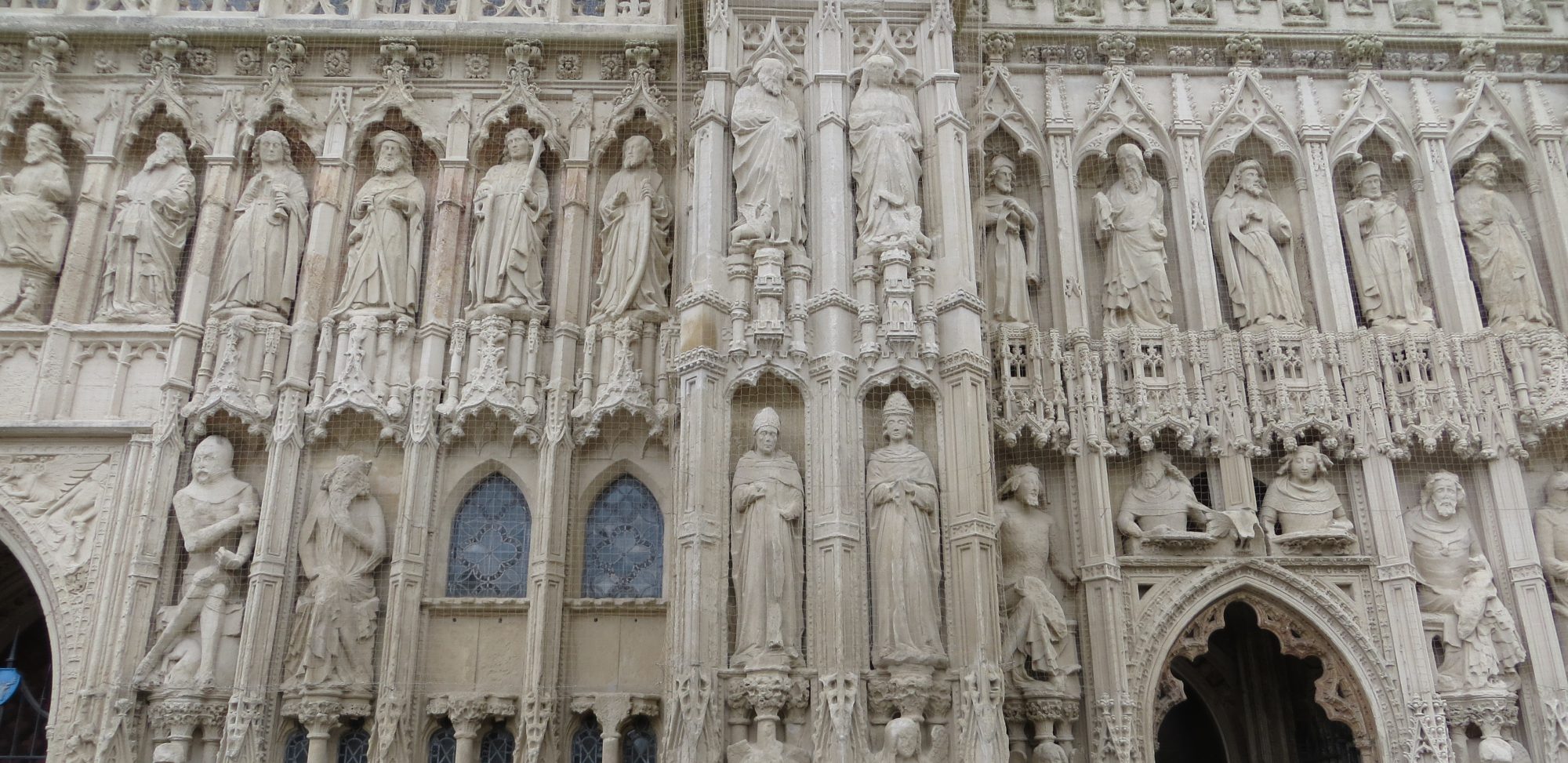
Immersing ourselves in the prayer of all times

This is proper to the Pastor, that he should be a man of prayer, that he should come before the Lord praying for others, even replacing others who perhaps do not know how to pray, do not want to pray or do not make the time to pray. Thus, it is obvious that this dialogue with God is pastoral work!

I would say further that the Church gives us, imposes upon us - but always like a good Mother - the obligation to make free time for God with the two practices that constitute a part of our duties: the celebration of Holy Mass and the recitation of the Breviary. However, rather than reciting it, this means putting it into practice by listening to the word which the Lord offers us in the Liturgy of the Hours.

It is essential to interiorize this word, to be attentive to what the Lord is saying to me with this word, to listen, then, to the comments of the Fathers of the Church or also of the Council in the Second Reading of the Office of Readings, and to pray with this great invocation, the Psalms, by which we are inserted into the prayer of all the ages. The people of the Old Covenant pray with us, and we pray with them. We pray with the Lord, who is the true subject of the Psalms. We pray with the Church of all times. I would say that this time dedicated to the Liturgy of the Hours is precious time. The Church offers to us this freedom, this free space of life with God, which is also life for others.

Thus, it seems important to me to see that these two realities - Holy Mass truly celebrated in conversation with God and the Liturgy of the Hours - are areas of freedom, of inner life, an enrichment which the Church bestows upon us. In them, as I said, we do not only find the Church of all the ages but also the Lord himself, who speaks to us and awaits our answer. We thus learn to pray by immersing ourselves in the prayer of all times, and we also encounter the people. Let us think of the Psalms, of the words of the Prophets, of the words of the Lord and of the Apostles, and of the teaching of the Fathers.

Benedict XVI To the priests of Albano diocese

A reasonable deliberation of the right ordering of our life together

Between Evangelicals and Catholics there have been long-standing differences on the capacities of human reason. To put it too briefly, Evangelicals (and the Protestant traditions more generally) have accented that human reason has been deeply corrupted by sin. Catholics, on the other hand, while recognizing that human reason has been severely wounded by sin and is in need of healing, have held a higher estimate of reasonâ??s capacity to discern truth, including moral truth. We, as Evangelicals and Catholics together, affirm that the knowledge of God necessary for eternal salvation cannot be attained by human reason alone apart from Divine revelation and the Holy Spiritâ??s gift of faithâ??s response to Jesus Christ the only Saviorâ?¦.

We also affirm together that human reason, despite the consequences of sin, has the capacity for discerning, deliberating, and deciding the questions pertinent to the civil order. Some Evangelicals attribute this capacity of reason to â??common grace,â?? as distinct from â??saving grace.â?? Catholics typically speak of the â??natural law,â?? meaning moral law that is knowable in principle by all human beings, even if it is denied by many (Romans 1 and 2). Thus do we, as Evangelicals and Catholics together, firmly reject the claim that disagreements over the culture of life represent a conflict between faith and reason. Both faith and reason are the gift of the one God. Since all truth has its source in Him, all truth is ultimately one, although our human perception of the fullness of truth is partial and inadequate (1 Corinthians 13:12). Thus do we invite those who disagree, including those who do not share the gift of faith in Christ, to join with us in attempting to move beyond â??culture warsâ?? to a reasonable deliberation of the right ordering of our life together.

That They May Have Life A statement of Evangelicals and Catholics Together

What is a university?

First – and perhaps surprisingly – there is a profoundly political element in the university. It is taken for granted that those who exercise power in a society need to be formed in a particular culture. They need to learn how to reflect on the social interactions around them; they need to learn how to evaluate the reasons that people give for actions and policies. Part of that training in how to evaluate reasons and arguments – and also ideals and aims – has always involved reference to the basic texts of a culture, sacred or not, which are regarded as setting out patterns of human life in society that continue to serve as an orientation….

Universities should devote serious resource and energy to encouraging public debate on the shared values of their society. This does not mean that a university as such should be a nursery of simple activism and criticism; it does mean, though, that a good university is always looking for ways of opening up general intellectual debate about common hopes and values to the community around it. It does not exist only to refine the work of the specialist…

It is only when universities are free to pose their own questions that they fulfil their function of enabling people to ask about the foundations of what others take for granted.

What is distinctive about the university is that it seeks to nurture the ability to understand political processes and to weigh political arguments rather than giving uncritical loyalty to any programme.

The student who is in this sense discovering what it is to be a ‘political agent’ is discovering what it is to exercise thoughtful responsibility in the life of a society. And this is where a narrow definition of what the social and the political might mean has to be balanced by some historical perspective; it is in fact where (in a very broad sense) the ‘classics’ of a society are relevant, so that a good university allows space for students to test their ideals and concepts against a historical tradition expressed not only in opportunities for discussion but also in the university’s public ceremony and its standards and protocols for intellectual exchange. By its very existence, the good university expresses certain philosophical commitments - to civil discourse, to liberty of expression, to careful and honest self-questioning, and to the possibility of creating trust through the processes of fair argument and exploration of evidence. This cannot be reduced to the narrow atmosphere of pressure-groups.

Ideally, then, the elements of awareness of history and tradition, openness to intellectual innovation and concern for the widest possible engagement with public life should come together in the university to help nurture adult and responsible citizens. But for us in Europe, there are, of course, two major factors which complicate still further the position of the university. One of these has already been hinted at: it is a political and economic climate in which the expectation of short-term and practical results has affected attitudes to ‘free’ intellectual endeavour in some very adverse ways. A proper concern for accountability has produced a real anxiety about the volume of work produced by universities, and an increasingly sharp competitive spirit between institutions. Every university has to promote itself in two directions – towards the public, to keep up recruitment, and towards funding bodies, which in Britain and much of continental Europe will be under government direction, to persuade them of its profitability. This is not a climate that will disappear overnight; it is part of the way in which ‘market’ models have come to dominate so many areas of social and institutional life in our context.

The second of these challenges is the sheer diversity of the cultural scene in the modern West; not only has British culture, for example, lost a degree of contact with and confidence in a history or identity shared by British citizens, it is now inclusive of active and often lively immigrant cultures, whose relation with the majority may be in various ways strained. Against such a background, what would it mean to see the university as offering an induction into some kind of culture appropriate to people who will grow into public responsibility? Isn’t this bound to be hopelessly compromised by the existing dominance of one culture or class or ethnic group (as has been the case in Britain)? In the vast perspective of China’s diverse cultures, similar questions are bound to be in evidence; what role has the university in promoting social and political stability in a context where much rests upon the ability of government to sustain national cohesion and a universal pattern of law, welfare and equity?

Any university now attempting to promote the advantage of one racial or class interest would forfeit its credibility and authority. But the alternative is not an acceptance of pure ‘postmodern’ diversity, a chaos of non-communicating discourses for mutually isolated communities.

Archbishop Rowan Williams What is a university? Speech given in Wuhan, China

Effective heritage of Christian interpretation

Bray

I was scooting through 1 Corinthians for a group of students last week, and assumed that I knew what I want to say about chapter 15 on the resurrection of the body, but somehow I made rather a mess of it. What I wanted to say was that the resurrection of each Christian and the resurrection of the body of the whole church is one resurrection. I needed to find some patristic commentary on 1 Corinthians, but what New Testament commentary provides that? Since I have remembered Thomas Oden’s Ancient Christian Commentary of Scripture series.

Gerald Bray has edited the volume on 1 & 2 Corinthians Here’s the blurb:

Paul's letters to the Corinthian church have left a mark on Christian Scripture in a way that could never have been predicted. Here the pastoral issues of a first-century Christian community in what Chrysostom identified as "still the first city in Greece" stand out in bold relief. How was a community shaped by the cross to find its expression in a city that Chrysostom knew to be "full of orators and philosophers" and that "prided itself . . . above all on its great wealth"? How was church unity to be maintained in a setting where prominent believers, bending truth and morality to their own advantage, divided the body of Christ? Here lay the challenge for the apostle Paul. And as the apostle writes, the fathers lean over his shoulder, marveling and commenting on his pastoral wisdom.

Best known among these patristic commentators is Chrysostom, whose seventy-seven homilies on the two Corinthian epistles are a treasury of exposition and application. The fragmentary works of Didymus the Blind and Severian of Gabala give us samples of Greek exegesis from the Alexandrian and Antiochene schools. The partial work of Theodore of Mopsuestia, a commentator of great skill and insight, was long valued in the church. And the comments of Theodoret of Cyrus are notable for their sensitivity to the intertextuality of Scripture. Then there are Origen and Pelagius, whose names resonate with notable error, to the needless obscuring of their brilliant insights into Scripture. But pride of place goes to the unknown fourth-century commentator long mistaken for Ambrose and now dubbed "Ambrosiaster." His excellent commentary on 1 and 2 Corinthians has been unavailable in English translation, and for that reason it is excerpted more generously in this volume.

This Ancient Christian Commentary on 1-2 Corinthians opens a whole new way of reading these New Testament texts. The pastoral and theological interpretation of the fathers offers spiritual and intellectual sustenance to those who would read Paul again with open minds and hearts. Here we find the Pauline wisdom of the cross generating an effective heritage of Christian interpretation.

Bet you there is not a single copy in any theological library in London. Never mind. The tide is going to turn in this city. I'll put it on my Amazon wish-list.

A real desire for unity 3

So the most important thing of all is the desire to be one, and to prove that desire, not only by praying â?? because we pray for unity at every single liturgy â?? but prayer without activity, without work, is just blasphemous. To be praying all these things and not to be working, not be ready to make any possible sacrifice you could make that doesnâ??t violate the essence of the faith. In other words, the Orthodox have to desire unity and be ready to sacrifice everything that they can without violating their convictions about the gospel in order to be one, particularly with Roman Catholics.

I believe that the Orthodox, if we were serious about unity, would need not only to desire it, sacrifice for it, forgive everything, admit our own sins, distinguish between what is essential and what is not, but also would have to be ready to practice â??economiumâ?? on certain issues. This would mean, in my opinion, that we would have to be ready not just to admit that there can be different ways of singing, and different styles of liturgy, and different uses of psalmsâ?¦there are some issues, especially between Orthodox and Catholics, that Orthodox would have to be ready to tolerate for a while (even though they think the issues are bad) for the sake of unity.

What do I have in mind? Things like the â??filioqueâ?? clause in the Creed [the clause in the Nicene Creed that says that the Holy Spirit proceeds, not only from the Father, but also, â??filioqueâ?? â?? from the Son]... If Rome would say it was not there originally, that the way it was explained was not right, we now can agree on certain aspects â?? I think the Orthodox would have to say, â??OK, let them keep itâ?? rather than insist that every last church in Portugal drop the â??filioqueâ?? before we can have unity.

In other words, the Orthodox may have to go along with something for a while, as long as itâ??s clear how we understand it.

Father Thomas Hopko What would the Orthodox have to do to have unity?

The Word of God gives us authority to live – well

The liberal hermeneutic paradigm, fashioned by the controversy over historical biblical criticism, failed precisely because it thought it could count on there being a concrete moral truth immediately and categorically known to all, a peremptory and unchallengeable moral certainty. In this it failed to allow for danger. Action is always exposed to danger: we may turn out to have acted on false assumptions about the facts, to have misunderstood the situation in which we acted, to have formed an inadequate conception of our task, to have failed to envisage the good to be pursued, etc. etc. Nothing can guarantee us against such failures; nothing except perpetual vigilance can protect us from them. In failing to allow for danger, the liberal hermeneutic failed to pose the questions that engage us supremely in our self-disposal: questions of intelligibility and purpose in the life we live, questions of our responsibility for ourselves. Always pressing forward in pursuit of some speculative truth, it dared to take the answers to all these questions as read; in doing so, it by-passed deliberative reason and short-circuited the role of the intellect in the living of life.

The Word of God... operates to elicit moral decision from us about the kind of life we are to live in faithfulness to its judgment. Its role is to authorise us to live well, not to take authority away from us. So any judgment we make on the authority of that text is, at the same time, a judgment on ourselves, a moment of self-transcendence that it has brought us to achieve.

If only we understood what freedom really meant, and how difficult freedom is to accomplish, we would surely ask that text to give us rivers of living water!

Oliver O'Donovan Scripture and Obedience

Knight re-appears

Knight ascends mountain

First the DK blog slowed to a crawl. Then it disappeared entirely.

The beginning of term always means a pile of work. I am teaching a couple of courses on Scripture, which means becoming rapidly re-acquainted with the bible. At the same time various friends arrived with dissertations. It is a joy to read a good piece of systematic theology, and in recent months I have read parts and wholes of some cracking PhD theses on Pannenberg, Barth, Jüngel, Gunton and Jenson, and on the doctrines of creation and mediation. All vital for my education, but I have fallen behind, particularly with correspondence. But:

Congratulations Dr Marion Gray - 'Time and Eternity in the Theology of Robert Jenson and Wolfhart Pannenberg' London PhD 2006

Then the DK blog disappeared entirely for some days. I admit I felt as much relief as grief. But after a night-long struggle it was restored by valiant webmaster James Knight. JK is the real power behind this blog and I am always very grateful to him.

All this means that I am behind on the series I promised you. So coming up on the DK blog:

'Catholicity’ (four posts still to come)

'Our Giant - Oliver O'Donovan'

'Theology in London'

'Evangelical'

and something on atonement and penal substitution.

Catholicity 8

The Church is whole when all parts of the church are in communion with all others. For this reason each church must insist on the centrality of ecumenism and be disciplined by it. Notionally, all the leaders of the church meet together in councils in which the whole church is present. This council or assembly is a function of the mercy of God to his Church and by which the Church is renewed and sustained.

Ecumenism is not an extra, but an evangelical imperative. ‘The divided Churches are called to receive from one another or indeed to receive one another.’ This does not mean simply agreement on doctrine, but mutual ecclesial recognition, ‘the reception of one Church by another Church’ – in the eucharist. ‘The Church, although one, exists as churches (in the plural), and these churches exist as One Church in and through constantly receiving one another as sister Churches.’ (Zizioulas ‘The Theological Problem of Reception’)

Conciliarity is the practice of communion, that is, of sending apostles to, and receiving apostles from, all other parts of the church. Receiving Christ from these apostles and being obedient to Christ in them, is simply what Christian love is. The Church is love. The whole church’s sending, receiving, meeting, learning and teaching, disciplining and obeying, is the event of love. It is the life Christ lives to the Father. Indeed all society is an event of love, and a participation in the society of God, and no amount of corruption changes the truth of the origin of human sociality. Any particular society becomes, and remains, a society as it is formed in and disciplined by Christ, who is in one society with the Father.

But there is no worldwide council of the church. There is the weekly, or daily, celebration the eucharist, which both looks forward to the assembly of Christ with his whole people, and already is this assembly in miniature. And there are the many interim ecumenical meetings and forums of the church. All of them are partial, but if they are gatherings of the church, they give their witness by pointing forwards to the perfect eucharist of the whole church. In the eucharist we receive the whole Church, Christ and his whole people. We shall return to this theme in the next post.

Thomas Aquinas on a better concept of freedom 2

We are made for excellence. Developed through the four cardinal virtues prudence (practical wisdom), justice, courage, and temperance (perhaps better styled today, â??self-commandâ??) freedom is the method by which we become the kind of people our noblest instincts incline us to be: the kind of people who can, among other possibilities, build free and virtuous societies in which the rights of all are acknowledged, respected, and protected in law. Law is thus intertwined with freedom. Law can educate us in freedom. Law is not a work of heteronomous (external) imposition but a work of wisdom, and good law facilitates our achievement of the human goods that we instinctively seek because of who we are and what we are meant to be as human beings. Virtue and the virtues are crucial elements of freedom rightly understood, and the journey of a life lived in freedom is a journey of growth in virtue, growth in the ability to choose wisely and well the things that truly make for our happiness and for the common good. Itâ??s a bit like learning to play a musical instrument. Anyone can bang away on a piano; but that is to make noise, not music, and itâ??s a barbaric, not humanistic, expression of freedom. At first, learning to play the piano is a matter of some drudgery as we master exercises that seem like a constraint, a burden. But as our mastery grows, we discover a new, richer dimension of freedom: we can play the music we like, we can even create new music on our own. Freedom, in other words, is a matter of gradually acquiring the capacity to choose the good and to do what we choose with perfection.

George Weigel A better concept of freedom

With the aid of the Holy Spirit we must judge for ourselves

The Scripture tells us not to bear false witness against our neighbour. Whether this particular ambiguous statement we have it in mind to make will be false, or merely discreet, is something that the Scripture will not tell us; we must judge that for ourselves with the aid of the Holy Spirit. Yet everything the Scripture does tell us about truth and falsehood will contribute to making that judgment possible. The authority of Scripture is proved, then, precisely as it does, in fact, shed light on the decisions we are faced with, forcing us to re-evaluate our situation and correct our assumptions about what we are going to do....

The most mysterious question anyone has to face is not, what does Scripture mean?, but, what does the situation I am facing mean? If we have even begun to appreciate the nature of this question, and how a false judgment of ourselves can lead us to destruction, we shall be on our guard against any hermeneutic proposal to reverse the sequence of discernments, starting with our own situation and turning back to Scripture to look for something there to fit it. That presupposes that we already know the answer to the one question we dare not presuppose an answer to. Nevertheless, such proposals are common enough in theological discussion, sometimes with a liberal, sometimes with a conservative slant. It hardly matters which, since the two come closest to each other precisely at the point where they are both furthest from the truth. If the conservative thinks that all the Scriptural witness to moral behaviour can and must be honoured somehow, and the liberal that only some of it, or only most of it, must be honoured, what difference does that make if each thinks that conclusion has been reached from some self-evident intuition about what the times require, so that the appeal to the Scripture merely confirms what has already been decided? This is not to take Scripture seriously as an authority. And it is not to take living in the present seriously as a risky business....

Oliver O'Donovan Scripture and Obedience

A real desire for unity 2

When people ask me, for example, why the Orthodox jurisdictions in America are not united, the answer is very clear: because our leaders donâ??t want it. If they wanted it, we would have had it yesterday. There is nothing stopping themâ?¦ you may have to suffer a lot. You may have to give up some things: power, pre-eminence, prominence, property, possessions, prestige, positions, privilege and pleasure. Weâ??re not ready to give up those things because of pride, passion and prejudice. Forget it. Thereâ??s not going to be any unity. Thatâ??s what divides people generally, and it is certainly what divides churches. Now here I would allow myself one little â??not my businessâ?? remark: I have a hunch those same things are operating in the Eastern Catholic Churches, tooâ?¦

We will never be one unless we desire it with all our hearts, and are ready to put away everything that we can to have itâ?¦. Everything that doesnâ??t belong to the essence of the faith. Language doesnâ??t belong to the essence of the faith. Calendars donâ??t belong to the essence of the faith. Certain liturgical customs donâ??t belong to the essence of the faith. Even the Byzantine Rite Liturgy for us does not belong to the essence of the faith.

There was a whole thousand years when the Church had multiple rites of praise to God. In fact, the irony is, the time when there were the most multiple rituals for the sacraments and the services was the time there was the greatest unity in doctrine and spiritual life, evangelism, etc. In any case, the ritual is not of the essence of the faith. Language isnâ??t, calendars are notâ?¦ all those things are not part of the essence of the faith. But unless we have the desire for unity, which then would lead us to feel that we have an absolute obligation from God to distinguish between what is really essential and what is not, we are never going to be united.

Father Thomas Hopko What would the Orthodox have to do to have unity?

Catholicity 7

The bishop represents the whole history of the Church, all its apostles and doctors, to his congregation. He is the catholicity of the Church, in one person. In him the worldwide church makes itself present to each local congregation. A bishop is a member of the assembly of the whole church, drawn from every corner of the world. If the bishop is present, the whole Church is present in each particular congregation, so that the whole geographic and historic catholicity of the Church is present in that particular part of the world. This Church on earth is the form in which Christ together with all his people is presently visible to the world.

Bishops are apostles. The point about apostles is that there is a plurality of them. Twelve indicates completeness, so there is one apostle for every part of the world (The same is true of the seventy apostles, for there are notionally seventy nations in the world). When one apostle falls, his place is filled by another. Apostolic succession does not run individual to individual, so the power of consecration does not run bishop to bishop in unbroken quasi-physical transmission, no single gap in all those centuries. It is ‘possessed’ by the assembly and council of apostles and bishops as a whole, represented in the council of the whole church as this participates in the whole Christ. Thus the worldwide council of the church is a foretaste of the ultimate assembly of all creatures in worship of God.

The bishop teaches his people the doctrine of the whole Church, and when the Church refuses any part of these gifts and disciplines, and sets out to found its faith on something less than the full deposit of faith, the bishop will exercise the discipline that will bring it back to obedience, and he will endure the suffering that this will involve.

Postbag

EE

Dear Dr Knight

I am on my second reading of â??EEâ??. As a Lutheran layman I am a reader of First Things and Touchstone. My pastor and good friend has just left our Lutheran church and communion for the Church of Rome. About the time he announced his decision to leave, I ordered â??EEâ?? on a whim and a few reviews. I have found it to be an excellent work in addressing the problems of church division and modernity. I have been quite frustrated with the very questions you address: Creation, Israel, the work of the Holy Spirit, and how I raise my children in the midst of screaming cultural conversations. Thus my second reading. I am captivated by the bookâ??s premise of a Trinitarian theology in which God is bringing his people to a fullness and freedom through his dynamic work: Father, Son and Holy Spirit. I have often struggled in this highly individualized culture with how to participate in the life of God as Body of Christ and how the time afforded me fits with that of the fullness of that Body in its history. Thank you for your diligent work. It has helped to clarify much of what was bothering me so much. I shall probably have a number of questions â?? one of which I will ask you now. Do you have an outline of â??EEâ?? that would enable me to teach an adult class in my church? I really believe that Christians of all educational levels (and economic levels) are struggling with the questions your book so helpfully addresses. I intend on developing such a series of classes that relies on scriptural readings, parables, and questions pertinent to the development of an eschatology that informs faith and inspires Christian formation. Can you help me with this? Sincerely your in Christ, CG

* * * *

Dear Christopher Many thanks for your wonderful mail.

Yes I do have an outline of The Eschatological Economy, though it needs more work. I have written a series of posts on EE for the blog and to post on Amazon. I will send you what I have, though I don't know if it will help your class.

As for scriptural material for classes on eschatology that informs faith and Christian formation, I am working on that too. I have been putting together some chapters on Christian formation which I hope will be of some use to the church. I am going to call it The Apprenticeship, and it will cover much of the same ground as The Eschatological Economy, but more accessibly.

Everything that Christians say about time, history and the purpose of the world, which is that we come to share life with God, can be lumped together as eschatology. It is a catch-all for all the issues around our looking forward in hope and faith to his coming again in great glory. This means that we have to say that the world has a plot, but it doesn't really know what it is, so there are two rival accounts of the plot â?? the worldâ??s and the Lordâ??s. There is a double history: secular history and salvation history. It is the Christian privilege to point out the difference between them. That is the line I would take with a class.

But there are many other and better people working in these areas, I commend their works to you. I have started to compile lists of books on my Amazon homepage, but it is a long job and James Merrick (there is a link from my blog) for example does it better than I do. You can find out what my suggestions are by looking through those lists. It would be a lot quicker than waiting for me to produce new material.

I don't think there is any need to leave the mainline denominations, Lutheran, Presbyterian, Episcopalian, nor to feel abandoned when someone near, dear or senior does. There are many reasons why individuals might leave this or that congregation, but whether we leave or stay, the Christian life is always going to hurt, but we should always be glad of it.

We English used to think that we were in possession of the gospel: then we decided that we had seen through the gospel. Now we really don't know what the gospel is, but are still too proud to say that it matters to us. So churches don't run classes in England, and almost no one asks for classes. Where classes are run, by charismatic churches for example, they tend not to make connections between discipleship and intellect, and don't see the intellectual side work as real work. The Christian here is a student without a teacher (or teacher without a class) - a sparrow on the rooftop. Thanks. If you want more, please ask me again.

Douglas

You can find out more about The Eschatological Economy at Amazon.com or at Amazon.co.uk or at Eerdmans

Comments

As my hope of becoming an intellectual slips away I have begun to hope - much more ambitiously - that I could one day become a disciple.

So I don't know why those who leave comments on this site believe that their comments have to be so fantastically learned. This isnâ??t Pontifications you know. If I can post statements of the blooming obvious on this blog, so can you.

But I have got to show you two comments which seem to hope that intellect yet may serve discipleship.

From Brian Hamilton:

Could it be, I wonder, that the while Christian community is rightfully and graciously ordered, it never be ordered in a way that is structurally final except to reflect the dependence of all on the guiding presence of Christ? The church is ordered and re-ordered in each moment, always participating in Godâ??s work through the lives of all its members, but with the profound knowledge that this as often throws us on back on the lives of our children as it does on our trained theologians and pastors. It is the mark of our humility that there are no â??professionalâ?? or â??expertâ?? disciples, only all of us together pilgrims on a journey. And yet this does not imply a naive and disembodied â??equality,â?? or else it would also imply a rejection a rejection that the Spirit gives gifts of authority to all its members. And so it does not imply the rejection of a regular order that the church must rely on for regular guidance and strength. It only refuses to institutionalize and absolutize a particular order that God may at any moment interrupt, since all Godâ??s people are charged with the task of leading the faithful through in those moments for which they have been prepared. And this cannot be only an abstract point, since it is also an ecclesiological one about the multiplicity of the gifts of the Spirit.

Iâ??m not sure if this way of putting it quite works; Iâ??m aware of the tension in the trajectories Iâ??m trying to hold together. That may well be, however, a good picture of the (Anabaptist-Mennonite) tradition Iâ??m trying to represent, who at the same time rejects the absolute and untouchable ordering of a church that is fundamentally hierarchical, and still wants to speak in deep appreciation of the necessity of shepherds for guiding the church through the world. Or to illustrate the same thing in a different way: mine is a tradition that has at once maintained that all Godâ??s faithful are saints in the truest sense of the word, yet has insisted on telling stories of the memorably faithful. I find it an incredibly pressing project to articulate an ecclesiology that does not forsake the sort of ordering you are insisting on, but neither absolutizes particular structures of particular people that prohibit structurally the churchâ??s right dependence on, for example, its newly baptized.

And A. Steward says:

I appreciate your comment that,

â??Christianity stands for that order and reason that, by Godâ??s grace, will make us happy to share one anotherâ??s experience without wanting it exclusively for ourselves, and to participate in one another without trying to absorb or replace one another.â??

It might be the case that poor listening skills are predicated by this sort of failure to recognize the uniqueness of other people. We assume that anotherâ??s experience of life fits with our idea of â??timeless truthâ?? as we have experienced it, and so we end up hearing not them, but ourselves. I think your ideas here are particularly relevant to our American racial myth of the â??melting pot.â?? Perhaps Lutherâ??s doctrine of the Word might be helpful for redressing this, particularly where he talks about the need for the Word to be spoken, and this not by our own mouth, but by another, addressed to us. I always liked Bonhoefferâ??s line, â??The Word of God is always stronger in the mouth of our brother.â??

Yes, the Word of God is stronger in the mouth of our brother. Could it be that you are that brother? And all Godâ??s people are charged with the task of leading the faithful through in those moments for which they have been prepared. So speak up and say it plainly. Perhaps some aspect of our education in this faith is in your hands.

Thomas Aquinas on a better concept of freedom 1

The monumental achievement of Thomas Aquinas was to marry the wisdom of a millennium of Christian philosophy and theology to the new philosophy of Aristotle that had been rediscovered in Europe (largely through the mediation of Arabic philosophers) in the early thirteenth century. This intellectual marriage yielded a rich, complex, and (to use the precisely right word a few centuries before its time) deeply humanistic vision of the human person, human goods, and human destiny. Embedded in that vision of the human person was a powerful concept of freedom.

Freedom, for St. Thomas, is a means to human excellence, to human happiness, to the fulfillment of human destiny. Freedom is the capacity to choose wisely and to act well as a matter of habit or, to use the old-fashioned term, as an outgrowth of virtue. Freedom is the means by which, exercising both our reason and our will, we act on the natural longing for truth, for goodness, and for happiness that is built into us as human beings. Freedom is something that grows in us, and the habit of living freedom wisely must be developed through education, which among many other things involves the experience of emulating others who live wisely and well. On St. Thomas’ view, freedom is in fact the great organizing principle of the moral life and since the very possibility of a moral life (the capacity to think and choose) is what distinguishes the human person from the rest of the natural world, freedom is the great organizing principle of a life lived in a truly human way. That is, freedom is the human capacity that unifies all our other capacities into an orderly whole, and directs our actions toward the pursuit of happiness and goodness understood in the noblest sense: the union of the human person with the absolute good, who is God.

George Weigel A Better Concept of Freedom

A real desire for unity

By popular demand, and at the insistence of Matthew Baker, it is time for more from the wonderful Fr Thomas Hopko. What goes for the Orthodox goes for the rest of us. I have taken some liberties with Fr Hopko's paragraphs.

* * * *

If you are in Eucharistic communion, you are one church. That’s what makes the Church one. It’s the unity in the body broken, the blood shed of Jesus before the face of God. That’s where the Church is actualized on earth in the celebration of the mysteries: baptism, chrism, Eucharist. That’s what makes us one. That is where the unity of our doctrine is shown, our unity of worship, our unity of morals, our ethics, the unity of spiritual life.

We claim to belong to the one, holy, catholic and apostolic church of Christ, the church that teaches the gospel truly, fully, that prays properly, that acts and teaches the right way to behave according to Christ, according to God Almighty, according to the Holy Scriptures, the canons, the saints, the fathers, etc.

So what is really required… all above everything, is a real desire for unity…to want to be one, to suffer over the division, to weep over it, to carry it around like a sword in your soul that we who claim Christ and praise God in Christ (especially in this world which is getting less and less Christian as the clock ticks) are divided...

Father Thomas Hopko What would the Orthodox have to do to have unity?

Equality, inclusivity and confusion

The liberal gospel is that we are all the same and that we should all be the same. It demands the equalization of access and experience. This is a gospel of natural rights that says that no experience should be denied any of us, and that we should all be able to experience everything directly for ourselves. We should not have to experience anything at second hand through the mediation of other people.

But Christians can afford to be more relaxed than this about what we are able to experience. We can admit that it is fine to enjoy most things at second hand, and we say that enjoying experiences through other people, rather than first hand, is real and valid enough. We can say this because we insist that other people cannot be substituted for. We cannot replace other people, we cannot be them. We live through other people, and they live through us, and this of course requires that we are properly ordered one to another. This ordering by which we can be with other people is given to us - it is not a work of our own. Our Lord hosts us, provides us with these other people and orders us one to another. By giving his order to us, even imposing it on us, he makes it possible for us to be together and to participate in one another's experience.

The Christian faith says that good order makes for a good life, which means a life lived together with others. For the sake of this good order, the Christian life is ordered and can even admit to being hierarchical. The Christian faith identifies what is good, it searches for those skills, capabilities and virtues that enable us to identify with increasing accuracy what is good. It promotes what it calls discernment, or judgment (or insight, taste, sensibility). It praises excellence, and it gives recognition to those who are best, and who are best able to lead the rest of towards what is good. So the Christian faith is intrinsically about excellence. Excellence is a nice word for it, while is elitism a less pretty word for it - but the same thing is meant. Christianity is intrinsically elitist - it confesses a Lord and it involves us in following those apostles and disciples who can pass to us the order and authority of this Lord.

Yet the greater part of the leadership of my (Anglican) church does not believe in leadership. It is elite that declares that all elitism is wrong (though elitism is intrinisic to excellence) and denies that it is itself an elite. It holds its authority in order to stop anyone else (those it calls conservatives or fundamentalists) from doing so.

Our church leadership, the liberal clergy, is in a state of confusion about what it wants. It decides that the gospel is too complex for its hearers and sets about simplifying it down to inclusivity and equality of opportunity. But the simplification and falsification of the gospel represented by the agenda of inclusivity brings unending confusion. There is no way of answering the question of how we shall make everyone equal without taking the powers of an elite.

There is also no way of answering the question ‘equal to….what’? What is the criterion and measure to which we are going to equalize everything?

They dislike the thought that one is better than another (better taught and discipled in the Christian life, for instance). But there is no way around this, and confusion will reign until the leaders of our civilisation are prepared to re-admit the idea that not everything is the same as everything else, and that the differences between people are themselves gifts.

Christianity theology now stands alone in the Humanities for the case that difference and otherness means order and hierarchy, and for the truth that there is no particularity or uniqueness without difference, and there is no difference without order. Christianity stands for that order and reason that, by God's grace, will make us happy to share one another's experience without wanting it exclusively for ourselves, and to participate in one another without trying to absorb or replace one another. The grace of God will make humans of us yet.

Catholicity 6

The whole Christian community is under a discipline imposed upon it by an external authority. It is formed and disciplined, as it is redeemed, by Christ who comes to it from outside. But Christ is no absentee landlord who exercises only a distant or theoretical authority. The authority of Christ is exercised by Christ, made present to us in his whole people the Church, and carried out by the office-holders of the Church. The lordship of Christ presently makes itself felt as these specific overseers.

No community of Christians is under its own authority, and so no individual community can ordain its own leaders. This must be done for it by the rest of the church, by all other congregations, as it were. Such overseers are sent by the whole Church to each local church, which must receive this overseer and his discipline willingly, as a gift received from the whole Church. Because these overseers must be trained in the full deposit of faith, we need a trained and ordained clergy. Christ makes himself present to us in the form of these disciplinarians, who are responsible for connecting us to all the people of Christ, mediating to us the whole Church, and passing on to us all the characteristics of the servanthood of Christ. Obedience to the God who is really God is freedom, and obedience to his word and then, to those he made his apostles, is the form Christ takes for us now.

Our overseers are the love and discipline of Christ for us as they pass on what they have received from Christ and enable us to receive it in full and thankfully. We have to help these overseers to be good transmitters of the faith, and we do this by encouraging them to instruct us, and by taking our complaints to them and to God when they fail to do so. So discussion of the office of the bishop is no defence of clerical interests, but an essential part of the living witness of the contemporary Church.

Next we must relate the bishop to the assembly and to the plurality-and-unity of the whole Christ.

Fletcher-Louis on the temple and the cosmos

The key…lies in the fact that the Temple was understood to be not only the centre of the world but also a microcosm of the whole creation. To speak of heaven and earth passing away quite naturally evoked the image of its destruction. Conversely, to destroy the Temple was to destroy the universe.

That a temple could represent the entire cosmos was taken for granted in the ancient Near East, as any modern visitor to the temple at Karnak in Egypt knows. Solomon’s Temple was similarly constructed, albeit with its own distinctive Israelite features (notably, the bronze basin of 1 Kings 7.23-26, which was actually called ‘the Sea’). Like the Tabernacle, it was dedicated in the New Year festival which celebrated God’s creation of the universe.

According to Psalm 78.69, the sanctuary was built ‘like the high heavens, like the earth, which he has founded forever’. A careful examination of the account of creation in Genesis 1 alongside the description of the Tabernacle in Exodus 25-40 finds many points of correspondence between the structure and symbolism of the latter and the order of the former. These connections were not esoteric secrets hidden in scripture. They were very well known to Jews in Jesus’ day and were described in detail by such writers as Josephus and Philo in the first century AD.

This cosmic symbolism had a very specific purpose: it meant that everything that went on in the Temple gave a structure, order and stability to the whole world. Through its sacrifices, prayers and liturgy, the Temple was believed to integrate within itself the life not only of humankind but of all creation. For Jesus the Jew, Israel’s coming catastrophe meant the destruction of the old order. This had truly cosmological implications, as the Temple’s function of holding things together was about to come to an end.

Rather than longing for a cosmic meltdown, we must hear the groans of creation as the birth-pangs of the new age and pray, in the words of Romans 8.21, that it ‘will be set free from its bondage to decay [so that it may] obtain the freedom of the glory of the children of God’.

Crispin Fletcher-Louis at Third Way on Mark 13.24ff & 30f

Try Greg Beale The Temple and the Church's Mission: A Biblical Theology of the Temple for a summary of Israel’s theological cosmology