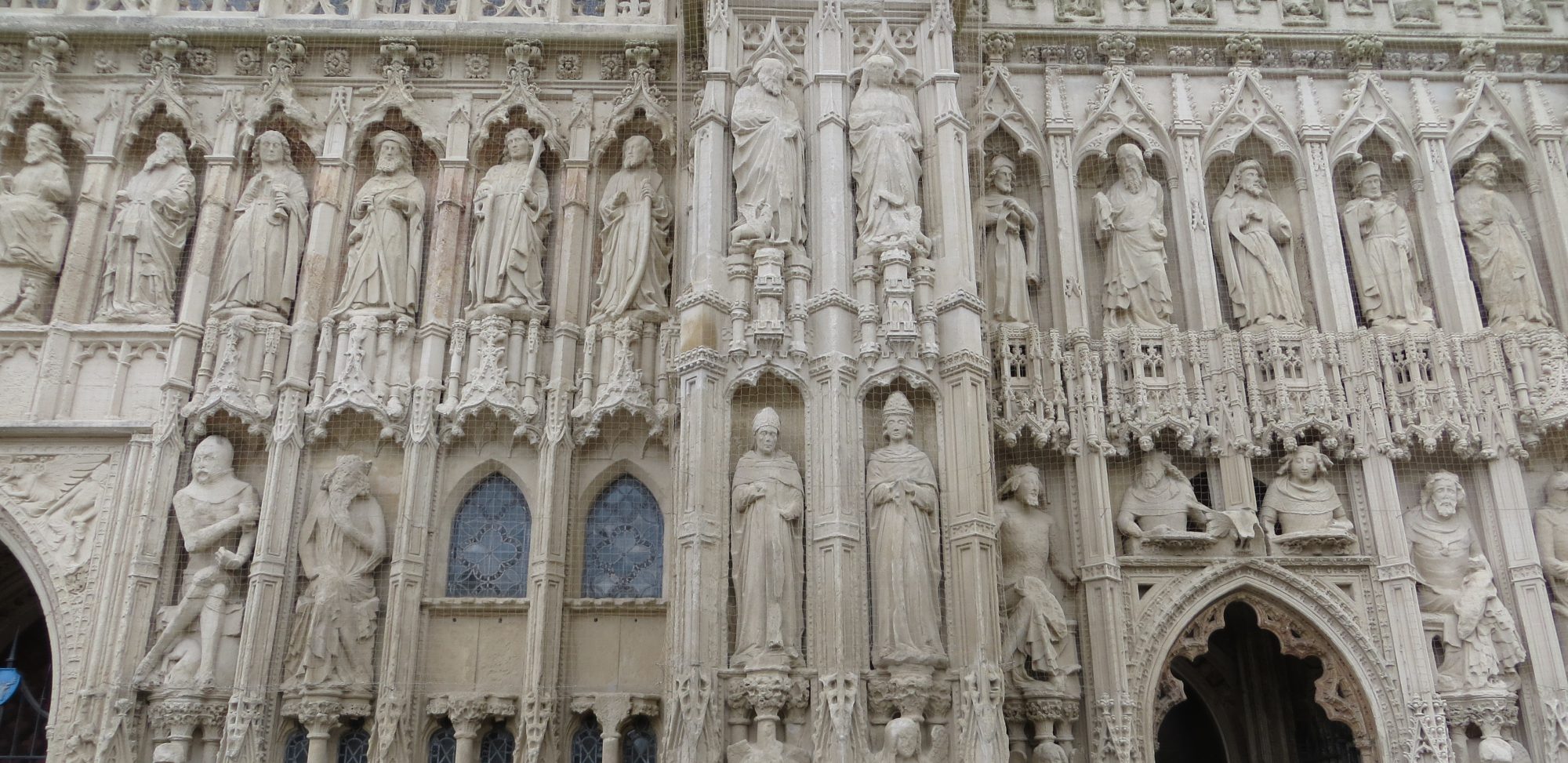
There are two very astute pieces from Pietro De Marco over at Chiesa on the Church and the public square in Italy, though it could be the UK that he is describing. The first is called A Catholicism deliberately absent from the public sphere
A first thesis: in the Tuscan communities, Catholic existence â?? outside of the circles of family and parish, or the many spiritual and intellectual cenacles, as well as the visibility circumscribed by the Sunday Mass and outreach activities â?? is, paradoxically, mainly notable for its absence.
This prevalent absence is an absence from what is called the public sphere. A dominant Catholic invisibility cannot be replaced by a thousand activities, as important and generous as these may be, in the social realm and in the domains of daily life. The public sphere is something else. The civil dimension of â??reactivating at the present time the values of the Christian faith and the ethical guideposts derived from itâ?? (Garelli) is not realized in the little things.
A second thesis: this Tuscan syndrome of a publicly absent Catholic existence is often translated into a presence of individuals in the intellectual or political sphere. This presence is mimetic. What does that mean? A mimetic presence is given if one acts by imitating and adopting the appearance and role of actors already familiar and accepted in the public sphere.
Thus the Catholic is by turns the tolerant mediator, the pacifist, the narrator of the glories of Florence in the twentieth century, the critic of the institutional Church, the extremist defender of the Constitution, the political leader on the side of the citizen, the priest of the disenfranchised (the other priests arouse distrust), the volunteer for strictly humanitarian reasons, the theologian who presents himself as a leftist intellectual, etc. Make no mistake, this mimetic presence is more often the expression of personal conviction than of an effort to mask oneâ??s identity.
A third thesis: this effective invisibility, constituted by a mimetic presence, entails the objective separation of the faith of the individual and of the ecclesial community from the public sphere. But at the same time, it faces recurrent appeals to break down the â??historical barricadesâ?? between the Church and civil society. If this contradiction is accepted with complacency, it is because Tuscan Catholic invisibility and its popular theorems have a background of weak theology, which makes it seem natural to merge the condition of the lay Christian with modern secularism.
So three points:
1. Christian institutions are being made, or making themselves, invisible, as Christian institutions.
2. We are happy to fall into the roles that the media is ready to acknowledge, and then Christian witness is identified with this or that individual rather than with the Christian community, so it ceases to be Christian witness.
3. This minimises the Christian difference. But the point of Christian witness is not to dissolve the difference between the Church and society - that would be to hide the distinctiveness of the gospel. The difference between Church and society must be clear, for the sake of society.
A lot of good theological diagnostic work is being done by the Catholic Church in Europe. The Catholics are teaching us how to be public Christians.
Are evangelicals in the UK listening to this? Are you listening Bible Society, Theos, Evangelical Alliance, Christian Today?