The Spirit-guided sensus fidei of the whole body of believers

For the first time in recent memory, Anglican conservatives have something to cheer about. Ever since the Episcopal Churchâ??s general convention in June, things have been moving rapidly in the Anglican world, and this past week was no exception. There were not one but two events sure to shape the future of Anglican polity and doctrine, following fast on the heels of a major statement by Rowan Williams, Archbishop of Canterbury. But instead of the almost obligatory gloominess of conservatives in response to, well, any significant action of their church, there is today a powerful sense of hope among many of the Anglican faithful, thanks to the long-awaited convergence of Canterbury, the Global South, and a substantial number of orthodox American bishops.

The case for hope starts with Abp. Williamsâ?? pastoral letter of September 15, addressed to the global primates. Just as in his previous letter to the primates, Williams affirmed the orthodox theological position on sexual ethics, recognizing it to be the mind of the Communion. Likewise, Williams duly noted that the actions of the Episcopal Church in convention could at best be called a â??mixed responseâ?? to the requests of the Communion, thus posing some â??very challenging questionsâ?? for the upcoming primatesâ?? meeting in February. At the same time, the archbishop cautioned conservatives against impatient and hasty actions that could lead to further schism. There is, he warned, no â??rapid short-term solutionâ?? to the current crisis capable of bypassing the need for Communion-wide discernment. The long-term solution, however, he made quite clear by his appointment of Archbishop Drexel Gomez, a conservative primate from the West Indies, to chair the forthcoming Anglican Covenant design group. It bodes very well indeed for Anglican identity that the Covenant, which will ultimately become a condition of full Communion membership, is to be overseen by a primate committed both to theological orthodoxy and Communion unity. And, not least, it bodes well that the Archbishop of Canterbury firmly wishes that it should be so.

Viewed as a whole, Archbishop Williamsâ?? actions and words can only be seen as positive from the perspective of those who hope to see the catholic substance of Anglicanism preserved. The Church of England is quite clearly not willing to give up either her children or her heritage, and while many conservatives have been understandably impatient at the seemingly glacial progress of Canterbury, it must not be forgotten that Williams is unable to jump ahead of decisions that can ultimately be made only by the entire Communion. Canterbury moves slowly by its very nature, but the irrevocable logic of the Covenant process guarantees its forward motion. So long as the majority of the Communion is dedicated to the preservation of Anglican catholicity and identityâ??and it isâ??the time will come, and soon, when the Covenantâ??s promise of mutual ecclesial subjectivity will entrust orthodoxy to that upon which it has always dependedâ??the Spirit-guided sensus fidei of the whole body of believers, living prayerfully under the authority of Scripture.

Jordan Hylden First Things

Catholicity 5

The Christian people is a vast assembly made up of all the members of Christ, both those who for us are in the past and the future. All the members of that assembly, the whole Christ, intend that we join them. Our full identity is there with them. They intend to make us present there with them, and the pass on to us the means by which we may fully take on our identity and take up our place in that assembly.

This future and final assembly makes itself present to the present world in two modes. It passes on the manyness and diversity of the whole Christ to each eucharistic congregation present in each location in the world. And it makes present to the world the unity of the whole Christ in the one indivisible Church in which each of these congregations participate. The Church participates in the unity and plurality of the whole Christ. It witnesses to the manyness and oneness of Christ, and it passes on to the world the manyness and unity it receives from Christ. The Church supplies the world simultaneously with both unity and plurality, identity and difference. The world receives its own unity and diversity, and with them its very existence, from the whole assembly of Christ. This act of witness shows that, in itself, apart from Christ, the world is not yet either one or many. Without the present assembly of the Church, present in every part of the world, both the unity and diversity of the world are in doubt.

The assembly of Christ’s people makes itself present in the eucharistic community in each locality. In its petitions it makes each locality present to God, and so that locality receives its existence. Each congregation that confesses Christ-with-his-whole-people, receives the discipline and shaping of the whole Church. The eucharistic community that receives the shaping of the whole Christ makes the whole future cosmic community present there in that locality. To participate in the whole it must seek Christ in every corner of his worldwide Church and beg each part of the body to give it that gift of Christ that it has not yet received. Thus each particular part of the world, represented and made present in the assembly called before God, seeks and receives the discipline of Christ learned and exercised worldwide and through all generations. Next we have to link this universality to the authority and discipline of Christ, that the Lord exercises through his entire Church.

The enlightenment lives from its Christian roots 2

We asked ourselves two questions: if rationalist (positivist) philosophy is strictly rational and, consequently, if it is universally valid, and if it is complete. Is it self-sufficient? Can it, or more directly must it, relegate its historical roots to the realm of the pure past and, therefore, to the realm of what can only be valid subjectively?

We must respond to both questions with a definitive "no." This philosophy does not express man's complete reason, but only a part of it, and because of this mutilation of reason it cannot be considered entirely rational. For this reason it is incomplete, and can only be fulfilled by re-establishing contact with its roots. A tree without roots dries up. In this connection, the Enlightenment is of Christian origin and it is no accident that it was born precisely and exclusively in the realm of the Christian faith.....

Christianity must always remember that it is the religion of the "Logos." It is faith in the "Creator Spiritus," in the Creator Spirit, from which proceeds everything that exists. Today, this should be precisely its philosophical strength, in so far as the problem is whether the world comes from the irrational, and reason is not, therefore, other than a "sub-product," on occasion even harmful of its development or whether the world comes from reason, and is, as a consequence, its criterion and goal.

The Christian faith inclines toward this second thesis, thus having, from the purely philosophical point of view, really good cards to play, despite the fact that many today consider only the first thesis as the only modern and rational one par excellence. However, a reason that springs from the irrational, and that is, in the final analysis, itself irrational, does not constitute a solution for our problems. Only creative reason, which in the crucified God is manifested as love, can really show us the way.

In the so necessary dialogue between secularists and Catholics, we Christians must be very careful to remain faithful to this fundamental line: to live a faith that comes from the "Logos," from creative reason, and that, because of this, is also open to all that is truly rational.

Cardinal Josef Ratzinger Europe’s crisis of culture

At the beginning of the academic year

If your college allows you to pay your academic fees in instalments, bring each payment with you to the theology seminar, lay it on the table in a big envelop.

But before you do this, go to the cathedral, stand inside the door and as people emerge from the morning eucharist ask them for a pound each to pay for your theological education. Tell them that you will come back to tell them what you have learned. And do so. Better still, ask the bishop, publicly and every time you see him, what his Cathedral theology school is teaching today, this week, this term.

Write the name of your church, or your several sponsors, on the envelop, and enclose letters from these congregations on their headed notepaper.

Mark the envelop ‘For the doctrine of God …. as taught by Irenaeus, Athanasius, Augustine, Anselm, Aquinas, Luther, Calvin, Owen, Edwards, Newman, Barth, Congar, John Paul II …. '

Always ask your teacher which Father or doctor of the church you should read on the matter under consideration. Whenever you ask your professor a question (do this often) preface it with ‘What shall I tell the people of St Mary's, Stoke Newington (or whatever your church is called) when they ask me … ’ then put your question to them. This will help focus the group and open the conversation up, and your teacher may very well find it helpful.

Our giant

ODO

Giants can still be found in Britain. Well, just the one giant really. He is our theologian, and he is an evangelical theologian.

His name?

Oliver O'Donovan

Author of The Desire of the Nations: Rediscovering the Roots of Politcal Theology and most recently The Ways of Judgment, O'Donovan is now Professor of Christian Ethics and Practical Theology in the University of Edinburgh. I have excerpted from O'Donovan’s public lectures, and posted on the significance of his and John Webster’s departure from Oxford. There seem to be just two photographs of him (not much of self-publicist then). This one was taken as O'Donovan was giving the sermon at the enthronement of his colleague Tom Wright as Bishop of Durham.

It’s hard to say what a single word sums up the O'Donovan kerygma, but I’ll go for ‘patience’ in the hope that you’ll hear the passio – listening to the tradition, being discipled by the apostles, serving an apprenticeship with all the doctors of the church, learning to suffer and so become robust enough to outlast the opposition.

We need time to be formed by that whole Christian tradition and to get to know, and know how to use, those many intellectual resources the Church has acquired in the course of the many centuries of its witness to the world. We learn from our predecessors in the faith by reading large numbers of primary texts (his From Irenaeus to Grotius: A Sourcebook in Christian Political Thought is an introduction to these texts, not an alternative). We may not hurry away from our predecessors with glib statements of what this means for us today.

O'Donovan is scholarly, patrician, awe-inspiring. ‘Evangelical’ is the only other epithet that does not bounce straight off him. Salvation is incorporation into the good company of God, which company and fellowship God has graciously extended to man. We are redeemed from our asocial isolation, and brought into love and life together in the society of man with God. This evangelical communion ecclesiology comes from the Augustinian and in particular the Anglican theological tradition. I think we will prosper as long as we go the way he is pointing. I think we will be stuffed if we go any other way.

If O'Donovan is new to you, Wikipedia has a bibliography and you could try Gilbert Meilaender’s review of The Desire of Nations . There is more critical response to The Desire of the Nations in A Royal Priesthood? – the collection of essays edited by Craig Bartholomew, to which O'Donovan adds responses, by the Scripture and Hermeneutics seminar - though they look like kids throwing stones at a very tall house without once managing to break a window.

O'Donovan is courteous and ready to grant as much as he can to his interlocutors, and to tackle the intractable issues of sexuality and church order and unity. This is what he is doing at the moment in a series of seven web sermons for Fulcrum, the first three of which have appeared: ‘The Failure of the Liberal Paradigm’, ‘The Care of the Churches’, ‘Ethics and Agreement’. Coming up next is ‘Scripture and Obedience’.

In the following posts I will talk about O'Donovan as:

Evangelical theologian Christian ethicist Political theologian Historical theologian Anglican theologian

I will of course make O'Donovan’s thought seem much less nuanced than it is. But I will let the man speak for himself with an excerpt from The Ways of Judgment

An effective church with an effective ministry holds out the word of life

The ministries are known by their effects; when we see the effects we may discern that the Spirit is giving the church its authentic shape. What impact, then, will these effects have on the politics society in which the church lives? If a political society has in its midst a church that is taught by the episcopate not to confine its deliberations to the local, national, linguistic, or racial sphere, but to explore contested issues in a catholic manner, not only attending to Christians from every present source, but also from every past age, it must have a profound effect. A society influenced by a such a church will be restrained from universalizing its own local experiences and perspectives. The narrow and culture-bound spirit which expects to exports its local assumptions and values en masse and makes no effort to learn from others, meets a roadblock when it comes face to face with a church support by a functioning episcopal ministry.

An effective church with an effective ministry, in holding out word of life, than which there is no other human good within the world or outside it, will render assistance to the political functions in society by forwarding the social good which they exist to defend… In holding out the word life, an effective church with an effective ministry issued, the call ‘Repent, for the Kingdom of God is at hand!’ and so in the short, medium and even penultimate term the presence of the church in political society can be a disturbing factor, as those who first thought Christianity worth persecuting understood quite well. It presents a counter-movement in social existence; it restrains the thirst for judgment; it points beyond the boundaries of political ideology; it undermines received traditions of representation; it utters truths that question unchallenged public doctrines’.

Oliver O'Donovan The Ways of Judgment 291-92

Catholicity 4

So far I have said that in the eucharist we receive our place in the one loaf of Christ glorified together with his people. In the eucharist all are called and gathered together in Christ, and through him we will be connected to, and so become alive to, all other people. When we are at last connected to one another, we will no longer be isolated entities, are our life be be supplied to us without limit.

It is not only that we are being fitted together in a vast living company of people, but that this company is being fitted to the cosmos. Humanity and nature are in process of reconciliation and integration. The church and the cosmos, like two halves of a single piece of engineering, are being brought together to form one vast entity. We are learning how to get into time with the cosmos, and the cosmos is being brought into synch with us. When humanity and nature are fitted together, and move in step, they will make a single beautiful working whole, called ‘creation’. But in giving the loaf to you, he is making it complete. It is not complete without you, but as you take hold of it and it is so joined to you, it is made complete. You are the completion of the cosmos. So the eucharistic loaf is a world-loaf – all creation united with Christ. We will be complete, and live with, rather than against, the order of creation. When Christ is all in all, we will all be in all.

This bread, which we now understand is the loaf, shows the world the present and the future of the church, which is linked to the future of the cosmos. The loaf we see held up in the eucharist is the cosmos. It is shown to us so we can acknowledge that it is not yet complete, but still fragmented. It is waiting for us, and for many others. (The verb ‘shows’ is scarcely adequate to the case, but I’ll come back to it when I talk about participation and our Amen).

The Lord wants us to acknowledge that it is not yet whole loaf, and that we are all waiting for the rest of God's creation to come in and join this loaf. This incomplete loaf represents his commission, ‘Go into all the world’: the mass is commission and mission. We have to go out and get these many others and bring them back with us and present them to God here at this point. That loaf is one half of a tally stick: the point is to come up with the other half. So this bread is work. This work of bringing these many in is what is going on in the lifting them up (anaphora) or offering them. This means that we present them to the Lord for his inspection. This work is Christ’s work. It is not our work apart from Christ. It is an invitation to participate in Christ, and so also in his work, to take it for ourselves, and to enjoy with him this labour of his along with its outcome.

Only within this assembly, that recognises and gives the proper name to all things as creatures of God, does this by participating (publicly for the benefit of world) in Christ’s office of lifting up (anaphora) the world to God. Only the assembly-member (represented by the bishop) in the assembly can carry out this priestly office. Thus only the bishop is the priest, and only when all those around him, all the people of God, accompany him in this act, so it is their act because his, his because theirs, their joint act because the act of Christ. In the next post I will talk about the significance of the bishop.

Soul and body

Months ago I promised that I would post pieces from The Apprenticeship. I haven't told you anything about the purpose or structure of the book, and without any context, passages may not make all that much sense, but let’s try anyway.

This first piece comes from a section asking ‘Which comes first – the individual or society?

Man is a social animal. We do not live in isolation. We live our lives before others: they make up our audience. We are influenced by them and they are influenced by us, so we wield power over one another. Others observe what we do as much as we watch what we do: they copy us and we copy them. Everyone is looking out for anyone who has good idea or has find a better way of doing the things we do. Better ideas are picked up and integrated.

Man is always with his company and his audience. Each man stands before his own home crowd. He plays to them and they receive and acknowledge his acts, and his acts only have sense to the degree that they acknowledge them. Our every act makes that act first acceptable, then compelling and over the long term binding over others.

But we are not only in relationship with those we are aware of, whom we see and can name. We are also in relationship with others all across the world, who want (or no longer want) the goods and services we produce, with the result that we are making money or struggling financially. Their demand for what we do means that we have a position, in a firm, with all its security and recognition. Though they may be unaware of this, we receive our place, and in it permission to do a range of things, from them. Our identity, even perhaps our very existence, comes from them.

But we are not only in relationship with those who are alive now, our contemporaries across the globe. We are also in a different sort of relationship which those who preceded us, and who set up the institutions and infrastructure that we take for granted, and from whom who have inherited our worldview, the palette from which we select what we regard as our own personal views.

Let us imagine that we do we are observed by others, who inhabit spectator galleries far above us, and of which we are unaware. Ancient people thought of the world as a series of galleries, such that the people who come before us, who are now dead to us, continue to take an interest us while they lead lives in a parallel sphere. Between us is a screen of one-way glass, which means that they can consider us part of their world, but we are unaware of their existence. It wouldn’t matter if we thought of our invisible predecessors as living not above us, but below us, in a basement of which we have no knowledge.

The ancients placed the ancestors not only in the notional spirit of the heavens, but also deep beneath us, because they were able to regard past and present as different floors of a single building. In our modern metaphysics we regard what is past as either behind us or as nature, which in worldview expresses as beneath us, constituting the ground on which we stand. It is not just ancients who visualize different times, past and present, as different locations relative to ourselves, whether arranged vertically one above another, or in some other way.

If we indulge the ancients a moment longer however, we will see that they sometimes visualize our predecessors as a crowd of sympathizers who look down us, and who regard us as their man in the field. We are not only their DNA, but their memes, their worldview, adapted so it survives in a new climate. When we think, it is with the conceptuality they have passed on to us; though we are oblivious of them, we may still be serving their agenda. Then we can say that any man represents and personifies his predecessors and ancestors to us. We could even say that they send him to us. The living man represents and incorporates his ancestors, as though the assembly of ancestors sends out an individual, the individual we see before us in our time.

The ancient world imagined that the ancestors were either above us, or below us, but just out of sight. They want to be our audience, because in some way the outcome of their lives rests on us, on our remembering them or vindicating them by continuing to do what they did. If we have no successors, not only will there be no one to remember us, but no one to remember them, so their memory and ours will disappear and that would place a question mark over our existence. This sort of thinking may seem foreign to Westerners, but there are two points to make here. One is that it may seem much more obvious to non-Westerners. The other is that I don't think it is as far removed from our Western thinking as we assume, and even that modern Western thinking is an attempt to conceal this issues, and our anxiety, about other people and other times than our own.

Now here is the pay-off for all this cosmological speculation. The company of the ancestors are our soul. The soul is a plural thing. It does not greater matter if we call it the self, or the mind, though I will stick with ‘soul’ for now. We are plural beings, made of two (in some accounts, three) elements, soul and body. We should regard the soul as a noisy convention of ancestors arguing about how best to push forward their identity in the world in which we live, and in which they live through us. We could say that we are the body, while our soul is them. We, the body, are the message boy that the soul sends into the world in order to represent it to other bodies representing other souls. We could say that we are the body and while our soul is our ancestors. But the soul is also us, or is even more us than is our body, for the soul is our past, our agenda and our future.

It is not necessary for us to buy into any worldviews such as these. But the Christian claim is that we are in one world, and a single world-community, not only with those around us now, but with those who have been and who will be, here where we are now. I have sketched for you the beginnings of a participative ontology, or account of corporate personality. This might come in handy when talking through the Christian understanding of communion, as in the communion of saints, eschatology and the eucharist.

The enlightenment lives from its Christian roots 1

The Muslims, who in this respect are often and willingly brought in, do not feel threatened by our Christian moral foundations, but by the cynicism of a secularized culture that denies its own foundations. ... The same is true for the reference to God: It is not the mention of God that offends those who belong to other religions, but rather the attempt to build the human community absolutely without God.

The banishment of Christian roots does not reveal itself as the expression of a higher tolerance, which respects all cultures in the same way, not wishing to privilege any, but rather as the absolutizing of a pattern of thought and of life that are radically opposed, among other things, to the other historical cultures of humanity.

The radical detachment of the Enlightenment philosophy from its roots becomes, in the last analysis, contempt for man. Man, deep down, has no freedom, we are told by the spokesmen of the natural sciences, in total contradiction with the starting point of the whole question. Man must not think that he is something more than all other living beings and, therefore, should also be treated like them, we are told by even the most advanced spokesmen of a philosophy clearly separated from the roots of humanity's historical memory.

Cardinal Josef Ratzinger Europe’s crisis of culture

Benedict: Human beings share in reason

It may sound strange, but the pope's main point is that the most pressing problem we face in the world is not the nature of faith, but the nature of reason. How could he say this? Isn't the problem today simply religious fanaticism and the intolerance associated with it? The pope certainly thinks these things are problems; he's not a stupid man.

Yet in the course of his very brief treatment of Islam, he points to another dimension of the issue: How do we understand the relationship of reason to the divine?

The quotation that caused all the furor involves a 14th-century dialogue between a Byzantine emperor and an educated Persian on the subject of Christianity and Islam. The pope quotes the emperor, who says: "Show me just what Muhammad brought that was new, and there you will find things only evil and inhuman, such as his command to spread by sword the faith he preached." Fighting words to be sure, but the pope does not quote them favorably. Rather, Benedict uses the quote to illustrate his deeper point. For Christians, it is always wrong to spread the faith through violence, precisely because of what the Christian faith claims about God. The pope says that "violence is incompatible with the nature of God" because acting against reason is contrary to God's nature. God is reasonable, not willful or arbitrary.

This may seem like an abstract theological point, but much of our common life hangs on it. By analogy, what if the people who ruled our country were willful and arbitrary? What if they said they were above reason or even acted contrary to it? If they made no pretension to being reasonable, there would be no reason for them to shirk away from threats and violence.

By contrast, we demand reasons from our fellow citizens, and especially from people in charge, when they act in the public sphere. In turn, we (hopefully) respect our fellow citizens' intelligence and good will enough to give them reasons when they ask us to justify our own actions.

When we do this, we are making a large statement about the way things are: Human beings share in reason, and we need to justify the decisions that govern our common life by appealing to reason so that we can persuade rather than manipulate. Manipulation and violence are wrong because they violate who we are most deeply as human beings.

The pope's point is partly that religious people believe God is the fundamental ground of reality. If we think that what is most real is willful and arbitrary, we can justify all sorts of irrational domination and violence. He is urging us to rethink the essential connection between God and reason.

Thomas W. Smith Pope's focus: Reason

Europeans and debate

I have to say I am stunned by the way some sectors of the European left appear to be reacting. I had heard they were rallying to Benedict's defense, which may be true generally, but not in two stories from The Guardian. Both are bitter, bitter attacks on Benedict, who they say is the bigot in profound need of repentance.

Never mind that they quite obviously haven't understood the speech, that Catholics aren't blowing up mosques this week or burning anybody in effigy, and that Benedict's remarks were mild compared to the anti-Christian and anti-Jewish stuff that is routine amongst Muslims.

I am really shocked. I would have thought that the defense of Benedict - at least along the lines that free debate is necessary & isn't helped by violent temper tantrums when somebody critiques you, and that the spread of Islam by violence is a legitimate talking point - was a no-brainer for liberals, but apparently not.

I hope what I'm reading isn't a general trend. Perhaps I've been naive, but it frightens me about European Enlightenment rationality; what I think we see here are pundits who are more interested in venting pre-existing anti-Catholic prejudice than in taking the case on its merits, and that worries me about their intellectual capacity for the work that needs to be done in the next few decades.

Chris Roberts

Christology from London

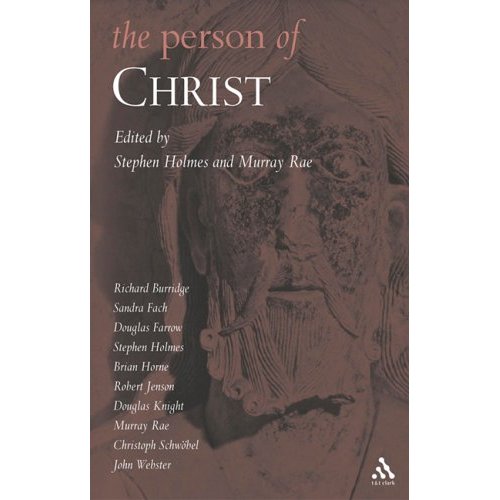
Person of christ

The Person of Christ is a product of King's College London - before the glory departed. Here is what T & T Clark says about it:

Understanding the Person of Christ affects our understanding of all Christian theology. All ten contributors to this volume share a commitment to the orthodox theological tradition in Christology as expressed in the creedal heritage of the Christian church, and seek to explicate the continuing coherence and importance of that theological tradition. The book's ten essays cover such topics as prolegomena to Christology, the incarnation, the person and nature of Christ, the communicatio idiomatum, the baptism of Christ, the redemptive work of Christ, the ascended Christ, and New Testament Christology, and offers critical engagements with such diverse theologians as John Calvin, Charles Williams and John Zizioulas. The contributors, all leading academics, include: John Webster, Richard Burridge, Robert Jenson, Stephen Holmes, Douglas Farrow, Brian Horne, Murray, Douglas Knight, Sandra Fach, Christoph Schwoebel.

More great work from Kings is appearing in November and spring of next year, five volumes that I know of, among them Colin Gunton's Lectures on Karl Barth, so the old place is enjoying a great afterlife. Friends will find advance notice of Alan Spence's The Promise of Peace: A Unified Theory of Atonement at T & T Clark, but for the rest of you I am saving Alan for my 'theology in London' series (for which I'd welcome suggestions for candidates).

Benedict - talking to Muslims

Richard Neuhaus at First Things (On the Square 18th September) offers a variety of views on what Pope Benedict said last week at Regensburg. Neuhaus himself says this:

â??Pope Benedict â?¦ is a man of great gentleness and deliberation and extremely careful to say what he means. What he said at Regensburg he has said many times before. Contrary to many reports, he has not apologized or retracted his argument. He has indicated sincere regret that many Muslims have reacted to his statement as they have. The response of those who are properly called jihadists is, â??If you donâ??t stop saying weâ??re violent, weâ??re going to bomb more churches, kill more nuns and priests, and get the pope too.â?? In short, the reaction has powerfully confirmed the problem to which Benedict called our attention.â??

The very reverse of inflammatory or careless, Benedict appeals with very great courtesy and encouragement to beleaguered moderate Muslim, anxious to help them win the argument against extremists. There is no great difference between Benedict and John Paul II here.

And here is part of a longer excerpt from Benedict himself speaking to Muslims:

It is in this spirit that I turn to you, dear and esteemed Muslim friends, to share my hopes with you and to let you know of my concerns at these particularly difficult times in our history. I know that many of you have firmly rejected, also publicly, in particular any connection between your faith and terrorism and have condemned it. I am grateful to you for this, for it contributes to the climate of trust that we need. Terrorist activity is continually recurring in various parts of the world, plunging people into grief and despair. Those who instigate and plan these attacks evidently wish to poison our relations and destroy trust, making use of all means, including religion, to oppose every attempt to build a peaceful and serene life together.

Dear friends, I am profoundly convinced that we must not yield to the negative pressures in our midst, but must affirm the values of mutual respect, solidarity and peace. The life of every human being is sacred, both for Christians and for Muslims. There is plenty of scope for us to act together in the service of fundamental moral values.

You, my esteemed friends, represent some Muslim communities from this Country where I was born, where I studied and where I lived for a good part of my life. That is why I wanted to meet you. You guide Muslim believers and train them in the Islamic faith.

Teaching is the vehicle through which ideas and convictions are transmitted. Words are highly influential in the education of the mind. You, therefore, have a great responsibility for the formation of the younger generation. I learn with gratitude of the spirit in which you assume responsibility.

Christians and Muslims, we must face together the many challenges of our time. There is no room for apathy and disengagement, and even less for partiality and sectarianism. We must not yield to fear or pessimism. Rather, we must cultivate optimism and hope.

I donâ??t see how you can get more gracious or encouraging than that. "I learn with gratitude of the spirit in which you assume responsibility." That is certainly how I feel about Benedict, and only wish he could say it to me and my lot.

For more good sense on this issue, see Amy Welborn and Anne Applebaum in the Washington Post.

Catholicity 3

Jesus does not come to the individual believer alone, but to his whole community. And he is not merely present to us, but brings us into this community and incorporates us in this body. It is Jesus Christ who comes to me, anointed (_christ_ed) with his whole people. As members of that people, we are part of that christ-ing.

We exist, you and I, purely because Christ holds us in his regard. He never loses concentration, and his regard is our whole life-supply. Though we may be hidden from all other people, dead to them, yet we are sustained in life by Christ. He will bring us to them, and them to us, so that as we are increasingly united to one another we become alive with the complete life of our Lord. We will live, and flourish, and enable one another to flourish without limit and gloriously, as his regard brings us into connection with one another. In his regard we will participate in one another, and live to and from one another.

Now Christ calls us to receive from him all whom he calls together in his eucharist. Like Jacob sending his flocks ahead to Esau, Christ sends us all these people ahead of him to us. To receive him we have to receive them, all of them, refusing none. They are all of them part of the loaf he intends for us. As we take them from him, as his members, they become part of us and we become part of them. We will receive our name and identity from them, and cannot attempt to be ourselves without them. We may not define ourselves by any more exclusive definition or smaller group. The identity that we will receive from this vast company will make us universal beings, for Christâ??s is the true and universal eucharist.

In the eucharist we pray and ask God for the whole of future body of Christ. We look forward to all those who are to come, and who will make that body complete, and we wait, and mourn, for those who are not yet present. Their absence means that we are not yet present as we want to be. The whole Christ, and our own very being, is waiting for them.

For us now the eucharist is exclusive, partial and anticipatory, for this kingdom has not yet come. Our way into this communion is through the exclusive path of the cross of Christ, in which the many exclusive groups and false universals (â??catholicitiesâ??) are stripped off us.

Benedict at the university of Regensburg

There was a lively exchange with historians, philosophers, philologists and, naturally, between the two theological faculties. Once a semester there was a "dies academicus" (open debate/general studies day?) when professors from every faculty appeared before the students of the entire university, making possible a genuine experience of "universitas": The reality that despite our specializations which at times make it difficult to communicate with each other, we made up a whole, working in everything on the basis of a single rationality with its various aspects and sharing responsibility for the right use of reason -- this reality became a lived experience.

The university was also very proud of its two theological faculties. It was clear that, by inquiring about the reasonableness of faith, they too carried out a work which is necessarily part of the "whole" of the "universitas scientiarum," even if not everyone could share the faith which theologians seek to correlate with reason as a whole. This profound sense of coherence within the universe of reason was not troubled, even when it was once reported that a colleague had said there was something odd about our university: It had two faculties devoted to something that did not exist: God. That even in the face of such radical skepticism it is still necessary and reasonable to raise the question of God through the use of reason, and to do so in the context of the tradition of the Christian faith: This, within the university as a whole, was accepted without question.

Pope Benedict Faith Reason and the University

* * *

The Pope is concerned by the threat of fideism and radical scepticism to the university, to rationality, and to our aspiration to know reality. (Even the way web-names are assigned makes it clearer in Germany that there is really just one university - one universe of knowledge - not ultimately divided by its many campuses.) It is a speech on faith and reason. Benedict regards Christianity, Judaism and Islam as three traditions of faith and reason. He tells us that 'science' and social science are also traditions of faith and reason. All these traditions ('scientific' as well as 'religious') are tempted by fideism (which leads eventually to irrationalism and even violence). But although these traditions are all sometimes tempted to avoid the public examination of rationality within which they can remain truly reasonable and rational, they all have the resources to resist that temptation, and they should all do so, and do so together in the university. If the modern university does not allow the intellellectual exploration of the Christian gospel, the university will operate on a greatly reduced concept of reason and science, and more than that, on a greatly reduced concept of man, which would be impoverishing for that society and for all mankind.

Any attempt to maintain theology's claim to be "scientific" would end up reducing Christianity to a mere fragment of its former self. But we must say more: It is man himself who ends up being reduced, for the specifically human questions about our origin and destiny, the questions raised by religion and ethics, then have no place within the purview of collective reason as defined by "science" …

In this way, though, ethics and religion lose their power to create a community and become a completely personal matter. This is a dangerous state of affairs for humanity, as we see from the disturbing pathologies of religion and reason which necessarily erupt when reason is so reduced that questions of religion and ethics no longer concern it.

Benedict says that God has made himself known, so we do not need to despair of knowing anything about him or about the creation he has set us in. This makes our knowledge of this physical world, his creation, also basically reliable and reasonable. The Christians (often along with Jews and Muslims) can point out that they are the guardians of reason against what Benedict calls 'de-hellenisation', modern irrationalism's retreat from the Logos, and so from the assumption that the world is an ordered and reliable place. The university needs Christianity, and any other tradition that reasons about faith, in order to allow full exploration of the creation and of man, the creature of God.

Fletcher-Louis on the image of God 2

Genesis 1 is a polemic, in fact, against the polytheistic creation-accounts of other cultures in Canaan, Mesopotamia and Egypt. Where the Babylonians and Assyrians celebrated the gods’ creation of the universe through the slaying of the sea monster Tiamat, Genesis sets ‘the great sea monsters’ in the fifth day of creation (1.21). They are God’s playthings, not pre-existent enemies. Similarly, many of those beings who would usually make up the council are reduced in Genesis 1 to the ranks of creatures, if not objects: the sun is a ‘greater light’, and the moon a ‘lesser light’.

But if the divine council has been disbanded, it has not had all its assets seized, and its members continue in new and surprising ways. The heavenly bodies may no longer be gods but they are thoroughly personal nonetheless, ‘ruling over’ the day and the night as local administrators within the cosmic kingdom.

This personal, conscious aspect of creation is also assumed in Genesis 1.11, 20 & 24, where three times God commands one part of creation to produce another. For example, he says: ‘Let the earth put forth vegetation: plants yielding seed, and fruit trees of every kind on earth that bear fruit with the seed in it.’ And so, says the author, it did.

Creation itself participates in the creative process. This brings us to a dramatically new understanding of verse 26. When God says, ‘Let us make humankind,’ he is speaking to the rest of his creation – to heaven and earth and all its adornment. Thus, when he proposes that humankind be made ‘in our image and according to our likeness’ there is present the claim that men and women are made in the image and likeness both of God and of the cosmos.

This is not, it should be said, a new idea – it is familiar to Jewish mysticism. Indeed, a pre-Christian tradition spread throughout medieval Europe which held that Adam was created as a microcosm of the universe, his physiology and essential faculties each corresponding to an aspect of the created order.

We frequently hear now the complaint that (Western) Christianity and modern secular culture cuts humankind off from the natural world. On the one hand, this has allowed us free rein in plundering creation. On the other, it has given rise to an increasing sense of isolation, for both modern man and 20th-century Christianity.

Genesis 1.26 calls humankind to be both a unique bearer of God’s image and presence and a priestly representative of the material world of vegetation, animals, sun, moon and stars.

Here, too, Man is unique, for ‘in him all things are to hold together’ (Colossians 1.17). The whole created world is to be gathered up in the true man and woman. And, because humankind is God’s image, it is ultimately through us that earth, sea, sky and all that is in them are to be taken up into God’s own life.

Crispin Fletcher-Louis at Third Way Genesis 1.26 & Ephesians 1.22

Try Greg Beale The Temple and the Church's Mission: A Biblical Theology of the Temple for an accessible summary of Israel’s theological cosmology.

An implosion of the powers of practical reason

…Pluralism is difficult to argue for successfully.

To assert the right of plural moral judgment requires a careful account of the systemic social differences that make that right intelligible. So explanation of difference is the essence of a policy of mutual forbearance. It risks adding insult to injury to demand forbearance while at the same time refusing explanations. The sharp response to the innovations of Western Anglican churches from the churches of the ex-colonial territories owed much to the fact that the innovating churches had no programme of mutual explanation in view. And here, perhaps, the churches of the South and East made a mistake. They attributed the North American uncommunicativeness to racism. It is, on the whole, more likely that the North American churches merely acted, in default of a thorough deliberative process of their own, under the force of strong cultural pressure, the reasons for which they never explained even to themselves, since an ill-conceived doctrine of pluralism persuaded them that thinking was an unnecessary labour. They may have suffered something worse than a bout of racism, if such a thing can be imagined; they may have suffered an implosion of their powers of practical reason, the result of long habits of irresponsibility. And since theology is nothing if not a discipline of common reasoning about God and our life together, unless they recover it, their days of being churches of any kind are numbered.

Oliver O'Donovan Ethics and Agreement - the third Fulcrum web sermon

The mystical unity of Scripture and the Church

In the disintegration of Western thought the Church has been treated as sociological entity; its human, visible aspects have become separated in idea from its mystical and divine aspects. This dichotomy lies at the root of all our Western divisions, and this appears to be reproduced in them all. Thus the conception of a single divine-human organism reaching from heaven to earth tends to be broken up into compartments between which a great gulf is fixed. In the result the proportions of truth suffer and every element of the whole gets out of focus. Whether the earthly, visible part is thought of in ‘Catholic’ or ‘Protestant’ terms the result is grievous impoverishment. Moreover ‘piety’ and ‘mysticism’ become individual and isolated, instead to being the salt of the common life which is both divine and human because it is rooted in Christ.

There is a sense in which the mystical unity of Scripture correspond to the mystical unity of the Church. These two forms of mystical unity are complementary; each is necessary presupposition for the right understanding of the other. Each embodies God’s self-communication to man in Christ; each attains its true unity only in Christ. There is an indwelling of Christ both in the people and in the Book. A return to the sources of illumination in him is inevitably a return both to the message of Scripture about the Church and to the life of the Church as set forth in Scripture. Such a return is necessarily a permanent task of the whole Church, to which each of us contributes no more than a minute fragment.

L. S. Thornton The Common Life in the Body of Christ (1941)

Yes, we do have an Anglican communion ecclesiology, and in this work by a member of the Community of the Resurrection it is in the form of a biblical theology,

Catholicity 2

My caricature continues:

Catholic and Protestant deliberations on the eucharist tend to focus on the encounter of two individuals, Jesus Christ and the believer. In this encounter Christ makes himself present in the form of the wafer consecrated before us. In the eucharist Jesus comes to me in an event of transformation in which ordinary bread is made extraordinary. But it is not the bread which is being transformed here, but the Christian. The Christian is being made holy, transformed from one degree of Christlikeness to another, from partial to whole and perfect.

The loaf does not represent Christ individualised and therefore without us. The loaf represents Christ – and us with him. That loaf is him and us together. It represents us in part as we are (broken) and in part as we shall be (whole). Thus the loaf represents all humanity recapitulated in Christ, who together make the one. It is the Christ-and-his-people loaf, the Christ-in-his-kingdom loaf.

The resurrection does not just mean that one day my little body will be made to stand upright again. It is that I will be raised to you, and you will be raised to me, so that the relationship we once had will be restored, and the relationship that we never had will now begin. I will be alive because you will supply me with this life: you will be my source of life and I will be your source of life. This will be so because we will both be connected to Christ, who is the source for all of us, and he will give and receive us back from one another again, authenticating our reception of one another.

I have been running away from people my whole life long. But in the event of the resurrection I am turned around so that I run slap into those very people I have been fleeing. Our collision and sudden encounter is what the resurrection is, for me and for them. In this encounter we are brought into relationship with all others, and so transformed.

We are being brought into relationship with those who are (presently) living and with those who are (to us) dead. They are dead to us and to each other, but they are not dead to Christ. Even separated by death from all other persons, they are alive, because Christ does not end the relationship he has with them; as long as Christ does not let them go, they are sustained and cannot finally die. Christ does not believe in death; he does not give it an inch, and he will not allow its individualizing and isolating to prevail over us.

It is not that I am being transformed as a merely individual entity. Rather I am being turned outwards so that I can no longer be thought of as someone cut off and isolated from others. I am being adapted to fit each other living person. We are all of us being fitted to one another. Resurrection means that I am brought into living relationship with, and so made alive to, every other person, and they to me. The (future) body of Christ will be made of every living person. We are being broken out of our present partial and sectarian community and brought into a much bigger one, indeed into the universal community. Our small local sectarian loaf is being re-dissolved and baked into a much bigger loaf – one that is made of all.

Freedom detached from moral truth

John Paul II decoded the new threats to the "mystery of the human person" in the post–Cold War world, and he spent much of the decade of the 1990s trying to explain that freedom detached from moral truth—the "freedom of indifference" that dominated the high culture of the triumphant West—was, inevitably, self–cannibalizing.

Freedom untethered from truth is freedom’s worst enemy. For if there is only your truth and my truth, and neither one of us recognizes a transcendent moral standard (call it "the truth") by which to adjudicate our differences, then the only way to settle the argument is for you to impose your power on me, or for me to impose my power on you. Freedom untethered from truth leads to chaos; chaos leads to anarchy; and since human beings cannot tolerate anarchy, tyranny as the answer to the human imperative of order is just around the corner. The false humanism of the freedom of indifference leads first to freedom’s decay, and then to freedom’s demise.

George Weigel John Paul II and the Crisis of Humanism

Gresham College in London has a day conference on John Paul II as Philosopher in November

Representation and participation

EE

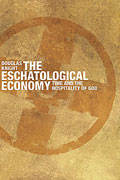
In The Eschatological Economy I wanted to show that one unfortunate consequence of reading the Scriptures without the doctrine of election of the people of God - first Israel, then also the Church - is that the Christian tradition has under-played the process of formation and transformation, and has little comprehension that a community is being changed, because it is being brought up by its God.

We have to learn the proper interrelations of Christian doctrine, or we will be putting together elements that don’t belong together. When too many scriptural notions are simply superimposed, rather than introduced only at the proper place in a narrative, we confuse what should be distinct accounts of the work of Christ.

The most obvious of these confusions is penal substitution, where sacrifice looks like the frankly pagan propitiation of a needy tyrant. To sum up what I have said so far: sacrifice does not belong with atonement; it is about the transformation of a people, so it belongs with sanctification.

The central Christian confession that ‘Christ died for us according to the Scriptures’ demands that we explain how one person can be for another. The concept of representation is crucial to the doctrine of the atonement. Here we must meet the important philosophical challenge of Kant to representation and atonement. Kant declared that one person cannot stand in for another.

So how is Christ for us ? How does he represent, substitute, intercede, supply what we lack and do what we cannot do for ourselves? The answer must take the form of a narrative of Christ that shows his action as public action, that takes place before the world, before his own people, before the Gentiles and in contest with them - and before God who approves his work.

I have been trying to set out these different audiences of Christ’s work, and to show that these atonement models also make sense in terms of a general purpose anthropology. For others do in fact speak up for us, stand in for us, invest in us – or at least we complain when they don’t.

If we go further and understand that we not merely are, but that we also we have a share in making one another the people we are, we could even call these models of atonement ‘social ontologies’.

A patient interest in Christian doctrine brings us to a concept of participation, which used to be called 'corporate personality'. We a concept of participation to explain what we mean by the term 'In Christ'.

You can find out more about The Eschatological Economy at Amazon.com or at Amazon.co.uk or at Eerdmans

Catholicity 1

Chris keeps nudging me towards saying something reckless about catholicity and ‘full communion with Rome’. His gambit is ‘Catholicism with a small "c" is incoherent without Catholicism with a big "C.".' I have resisted for months, for surely a real friend would not ask me to do anything so foolish. But now for your entertainment (ready with that outrage?) I am going to take a couple of posts to caricature and contrast two different ways of thinking about the church. Here goes:

The Western church begins its ecclesiology with consideration of the priest, the people and either the eucharistic host (or bible, depending on which is your side of the Reformation divide). It sees the eucharistic bread as one single wafer, broken for each individual communicant (or, the bible immediately open and comprehensible to the individual believer). Its ecclesiology begins with the church hierarchy, with the individual priest at the local level, and the pope at the worldwide level. The priest consecrates the bread and the people are formed by its reception. The pope holds the church together, making all these people and congregations one church. The logic here is that, though the authority of the priest is given by the pope and validated by him, priest and pope are individuals, but the pope is more so, his greater universal individuality sourcing and validating the individuality of each church in each locality (Yes, it is caricature, but I am trying not to take too long a run-up to what I want to say - this is only a blog).

On this logic the people are the church because the priest, or the pope, ministers to them. His ministry makes them who they are: he is not only the source of their unity but of their existence as church. The Western church makes this basic assumption of the singleness of the priest, and of the pope, and assumes that the manyness of the Christian people derive from it. Unity occurs at the expense of diversity.

The Protestant Reformers insisted that the people are made the people of God by baptism, the direct action of God, not by the ministry of the hierarchy. The laity do not depend on the hierarchy for their existence as the people of God. But despite its proper stress on the people of God, there was some part of the gospel that the Reformers did not adequately recover. They did not manage to show that the people of God are not only the recipients of the gospel, but also the form of the gospel. The manyness of the people of God is caused by the gospel because the gospel is Christ united with his people. He is never without them and they are never without him. They are never known without him, and he is never known without them. The gospel is the manyness of Christ’s people.

In the Western half of the church we have this basic and very deep assumption of a oneness or unity that occurs at the expense of diversity. Although the diversity is expressed, Western theology does not make clear that the diversity is not subordinate to the unity. It does not tell us clearly enough that plurality and unity are equally fundamental. To put it at its very bluntest, the Western church fails to tell us that the people, and included with them the leadership of the church (and not the leadership of the church without the people) who make the unity of the church. This is to say that Christ-united-with-his-people, never one without the other, who are the church. Instead we are left with the impression that the pope makes the church but the church does not make the pope, and the Reformers did not succeed in getting rid of this assumption from the deepest level of the logic of ecclesiology. This is implicit assumption, an aspect of the logic of the Western church – for no part of the Western church teaches this explicitly. But this logic holds good not only for the pope but it is also the logic of the position of every minister and pastor before every congregation. As such it is denial of the gospel embedded in the form and structure of the church.

So next I have to show that the Eastern Orthodox are the guardians of some part of the gospel, and of the logic, of the gospel, embodied in the public form of the church, that we Westerners have yet to learn. I will call this ‘catholicity’.

How to be a bishop - TEAC

Theological Education for the Anglican Communion (TEAC) has just published a set of outlines of what Christians and Christian leaders – clergy and bishops – can expect, what help they can ask for, and what is expected of them.

The outline for bishops presents a nuanced set of expectations for bishops-elect, bishops in their first year, and over the long haul.

It asks about the vocation of the bishop, clarity about the nature of ministry, about the bishop’s spirituality and faith, about leadership and collaboration, and considers the bishop as guardian of the faith and of the mind of Christ. It gives us an idea of the sort of pressures our leaders are under.

The candidate will have a thorough knowledge and understanding of the apostolic tradition that is to be guarded, passed on, and communicated, and ability to teach it effectively with grace (1 Timothy 3. 1-7; Titus 1; Irenaeus; Tertullian)

The bishop regularly and rigorously reviews the vocation of chief pastor, re-assessing how well clergy and people have been enabled, resourced and empowered, and the role of representative of the diocese in public life and for laity assessing how effective this has been

The elected candidate’s spirituality is grounded in Anglican liturgy and in classics of devotion

The incoming bishop will become an example of holiness of life appropriate to a more sensitive and exposed role in the public arena

Holiness in word and life, love for God’s people, humility and lack of self-promotion will be seen. The candidate will be secure enough to avoid becoming defensive or authoritarian

The bishop-designate or incoming bishop will devise safeguards against any temptation to self-aggrandisement or conversely to undue feelings of inadequacy

The bishop’s personal integrity has not become sacrificed to a multiplicity of expectations or role-performances

The candidate has shown ability to share responsibility, and praise or blame with co-workers; humility to share decisions with others; and also confidence to take initiatives and to lead from the front when required. The candidate practises courageous servant-leadership.

The incoming bishop will study and reflect on the meaning of ‘apostolicity’ in the New Testament, and the growth of Patristic, Reformation and particularly Anglican views of the chief roles of bishops.

The bishop will reflect on how to hold together unity and order with diversity but within acceptable limits. It will mean also critically discerning, in collaboration with trans-provincial and other colleagues, what these acceptable limits are.

The bishop continues to follow and to live out the example of Jesus as chief pastor, servant, intercessor, friend and example, when necessary accepting shame and suffering

Many glib remarks occur, but I just don't seem to be able to put them in writing. But I suppose we could say this:

Lord, give the bishops of the Church of Christ Jesus all the virtues and gifts of the Holy Spirit to perform and fulfill their tasks.

Lord in your mercy, hear our prayer

Scripture and doctrine reunited

HH

History and Hermeneutics is the latest volume from the ever-excellent Murray Rae. In it Murray shows how unnecessary the divorce of the bible from the church was; each stage of the separation was intellectually corrupt, but how when the gospel is allowed to shape our understanding of history, Christian doctrine retrieves its proper apostolic role in teaching the Church how to see and hear Scripture as God's gracious witness to the church and the world. Here is T & T Clark's description of his latest book:

History and Hermeneutics addresses the relation between historiography and hermeneutics during the past three hundred years of western thought, traces its genealogy from classical Greek thought, and argues that the practice of contemporary biblical hermeneutics has been radically impaired by a widespread allegiance to a series of problematic assumptions about history. The book offers a theological account of what history is, centred on the categories of creation and divine promise, and proposes that it is within this theological conception of history that the Bible may be understood on its own terms.

The book is both critical and constructive, identifying problems in hermeneutics and proposing a way forward. The ecclesial reading of Scripture and the value of tradition are rehabilitated and an account is given of how we may properly ask the question, ‘what really happened?’

1. History and History Writing; 2. Creation and Promise; 3. Resurrection - The Centre and End of History; 4. Seeing What Really Happened; 5. Hearing What Really Happened; 6. The Ecclesial Reading of Scripture; 7. Re-Reading the Text.

This is Murray's version of the famous 'Reason and Revelation' course at Kings College London, which was handed down, father to son, from Gunton to Schwöbel to Torrance to Rae, some of which became The Practice of Theology (which is also due a sequel). Rumour says that Murray was intending to introduce a new course on theological hermeneutics – which impertinently suggested that the Christian church has a claim on the bible, and thus that the bible is not solely a cat litter tray for academics. Now back in NZ, Murray is part of the team launching the Journal for Theological Interpretation

An Orthodox view of Rome and Christian Unity

Father Thomas Hopko has produced a very significant statement of what is outstanding between the Orthodox and Roman Catholic churches. I have plucked four paragraphs from a nine-page document.

The pope would also make it clear that Christ's crucifixion was not a payment of the debt of punishment that humans allegedly owe to God for their sins. He would rather teach that Christ's self-offering to his Father was the saving, atoning and redeeming payment of the perfect love, trust, obedience, gratitude and glory that humans owe to God, which is all that God desires of them for their salvation.

WOW

â??The pope would also assure all Christians that the bishop of Rome will never do or teach anything on his own authority, "from himself and not from the consensus of the church (ex sese et non ex consensu ecclesiae)." He would promise to serve in his presidency solely as the spokesperson for all the bishops in apostolic succession who govern communities of believers who have chosen them to serve, and whose validity and legitimacy as bishops depend solely on their fidelity to the Gospel in communion with their predecessors in the episcopal office, and with each other.â??

RIGHT

â??The bishop of Rome would be chosen by the church of Rome. His election, because of his church's unique position among the churches, and his position in the world, may have to be affirmed in some way by the patriarchs and the primates of autocephalous (i.e. self-governing) archbishoprics and metropolias throughout the world. But like the election of all Christian bishops, the pope's selection and installation would be the canonical action of the community that he oversees. A "college of cardinals" appointed by the pope and having nominal ministries in Rome would no longer exist.â??

TOUGH, BUT RIGHT

â??The pope would not select and appoint bishops in any churches. He would, however, affirm them in their ministries, and may even do so in some formal manner, as every bishop is called to affirm his brothers with whom he holds the one episcopate in solidumâ?¦â??

RIGHT AGAIN, THOUGH STILL TOUGH

This new and more modest Rome might change everything for the Protestant mainline denominations. If so many historic Protestant objections to Rome are removed perhaps we would see an ecumenical avalanche. Perhaps the Protestant churches would be unable to stay away from the ongoing ecumenical council that would be the new (or restored) form of the worldwide church. Or, perhaps, without a Catholic Church centralized on a strong Rome we will see anarchy â?? but that would be a faithless fear.

Enormous goodwill, energy and time would be necessary to refashion the papacy so that the Pope of Rome might be Christianity's world leader as the bishop whose church "presides in love" among all the churches of orthodox faith and catholic tradition. And, as recent popes have insisted, radical repentance would be also be required, beginning with the Roman church itself whose calling, as first among Christian churches, is to show the way to all others.

The Orthodox churches would surely have to undergo many humbling changes in attitude, structure and behavior to be in sacramental communion with the Roman church and to recognize its presidency among the churches in the person of its pope. The Orthodox would certainly have to overcome their own inner struggles over ecclesiastical power and privilege. They would have to candidly admit their sinful contributions to Christian division and disunity, and to repent of them sincerely. They would also have to forego all desires or demands for other churches to repent publicly of their past errors and sins, being willing to allow God to consign everything of the past to oblivion for the sake of bringing about the reconciliation and reunion of Christians at the present time.

In a word, the Orthodox would have to sacrifice everything, excepting only the faith itself, for the sake of building a common future together with Christians who are willing and able to do so with them. Like Roman Catholics and Protestants, they would have to be willing to die with Christ to themselves and their personal, cultural and ecclesiastical interests for the sake of being in full unity with all who desire to be saved by the crucified Lord in the one holy church "which is his body, the fullness of him who fills all in all" (Eph 1.23), that is "the household of God, which is the church of the living God, the pillar and bulwark of the truth." (1Tim 3.15)

Fr. Thomas Hopko Roman Presidency and Christian Unity in our Time With thanks, as ever, to Pontifications

Knight out of his depth

The lovely people at Fulcum seem to have put me onto their leadership team. Fulcum â?? â??Renewing the Evangelical Centreâ?? â?? aims to â??represent the centre ground of evangelical Anglicanism in the church and in wider societyâ??. It has an annual conference, and a huge website which offers a news and comment service, publishes essays and articles, and has a very lively forum in which people talk about what it is to be evangelical and Anglican, and a host of more general theological issues. You can read about Fulcrumâ??s founding and where it fits in the English Evangelical scene. You should go and have a look.

I donâ??t think the management at Fulcrum appreciate how slow a writer I am, and how long readers of this blog have to wait for each new, though well-worn, observation to appear from the tired brain of Knight.

It will be a big treat me to be in the evangelical centre. I don't think I have ever got into the centre before, and I am looking forward to it. I am not sure the centre is the only place to be, though. Might not the edge, or even right outside, be the proper place for me?

Being an evangelical means you are in a good company. But sometimes the evangelical, a disciple, is on their own, pitched not only against the world, but against other Christians, even sometimes against â??the Evangelicals.â?? Sometimes the centre becomes vanishingly small and the Christian has no place to stand. Then you may experience some discomfort, as they say.

Readers of this blog will know that Christ is never without his people, and that christology therefore always involves us in ecclesiology, and vice versa, so that evangelical implies catholic, and catholic implies evangelical. Since you lot know all this, I will try out one or two things here, just between ourselves, before displaying them there on Fulcrum for all the world to see. Better I get into trouble with you than with them because the English are a bit â?¦ well, you know.

And I hope to achieve a little synergy by also talking about the recent work of the greatest living British theologian. Iâ??ll tell you who that is â?? very shortly.

Christian Worship

wainwright

The Oxford History of Christian Worship is 860 pages of wonderfully perceptive and accessible historical scholarship in the service of Christian theology. The book is sympathetic to every strand of Christian worship: there is nothing dry or patronizing here. The masterly Introduction by Geoffrey Wainwright is not only theological, it is positively evangelical: if we do not worship the true God we worship false ones.

The book starts with the apostolic tradition, the ancient oriental churches, and goes on to Orthodoxy. I was most impressed by Alexander Rentel’s fifty pages on Eastern Orthodoxy, by André Haquin on changes in Catholic worship in the twentieth century, and by Karen Westfield Tucker’s forty page chapter on North America. Other chapters deal with different ecclesiologies (Mennonite, Charismatic), territories (Africa, Asia) and themes (Music, the Spatial Setting, Women), and there are seven chapters on church and worship in the global south. The chapters lay out the theological logic of each form of worship: the content and structures of worship services are discussed, with some information laid out in boxes, and lots of illustrations.

Several chapters discuss the twentieth century, in which worship underwent rapid changes in every church. The Roman Catholic recovery of the idea that whole church is the people of God, communion ecclesiology (an unnoticed reformation?), meant that Vatican II was not simply the Catholic church ‘catching up’ with change outside it; it has also been the impetus to liturgical revision in every other (Protestant) denomination. Revision of lectionaries, service books and hymn books shows an increasing Evangelical understanding of the role of the lectionary in cementing the unity of the Church, and thus a growing Protestant realisation of the catholicity of Church. There is an intelligent discussion of Pentecostal and charismatic worship and a tentative look forward, perhaps to a church led by the charismatic churchmanship of the global south. The Oxford History of Christian Worship is a compelling read, and I was gripped even by subjects that I thought I had no interest in. It is the best purchase I have made this year.

See The Oxford History of Christian Worship at Knight's Amazon Store

Geoffrey Wainwright, an English Methodist, has been master of this field since the appearance of his systematic theology of Christian worship, ‘Doxology’. As one Amazon reviewer said – "After reading Wainwright's book, you will want to look for another one just like it - only it doesn't exist." Though it has been universally admired, ‘Doxology’ has not had enough of an impact, so much theology is still studied as though it had nothing to do with the public worship and confession of the Christian community. See Wainwright at Wikipedia and at Duke.

Finding theology in London

There is plenty of good Christian theology going on in London. It is true that theology was driven out of the one place in London that could claim to offer academic Christian teaching at an international level, the theology department of Kings College London. But it is still going just going on informally outside the university. I'll give you some examples of good Christian theologians at work in London.

My first example is Crispin Fletcher-Louis.

Crispin

Crispin Fletcher-Louis is a New Testament scholar. He has made it his task to show that Israel understood that man is the representative of God in creation, the living breathing icon of God, who sums up all creation and is able to articulate and return all creation's praise to God. This colossal definition of man as the creature, officer and right-hand man of God was made visible in the Jerusalem temple, and in particular in the figure of the high priest. Fletcher-Louis sees this priestly imago dei theology not just where you would expect to find it, in the Book of Hebrews, but in every book of the New Testament. Watching Fletcher-Louis opening up a passage of Scripture is as exhilarating as your first encounters with Tom Wright were. That's right, the theological ambition of Fletcher-Louis' project is comparable with Tom Wright’s.

Fletcher-Louis has been constructing this thesis with considerable patience through a large number of articles and Luke-Acts: Angels, Christology and Soteriology. He should be in a large theology department with a team of postgraduate students around him, and getting on with this project by writing some big books.

But these are funny times.

So instead Crispin has been setting up the Westminster Theological Centre, which intends to bring the training of Anglican clergy back to London. The Westminster Theological Centre has been set up in-house by St Mary’s Bryanston Square, and it is not the only large charismatic evangelical Anglican flagship to start a new theological college. Who else but the charismatic evangelicals have the energy? Theological training has to come back to the churches, and this is a start. Of course it raises all sorts of questions, but we can look at these another day.

* * * *

Anyway, just to give you an idea of the Fletcher-Louis product I'll give you a paragraph from one of three brief and very accessible little studies he did for Third Way:

"We can now explain why ‘idolatry’ is forbidden: the only physical reality that embodies the divine presence is (ideal) humankind. Idolatry, according to the Old Testament, may thus be defined as giving to some thing else not only the worth and respect that belong to God but also those that are due to us, because it is humankind that represents and bears God’s presence… Humankind is called to be an ecstatic embodiment of divine creativity, filling the world with the presence of God’s glory and thereby providing the order and stability that God’s own authority naturally entails. … This interpretation may sound like an arrogation of divine rights which only adds to centuries of human claims for independence from God, but it is quite the reverse. This image-of-God theology disallows any identity that does not glorify the one true God. True humanity lives for the other, for the Creator it represents."

Crispin Fletcher-Louis Genesis 1.26 & Ephesians 1.22

Here is an article on Jesus and the High Priest (in scruffy PDF) that nicely summarises the Fletcher-Louis project. Next time, another theologian in working London.

Oliver O'Donovan on Rowan Williams

o'donovan archbishop

Fulcrum has published two papers by Oliver O'Donovan. The first shows that contemporary theological liberalism is bankrupt: ‘The Failure of the Liberal Paradigm’ is its obituary. But O'Donovan does so the more effectively because he shows that liberalism wasn’t always bankrupt, and is not bankrupt by necessity.

Contemporary liberalism shows a violent disdain for the past. ‘The present state of liberal Anglican thought [which] appears to be in deep denial: denial about the record of the past ….’. Contemporary liberalism pitches itself against any existing, time-tested formulation of the Christian faith. This is self-contradicting and so self-refuting.

O'Donovan’s faint but real praise of the liberalism of previous generations, shows the more effectively that contemporary liberalism has to be entirely cleared away before a positive way can be set out.

Old-fashioned liberalism once provided the glue that held the different theological emphases of Anglicanism together. It showed a ‘.. respectful attentiveness to the world as it is…’ .

At its best real (old-fashioned) liberalism meant – and here O'Donovan quotes Rowan Williams – ‘cultural sensitivity and intellectual flexibility that does not seek to close down unexpected questions too quickly’.

O'Donovan’s response for this insight, and for Williams himself is …. ‘For what we have received may the Lord make us truly thankful’.

In other words, O'Donovan fears we may not be thankful enough for our Archbishop. He may be a much greater gift than we appreciate, and whether he is or not, depends on us. This takes us into O'Donovan’s second paper, ‘The Care of the Churches’.

Our appreciation of Archbishop Williams will increase the extent he is able to lead us well through the present crisis. If we allow him to lead us well, the church will positively grow and flourish, not despite the present crisis, but because of it, and he will turn out to have been a great Christian leader. Williams’s old-fashioned liberalism is itself a gift to the Church. Williams never was just a liberal: he is far more complex than that, because he is deeply formed by the whole Christian tradition. liberal, catholic, evangelical instincts are all part of his make-up – as they must be of any Christian leader.

But it is a good thing that we have a liberal at the helm because this liberal is able to make this public turn to the unity of the church, its discipline and its doctrine. The unity that Williams is turning to church to is unity with truth, through discipleship. Then the truth of the gospel is not only not sacrificed, but is the basis on which the more costly unity of the church is won. Alternatively, if we stick with O'Donovan’s generous definition, Williams is restoring something of the liberalism with church discipline that once provided Anglican unity.

O'Donovan’s very under-stated line on Williams is – that Williams is a real disciple. You know that real disciples are rare as ... well, they dont come by too often, you can take it from me. So the obedience of the church and its survival through the present church-dividing crises, does not depend just on Williams. It depends on the extent to which every part of the Anglican church is able to see that this Archbishop is a real disciple, and loses its heart again to Christ – and follows him. We have am unusual Christian leader before us. O'Donovan’s question is then – will we follow him and find that more costly unity that comes with truth and discipline?