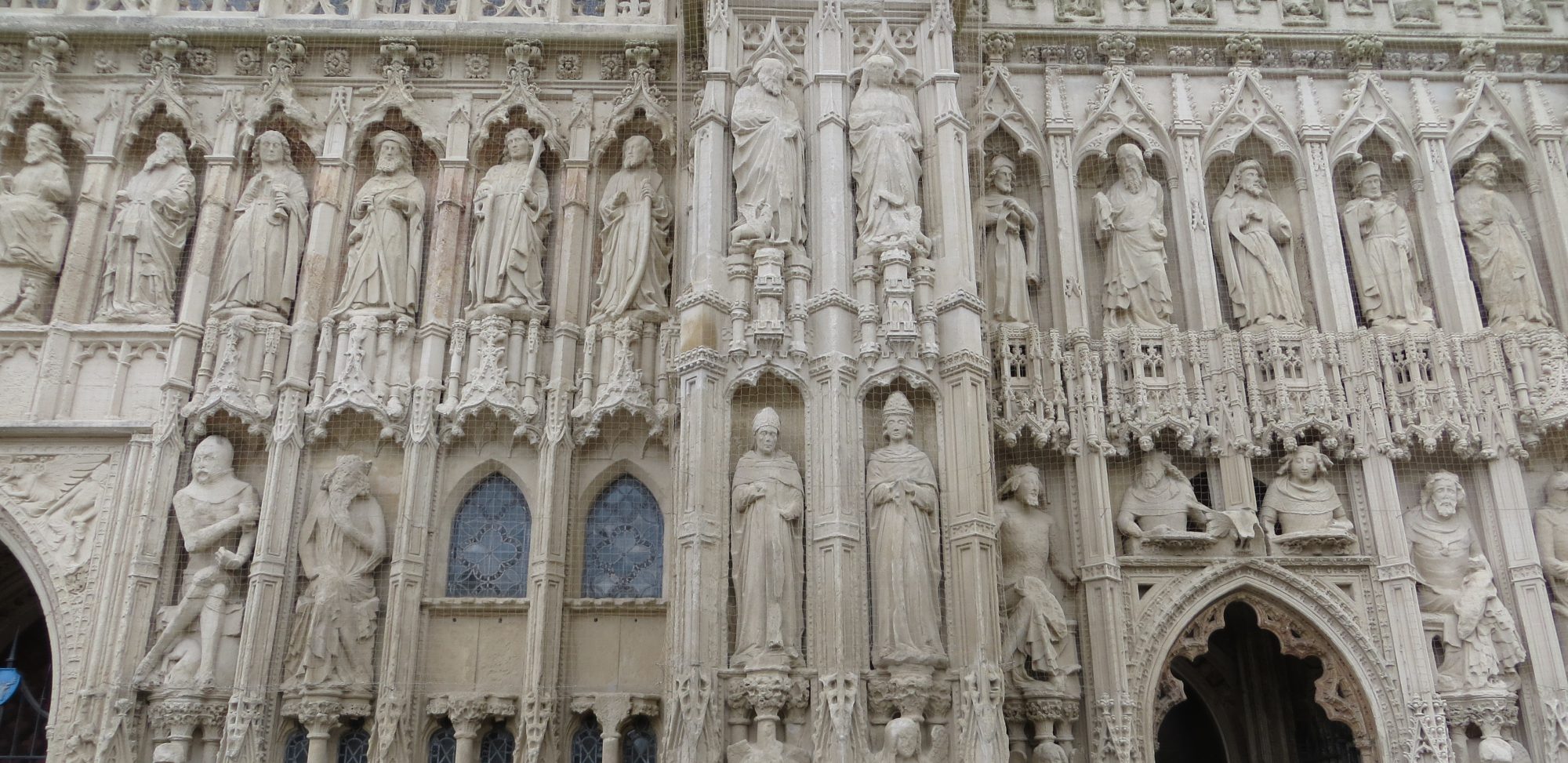
Christians have a relationship of direct and personal familiarity with the Church and the saints. The relationship involves our entire being. Yet when someone lights a candle or makes an offering, you will often hear the remark that such an action is meaningless if that person is not thinking the right set of thoughts. But we must be clear that it is not our thoughts that make everything what it is: what is significant is that we have left home and come to Church to meet with the saints. The liturgy is simply the realization of our relationship to God, to the whole communion of his saints and to the entire world. Its purpose is not simply to grasp something intellectually or arrive at some state of mind, for the mind will follow in its own time.
When the congregation signs themselves with the Cross each time a saint is mentioned this shows that, even if they are not keeping up with the sermon, they enjoy a living relationship with that saint. But while the Christian is in church to keep up their relationship with the saints, the preacher, always searching around for the identity of the Church, is unable to resist telling others what they should be thinking. The Church can judge and teach the world, but it also needs to clear away the confusion that hides its own truth.
John Zizioulas Lectures in Christian Dogmatics