In communion

Christians have a relationship of direct and personal familiarity with the Church and the saints. The relationship involves our entire being. Yet when someone lights a candle or makes an offering, you will often hear the remark that such an action is meaningless if that person is not thinking the right set of thoughts. But we must be clear that it is not our thoughts that make everything what it is: what is significant is that we have left home and come to Church to meet with the saints. The liturgy is simply the realization of our relationship to God, to the whole communion of his saints and to the entire world. Its purpose is not simply to grasp something intellectually or arrive at some state of mind, for the mind will follow in its own time.

When the congregation signs themselves with the Cross each time a saint is mentioned this shows that, even if they are not keeping up with the sermon, they enjoy a living relationship with that saint. But while the Christian is in church to keep up their relationship with the saints, the preacher, always searching around for the identity of the Church, is unable to resist telling others what they should be thinking. The Church can judge and teach the world, but it also needs to clear away the confusion that hides its own truth.

John Zizioulas Lectures in Christian Dogmatics

God exercises his freedom in love

Since his existence is not a given thing, God is not obliged to choose whether to say yes or no to it. For him there is only one way to exercise freedom, and that is affirmatively, positively. What is there for him to say no to? God has the freedom of saying yes. The Father’s freedom is expressed by saying yes to the Son, and the freedom of the Son is expressed in saying yes to the Father. This is the yes and yes again, that the Apostle Paul says (2 Corinthians 1.19) has come to us in Christ. Since for God nothing is given, there is nothing which he has to refuse. For God, the exercise of freedom does not take the form of a choice, but it is exercised voluntarily, in the form of love, expressed in his trinitarian life. If we apply this to human existence, freedom is not sometimes yes and sometimes no, but only ever yes. There is only one way to exercise freedom to demonstrate that you are free, and that is love. Giving your affirmation to beings other than yourself is the only way to exercise freedom. Our food therefore consists in saying that you acknowledge that this exists for you, that you desire it and intend it to become part of your very being. The relevant verse in the Second Letter to the Corinthians tell us that ‘Jesus Christ who is amongst you and is preached by you, did not become yes and no, but in him it has always been yes’ (2 Corinthians 1.19). God’s ‘yes’ and Christ’s ‘yes’ is now the freedom of affirmation.

This is the way in which God is who he is, as trinity. The Father freely consents to this Son, desires him and acknowledges him as his Son, freely. God exercises his freedom in love and affirmation when the Father begets the Son, and when he sends the Holy Spirit. This opens up a way of life for man which consists in exercising our freedom affirmatively, as love. This exercise of freedom transforms us into the likeness of God. The image of God is fulfilled in the self-government of man who, though he is able to say no, says yes, as God does. This is how we may join those great lovers of God and of man, the spiritual Fathers, who have learned how to break out of their individual will to submit themselves to the other, in the person of their spiritual father.

John Zizioulas

Life without limit

The Gospel points to real life. When the bible talks about eternal life, it does not mean some other life, but simply the reality of life. The reality of life is spiritual, of the Holy Spirit. This life does not die and does not share in the deception of that life that leads to death. Real life cannot be brought to an abrupt end by death, so it will not prove false. Real life springs from the resurrection, that is, from Christ himself who transcends biological death. This does not mean that we are trying to ignore biological death or substituting some other life for it. On the contrary, the afterlife, as it is called, is the truth and continuation of this life; it is the real side of this life. So death, by which we mean this counterfeit life with which we are presently content, and which carries death within it, is the outcome of the fall. It is a poor, evil and intolerable form of life. The Christian view is that death is never good, but that it is always an outrage.

The gospel is the breaching and breaking of death. The resurrection is the promise that the confusion of false and real life will come to an end and be replaced by real life. The false life to which we are subject will be removed, to leave only the reality and truth of life. What is true and real can never be delimited, or broken off or brought to an end, nor can we run out of. Life that is real is not finite, but unlimited and eternal.

John Zizioulas

'The Theology of John Zizioulas'


Copies of The Theology of John Zizioulas arrived here today. The book is published in May, and so far is visible on Amazon.co.uk only. Ashgate have the Contents page and Introduction. Here’s the blurb.

John Zizioulas is widely recognised as the most significant Orthodox theologian of the last half century and acclaimed advocate of ecumenism. From his indepth knowledge of the intellectual resources of the Church, Zizioulas has argued that the Church Fathers represent a profound account of freedom and community that represents a radical challenge to modern accounts of the person. Zizioulas uses the work of the Fathers to make an important distinction between the person, who is defined by a community, and the individual who defines himself in isolation from others, and who sees community as a threat to his freedom. Zizioulas argues that God is the origin of freedom and community, and that the Christian Church is the place in which the person and freedom come into being.

This volume offers a critical appraisal of the theology of John Zizioulas. Leading Anglican, Reformed, Catholic and Orthodox international scholars, including Colin Gunton, Nicholas Loudovikos, Paul McPartlan, Wolfhart Pannenberg and Philip Rosato present essays which analyse Zizioulas’ trinitarian doctrine of God, and his theological account of the Church as the place in which freedom and communion are actualised. Many include discussions of Zizioulas’ Being as Communion as well as other lesser known works, now available in Communion and Otherness. Together they represent an unrivalled introduction to the work of this great theologian.

Robert Turner Eschatology and Truth

Alan Brown On the Criticism of ‘Being as Communion’ in Anglophone Orthodox theology

Wolfhart Pannenberg Divine Economy and Eternal Trinity

Markus Mühling The Work of the Holy Spirit

Colin Gunton Persons and Particularity

Douglas Farrow Person and Nature

Nicholas Loudovikos Christian Life and Institutional Church

Demetrios Bathrellos Church, Eucharist, Bishop

Paul Collins Authority and Ecumenism

Philip Rosato SJ The Ordination of the Baptized

Paul McPartlan The Local and Universal Church

Douglas Knight The Spirit and Persons in the Liturgy

The first chapter by Robert Turner sets out the issues very lucidly and accessibly. In my case, words of one syllable are all I can manage these days, so the Introduction is an easy read for any undergraduate. Then comes a simply awesome chapter by Alan Brown which shows just how exciting this subject can get.

I am very grateful to all the book’s contributors of course, but most particularly to Demetrios Bathrellos, for whom this business has been going on for eight years, and to Mihail Neamtu, Alan Brown and Liviu Barbu, and to Pam Bertram and her colleagues at Ashgate. As for Zizioulas, I am still finding that there is much more to learn from this extraordinary theologian. As Liviu pointed out, he is a church father himself, and an apostle for the contemporary church.

Christian communion is the practice of sending apostles

John Zizioulas believes ecumenism, conciliarity and the Eucharist belong to the very being of the Church. The bishop is intrinsic to ecumenism. Zizioulas’ account of the relation of the particular and universal, one and many, demonstrates that the relationships of the bishop and his congregation, and of the local and the worldwide Church, are essentially Christology.

Only in Christ is the Church one. Unity is not a matter of one writ running through a unified jurisdiction. The unity of the Church is the act of God. Every congregation and Christian participates in Christ’s eucharistic reception of the Church as the gift of God. We participate in his act through reception: ‘churches exist as One Church in and through constantly receiving one another as sister Churches.’ Each congregation participates in the one Church as it reaches out to all other churches: this reaching out is not an extra, for each congregation receives its very being from all others. (Zizioulas ‘The Theological Problem of Reception’, One in Christ, 21, 1985).

Since each Christian community is formed and disciplined by Christ, who comes to it from outside, no community can be under its own authority. It must willingly receive its leadership from all other congregations, as it were. Each church must receive its overseer as the gift of the whole Church. Bishops are apostles. Christian communion is the practice of sending apostles, their teaching and discipline, to and from all other parts of the Church. Conciliarity is the practice of communion and the event of love by which we participate in the life Christ, who is in one society with the Father.

Some have asked whether stress on the bishop endangers prospects for ecumenism with churches without a hierarchical tradition. But the churches with explicit (episcopal) oversight may encourage other (non-episcopal) churches to receive this discipline along with every other gift of the Church catholic, and look for some gift or lesson from them in return.

It is only in the act of receiving from, and giving to, other churches that any church is part of the Body. It is not the case that a church first has being, and then enters relationships with other churches. ‘Being is a gift, not a self-subsistent and self-explicable reality. As a gift, being presupposes the Other – there is no gift without a giver’ (Communion and Otherness p.88). This reception is made complete by the public ‘Amen’ of the people.

Christ calls us to receive all whom he calls to his eucharist. We have to take them all from him, refusing none, for only with them do we become members of Christ. In the eucharist we pray for those who are not yet present, and the whole Christ, and our own very being, waits for them.

Yet the Church already participates in the unity and plurality of the whole Christ. The petitions of Christ’s people in the eucharist make each locality present to God. All other communities and cultures fail to sustain the real otherness of their members; because they represent less than the whole truth, they will not last. Without the Church making its offering from every part of the world, the diversity and indeed existence of the world are in doubt. ‘The Church, as sign and image of the eschatological community, continues to portray in history the genuine ethos of otherness… the Church is the place where … the fear of the Other is replaced in the Eucharist… by the acceptance of the Other qua Other… (Zizioulas Communion and Otherness p.88).

The bishop represents the catholicity of the Church in one person. Together with him the congregation is the geographic and historic catholicity of the Church in that place. In the eucharist we already participate in that future complete assembly, yet every eucharist and ecumenical gathering, being only partial, looks ahead to the assembly of the whole Church.

Just as there is no plurality without unity, so there is no communion without order and authority. Primacy enables communion, but equally communion enables and affirms primacy. Zizioulas asks whether the Western Church assumes that, of unity and communion, one must be prior to the other: the Roman Church assumes hierarchy is prior, while Protestant churches assume communion is prior, though these two positions have been represented in the Roman Church by Ratzinger and Kasper.

Zizioulas suggests that Rome does not represent the unity of the many churches by nature, but that Rome may receive its authority from the whole Church. It could only be the free act of every church that appointed one bishop to the chair in the assembly of bishops. His authority makes their council an ordered communion, but he receives his authority from them. If the Amen of the Church affirms this role for Rome, Rome’s priority would be an act of the whole Church.

Ecumenism involves reconciliation through repentance and mutual service. It does not come at the expense of truth, or of those forthright exchanges of view through which real plurality and particularity are established. Zizioulas’ is a thoroughly theological account of ecumenism, but it allows plenty of opportunity for each church to initiate the practicalities of exchanging gifts, personnel and instruction, with churches even of ostensibly incompatible forms of churchmanship. Reaching out to other churches is not an extra, for in the long run we are not Church without them. His discussion of bishop, council and eucharist, make Zizioulas’ a very significant ecumenical proposal.

Communion and Otherness

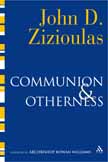
Communion and Otherness

Metropolitan John Zizioulas’ earlier work, Being as Communion, has a fair claim to be one of the most influential theological books of the later twentieth century; it had a lasting effect on ecumenical discussions and on the vocabulary and assumptions of many churches as they sought to clarify their self-understanding and indeed their understanding of ordained ministry. But what Zizioulas had to say about the church was firmly anchored in a set of arguments about what we mean about the word ‘God’, and how our understanding of being itself had to be wholly informed by our understanding of God. In the following pages, these reflections are worked out at greater and greater depth, producing finally a comprehensive model for the whole of Christian theology.

This book is, in effect, a systematic theology, though it is not structured like one. But it is also a work of apologetics in its way. Zizioulas mounts a formidable challenge to atheism by affirming very simply that it is meaningless to discuss ‘whether or not’ God exists in abstraction from the question of ‘how’ God exists. To ask whether God exists is really to ask about what the relations are that you can recognise yourself as involved in – because God is irreducibly a living complex of relation, Father, Son and Holy Spirit. But this complex is not just a given plurality, it is the work of freedom – the Father’s personal liberty and love generate the inseparable Other, the eternal Son, and ‘breathe out’ the eternal Spirit. The Father is never alone, nor is the Father simply one among three divine beings alongside each other; it is his absolute freedom to be completely for and in the Other that is the root and rationale of Trinitarian life. And this utter freedom for the Other becomes the insight that allow us to make sense of the freedom of creation, with all that this implies…

On page after page of this outstanding book our assumptions are challenged and our minds led back to the most deeply significant aspects of the Christian faith, and to the conceptual and practical map drawn not only in Scripture but in the Greek Fathers, including the Fathers of the desert and their teaching on practice and prayer. The discussion of what is implied in classical Christological statement is of special note; so is the chapter on the Spirit. But insights abound, into death and sexuality, individualism and postmodernity, prayer and ecology. Zizioulas engages boldly with different strands of modern philosophy, refuting most effectively the idea that he is simply recycling some kind of existentialism or secular personalism, and offering a deeply suggestive religion and correction of Levinas on the Other as fundamental for ethics.

Few will read this book without sensing that they have been invited to rediscover Christianity in its richest traditional form….

A great book and a converting one, which reintroduces us to the essential Christian conviction that there is no life without relation with God, as God himself is eternally life in and only in the relations initiated by the free love of God the Father, generating the everlasting Son in whom and for whom all things exist, growing into their fullest possible connectedness with God through the gift of the Spirit’s presence.

Archbishop Rowan Williams’ Foreword to Communion and Otherness by John Zizioulas

John Zizioulas – Communion and Otherness

Zizioulas Communion and Otherness

One highlight of the AAR, though there was no fanfare, was the arrival of Communion and Otherness: Further Studies in Personhood and the Church, the second volume of Metropolitan John Zizioulas.

I intended to post a chunk from the cracking Preface by Rowan Williams and the author’s dedication to George Florovksy and Colin Gunton, but gave my copy to an old student of Zizioulas here in London. So we’ll have to make do with a paragraph from the publisher, T & T Clark.

‘Communion and otherness: how can these be reconciled?’ In this wide-ranging study, the distinguished Orthodox theologian, Metropolitan John (Zizioulas) of Pergamon, seeks to answer that question. In his celebrated book, Being as Communion (1985), he emphasised the importance of communion for life and for unity. In this important companion volume he now explores the complementary fact that communion is the basis for true otherness and identity.

With a constant awareness of the deepest existential questions of today, Metropolitan John probes the Christian tradition and highlights the existential concerns that already underlay the writings of the Greek fathers and the definitions of the early ecumenical councils. In a vigorous and challenging way, he defends the freedom to be other as an intrinsic characteristic of personhood, fulfilled only in communion.

After a major opening chapter on the ontology of otherness, written specially for this volume, the theme is systematically developed with reference to the Trinity, Christology, anthropology and ecclesiology. Another new chapter defends the idea that the Father is cause of the Trinity, as taught by the Cappadocian fathers, and replies to criticisms of this view. The final chapter responds to the customary separation of ecclesiology from mysticism and strongly favours a mystical understanding of the body of Christ as a whole. Other papers, previously published but some not easily obtainable, are all revised for their inclusion here.

Metropolitan John

Douglas Knight John Zizoulas Alan Brown

Alan Brown (right) and I met Metropolitan John Zizioulas in London at Heythrop last Friday. It was wonderful to see the Metropolitan again. We have both got older, but I was more polite about this than he was. We talked about Rome and Constantinople, and then relieved to get off these vexed questions, we talked about books.

Apparently Archbishop Rowan Williams has written an embarrassingly fulsome preface to the Metropolitan’s book Otherness and Communion. The Metropolitan wishes he hadn’t been rushed into this book, though I suspect the rest of us think that the twenty-two years between 1985 and 2007 is a decent enough interval and doesn’t look like a rush into print. Its publishers T&T Clark have been hoping to launch this book at the AAR in November, but the Metropolitan has other things on then.

We talked about Aristotle Papanikolaou’s new book Being with God, which is a wonderful comparison of the theology of Vladimir Lossky and John Zizioulas, the two giants of twentieth century Orthodox theology. Papanikolaou is scrupulously fair, but Zizioulas clearly has the best of it, though Papanikolaou suggests that Zizioulas himself has been too severe on Lossky. It is thorough, meticulous, and works well as an introduction to Orthodox theology, and since it very ably discusses some major issues of systematic theology, it is a gift to the Church as a whole. I have been meaning to review this, but now Liviu Barbu has borrowed my copy – but then that is a commendation.

The Metropolitan told us a bit about his three writing projects. The first of them is on his favourite theme of ecology and man as priest of creation. Secondly, he wants to continue to develop his work on an eschatological ontology, and finally there is his Dogmatics. The Metropolitan gave his Dogmatics lecture notes to the people of the Orthodox Outlet for Dogmatic Enquiries, who have been working hard to make these lectures available on the internet, and we must be very grateful to them, in particular to A.N. who has been doing the translating. They appear to be half way through this important work, so we hope they persevere.

Then we also talked about The Theology of John Zizioulas: Personhood and the Church, and at the insistence of Liviu, gave him a typescript of book and talked through its individual chapters. The Metropolitan was pleased, and I am relieved, that the book has got to this point at least. I gave him a copy of The Eschatological Economy, and we took some photos (but I am no photographer – sorry) and we all promised to stay more in touch from now on.

In person, there is a gentle but really evangelical authority about Zizioulas. I agree with Liviu that he is one of our contemporary ‘spiritual fathers’. I have always been very lucky in the teachers I have had, I don’t know why. Many thanks to Liviu for hosting the meeting.

Douglas Knight, Metropolitan John Zizoulas, Liviu Barbu

Zizioulas Communion and Otherness

John Zizioulas Metropolitan of Pergamon

Here at at last is the first notice from the publishers Continuum – T & T Clark of the second volume (or third, if you count Eucharist, Bishop, Church, translated into English forty years after its first publcation in Greek) from Professor John Zizoulas, Metropolitan of Pergamon (Jean de Pergame). Here is the blurb from T & T Clark

Communion and Otherness: Further Studies in Personhood and the Church

‘Communion and otherness: how can these be reconciled?’ In this wide-ranging study, the distinguished Orthodox theologian, Metropolitan John (Zizioulas) of Pergamon, seeks to answer that question. In his celebrated book, Being as Communion (1985), he emphasised the importance of communion for life and for unity. In this important companion volume he now explores the complementary fact that communion is the basis for true otherness and identity.

With a constant awareness of the deepest existential questions of today, Metropolitan John probes the Christian tradition and highlights the existential concerns that already underlay the writings of the Greek fathers and the definitions of the early ecumenical councils. In a vigorous and challenging way, he defends the freedom to be other as an intrinsic characteristic of personhood, fulfilled only in communion.

After a major opening chapter on the ontology of otherness, written specially for this volume, the theme is systematically developed with reference to the Trinity, Christology, anthropology and ecclesiology. Another new chapter defends the idea that the Father is cause of the Trinity, as taught by the Cappadocian fathers, and replies to criticisms of this view. The final chapter responds to the customary separation of ecclesiology from mysticism and strongly favours a mystical understanding of the body of Christ as a whole. Other papers, previously published but some not easily obtainable, are all revised for their inclusion here.

This is a further contribution to dialogue on some of the most vital issues for theology and the Church from one of the leading figures in modern ecumenism.

A draft of its contents page fell into my hands a while back:

Introduction: ‘Communion and Otherness’, St Vladimir’s Seminary Quarterly 38(1994), pp.347-61.

1. On Being Other: Towards an Ontology of Otherness
(New)

2. On Being a Person: Towards an Ontology of Personhood
(In Christoph Schwöbel & Colin E Gunton (eds.), Persons, Divine and Human (T & T Clark, Edinburgh, 1991), pp.33-46.)

3. The Trinity and Personhood: Appreciating the Cappadocian Contribution
(In Colin E Gunton (ed.), Trinitarian Theology Today (T & T Clark, Edinburgh, 1995), pp.44-60.)

4. The Father as Cause: Personhood Generating Otherness
(New)

5. Pneumatology and the Importance of the Person: A Commentary on the Second Ecumenical Council
(Credo in Spiritum Sanctum (1983), vol.1, pp.29-54.)

6. ‘Created’ and ‘Uncreated’: The Existential Significance of Chalcedonian Christology
(Contacts 36(1984), pp.154-172; 37(1985), pp.60-72; correspondence with Philip Sherrard.)

7. Human Capacity and Human Incapacity: A Theological Exploration of Personhood
(Scottish Journal of Theology 28(1975), pp.401-448.)

8. The Spirit and Christ’s Human Nature: In Search of Authentic Humanity
(Unpublished (1995)).

9. Christ, The Spirit and the Church: Two Types of Pneumatology and their Ecclesiological Significance
(Communio Sanctorum (1981), pp.141-154.

10. The Church as the ‘Mystical’ Body of Christ:Towards an Ecclesial Mysticism
(Unpublished (1985))

Apparently there’s some other book on the Metropolitan on the way. I hope Ashgate will promote the book as readily as they have promoted its editor.
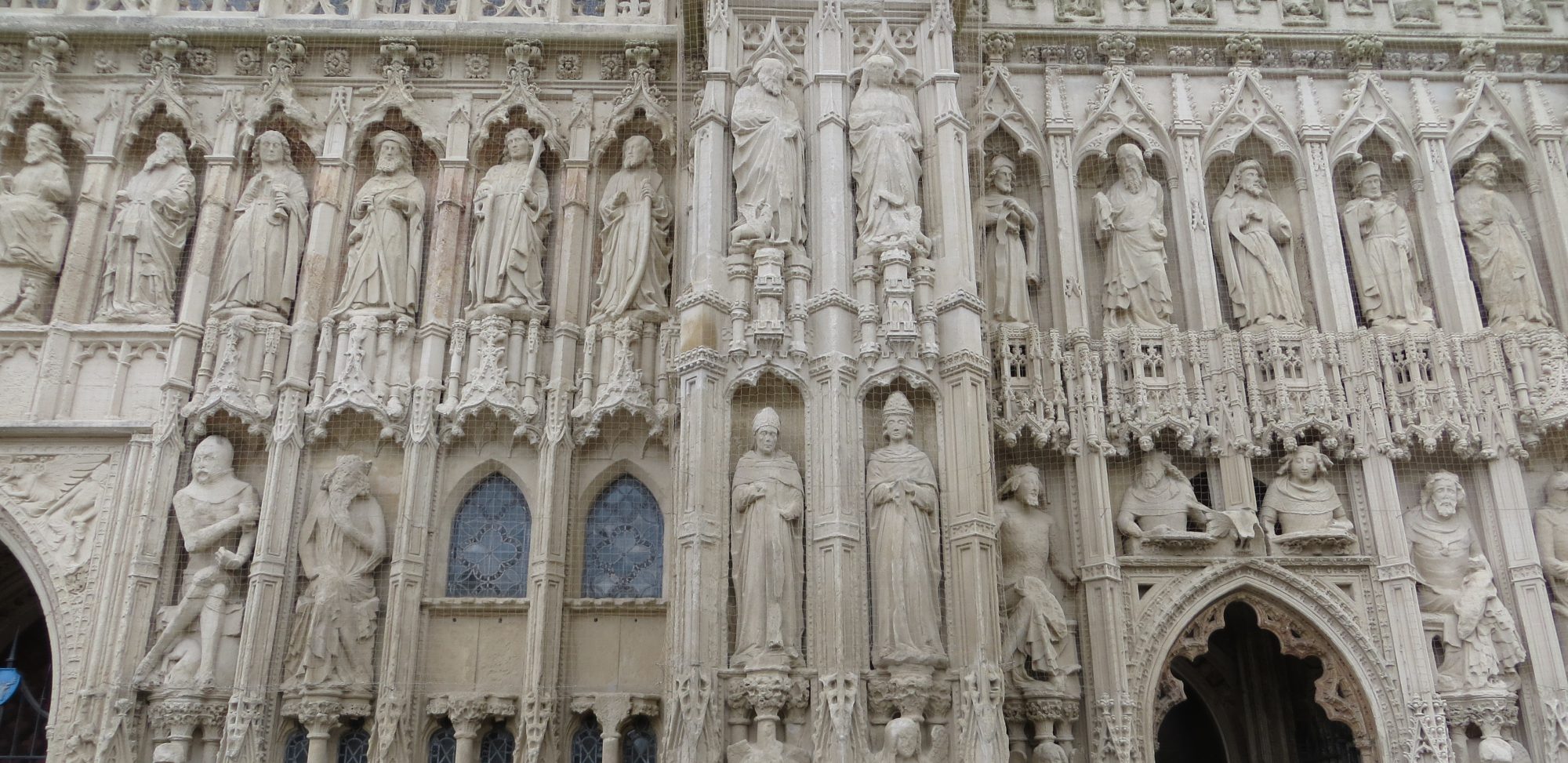
The Church is a participation in divine being

Here is another excerpt from ‘The Critics of ‘Being as Communion”, Alan Brown chapter’s in Personhod and the Church: The Theology of John Zizoulas, due to appear at the end of this year:

“Baptism is a new birth in which the human being is newly hypostasised in the mode of being of Jesus Christ. This ontological re-constitution and in-corporation is not, however, a re-constitution and in-corporation into a separated and individualized hypostasis, but rather one into the hypostasis of the one who is the only-begotten of the Father, existing in and only in an absolute perichoretic reciprocity with the Father and the Holy Spirit. As such, the communion of the Church is a participation (an already eschatological participation) in the mode of divine being itself, the mode of catholic, koinonetic love. Consequently, for Zizioulas, it is not possible to ‘project’ the mode of being of the Church onto the divine being, since the mode of being of the Church already is the mode of being of divine being;

For Zizioulas, there are not ‘two communions’, one divine and one human – rather there is one divine communion, in which humans participate, this participation being the ecclesial mode of being that is the Church.”