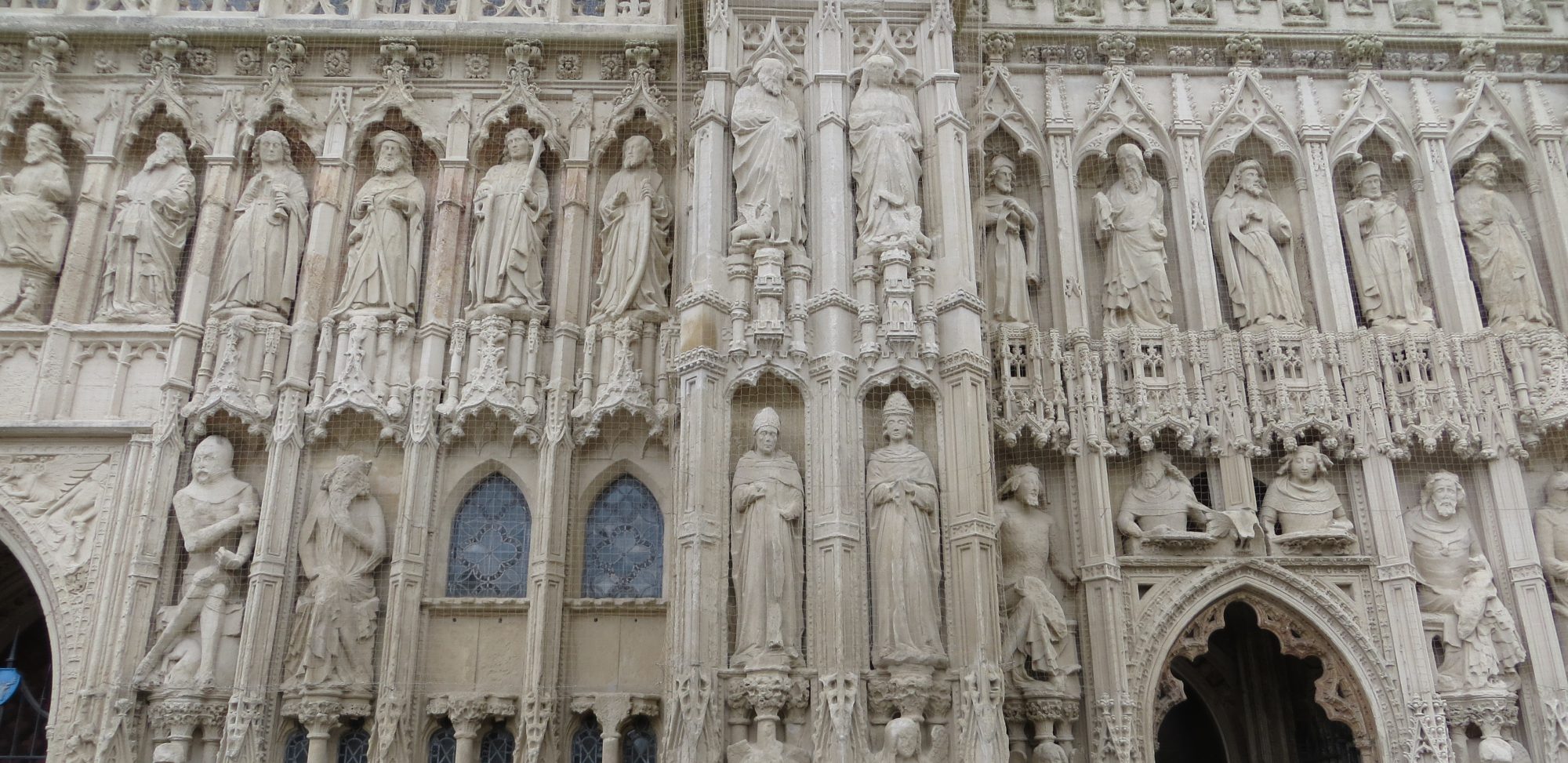
The bishop represents the whole history of the Church, all its apostles and doctors, to his congregation. He is the catholicity of the Church, in one person. In him the worldwide church makes itself present to each local congregation. A bishop is a member of the assembly of the whole church, drawn from every corner of the world. If the bishop is present, the whole Church is present in each particular congregation, so that the whole geographic and historic catholicity of the Church is present in that particular part of the world. This Church on earth is the form in which Christ together with all his people is presently visible to the world.
Bishops are apostles. The point about apostles is that there is a plurality of them. Twelve indicates completeness, so there is one apostle for every part of the world (The same is true of the seventy apostles, for there are notionally seventy nations in the world). When one apostle falls, his place is filled by another. Apostolic succession does not run individual to individual, so the power of consecration does not run bishop to bishop in unbroken quasi-physical transmission, no single gap in all those centuries. It is ‘possessed’ by the assembly and council of apostles and bishops as a whole, represented in the council of the whole church as this participates in the whole Christ. Thus the worldwide council of the church is a foretaste of the ultimate assembly of all creatures in worship of God.
The bishop teaches his people the doctrine of the whole Church, and when the Church refuses any part of these gifts and disciplines, and sets out to found its faith on something less than the full deposit of faith, the bishop will exercise the discipline that will bring it back to obedience, and he will endure the suffering that this will involve.
