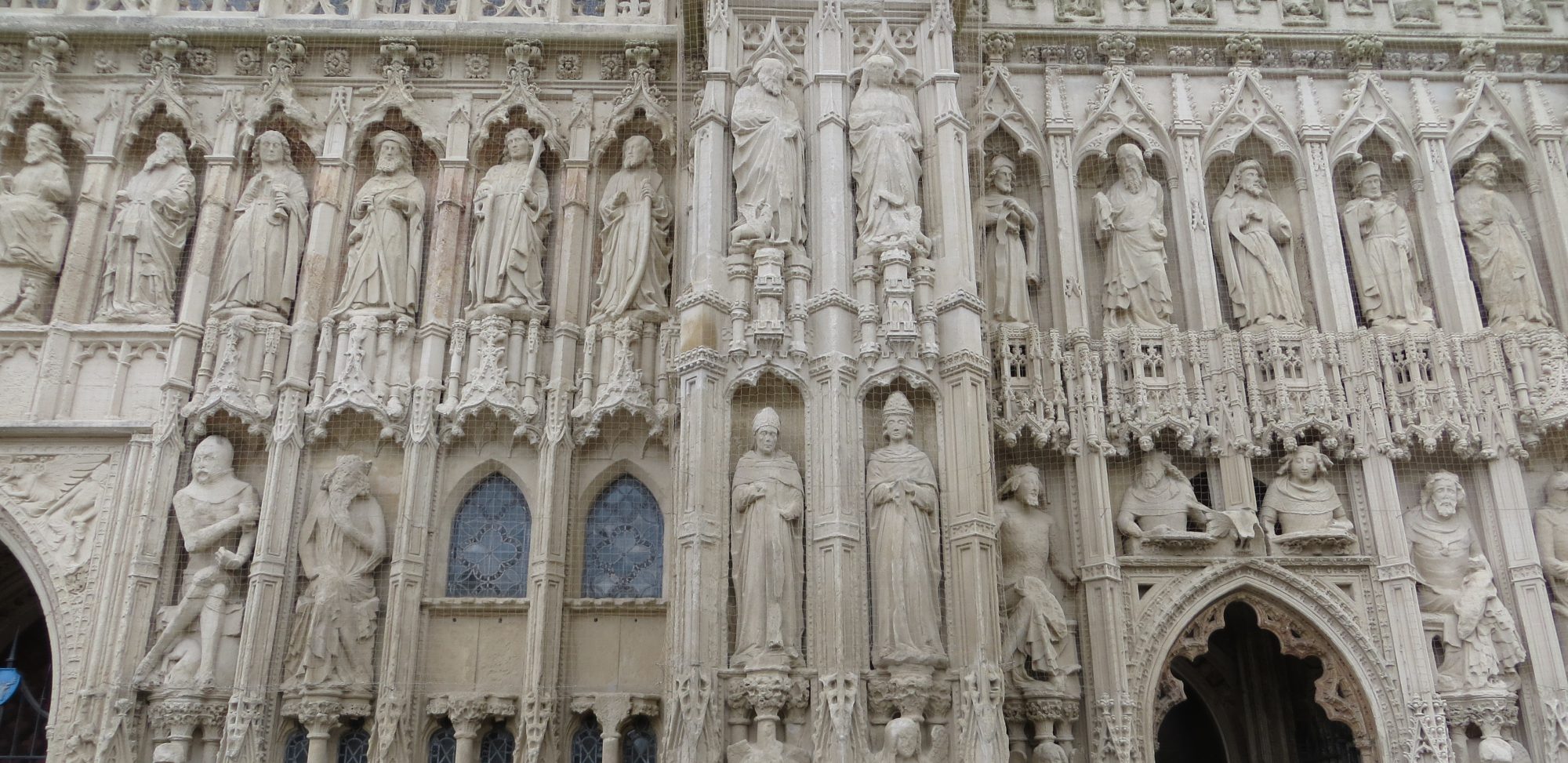
What is a university?

First – and perhaps surprisingly – there is a profoundly political element in the university. It is taken for granted that those who exercise power in a society need to be formed in a particular culture. They need to learn how to reflect on the social interactions around them; they need to learn how to evaluate the reasons that people give for actions and policies. Part of that training in how to evaluate reasons and arguments – and also ideals and aims – has always involved reference to the basic texts of a culture, sacred or not, which are regarded as setting out patterns of human life in society that continue to serve as an orientation….

Universities should devote serious resource and energy to encouraging public debate on the shared values of their society. This does not mean that a university as such should be a nursery of simple activism and criticism; it does mean, though, that a good university is always looking for ways of opening up general intellectual debate about common hopes and values to the community around it. It does not exist only to refine the work of the specialist…

It is only when universities are free to pose their own questions that they fulfil their function of enabling people to ask about the foundations of what others take for granted.

What is distinctive about the university is that it seeks to nurture the ability to understand political processes and to weigh political arguments rather than giving uncritical loyalty to any programme.

The student who is in this sense discovering what it is to be a ‘political agent’ is discovering what it is to exercise thoughtful responsibility in the life of a society. And this is where a narrow definition of what the social and the political might mean has to be balanced by some historical perspective; it is in fact where (in a very broad sense) the ‘classics’ of a society are relevant, so that a good university allows space for students to test their ideals and concepts against a historical tradition expressed not only in opportunities for discussion but also in the university’s public ceremony and its standards and protocols for intellectual exchange. By its very existence, the good university expresses certain philosophical commitments – to civil discourse, to liberty of expression, to careful and honest self-questioning, and to the possibility of creating trust through the processes of fair argument and exploration of evidence. This cannot be reduced to the narrow atmosphere of pressure-groups.

Ideally, then, the elements of awareness of history and tradition, openness to intellectual innovation and concern for the widest possible engagement with public life should come together in the university to help nurture adult and responsible citizens. But for us in Europe, there are, of course, two major factors which complicate still further the position of the university. One of these has already been hinted at: it is a political and economic climate in which the expectation of short-term and practical results has affected attitudes to ‘free’ intellectual endeavour in some very adverse ways. A proper concern for accountability has produced a real anxiety about the volume of work produced by universities, and an increasingly sharp competitive spirit between institutions. Every university has to promote itself in two directions – towards the public, to keep up recruitment, and towards funding bodies, which in Britain and much of continental Europe will be under government direction, to persuade them of its profitability. This is not a climate that will disappear overnight; it is part of the way in which ‘market’ models have come to dominate so many areas of social and institutional life in our context.

The second of these challenges is the sheer diversity of the cultural scene in the modern West; not only has British culture, for example, lost a degree of contact with and confidence in a history or identity shared by British citizens, it is now inclusive of active and often lively immigrant cultures, whose relation with the majority may be in various ways strained. Against such a background, what would it mean to see the university as offering an induction into some kind of culture appropriate to people who will grow into public responsibility? Isn’t this bound to be hopelessly compromised by the existing dominance of one culture or class or ethnic group (as has been the case in Britain)? In the vast perspective of China’s diverse cultures, similar questions are bound to be in evidence; what role has the university in promoting social and political stability in a context where much rests upon the ability of government to sustain national cohesion and a universal pattern of law, welfare and equity?

Any university now attempting to promote the advantage of one racial or class interest would forfeit its credibility and authority. But the alternative is not an acceptance of pure ‘postmodern’ diversity, a chaos of non-communicating discourses for mutually isolated communities.

Archbishop Rowan Williams What is a university? Speech given in Wuhan, China
Benedict at the university of Regensburg

There was a lively exchange with historians, philosophers, philologists and, naturally, between the two theological faculties. Once a semester there was a “dies academicus” (open debate/general studies day?) when professors from every faculty appeared before the students of the entire university, making possible a genuine experience of “universitas”: The reality that despite our specializations which at times make it difficult to communicate with each other, we made up a whole, working in everything on the basis of a single rationality with its various aspects and sharing responsibility for the right use of reason — this reality became a lived experience.

The university was also very proud of its two theological faculties. It was clear that, by inquiring about the reasonableness of faith, they too carried out a work which is necessarily part of the “whole” of the “universitas scientiarum,” even if not everyone could share the faith which theologians seek to correlate with reason as a whole. This profound sense of coherence within the universe of reason was not troubled, even when it was once reported that a colleague had said there was something odd about our university: It had two faculties devoted to something that did not exist: God. That even in the face of such radical skepticism it is still necessary and reasonable to raise the question of God through the use of reason, and to do so in the context of the tradition of the Christian faith: This, within the university as a whole, was accepted without question.

Pope Benedict Faith Reason and the University

* * *

The Pope is concerned by the threat of fideism and radical scepticism to the university, to rationality, and to our aspiration to know reality. (Even the way web-names are assigned makes it clearer in Germany that there is really just one university – one universe of knowledge – not ultimately divided by its many campuses.) It is a speech on faith and reason. Benedict regards Christianity, Judaism and Islam as three traditions of faith and reason. He tells us that ‘science’ and social science are also traditions of faith and reason. All these traditions (‘scientific’ as well as ‘religious’) are tempted by fideism (which leads eventually to irrationalism and even violence). But although these traditions are all sometimes tempted to avoid the public examination of rationality within which they can remain truly reasonable and rational, they all have the resources to resist that temptation, and they should all do so, and do so together in the university. If the modern university does not allow the intellellectual exploration of the Christian gospel, the university will operate on a greatly reduced concept of reason and science, and more than that, on a greatly reduced concept of man, which would be impoverishing for that society and for all mankind.

Any attempt to maintain theology’s claim to be “scientific” would end up reducing Christianity to a mere fragment of its former self. But we must say more: It is man himself who ends up being reduced, for the specifically human questions about our origin and destiny, the questions raised by religion and ethics, then have no place within the purview of collective reason as defined by “science” …

In this way, though, ethics and religion lose their power to create a community and become a completely personal matter. This is a dangerous state of affairs for humanity, as we see from the disturbing pathologies of religion and reason which necessarily erupt when reason is so reduced that questions of religion and ethics no longer concern it.

Benedict says that God has made himself known, so we do not need to despair of knowing anything about him or about the creation he has set us in. This makes our knowledge of this physical world, his creation, also basically reliable and reasonable. The Christians (often along with Jews and Muslims) can point out that they are the guardians of reason against what Benedict calls ‘de-hellenisation’, modern irrationalism’s retreat from the Logos, and so from the assumption that the world is an ordered and reliable place. The university needs Christianity, and any other tradition that reasons about faith, in order to allow full exploration of the creation and of man, the creature of God.

Reno grades theology graduate schools

At the top of my list is Duke. Richard Hays and Ellen Davis are leading a strong cohort of biblical scholars toward the recovery of a theological voice in biblical interpretation. Add to that the creative mind of Stanley Hauerwas, the rigorous mind of Reinhard Huetter, the learned mind of Geoffrey Wainwright, and the outspoken voice of David Steinmetz, as well as some excellent younger faculty (Amy Laura Hall, Warren Smith, Steve Chapman, and others), and you have a program firing on all cylinders. Three cheers for the Dean, Gregory Jones. He has done wonders in bucking the trends toward the banality and post-Christian distraction that afflict other mainline institutions. It isnâ??t perfect, but itâ??s as good as we have now in the United States.

In the No. 2 spot, I put Notre Dameâ??s Department of Theology. Itâ??s not firing on all cylinders. The biblical scholars pretty much follow the tired old distinction between â??what it meant for themâ?? and â??what it means for us.â?? This guarantees their marginal relevance to the study of theology. Most of the systematic theologians are still living in the 1970s and 1980s. But this is a huge department with some great people. Notre Dame is the best place to study the Church Fathers (Brian Daley, John Cavadini, Robin Darling Young). Gary Anderson and Cyril Oâ??Regan are first-rate Christian intellectuals capable of inspiring a wide range of doctoral students toward genuine vocations in theology rather than careers of expertise. Jean Porter and Jennifer Herdt have creative things to say in moral theology. Itâ??s a strong program, and it is getting better every year.

* * * *

Ephraim Radnerâ??s extraordinary book The End of the Church is the most creative, erudite, and important book of historical theology since Henri de Lubacâ??s Surnaturel. David Hartâ??s The Beauty of the Infinite is a bold (and to my mind brilliantly successful) theological campaign that carries the fight for truth into the deepest reaches of our sad, failing, postmodern academic culture.

These two remarkable theological minds are not just in less-than-ideal places for an aspiring, adventuresome graduate student interested in serious theology in the service of the Church, as is the case with Marshall. Radner and Hart are totally inaccessible. Radner is a parish priest in an Episcopal church in Pueblo, Colorado. Hart has a temporary, one-year appointment at Providence College. For all intents and purposes, both have been excluded from academia. It is a sign of the times. The United States, a wealthy country with vibrant churches, has only two graduate programs in theology that get even a relatively strong thumbs up.

R. R. Reno at First Things

Reno’s is an apocalyptically short list. But, even taking into account the relative sizes of the US and UK, the UK list would be shorter still. Since Reno is asking about theology faculties as a team, with a team ethos, it is a very good question whether we could come up with a list for the UK at all. So I will be trying to bring to your attention whatever good work I can find in the UK, and, more of a challenge, in London.

And on a related subject see Jason Byassee’s Going Catholic: Six journeys to Rome (the six include Reinhard Hütter, Bruce Marshall, Russell Reno and our very own Douglas Farrow).

Oxford looks for Oliver O'Donovan's replacement

‘The Regius Professor of Moral and Pastoral Theology is appointed to lecture and give instruction in Moral and Pastoral Theology, in the duties of the Pastoral Office, and in such subjects as Christian Ethics, both Social and Individual, Ascetic and Mystical Theology, and the study of the various types of Christian Experience. The formal duties are set out below. The appointee will be a scholar of distinction who will exercise leadership in research and develop graduate studies in his or her area of specialisation. He or she will also be expected to take a leading part in developing the work of the Faculty of Theology generally.’

(i) Candidates should either be ordained in Priest’s Orders in the Church of England or in an Episcopal Church in communion with the Church of England or eligible for and prepared to accept ordination. A canonry at Christ Church is annexed to the professorship.

(ii) An outstanding research and publications record in the broad field of Moral and Pastoral Theology, which will contribute to and enhance the profile of Moral and Pastoral Theology and the Faculty of Theology.

(iii) The ability and readiness to lead and inspire academic colleagues, and in particular to take responsibility for Moral and Pastoral Theology and its courses, undergraduate and graduate, and for the scholarly direction of the subject at Oxford.

It will be interesting to see whether Oxford University’s appointments panel will appoint somebody who can do this job (Nigel Biggar, Michael Banner, Bernd Wannenwetsch,.. ) or will continue to make appointments without regard to the selection criteria contained in the job description they have published.

Theology redefines religion

Modernity identifies religion as separate from ethics, the discussion of ends. It supposes that we all know what end has been agreed upon, and have now only to concern ourselves with how to get there, and so with comparing one means with another. The modern concept of religion belongs to this idea that there is one single end and all talk is only about how, not about what. Theology should refuse this definition and identify religion as talk about ends, assume open discourse about what the ends are, and insist that there is no meta-discourse that can settle this for us. Then we can say that religion is a matter of the good performance of talk about ends. It is not to be reduced to reaching agreement so that talk can stop, but it aims at getting better at the give-and-take of converse, so the talk can grow, become a good of its own and open space for other goods to emerge. Our talk is then both preparation for, and already good performance of, life in common.

Theological institutions and excellence

The International Theological Institute for Studies on Marriage and the Family has three aims, four pillars and seven principles. It is not only their numerical neatness that I approve of.

Here are the three aims:

1. To provide studies in Theology as well as specialized theological studies on marriage and the family;
2. To form by such studies those who are preparing themselves for tasks in the various areas of the Churchâ??s life, especially in the area of marriage and the family;
3. To organize seminars, symposia and conferences as an aid to the local Churches and to the Holy See in promoting an authentic vision of marriage and family life.

The four pillars

1. The first pillar is the founding intention of Pope John Paul II. ITI was founded for the study of Catholic theology as a unified whole within which particular attention is devoted to the theme of marriage and the family. A solid theological formation is needed for Catholic leaders, lay and clergy, to achieve critical judgment in our culture and the capacity to contribute to the new evangelization, which is especially needed in the area of marriage and the family.

2. The second pillar of ITI, also part of John Paul IIâ??s founding vision, is its international character, its bridge function between East and West. About 50% of the students come from Central and Eastern Europe (the majority of them are Greek Catholic), others come from Western Europe and the Americas. This international character allows a genuine experience of the universal Church, which must â??breathe with both lungsâ?? (John Paul II) East and West.

3. The third pillar of ITI is its pedagogy, which consists in studying the original writings of the great Masters of Theology, in addition to Sacred Scripture, esp. the Fathers and the Doctors of the Church. Contact with original texts develops an eye for quality, especially in theology. The great masters lead faculty and students most directly to the realities discussed in theology, above all God himself. This pedagogy also develops the virtues of active reading, attentive discussion and penetrating understanding.

4. The fourth pillar of ITI is a rich Catholic community that lives and prays together in the same place and its close vicinity. The example of the Christian family life lived by many among the faculty and students offers the most persuasive and practically helpful evidence of the beauty and practicability of that life. It also encourages the formation of religious and priestly vocations and their blossoming.

But the Seven Principles are the knock-out.

The Word of God as Center
As the inspired Word of God, Scripture, as the Church receives it, stands at the center of the curriculum. All other courses are ordered to unfolding its meaning.

Ad Fontes, East and West
The Curriculum has its point of departure in the primary sources written by the great masters of the theological tradition, from the Fathers of the Church to the present age. It draws on the theological tradition of the East as well as of the West, seeking in this way to â??breathe with both lungs of the Church.â?? The Greek Fathers and St. Thomas Aquinas are particularly important points of reference.

Pedagogy
Teachers and students actively collaborate in pursuing the understanding of the Churchâ??s faith through the reading and guided discussion of the masters. Care is taken that students truly prepare the texts and that sufficient room is given to student participation to develop the virtues of active and responsible reading and thinking.

Theology in its Unity
Foregoing premature specialization, the Curriculum seeks to unfold theology out of its inner unity, in conformity with its essence as a scientific reflection of the faith of the Church. The Curriculum is ordered around the central mysteries of the faith: the Trinity, the Incarnation, grace, justification, the Church, etc. All particular questions are addressed in the light of these central mysteries.

Theological Rationale
The rationale of studies at ITI is theological throughout. Both the sequence of semesters and the composition of courses in each semester are shaped in accord with the above mentioned unity to allow for a systematic building up of the parts of theology. When questions usually classified with other fields (philosophy, psychology, sociology) are discussed, they are discussed for the sake of theology and in an order required by theology.

Primacy of the Theological Question
Historical-critical investigations are a necessary aspect of the study of sources. Such investigations, however, find their inner completion only in the properly theological question, “What is the truth of the matter?â??

Above All, Charity
Theology stands under the rule of the new commandment and exists for the sake of union with the One whose love for us we come more deeply to understand. It is therefore studied and taught at the heart of his Church.

I will be plagiarizing these principles in their entirety from now on.

More from D'Costa

Roman Catholics need to revisit their universities in the United States, promoting a genuine difference in scholarship and curriculum so that in five generations a Catholic intellectual culture might possibly be present and transformative of society. The Christian Church at the heart of the university will facilitate such genuine developments that can only enrich intellectual and cull life, facilitate real pluralism and dialogue, and serve the common good. Liberal society owes itself religious universities. American Catholics owe it to their Church and nation.

The other group of critics, those against ‘sectarian’ projects such as mine, and those against outside interference (the Church) in the university, are to be found in strength – within the churches, as well as from non-religious camps. I argue that such criticisms are misplaced and even self-deluding. Since all enquiry and methods of enquiry are tradition-specific, all forms of education are sectarian in certain ways. There is no high ground in this debate, only differing forms of sectarianism, be they liberal, religious, feminist, psychoanalyst, and so on. But there is an advantage to Catholic sectarianism: its conviction, founded in revelation and beautifully expounded by Thomas Aquinas, that reason has a rightful autonomy.

Gavin D’Costa Theology in the Public Square: Church, Academy and Nation.

D'Costa on the university

D'Costa

I have found a new hero – he is Gavin D’Costa. I heard him give an impressive paper last summer on the origins of the university in the medieval Catholic Church. He introduced it by saying that after twenty years of teaching theology in Religious Studies departments he has just come out – as a Christian. This was moderately amusing (and this is the best I can do for an emotional response to D’Costa’s revelation). D’Costa’s paper was the last thing I ever attended at the systematic theology seminar of King’s College London – it might have been an epitaph on what had been until two years previously the last place in England in which Christian theology could be studied.
But now, on the day I was in Edinburgh to make the case for Christian theology for the university’s sake (see postings in ‘Theology and the University’) I found D’Costa’s Theology in the Public Square: Church, Academy and Nation. It is a joy. Here is a blast from the last page:

Education is central to the development of civilization and if the Church fails to transform education at every level, then the future of the Church and the world are in the deep trouble. If the North American and English public cannot see this, then they should drop all the rhetoric about fostering genuine pluralism and admit the ideological nature of their secularism. This would involve suppressing history – as the recent contested European constitution exemplifies, where the Christian heritage of Europe is passed over in silence. It is up to the churches in North America and English to take up this challenge, to bring the light of God to shine through the portals of the university, to allow for a revitalization of Christian culture so that God may be given glory and the common good thereby served.

This book says what seemed to have become unsayable, in fact it blurts it out.

Theology in the Public Square: Church, Academy and Nation.

The apprenticeship

Christianity is an apprenticeship. All professions – law, medicine, football – require apprenticeships, which involve their own craft skills and vocabulary. The logic of the practices peculiar to each of these cannot be seen immediately seen by the public. Nevertheless we do not demand that each specialism speaks only some neutral language in which all their judgments are completely accessible in the public domain. But it is part of our modern narrative that we should speak only neutral language and that we need no apprenticeship: we can know, everything, immediately, without effort.

Christians say that the Christian life is learned and lived like any other vocation or career, with the same element of adventure, which means that its path is not entirely clear from the outset. In fact they say this is how any life, not just the Christian life, is – everything requires training which means that nothing is immediate or effort-free. This means that the Christian hermeneutic is more sophisticated than the modern hermeneutic of immediacy, which wants us to believe that nothing has to be learned and that life doesn’t require any particular skills.

The package of Christian doctrine, which constitutes the Christian apprenticeship, has been taken apart in modern period and some of its components have been re-connected to re-create old Hellenic arrangement of two worlds, in which the world of the individual is prior to the public and political world. This arrangement does not concede that the individual gives or receives anything in his encounter with others, so we appear to have no real stake in other people. We are reluctant to concede that we are beings in time, or that we are really committed to the toil and change that comes with life with other people.
Here Christian theology, particularly in its patristic and Eastern Orthodox expression, can contribute decisively. It can show that Christians have an alternative way of regarding the world, a sophisticated ontology which factors in hope. They say that God is making the world more real, and that the ordinary environment of people and things is in process of becoming more vivid, more solid, engaged and interactive. This is what I have learned represented by Orthodox theology. Since catholicity alone says that we cannot leave out the insight of half the Church, though the Eastern tradition may not be better, its difference from our own helps us to see how we may better hold together what we have inherited from Augustine, and prevent it from being purloined by the champions of autonomy who want us to believe that life requires no skills and that we should therefore do without this, or any, apprenticeship.

Whose crisis?

Here is more provoked by O’Donovan’s move (see post below).

In every university in the UK administrators are making it difficult to do any academic theological work. But administrators don’t start out as administrators, but as academics, people excited by ideas. But those academics who do not care to explore the wonderful world of the Western intellectual tradition right back to its beginnings, are very likely to run out of ideas. Then they will lose interest in their subject, be attracted by anything that relieves of what they will then see as the burden of teaching, they will be drawn into preoccupation with syllabuses, examining and funding, and so be drawn into administration.
Those who search that long intellectual tradition will find there all sorts of ideas about what it is to be human and what humans have to hope for. Their wonder at the tradition will communicate itself through them. They will not run out of ideas, but will be happy to pass on the excitement they find there, and so they will find satisfaction in teaching and be content to remain academics.

Debate is the real business of the university. But debate costs a lot of nervous energy and the risk of public loss of face is high. It is easy to turn to administration and settle for the satisfactions of paperwork, the more social soul might well get enough satisfaction from rounds of meetings. Demanding paper trails, and complying with the demand for paper trails, is certainly easier than debate.

Administrators are there to serve the university and thus to serve the debate. But because administrators do not attend the seminars in which debate takes place they are never subject to that debate, in the way every academic is. They are not subject to the conflict of ideas or to the testing of those ideas. Debate – the imperative of setting out your ideas before your colleagues and having to defend them – is a very severe discipline. Administrators are those academics who can no longer face that discipline. They place themselves above it. They put themselves beyond the control of the university – that is the universe represented by the various disciples – and so become a separate and superior class, above the academics of the university, who are thereby demoted to the status of the producers of mere product.

The Humanities (literature, history, philosophy, sociology….etc) are that part of the university particularly concerned with what it is to be human, and what humans can do and can hope for. In the long term the health of the humanities is dependent on their staying in touch with the thought of all previous generations on what it is to be human. But it is always tempting for the Humanities to patronise previous generations, to think that they know the long tradition without having read it, or even to believe that they have surpassed all previous generations and no longer need to learn and cultivate that tradition. This temptation always puts the Humanities on the edge of a crisis. When they reach this crisis, produced by laziness or arrogance, they are tempted to believe that the crisis is particularly bad for that discipline most clearly associated with a long history and commitment to things that happened centuries back – Christian theology. But Christianity is very clear about the importance of looking back, faithfully, because it understands that our ability to look forward, hopefully, depends upon it. Christian theology has a very strong definition of what it is to be human and so has a very distinct message. Unlike any other discipline of the humanities, as long as theology listens to the gospel and continues to look back and forward, theology does not lose its way.

It is Christianity (along with Platonism) that is behind whatever agenda other humanities still faintly remember. It is the Humanities which are in crisis, not theology, and this crisis will continue as long as they deny that Christian theology and the ancient tradition of paideia (Plato) offer definitions of human being and what human being may aspire to. Humanities administrators project their crisis onto theology, by appointing to theology teaching positions those who are so poorly acquainted with the Christian theological tradition that they do not understand Christianity as a tradition of thought about how to be human, and a course of education in being human (on the definition revealed in the gospel).

Here is my point. In the UK we have such administrators appointing to theological positions people who have never learned, or learned to love, the Christian tradition of doctrine, and whose assumption that the Christian tradition is in crisis is never challenged by serious engagement with that tradition. These administrators – academics who themselves no longer have anything to teach – appoint to theological positions people like themselves, who pass on this myth of crisis on in their teaching.

I told you this blog is all about stating the blooming obvious.