Ash Wednesday

Shout out, do not hold back!
Lift up your voice like a trumpet!
Announce to my people their rebellion,
to the house of Jacob their sins.
Yet day after day they seek me
and delight to know my ways,
as if they were a nation that practised righteousness
and did not forsake the ordinance of their God;
they ask of me righteous judgements,
they delight to draw near to God.
‘Why do we fast, but you do not see?
Why humble ourselves, but you do not notice?’
Look, you serve your own interest on your fast-day,
and oppress all your workers.
Look, you fast only to quarrel and to fight
and to strike with a wicked fist.
Such fasting as you do today
will not make your voice heard on high.
Is such the fast that I choose,
a day to humble oneself?
Is it to bow down the head like a bulrush,
and to lie in sackcloth and ashes?
Will you call this a fast,
a day acceptable to the Lord?

Is not this the fast that I choose:
to loose the bonds of injustice,
to undo the thongs of the yoke,
to let the oppressed go free,
and to break every yoke?
Is it not to share your bread with the hungry,
and bring the homeless poor into your house;
when you see the naked, to cover them,
and not to hide yourself from your own kin?
Then your light shall break forth like the dawn,
and your healing shall spring up quickly;
your vindicator shall go before you,
the glory of the Lord shall be your rearguard.
Then you shall call, and the Lord will answer;
you shall cry for help, and he will say, Here I am.

Isaiah 58

Have mercy on me, O God,
according to your steadfast love;
according to your abundant mercy
blot out my transgressions.
Wash me thoroughly from my iniquity,
and cleanse me from my sin.

Create in me a clean heart, O God,
and put a new and right* spirit within me.
Do not cast me away from your presence,
and do not take your holy spirit from me.
Restore to me the joy of your salvation,
and sustain in me a willing spirit.

Psalm 51

Praying together

I never had a very high view of the Week of Prayer for Christian Unity. I have just read some of the teaching material on the unity of the Church offered by The Pontifical Council for Promoting Christian Unity and had a change of mind.

The traditional date for the Week of Prayer for Christian Unity is 18-25 January. Those dates were proposed to cover the days between the feast of St Peter and the feast of St Paul, and therefore have a symbolic meaning. In the southern hemisphere churches often find other days to celebrate the week of prayer, for example around Pentecost which is also a symbolic date for the unity of the church.

This year the Week of Prayer for Christian Unity “brings together two themes, two invitations extended to Christian Churches and people: to pray and strive together for Christian unity, and to join together in responding to human suffering. These two responsibilities are deeply intertwined. Both relate to healing the Body of Christ (the Church), hence the principal text chosen for this year’s week of prayer is a story of healing.”

January 18: In the beginning was the Word. “And God said…” (Genesis 1).

January 19: The Saving Word of Christ. “He makes the deaf to hear and the mute to speak” (Mark 7: 31-37).

January 20: The Holy Spirit gives us the Word. “The Spirit …will testify on my behalf” (John 15: 26).

January 21: The silence of the forgotten and the cries of the suffering. “If one member suffers all suffer together” (1 Corinthians 12: 26).

January 22: God’s judgment on our silence. “Just as you did not do it to one of the least of these…” (Matthew 25: 45).

January 23: Empowered to speak out. “But the woman … came in fear and trembling … and told Him the whole truth” (Mark 5: 33).

January 24: Forsakenness. “Why are You so far from helping me?” (Psalm 22:1)

January 25: Resurrection – glorification. “Every tongue should confess that Jesus Christ is Lord” (Philippians 2:11).

This Vatican website is one non-stop online bible study. The pope is an evangelical. But you all knew that already. Once again, I am the last one to realise, aren’t I?

Epiphany

Your light has come, Nations shall come to your light… Lift up your eyes and look around; they all gather together, they come to you.

This is Isaiah 60. God’s coming to man represents the re-gathering of Israel, and with them all the lost, forgotten, abandoned of the world. Christ is the light and the star that guides these foreign kings into Israel, that very lowly nation, and lower, to this town, and lower still, to the cowshed out back, where the lowest of the low huddle. This is because

The LORD has remembered His mercy and His faithfulness to the house of Israel.

and because

All the ends of the earth have seen the salvation of our God.

God has remembered all Israel, and all the utterly forgotten – this is Psalm 98, which we just sang.

This was well trailed by Advent – remember, the king is coming, but for us it is not clear whether this good news or a warning. Are we with the magi, these foreign kings who come to cast their crowns before this unprepossessing, almost unnoticed unit of humanity?

Or are we with Herod? ‘Bring back word to me, that I may come and worship Him, or patronise and co-opt him, or sneer, deride and perhaps crush those who put their hopes in him…’

At Christmas it turns out that the arrival of the king is the birth of this child. The king seems to have put himself in no position to help us. He appears as just another little voice among the many voices in Israel and the world that have to cry for what they want. The king has replied to the complainants by becoming just another petitioner, who prays to us for justice. God help us if we do not hear them. We must become petitioners too – who pray to God, for ourselves but even more from those who petition God against us. For

he has exalted the lowly – the rich He has sent away empty.

We are Mary’s people of course, we have just sung her song, the Magnificat, and this is Mary’s time of year. Her line is

Behold the maidservant of the Lord! Let it be to me according to your word.

Maybe it is easier to understand Mary by comparing her with Abraham, who having heard God, listened out for him again and again, to find out what it was that God was promising. Abraham made no demands about delivery dates, apparently content to see what would unfold in its own time. He listens, waits and so represents all the people of the Old Testament, the named and the unnamed, all to way up to Mary. It was for us that they heard God, suffered and waited, and this makes them little intimations of Christ.

For Christ has listened to the Father, and heard him. And he has heard the cries of every last human being. And he now enables us to hear God, and to hear these cries too, and to hear one another as the creatures of God.

Now Epiphany, the slow week by week revelation of this gift who is the future of all humanity – this boy who is circumcised, bar mitzvah-ed and baptised. The gospel for this evensong is the wedding of Cana, which also appears in our morning eucharist in two Sunday’s time. Mary’s line at Cana, to the servants, is

Whatsoever he saith unto you, do it.

He said to them,

Now draw some out, and take it to the chief steward.” So they took it. When the steward tasted the water that had become wine…

Now about this wine. Christ is this wine. He is wine and he has made himself water for us. The water is our humanity, in its present not entirely functional state. Of course it is only when this act is deliberately reversed, water into wine, that we notice it. But it reveals the miracle in which God becomes man, and it points towards the coming miracle in which we become humans with God.

Christ is humanity. He is the truth of us. God has defined human as being in relation, through Christ, with all other humans. So we are human to the extent that we admit all others and concede them the status as ourselves, and so are with them. On this definition Christ is the real future humanity.

Call me Herod. Left to myself I would fight this to the end. I resist being credited with only the same status as everyone else. I want to be king, and I will grant you only the status I have to concede in order that I can remain king, exclusively. But there is no way to say Yes to Christ without this being a Yes to anyone, everyone, he brings with him. Christ warns us that if we open the gate just a crack to let him in, he will bring in John, Judith, Jeremy and Jonathan, and not only those we like but those we don’t, uncle Tom Cobbley and all, stomping past our fortifications and into our well-defended courtyard.

Christ is the full measure of humankind, not as it is now, but as it will be, stretched open to the uttermost. But he does not will to be human without us. He does not consider himself to be entirely himself without us, all of us, the arrogant and smug, and the meek and broken together.

The project of God is to make human beings – that is, those freely able to hear one another without limit, to speak back to God, and thank him for one another. Week by week, in a huge gamble God, is attaching his name and reputation to us. He makes us human, or rather he invites and he enables to become human – by being with him. By the long slow process of sanctification we are being turned into humans on this definition, no longer in-turned, defending ourselves against the world and dictating terms to it, but able to receive every other human creature as the kindness of God to us, and so to take them for our own.

By the weekly addition of the wine of Christ, humanity-with-God, we are being turned from water into wine. This water has no other purpose than that it become wine, but holiness has to be added to us, externally, week by week, by eucharistic dosing. The Holy Spirit adds himself to virgin humanity, drop by drop. So each week one of the servants draws some wine out and brings it to us, as though we were chief steward. Shall we send tell him this water tastes funny, or that it is not what we ordered? Or shall we say that we can definitely taste the wine in this water? Shall we catch on, and get him and all the servants of God to bring us more, because we know that each ladleful will be more wine than the last?

When the wine becomes perceptible we are getting a foretaste of the future, and of our own future reality, when humanity is joined with God, the mortal with the eternal. Then each of us will be joined to all others – and so we will be human at last. So the birth of Jesus is the beginning, of the beginning, of the whole human race. Let us attach our name and reputation to Christ, and declare publicly, hearts in mouth, that we are his holy-people-in-process. There is nothing for it but to become this holy, catholic people. Let us join Christ in hearing God, and saying Amen, Come Lord Jesus.
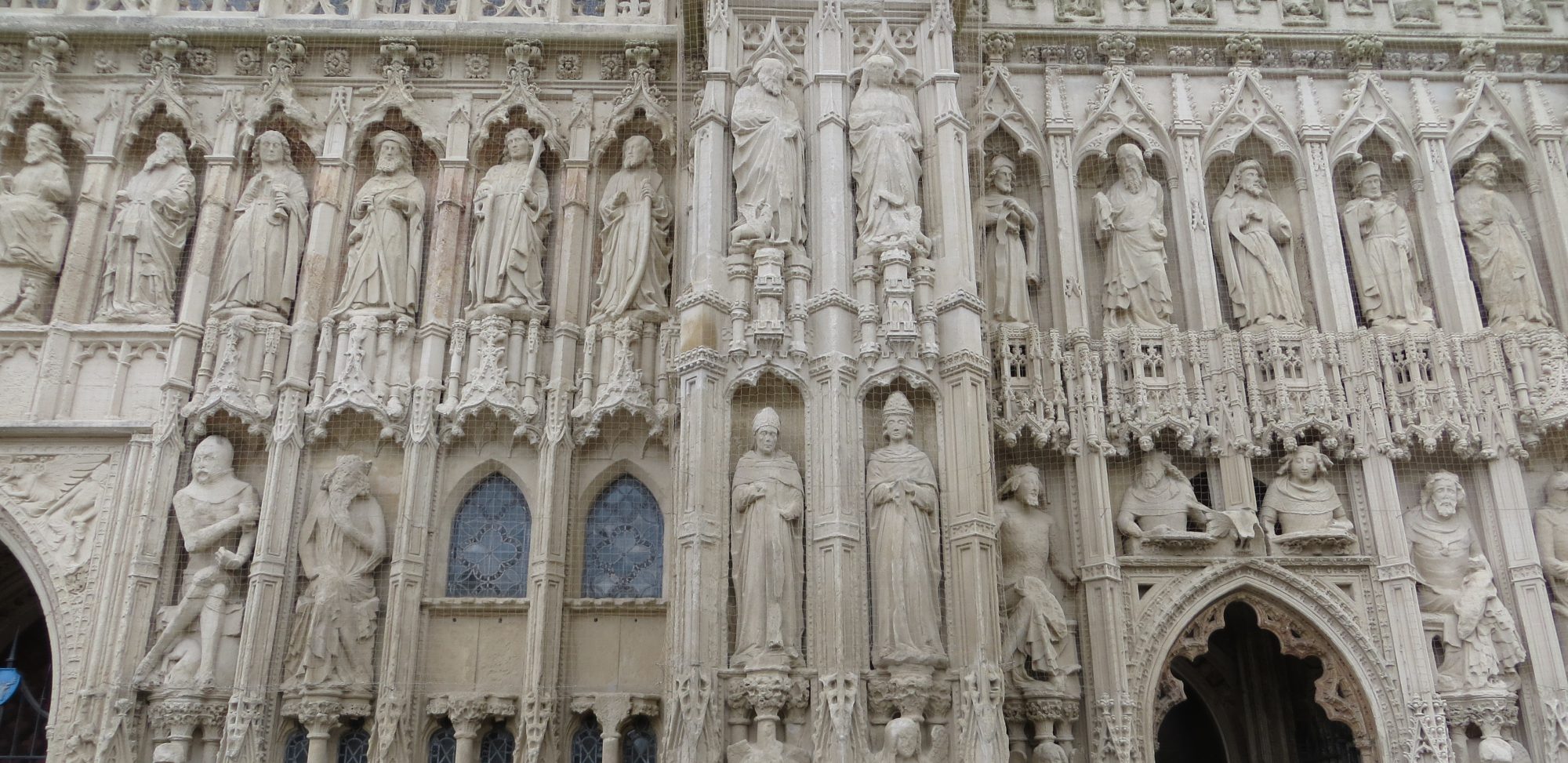
Epiphany

One of the great things about my church is that they don’t ever let lay people preach in the main Sunday morning eucharist. One or two lay people are allowed to conduct the very much smaller Evensong, which is from the Book of Common Prayer. You lead the service, sing a couple of bits (O Lord, open thou our lips – And our mouths shall shew forth thy praise), read the collects, then provide intercessions and a sermon.

It is my turn this Sunday, so I am having to get to grips with Epiphany. So I have been wondering about the odd transitions – lurches back and forth – between the Magi, the wedding at Cana, the presentation of Jesus in the temple and baptism which appear in the readings for different services between Christmas and Epiphany in the Revised Common Lectionary (The Anglican version of the RCL is only sometimes the same as the RCL for the rest of you).

So, Epiphany.

I have taken a look at the wonderful Dennis Bratcher on Epiphany

In traditional Christian churches Christmas, as well as Easter, is celebrated as a period of time, a season of the church year, rather than just a day. The Season of Christmas begins with the First Sunday of Advent, marked by expectation and anticipation, and concludes with Epiphany, which looks ahead to the mission of the church to the world in light of the Nativity.

I have read the splendid Ken Collins on Epiphany

There was a common belief, which ancient Christians inherited, that the prophets of Israel died on the on the same date as their birth or conception. According to ancient western calculations, Jesus was crucified on 25 March, so they assumed that 25 March was the date of Jesus’ conception. The Annunciation is still commemorated on that date to this day. Nine months after 25 March leads to 25 December, which would be the birthday of Jesus Christ if all those assumptions and calculations were correct. They aren’t correct, but the fact remains that the date has a Christian origin.

Meanwhile, back in the east, Christians calculated the date of the crucifixion independently and came up with 6 April. Nine months after April 6 is January 6. So the birth of Christ was celebrated on that day.

Christmas spread to the east and Epiphany spread to the west and the two days became differentiated. Today, Christmas is the celebration of the Nativy and the Epiphany is the celebration of Jesus’ ministry to the Gentiles.

The purpose of the liturgical calendar is to relive the major events in Jesus’ life in real time. If Jesus were born on 25 December, then He would have been circumcised and given His name on 1 January, the eighth day of His life on earth. Therefore, 1 January is known in the historic church as The Circumcision of Our Lord (See Luke 2:21 and Leviticus 12:3.)

Of course I have looked back to see what Benedict (no epithet required) said at Epiphany last year

The light that shone in the night at Christmas illuminating the Bethlehem Grotto, where Mary, Joseph and the shepherds remained in silent adoration, shines out today and is manifested to all. The Epiphany is a mystery of light, symbolically suggested by the star that guided the Magi on their journey. The true source of light, however, the “sun that rises from on high” (cf. Lk 1: 78), is Christ.

In the mystery of Christmas, Christ’s light shines on the earth, spreading, as it were, in concentric circles. First of all, it shines on the Holy Family of Nazareth: the Virgin Mary and Joseph are illuminated by the divine presence of the Infant Jesus. The light of the Redeemer is then manifested to the shepherds of Bethlehem, who, informed by an Angel, hasten immediately to the grotto and find there the “sign” that had been foretold to them: the Child, wrapped in swaddling clothes, lying in a manger (cf. Lk 2: 12).

The shepherds, together with Mary and Joseph, represent that “remnant of Israel”, the poor, the anawim, to whom the Good News was proclaimed.

Finally, Christ’s brightness shines out, reaching the Magi who are the first-fruits of the pagan peoples…

In the mystery of the Epiphany, therefore, alongside an expanding outward movement, a movement of attraction toward the centre is expressed which brings to completion the movement already written in the Old Covenant. The source of this dynamism is God, One in Three Persons, who draws all things and all people to himself. The Incarnate Person of the Word is presented in this way as the beginning of universal reconciliation and recapitulation (cf. Eph 1: 9-10).

He is the ultimate destination of history, the point of arrival of an “exodus”, of a providential journey of redemption that culminates in his death and Resurrection. Therefore, on the Solemnity of the Epiphany, the liturgy foresees the so-called “Announcement of Easter”: indeed, the liturgical year sums up the entire parable of the history of salvation, whose centre is “the Triduum of the Crucified Lord, buried and risen”.

In the liturgy of the Christmas season this verse of Psalm 98 frequently recurs as a refrain: “The Lord has made his salvation known: in the sight of the nations he has revealed his justice”.

But I might just lift Kim Fabricius’ list of Ten Propositions on Worship, from Ben Myers’ Faith and Theology.

1. Why worship God? Because God is to be worshipped. Worship is a holy tautology.

2. Does worship make God present? No, worship presupposes God’s presence.

3. Is worship necessary? Not for God it isn’t. God does not need our worship – because God is worship, the perichoretic adoration of Father, Son, and Holy Spirit. Worship is, however, necessary for us, for it is only as homo adorans, participating in the very life of the Holy Trinity, that we become truly human.

Not bad, not bad at all.

Now you see why we Anglicans don’t try to improvise. We collect the best of what the whole church offers and simply read it out in public.

The eucharist the centre of the cosmos and of history

We are meeting just before Christmas, which is the feast of gifts, as I recalled last Sunday when I visited the new Roman parish dedicated to Our Lady Star of Evangelization. Christmas gifts evoke the gift par excellence which the Son of God made of himself and offered to us in the Incarnation.

For this reason, Christmas is appropriately emphasized by the many gifts that people give to one another in these days. But it is important that the principal Gift of which all other gifts are a symbol not be forgotten. Christmas is the day on which God gave himself to humanity, and in the Eucharist this gift of his becomes, so to speak, perfect.

Under the appearance of a little piece of bread, as I said to the children of the above-mentioned Roman parish who are preparing for First Communion and Confirmation, it is really Jesus who gives himself and wishes to enter our hearts.

Dear young people, this year you are reflecting precisely on the theme of the Eucharist, as you follow the spiritual and pastoral programme prepared by the Diocese of Rome.

The Eucharistic mystery is the privileged point of convergence between the various contexts of Christian life, including that of intellectual research.

Encountered in the liturgy and contemplated in adoration, Jesus in the Eucharist is like a “prism” through which one can penetrate further into reality, in the ascetic and mystical, the intellectual and speculative, as well as the historical and moral perspectives.

In the Eucharist, Christ is really present and Holy Mass is a living memorial of his Pasch. The Blessed Sacrament is the qualitative centre of the cosmos and of history. Therefore, it constitutes an inexhaustible source of thought and action for anyone who sets out to seek the truth and desires to cooperate with it.

It is, so to speak, a “concentrate” of truth and love. It not only illumines human knowledge, but also and above all human action and human life, in accordance with “the truth in love” (Eph 4: 15), as St Paul said, in the daily task of acting as Jesus himself did.

Thus, the Eucharist fosters in those who nourish themselves on it with perseverance and faith a fruitful unity between contemplation and action.

Dear friends, let us enter into the mystery of Christmas, now approaching, through the “door” of the Eucharist; in the grotto of Bethlehem let us adore the Lord himself who, in the Sacrament of the Eucharist, desired to make himself our spiritual food to transform the world from within, starting with the human heart.

Pope Benedict To the teachers and students of Roman universities

The eternal Word became small

We have just heard in the Gospel the message given by the angels to the shepherds during that Holy Night, a message which the Church now proclaims to us: “To you is born this day in the city of David a Saviour, who is Christ the Lord. And this will be a sign for you: you will find a babe wrapped in swaddling clothes and lying in a manger” (Lk 2:11-12).

God’s sign is simplicity. God’s sign is the baby. God’s sign is that he makes himself small for us. This is how he reigns. He does not come with power and outward splendour. He comes as a baby – defenceless and in need of our help. He does not want to overwhelm us with his strength. He takes away our fear of his greatness. He asks for our love: so he makes himself a child. He wants nothing other from us than our love, through which we spontaneously learn to enter into his feelings, his thoughts and his will – we learn to live with him and to practise with him that humility of renunciation that belongs to the very essence of love. God made himself small so that we could understand him, welcome him, and love him. The Fathers of the Church, in their Greek translation of the Old Testament, found a passage from the prophet Isaiah that Paul also quotes in order to show how God’s new ways had already been foretold in the Old Testament. There we read: “God made his Word short, he abbreviated it” (Is 10:23; Rom 9:28). The Fathers interpreted this in two ways. The Son himself is the Word, the Logos; the eternal Word became small – small enough to fit into a manger. He became a child, so that the Word could be grasped by us…

Yet now further questions arise: how are we to love God with all our mind, when our intellect can barely reach him? How are we to love him with all our heart and soul, when our heart can only catch a glimpse of him from afar, when there are so many contradictions in the world that would hide his face from us? This is where the two ways in which God has “abbreviated” his Word come together. He is no longer distant. He is no longer unknown. He is no longer beyond the reach of our heart. He has become a child for us, and in so doing he has dispelled all doubt. He has become our neighbour, restoring in this way the image of man, whom we often find so hard to love. For us, God has become a gift. He has given himself. He has entered time for us. He who is the Eternal One, above time, he has assumed our time and raised it to himself on high. Christmas has become the Feast of gifts in imitation of God who has given himself to us. Let us allow our heart, our soul and our mind to be touched by this fact! Among the many gifts that we buy and receive, let us not forget the true gift: to give each other something of ourselves, to give each other something of our time, to open our time to God. In this way anxiety disappears, joy is born, and the feast is created…

And so, finally, we find yet a third meaning in the saying that the Word became “brief” and “small”. The shepherds were told that they would find the child in a manger for animals, who were the rightful occupants of the stable. Reading Isaiah (1:3), the Fathers concluded that beside the manger of Bethlehem there stood an ox and an ass. At the same time they interpreted the text as symbolizing the Jews and the pagans – and thus all humanity – who each in their own way have need of a Saviour: the God who became a child. Man, in order to live, needs bread, the fruit of the earth and of his labour. But he does not live by bread alone. He needs nourishment for his soul: he needs meaning that can fill his life. Thus, for the Fathers, the manger of the animals became the symbol of the altar, on which lies the Bread which is Christ himself: the true food for our hearts. Once again we see how he became small: in the humble appearance of the host, in a small piece of bread, he gives us himself.

All this is conveyed by the sign that was given to the shepherds and is given also to us: the child born for us, the child in whom God became small for us.

Pope Benedict XVI Christmas Eve

God on earth, man in heaven; and all became mingled together

Brothers, Sisters and beloved Children in the Lord,

The human mind finds it difficult to comprehend the immense change the Birth of Christ brought about in the world. He who was born in the manger of Bethlehem was not an ordinary child like the ones that are born every day. He is the Creator of the entire universe, come down to our level, in order to lift up His creature and restore him to the heights from which he had fallen.

According to the plan of the Creator, which is full of love, man was created with the capacity to achieve divinity. Due to his own failings, however, he strayed from the right path and became enslaved to decay and death. In order to restore to man the potential to become divine, God had to become incarnate, to take on flesh, for the sake of fallen, perishable and sinful man who, being a creature of earth, could not by his own means transcend his mortal nature and become like God.

The idea of God’s incarnation was something that not even the most vivid human imagination could come up with; no one dared even to consider this unexpected event as a possibility. Only the Prophets, inspired by the Holy Spirit, prophesized that such occurrence would be possible through God. Indeed, the night of Christmas, the unexpected became real. “God [is] on earth, man in heaven”, exclaims St. John Chrysostom in admiration.

This world-altering event is not irrelevant to our life. Its significance is not exhausted in the fleeting celebratory festivities. We ought to contemplate the new situation with great seriousness. The Birth of Christ gives us the opportunity to transcend our mortality, ascend to heaven, live with Christ, be reconciled to God, enjoy His adoption, live in the inexhaustible joy of His love unto the ages.

Let us celebrate spiritually the grace of God offered to man together with the Angels and Saints, and let us begin a new life, worthy of the calling of the Incarnate God. The stirring event of Christ’s Birth, although it occurred inconspicuously and humbly, has caused immense changes to the Universe and particularly to the future of each person. We should take care not to undervalue its importance, simply because it took place in historically humble and simple circumstances. Nor should we celebrate the event in a boisterous and superficial manner that would befit a seasonal celebration that had no other significance for our life beyond providing an opportunity for secular revelry.

Although the events surrounding the Birth of our Lord Jesus Christ are not visible by our mortal human eyes, there are some who, by the grace of God, have seen and described the deeper events and the resulting mystical change of the world. Here is how our saintly predecessor on the Patriarchal Throne, John Chrysostom describes this sacred event, dazzled by what he has perceived:

“Angels joined the choirs of men, men had fellowship with the angels and with the other celestial powers; and one might see … reconciliation made between God and our nature, the devil brought to shame, demons in flight, death destroyed, Paradise open, the curse eradicated, sin done away with, error driven off, truth returning, the word of piety everywhere sown and flourishing in its growth, the heavenly City planted on earth, angels continually brought to the earth and abundant hope for things to come” (P.G. 57, 15-16).

Children, brothers and sisters, may we see this very hope for things to come realized in our life through the prayers of great Saint John Chrysostom, who intercedes before us to the Lord in heaven together with all the Saints. This coming year will mark the sixteen hundredth anniversary of the falling asleep in the Lord of this Saint, and thus, the Ecumenical Patriarchate proclaims this to be the year of Saint John Chrysostom, so that we may give the urge to the faithful to study his work and more closely examine his life.

Brothers and Sisters!
Christ is born: glorify Him!
Christ is come from heaven: go to meet Him!
Christ is on earth: be lifted up!
To this God who so loves mankind that He was born for us in the flesh at Christmas, be the honor, the thanksgiving, the glory and the worship unto the ages of ages. Amen.

Ecumenical Patriarch Bartholomew Patriarchal Proclamation Upon the Feast of the Christmas 2006

The Word became flesh and lived among us

Long ago, at many times and in many ways, God spoke to our fathers by the prophets, but in these last days he has spoken to us by his Son, whom he appointed the heir of all things, through whom also he created the world. He is the radiance of the glory of God and the exact imprint of his nature, and he upholds the universe by the word of his power. After making purification for sins, he sat down at the right hand of the Majesty on high, having become as much superior to angels as the name he has inherited is more excellent than theirs.

For to which of the angels did God ever say, â??You are my Son, today I have begotten youâ??? Or again, â??I will be to him a father, and he shall be to me a sonâ???

And again, when he brings the firstborn into the world, he says, â??Let all God’s angels worship him.â?? Of the angels he says, â??He makes his angels winds, and his ministers a flame of fire.â??
But of the Son he says, â??Your throne, O God, is forever and ever, the scepter of uprightness is the scepter of your kingdom. 9 You have loved righteousness and hated wickedness;
therefore God, your God, has anointed you with the oil of gladness beyond your companions.â??

And, â??You, Lord, laid the foundation of the earth in the beginning, and the heavens are the work of your hands; they will perish, but you remain; they will all wear out like a garment, like a robe you will roll them up, like a garment they will be changed. But you are the same, and your years will have no end.â??

Hebrews 1.1-12

In the beginning was the Word, and the Word was with God, and the Word was God. He was in the beginning with God. All things came into being through him, and without him not one thing came into being. What has come into being in him was life, and the life was the light of all people. The light shines in the darkness, and the darkness did not overcome it.

There was a man sent from God, whose name was John. He came as a witness to testify to the light, so that all might believe through him. He himself was not the light, but he came to testify to the light. The true light, which enlightens everyone, was coming into the world. He was in the world, and the world came into being through him; yet the world did not know him. He came to what was his own, and his own people did not accept him. But to all who received him, who believed in his name, he gave power to become children of God, who were born, not of blood or of the will of the flesh or of the will of man, but of God. And the Word became flesh and lived among us, and we have seen his glory, the glory as of a father’s only son, full of grace and truth.

The Gospel of John 1. 1-14

Saint Mary Stoke Newington

Christ the King

What a relief to get out of ordinary time.

As I watched,
thrones were set in place,
and an Ancient One took his throne;
his clothing was white as snow,
and the hair of his head like pure wool;
his throne was fiery flames,
and its wheels were burning fire.
A stream of fire issued
and flowed out from his presence.
A thousand thousand served him,
and ten thousand times ten thousand stood attending him.
The court sat in judgment,
and the books were opened.

Daniel 7.9-10, 13-14.

The Lord is king, he is robed in majesty;
the Lord is robed, he is girded with strength.
He has established the world; it shall never be moved;
your throne is established from of old;
you are from everlasting.

Psalm 93

To him who loves us and freed us from our sins by his blood, and made us to be a kingdom, priests serving his God and Father, to him be glory and dominion for ever and ever. Amen.
Look! He is coming with the clouds;
every eye will see him,
even those who pierced him;
and on his account all the tribes of the earth will wail.
So it is to be. Amen.

Revelation 1

Pilate asked him, ‘So you are a king?’ Jesus answered, ‘You say that I am a king. For this I was born, and for this I came into the world, to testify to the truth. Everyone who belongs to the truth listens to my voice.’

John 18

And from the hymns, this – the single most difficult thing for us at St Mary’s Stoke Newington to grasp –

Christ through all ages is the same
Place the same great hope in his name
With the same faith his word proclaim
Alleluya

From George Bell’s ‘Christ is the King, O friend rejoice!’
Bell, bishop of Chichester, was Bonhoeffer’s chief supporter in England

All Saints Evensong

Isaiah 65.17-25, Psalms 148 & 150, Hebrews 11.32-12.2

Let them praise the name of the LORD,
for his name alone is exalted;
his splendor is above the earth and the heavens
.

Why?

For he commanded and they were created. Kings of the earth and all nations,
princes and all rulers on earth, young men and maidens, old men and children
.

The line Let everything that hath breath praise the Lord rounds off the book of psalms. We end the day with them in our evensong, and end the year with All Saints. Everything that has a voice receives its existence from the Lord – and as long as we say we receive all things from him we receive new breath. From Hebrews we heard about this great a cloud of witnesses, and then this – ‘God had provided something better so that they would not, apart from us, be made perfect…

The life-work of the saints is not established until we have grasped for ourselves what they want to give us. They not only know something that we don’t know, but they know something about us and have something for us that we don’t yet know and don’t yet have. They tell us that we do not have to establish ourselves or create an identity for ourselves in the face of the world. Our identity is given by God who has a far higher view of us than we have of ourselves. All the people amongst whom I will find my identity, are gifts given by God, and we must receive them as such. Each person, in particular each saint, brings us some part of this good gift of God to us, and with it some part of our very own identity. By the faithfulness of this company of witnesses the gospel has dropped into our lap.

When we allow that our predecessors in the Christian faith have been faithful, and have handed on to us a fair representation of the faith of Jesus Christ and his apostles, an extraordinary adventure opens up to us.

But of all people how has this extraordinary thing come to us so we find ourselves here, saying and singing these things, that God has spoken and speaks now to us? Why us?

I have been asked to talk about the book that the Theology Discussion group has been reading. This time it is Karl Barth’s Dogmatics in Outline, in which Barth introduces the creed which we have just said together. This evening the group will look at these clauses – ‘I believe in… God the Father, Almighty, Maker of heaven and earth…‘, and two in particular, God the Creator, and God the Father.

The first point Barth makes is that:

It cannot be that first of all we presuppose the reality of the world and then ask whether there is also a God.

It is not the case that the truth about God the Creator is directly accessible to us and that only the truth of the second article needs a revelation.

The existence of the creature is the great puzzle and miracle.

By the Word the world exists

– which is what our psalm 148 means by For he commanded and they were created

It is not the existence of God, but the existence of anything besides God, that is the extraordinary thing. The wonder is that there is also us, this creation and existence, and all heaven and earth. Heaven, Barth says, is the earth we do not know yet.

God has allowed us to be his witnesses, and allowed a whole world to be our witnesses as we are God’s witnesses. The existence of this world of witnesses is a marvel. We live before them and through them, sometimes against them, but ultimately always among them and with them. We are also their witnesses and make up their world. All existence a mystery: what it amounts to and who we are is knowable as God makes it known – in Christ.

Barth suggests that the first article of the creed – about God the Father Almighty, the Creator, depends on and frames, the second article about Jesus Christ who was born, suffered and died. Each is the condition for the other.

First it is not obvious that God is Father. We call God this because only because Jesus did. Father is therefore a name, and part of the name, Father, Son and Holy Spirit. This non-transferable name relates to the bible’s recounting of the event of Israel and Jesus. Their story reveals this complex name. It must always disturb us that the name of God is so odd. All the pressure is to look round for another less controversial, less unilateral name, one on which we can all agree. But …

God named us and called us. He gives us life and breath as we participate in the calling and naming by which he calls all things into existence, and in that hearing and replying by we recognise and learn to love one another as God’s creatures. Barth’s point is that God called us into love and existence – existence does not precede love. All love, friendship, relationship and good order are derived from the friendship that God is to us and within which we receive our name and existence.

This love comes with its own definition. If it was down to us to fill this love with meaning that it did not have, it would not be love, but be a new law for us to have to fulfill; then it would not be kind, but another imperative and another opportunity for our narcissism, autonomy and tyranny.

So this God who has introduced himself in Jesus Christ safeguards the mystery of human life. Because of him only I may not presume that I already know you, know what you use you are, and define, manage, manipulate and control you to ends that focus around me. The confession that you and I are gifts of God to one another means that I am not a god myself, so all my attempts to make your existence revolve around me, are vain. Only this God, who has called you into existence-and-fellowship will protect you from me.

That the only name that can protect us from one another is Father, Son and Holy Spirit, has to be taught and learned, just like all the rest of this faith. Use of this name, might put some people against us, and we who confess it in public worship do so with our hearts in our mouths. But that is just as it should be. Not everyone knows this, or agrees with this, or likes this. It is not too obvious to need saying and that is why we have to say it, and that is why we gather here, to be faithful witnesses in our turn, who give thanks to God for all that exists.