Sonderegger on Barth on Israel
I have just discovered Katherine Sonderegger That Jesus Christ Was Born a Jew: Karl Barth’s ‘Doctrine of Israel’ (Penn State 1992). I don’t know why it has taken me so long to get my hands on this book, since I was dimly aware of the title. It might save Solly and me a lot of work on the Christ and Israel issue. You can read sections of it on Google Book Search. You probably knew all this already – I am often the last to find out about these things. But did you know that Katherine Sonderegger will be in the UK, at the Society for the Study of Theology conference at Leeds 4-6 April 2006?
Metadilemma

It dares the thought that, if Barth is right, the Bible understood the Enlightenment better than it understood the Bible, and, indeed, better than the Enlightenment understood itself: according to its own canons of inquiry it ought not to have lost faith with the Bible in the way that it did.
This is the blurb for Neil Macdonald Karl Barth and the Strange New World Within the Bible: Barth, Wittgenstein, and the Metadilemmas of the Enlightenment
Pester power
You know what a shirker I am when it comes to prayer. But thanks to the persistence of mates who tell me to pray – and to give thanks – I think I am beginning to get it. After all, we always have to ask people for whatever we want, and ask them many times. I pester people for things. And so it is with those God has set over us. We have to ask them for what we want, and we have to persist, and not to change our minds. Our leaders need that constant drip, drip of our requests for more of everything – and most of all, for more Christ. We have to nag them to teach us and to act like they are responsible for us.
I get nagged too, though I am not set over anybody. Wai Luen sends me his papers to read, and once a month he emails me a single line, saying something like, ‘Well, you lazy Englishman, have you read my paper yet and are you going to respond to it at last?’ Wai Luen is smart. He gave us a little yellow blanket, very soft, that lines Michael’s buggy. I look at that blanket every time I take Michael out for a walk so I think of Wai Luen three times daily. That blanket is a kind of intercessory flag, that intercedes for its giver and it accuses me to God for my neglect of Wai Luen, and oh, well, a list of others, who came to London to study but who have been abandoned here without teaching, supervision or support. All their voices go to God. Will the English and the deaf theology departments of their irresponsible universities crack under this pressure?
Help ! I'm being interpreted!
I have that weird feeling you get when you put yourselves in the hands of a doctor or barber and are then under their control, not your own. I have got an interpreter and I am being interpreted to within an inch of my life. Solly is reading The Eschatological Economy and giving a running commentary on his blog, Solly Gratia. He summarises what I am saying, find labels for the positions I take, and puts everything that I say in the context of our evangelical hopes and hang-ups – and he has made me remember how I got started on the great adventure of Christian theology. As a reader he is fast, he has stamina, and above all he has insight. I went to university to do a PhD, and paid a lot of fees, for the sort of feedback and criticism I am getting from Solly. But I am getting real analysis now, into Chapter two already, and I am taking notes on Solly’s notes.
Here is how it happened. I offered a PDF of The Eschatological Economy to whoever asked. Solly asked. If you would like to see a PDF of The Eschatological Economy, just ask in the comment box here or in ‘Pages’. Your email will appear to me (though it will not appear with your comment) and I will send The Eschatological Economy for you to read – and then you can comment on Solly, and tell him he is too charitable a reader.
Solly says
Solly at Solly Gratia is reading a really tough book at the moment. He is riffing on its opening lines, just saying what occurs to him as he goes along and thereby asking all the hard questions about the context and audience, not only of this theology book, but of theology. Who is it for, and how can they hear it? I’m hoping Solly doesn’t give up – because it is for him, and not for him only but for anyone who asks.
Faith and Theology
I am very grateful to Ben Myers of Faith and Theology for an extraordinarily energetic and creative blog, full of competitive but informative lists, links, news and bits from Barth and Jüngel – the perfect blog really. It is only hard to see why he has made my much duller effort his ‘blog of the week’.
I think Arni over at Annall is spot on about the two of us – Ég rakst á tvö áhugaverð guðfræðiblogg um daginn, öðru er haldið úti af Douglas Knight, sem er breskur guðfræðingur. Hann kennir við háskólann í Leeds ef ég man rétt. Hitt sér Benjamin Myers um. Hann kennir við háskólann í Queensland. Báðir eru systematíkerar og hugsa upphátt um eitt og annað sem er áhugavert.
Ben and Arni have both taken advantage of my offer to send an e-copy of The Eschatological Economy to anyone who asks (see ‘Eschatological Economy’ in ‘Pages’). I just hope they are still as polite when they have read it.
Wright in London
The lucky few in London next week could pop along to the F.D. Maurice lectures. Maurice was one of the great teachers of the Victorian Anglican Church, who was punished by being sacked by the college which now hosts these lectures in Christian theology. The subject this year is The Bible in the Postmodern World, given by some New Testament bloke, apparently. Anyone heard of NT Wright?
Bretherton on hospitality
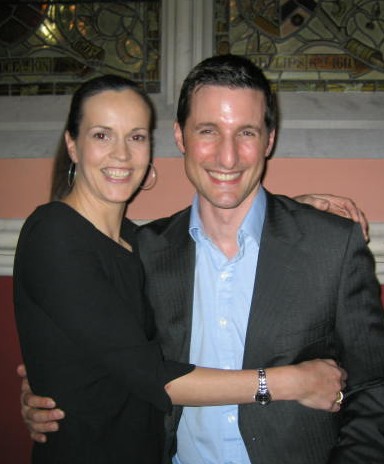
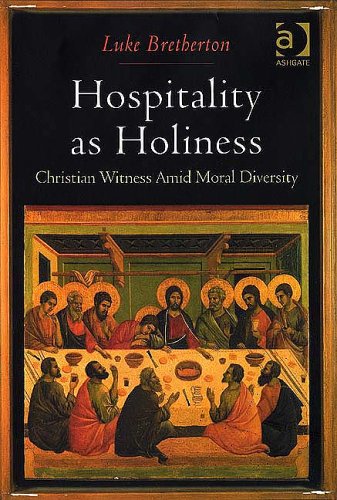
All the Glitterati were out at the reception given by the Brethertons last night to launch Luke’s new book Hospitality as Holiness – Christian Witness among Moral diversity.
Synopsis
We live amid increasing ethical plurality and fragmentation while at the same time more and more questions of moral gravity confront us. Some of these questions are new, such as those around human cloning and genetics. Other questions that were previously settled have re-emerged, such as those around the place of religion in politics. Responses to such questions are diverse, numerous and often vehemently contested. Hospitality as Holiness seeks to address the underlying question facing the church within contemporary moral debates: how should Christians relate to their neighbours when ethical disputes arise? The problems the book examines centre on what the nature and basis of Christian moral thought and action is, and in the contemporary context, whether moral disputes may be resolved with those who do not share the same framework as Christians. Bretherton establishes a model – that of hospitality – for how Christians and non-Christians can relate to each other amid moral diversity. This book will appeal to those interested in the broad question of the relationship between reason, tradition, natural law and revelation in theology, and more specifically to those engaged with questions about plurality, tolerance and ethical conflict in Christian ethics and medical ethics.
holy
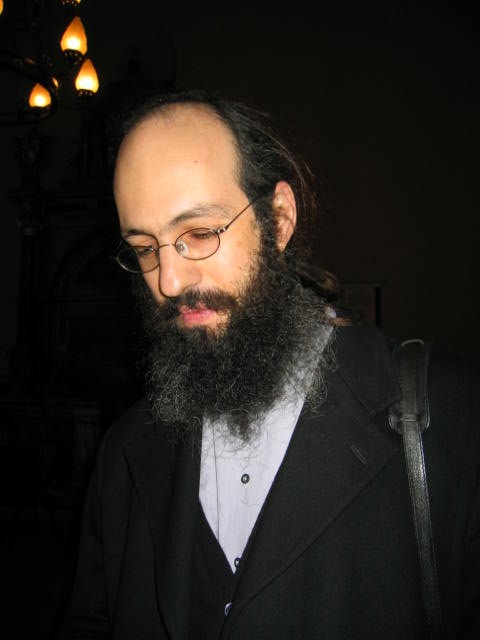
Demetrios said he received a great reception when he went back to Hagia Sophia. His old parishioners stood in a line to greet him one by one, with a kiss on the hand.
– What does the congregation make of the new priest?
– Well, he doesn’t speak any English (Oops. Three quarters of this particular Greek congregation in London are second generation and don’t speak Greek).
– But the new priest is much holier than I am, says Demetrios. Of course, he is a monk who has spent many years on Athos. (Demetrios is married, with fourth child on the way, therefore not nearly so holy – obviously).
