We are bound to each other

No member Church can make significant decisions unilaterally and still expect this to make no difference to how it is regarded in the fellowship; this would be uncomfortably like saying that every member could redefine the terms of belonging as and when it suited them. Some actions – and sacramental actions in particular – just do have the effect of putting a Church outside or even across the central stream of the life they have shared with other Churches.

We now face some choices about what kind of Church we as Anglicans are or want to be. Some speak as if it would be perfectly simple – and indeed desirable – to dissolve the international relationships, so that every local Church could do what it thought right. This may be tempting, but it ignores two things at least.

First, it fails to see that the same problems and the same principles apply within local Churches as between Churches. The divisions don’t run just between national bodies at a distance, they are at work in each locality, and pose the same question: are we prepared to work at a common life which doesn’t just reflect the interests and beliefs of one group but tries to find something that could be in everyone’s interest – recognising that this involves different sorts of costs for everyone involved? It may be tempting to say, ‘let each local church go its own way’; but once you’ve lost the idea that you need to try to remain together in order to find the fullest possible truth, what do you appeal to in the local situation when serious division threatens?

Second, it ignores the degree to which we are already bound in with each other’s life through a vast network of informal contacts and exchanges.. These are not the same as the formal relations of ecclesiastical communion, but they are real and deep, and they would be a lot weaker and a lot more casual without those more formal structures. They mean that no local Church and no group within a local Church can just settle down complacently with what it or its surrounding society finds comfortable. The Church worldwide is not simply the sum total of local communities. It has a cross-cultural dimension that is vital to its health and it is naïve to think that this can survive without some structures to make it possible. An isolated local Church is less than a complete Church…

The idea of a ‘covenant’ between local Churches (developing alongside the existing work being done on harmonising the church law of different local Churches) is one method that has been suggested, and it seems to me the best way forward. It is necessarily an ‘opt-in’ matter…

The idea of an Archbishop of Canterbury resolving any of this by decree is misplaced, however tempting for many. The Archbishop of Canterbury presides and convenes in the Communion, and may do what this document attempts to do, which is to outline the theological framework in which a problem should be addressed; but he must always act collegially, with the bishops of his own local Church and with the primates and the other instruments of communion.

Archbishop Rowan William Reflections on the Anglican Communion

Anglican Covenant

A well-written and concise covenant would clarify the identity and mission of the Churches of, or in association with, the Anglican Communion. By articulating our ecclesiological identity, a covenant will also help the Anglican Communion in self-understanding and in ecumenical relationships. A covenant could provide, for all provinces and/or national churches, a fundamental basis of trust, co-operation and action in relationship with one another and in relation to the whole Communion. A covenant could express what is already implicit, by articulating the â??bonds of affectionâ??, that is, the â??house rulesâ?? by which the family of Anglican churches wishes to live together . These would be intended to develop a disciplined and fulfilling life in communion.

It could also become a significant educational tool within the Communion, enabling Anglicans worldwide to understand and deepen their commitment to the beliefs, history and practices they share in common and their development of these as they engage together in Godâ??s mission in the world.

Any covenant also has the potential of providing what is currently lacking – an agreed framework for common discernment, and the prevention and resolution of conflict. It could do this by bringing together and making explicit much that until now has been a matter of convention within the Communionâ??s common life.

The Proposal for an Anglican Covenant

The episcopate is one, each part of which is held by each one for the whole

So koinonia / communio is a foundational term which gained fundamental significance for the early church, and which in the eyes of many once more occupies a pre-eminent place in defining the essence of the Church today. The Church is shared participation in the life of God, therefore koinonia with God and with one another (1 Jn, 1,3).

So from the beginning the episcopal office was ‘koinonially’ or collegially embedded in the communion of all bishops; it was never perceived as an office to be understood or practised individually. In his history of the Church Eusebius describes in detail the endeavours to maintain peace, unity, love and communion during the violent conflicts of the second century regarding the correct fasting practices and the dating of Easter (Hist. eccl., v,23f; cf. vii,5). The collegial nature of the episcopal office achieves its most impressive expression in the consecration of bishops.

‘The episcopate is one, each part of which is held by each one for the whole’ (Cyprian of Carthage De ecclesiae catholicae unitate, 1,5). Such statements and admonitions recur again and again in Cyprian’s letters (Ep., 55,21; 59,14 et al.). Most familiar is the statement that the Church is the people united with the bishop and the flock devoted to its shepherd. ‘The bishop is in the church and the church is in the bishop, and if anyone is not with the bishop he is not with the church.’ But Cyprian goes even one step further: he not only emphasises the unity of the people of God with its own individual bishop, but also adds that no one should imagine that he can be in communion with just a few, for ‘the Catholic Church is not split or divided’ but ‘united and held together by the glue of the mutual cohesion of the bishops’ (Ep., 66,8).

Cardinal Walter Kasper An address given to the Church of England Bishops’ Meeting (5 June 2006)

The discipline of the whole Church

What is a bishop?

A bishop is the discipline of the whole Church on us – which is nothing other than the Lordship of Christ effective for us – packaged in the form of one person. The bishop represents, and makes available to us, the discipline of all other parts of the Church – geographically, historically, eschatologically. The bishop is the whole Church in one person. We can go and complain to him, seek explanations from him, and we also have to encourage and to pray for him. We always have to ask – beg, demand – the bishop to give us the whole Christ, through all discipline and in all the Scriptures (This is apparent from the paragraphs of the Windsor Report I have posted). We have to remind the bishop to love and care for us. And of course each bishop has to be under the discipline of all the ecumenical councils of bishops, across the world and across the whole history of the Church.

We are under the discipline of the whole Church. If we believe that the Roman Catholic and Eastern Orthodox churches are mistaken to believe that bishops, and clergy, can only be male, nevertheless we cannot ignore them or defy them. To do so would be lack of love, and neglect of what the whole Church has always held to be good. Roman Catholics and Orthodox are sure that they are preserving the tradition of the Church on this matter. What if they are right? Once again, the issue is not so much the ordaining of women or homosexuals, or any new self-identifying minority, but just of doing of what the Church has never done before, and doing it without it being the act of the whole Church. If we make new rules, whether about ordination or about anything else, we have failed to understand that the Church is the reconciliation of all opposing parts, and so the costly unity won by Christ, that now enables our mutual subordination and love, in which we consider each better than ourselves. Our talk about making new rules for ourselves is a deliberate walking away from the Roman Catholics and Orthodox. We can not act without the rest of the Church and still be Church ourselves. If we walk from the unity of the Church the truth of the Church leaves us too.

Broken Church

Christopher Wells, writing for the ever-excellent Anglican Communion Institute, is wondering what the Archbishop of Canterbury makes of the debacle of the just-finished General Convention of the Episcopal Church of the United States. Wells suggest we read Archbishop Williams’ lecture on a previous great Archbishop of Canterbury, Michael Ramsey.

‘Williams seized Ramseyâ??s suggestionâ??enshrined in his classic of the 1930s, revised in the 1950s, The Gospel and the Catholic Church â??that the center of Anglicanism, her primary vocation, is to witness to the perpetual passion of Christâ??s body which must lead ineluctably, according to divine providence, into the heart of the gospel. In this perspective, the peculiar â??lightâ?? of Anglicanism within the wider oikumene will be provisionality itself, following on a proper penitence: a readiness to go willingly, and perhaps be lifted up, to suffer whatever further sacrifices may be necessary for the visible reunion of the one Church.’

Christopher Wells Wounded in Common Mission: The Term of Inter-Christian Divisiveness

Here is Rowan Williams himself, turning from Michael Ramsey to Ephraim Radner:

‘The situation is made harder by our cultural setting. The unhappy irony of the Reformation legacy is the steady slippage from the confessional protest of Luther to the consumer choices of modern Christianity in the West – the search for the Church of your taste and preference. Ephraim Radner, one of the most exacting and rigorous of contemporary American theologians, has outlined the irony in a recent book, Hope Among the Fragments. The Broken Church and its Engagement of Scripture, in which he insists that the Church is only itself if it engages with the specific form of Christ as Scripture proclaims it; but also that a movement for reform, purity or separation in the name of this engagement always drifts towards that typically modern pluralism which fails in the long run to do any justice to the utter givenness of Godâ??s initiative, fails to think the Church theologically.

â??As institutional churchesâ??, he writes, â??as formal Christian communities, we now stand in the same condition as that of the first Christians after the resurrection. We have no articulated theology, we have no proven structures of authority, no experienced framework for the reading of Scripture that is common to us as a churchâ?? (p.175). This may be optimistically presented as great opportunity; but it should first be recognised as â??the judgment of Godâ??s historyâ?? – that is, as the result of long-engrained habits of unfaithfulness in our practice. We have forgotten how to be churches. Starting new ones will only compound the problem: the traditionalist is in the same boat as the liberal to the extent that both are prisoners of a denominational market (p.205), even when appeal is constantly being made to the model of Reformation confessio – or even early Christian martyrdom. The only theologically honest response is to acknowledge that Godâ??s providence has placed us in a divided and in various ways unfaithful Church, and that we have to learn there a form of repentance (individual and corporate) that is our best route towards the form of Christ: â??That God has placed us in this church at this time must mean that he would have us grow in the from of life that bespeaks the Churchâ??s repentant readiness to be healedâ?? (208).

Radner goes on to elaborate what is involved, practically and theologically, in â??staying putâ?? – bearing with the contradictions of the visible institution, â??faithfully navigating a hostile church while remaining in communion with itâ?? (212). It is the most accessible contemporary form of being a fool for Christâ??s sake in a â??Church of fools, filled with waiting, filled with patience, filled with perseverance, filled with prayer, filed with endurance, filled with hopeâ?? (214). But at the larger structural level, this means a polity and policy for our churches – and Radner speaks about Anglicanism in particular – that â??hold dependencies in orderâ??: we are bound up in so many relations of dependence – to Scripture, to our past, to our present partners and our present members – but we have to find a way of keeping them in tension, not seeking to relieve the pressure by removing whatever ones we currently find hardest or most offensive (229). And this in turn means a call to the churches to discover a form of holiness that effectively challenges the localisms and self-assertive separatisms that are the most effective cultural captivity of the modern Church. It is no surprise that Radnerâ??s last paragraph but one in this difficult and necessary book takes us back to Ramsey, and to The Gospel and the Catholic Church.

The Anglican Churchâ??s embrace of incompleteness, which Radner sees as central to Ramseyâ??s vision (218), is grounded in a description of the Church â??in terms of the fate of Christâ??s body in passion and self-giving – an incompleteness divinely opened to the divine gift of new lifeâ?? (233). Here is the Churchâ??s task, its one task that is truly its task as Church. We may not know where the â??realâ?? Church is in abstract terms – and if Radner is right, the question itself is going to lead us in the wrong direction in our present climate. But we may still know where the event of Christ is going on, and we may still know what we must do to align ourselves with it. Thereâ??s the problem, of course: it is more attractive to go in quest of the real Church than to seek for the pattern of cross and resurrection in the heart of where we happen to find ourselves. But Ramsey implicitly warns us that the quest can be a way back to the self-defining and self-protective religious institution that always distorts or stifles the gospel.

Somewhere in this is a very substantial paradox – that the harder we search for a church that is pure and satisfactory by our definition, the less likely we are to find it. Embracing the incompleteness is not a recipe for passive acquiescence in a Church that is corrupt, implicitly heretical or indifferent to the gospel; it is a recognition that the Church is always at best on the edge of all these things and that the self-seeking individual who believes that the Churchâ??s problems are always in the souls of others has the capacity to tilt the community further towards its perennial temptations. We have to be Lutherans after all, in the sense of refusing any model of the Church that allows us to think of the Church as a body to which we choose to give our allegiance so long as our individual spirituality is nourished by it – rather than as the very form of our Christian being. As Lutherâ??s example shows, this is far from being a passive acceptance of the concrete tyrannies or infidelities of the Church in history; but it demands a theological vision of those failures. And it also requires a difficult spiritual discernment as to how, in an unfaithful Church, we try to live our way into the one event in which the Church actually subsists.’

Archbishop Rowan Williams The Ramsey Lecture
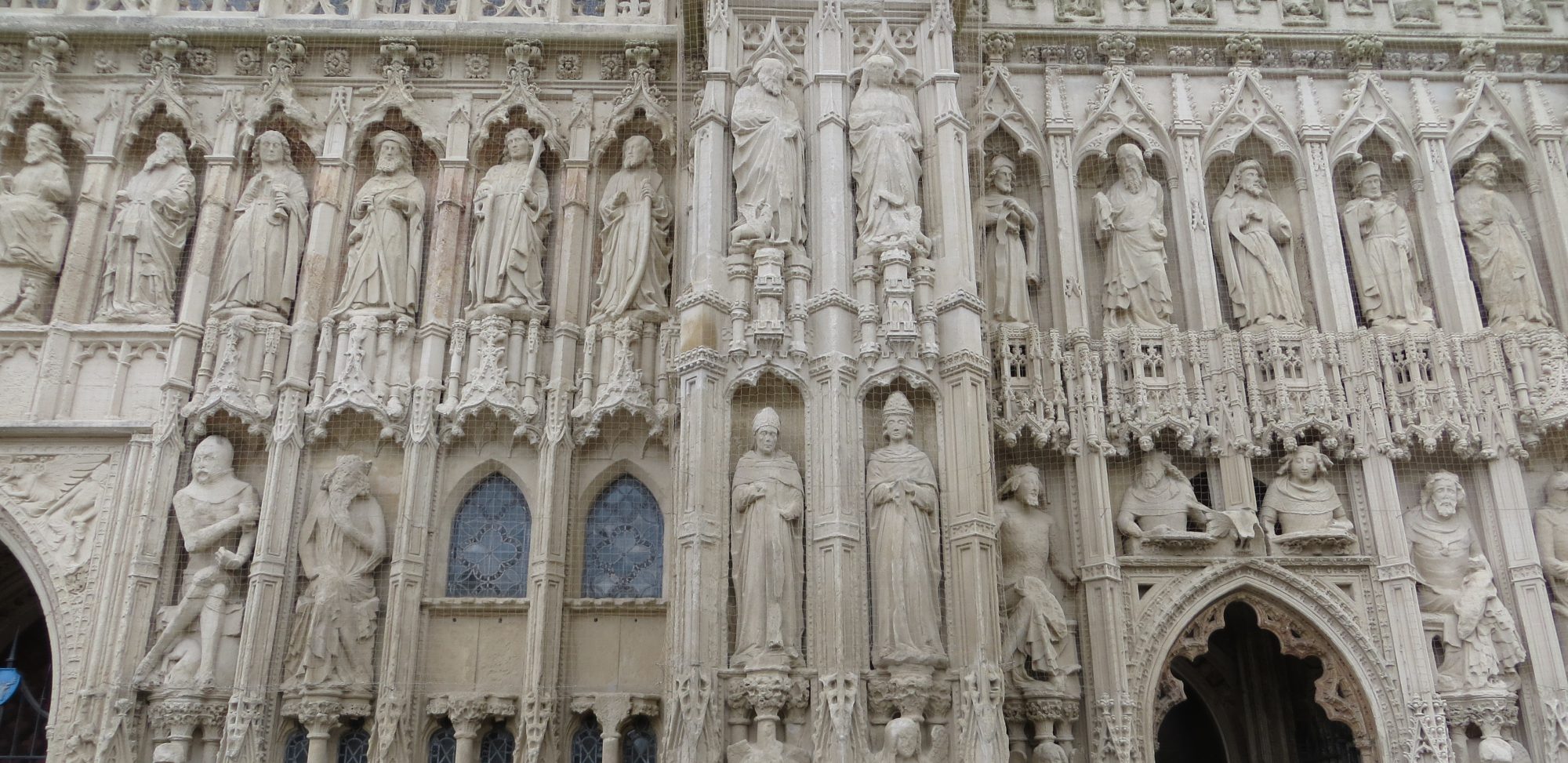
Bishops of the Church of God in the Anglican tradition guard the faith, unity and discipline of the Church

This General Convention has now given its response to the recommendations of the work of that Commission, known as the Windsor Report….The responses which the Convention has given to the clear and simple requests of the Lambeth Commission, the clear and simple requests indeed of the Anglican Communion, are clearly and simply inadequate. We reaffirm our conviction that the Windsor Report provides the way forward for the entire Anglican Communion, the ecumenical relationships of the Communion, and the common life of a faithful Episcopal Church. Further, we have agreed to submit ourselves to the Windsor Reports requirements, both in what it teaches and in the discipline it enjoins. We have not changed in our commitment. …

It is our intention not only to point to the inadequacies of the General Conventions responses, but to declare to our brothers and sisters in Christ throughout the Communion that we continue as The Episcopal Church in this country who uphold and propagate the historic faith and order we have come to know through the Anglican heritage of apostolic teaching and biblical faith; who desire to be fully a constituent member of the Anglican Communion; and who are ready to embrace and live under the Windsor Report without equivocation. Accordingly, we repudiate the actions of the General Convention of 2003 which have breached the bonds of affection within the Communion. We bishops have committed to withhold consents for any persons living in same gender relationships who may be put forward for consecration as a bishop of the Church. And we have refused to grant authority for the blessing of sexual relationships outside Christian Marriage in our jurisdictions. We intend to go forward in the Communion confidently and unreservedly.

Our chief concern now is to fulfill our charge as bishops of the Church of God in the Anglican tradition to guard the faith, unity and discipline of the Church. Pastoral care and apostolic teaching must not only be given to our own dioceses, but to all the faithful in this country who seek apostolic oversight and support. We will take counsel together to fulfill our service on behalf of faithful Anglicans in this country, both clergy and laity, and to proclaim the Gospel and build up the Church of our Lord Jesus Christ, and we seek the support of the Archbishop of Canterbury and the Primates and Bishops of the Anglican Communion as we do so.

Bishops’ Statement – General Convention Actions Inadequate – Anglican Communion Network

Windsor: mature study, wise and prayerful discussion

The current crisis thus constitutes a call to the whole Anglican Communion to re-evaluate the ways in which we have read, heard, studied and digested scripture. We can no longer be content to drop random texts into arguments, imagining that the point is thereby proved, or indeed to sweep away sections of the New Testament as irrelevant to today’s world, imagining that problems are thereby solved. We need mature study, wise and prayerful discussion, and a joint commitment to hearing and obeying God as he speaks in scripture, to discovering more of the Jesus Christ to whom all authority is committed, and to being open to the fresh wind of the Spirit who inspired scripture in the first place. If our present difficulties force us to read and learn together from scripture in new ways, they will not have been without profit.

Windsor Report on the future of the Anglican Communion paragraph 61

Windsor: prayerful teaching ministry

The place of Christian leaders â?? chiefly within the Anglican tradition, of bishops â?? as teachers of scripture can hardly be over-emphasised. The â??authorityâ?? of bishops cannot reside solely or primarily in legal structures, but, as in Acts 6.4, in their ministry of â??prayer and the word of Godâ??. If this is ignored, the model of â??the authority of scriptureâ?? which scripture itself offers is failing to function as it should. The authoritative teaching of scripture cannot be left to academic researchers, vital though they are. The accredited leaders of the Church â?? within the diocese, the bishop(s); within the Communion, the primates â?? must be people through whose prayerful teaching ministry the authority of God vested in scripture is brought to bear – in mission within the world and in wise teaching to build up the Church.

Windsor Report on the future of the Anglican Communion paragraph 58

Windsor: Scripture at the heart of worship

For scripture to ‘work’ as the vehicle of God’s authority it is vital that it be read at the heart of worship in a way which (through appropriate lectionaries, and the use of scripture in canticles) allows it to be heard, understood and reflected upon as God’s living and active word. The message of scripture, as a whole and in its several parts, must be preached and taught in all possible and appropriate ways. It is the responsibility of the whole Church to engage with the Bible together; within that, each individual Christian, to the fullest extent of which they are capable, must study it and learn from it, thoughtfully and prayerfully. Within this context, the Church’s accredited leaders have a responsibility, through constant teaching and preaching, to enable the Church to grow to maturity, so that when difficult judgments are required they may be made in full knowledge of the texts.

Windsor Report on the future of the Anglican Communion paragraph 57

Act interdependently, not independently

It is an ancient canonical principle that what touches all should be decided by all. The relational nature of communion requires each church to learn more fully what it means to be part of that communion, so that its members may be fulfilled and strengthened in and through their relations with other churches. Communion obliges each church to foster, respect and maintain all those marks of common identity, and all those instruments of unity and communion, which it shares with fellow churches, seeking a common mind in essential matters of common concern: in short, to act interdependently, not independently.

Windsor Report on the future of the Anglican Communion paragraph 51