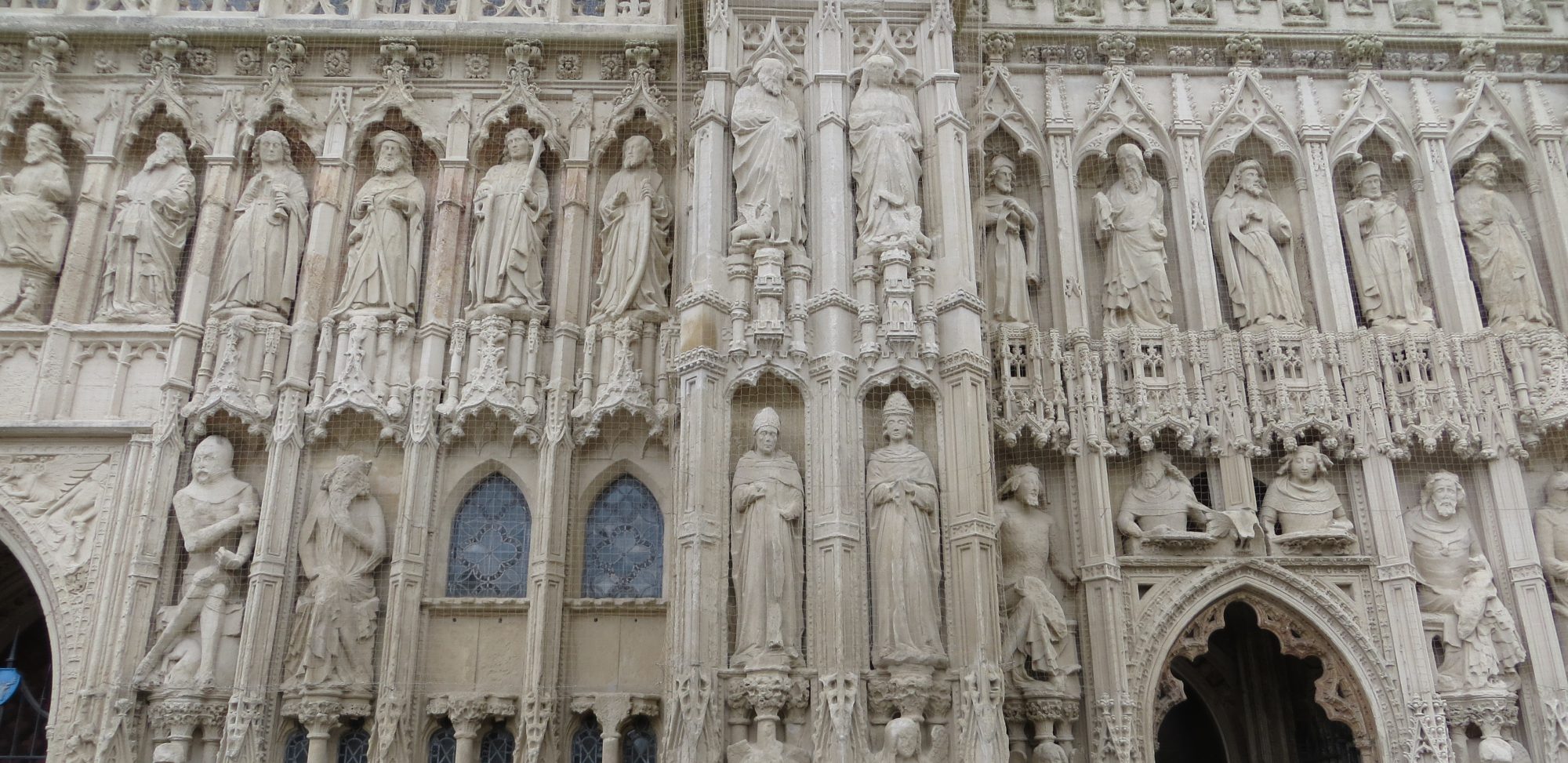
Israel is being hanged on a public gallows erected on the grounds of the United Nations with yards of rope gleefully supplied by the Muslim world. But the hangmen are mostly Westerners who still think that the Muslim lynch mob at their doorstep can be pacified with the death of a single victim.
Daniel Greenfield Sultan Knish
Israel, the stone that the builders rejected, yet the cornerstone
Suicide, or as the participants doubtless dubbed it, a â??martyrdom operation,â?? was the evident goal of the Hamas supporters on the Mavi Marmaraâ?¦ the incident was an exercise in the theater of horror, one suicide attack in long and sickening series of suicide attacks.
It is hard to see what sequence of events might prevent a horror beyond the worst imagings of the Western public. That is the Islamist trump card. Even if the West wins, the Islamists believe, it loses, as America did in Vietnam and France did in Algeria. The cost of victory will be a wave of horror and revulsion that destroys Western morale. And they well may have judged us aright. If we are incapable of distinguishing our culture from the failing culture of death that has empowered itself in so much of the Muslim world, we will not survive.
David Goldman â??The Horror, the Horrorâ?? on the High Seas
Introduction to Economics book
New Overlords
Unregulated finance, the ideology of unfettered free markets, and state capture by corporate interests are what ended up undermining democracy both in North America and in Europe. All industrialized countries are at risk, but it’s the eurozone – with its vulnerable structures – that points most clearly to our potentially unpleasant collective futures.
As a result of the continuing euro crisis, European Central Bank (ECB) now finds itself buying up the debt of all the weaker eurozone governments, making it the – perhaps unwittingly – feudal boss of Europe. In the coming years, it will be the ECB and the European Union who dictate policy. The policy elite who run these structures – along with their allies in the private sector – are the new overlords.
We can argue about who exactly are the peasants, the vassals, and the lords under this model – and what services exactly will end up being exchanged. But there is no question we are seeing a sea change in the post-war system of property, power, and prosperity across Western Europe, just as Hayek feared. An overwhelming debt burden will bring down even the proudest people.
Simon Johnson The European Road to Economic Serfdom
Our own red-tory Philip Blond’s Respublica publishes The Venture Society – A small state, big (civil) society, please. It’s a mess of pottage but you have got to wish them luck. Curious how the Front Porch Republicans, of whom the excellent Patrick Deneen is the latest, have taken him to heart. Meanwhile my own account of these matters is nearly presentable enough to be shown to good friends.
Jerusalem
States are not founded on social contracts, protection of the individual, or any such idiocy handed down from Hobbes; they are founded upon congregations, as Augustine explained in the City of God. It is not common interest but common love that defines states. We do not have a â??selfâ?? interest as such; our â??selfâ?? belongs to our ancestors and our children, unless, of course, we are contemporary Europeans, who despise our ancestors and have no children, and hope to pass into extinction with the minimum of bother.
From Jerusalem came the most persuasive promise humankind had ever heard, namely the promise of eternal lifeâ??not the fragile immortality of the pagan gods, whose doom already was sealed by fate in the myths of all the peoples, but life with God past the dissolution of the physical world. The world will wear out and God will discard it like a cloak, Psalm 102 sings, but the Lord will establish his servants forever.
The history of Israel is the history of the world, said Franz Rosenzweig, for as soon as the peoples learned that the God of the Jews had promised them eternal life, they considered how they, too, might become part of this covenant. The Christians emulate us and the Muslims parody us. I use the word â??emulationâ?? with respect: as Jacob Neusner observes (and Benedict XVI quotes him), when Jesus declares himself to be Lord of the Sabbath in Matthew, he in effect proposes to make Temple and Sabbath accessible to non-Jews. The truth of this proposition or its ultimate efficacy is another matter, but there is no doubt in my mind that orthodox Christians seek the loving Creator God of the Jews. Islam is a different issue: it maintains outward forms similar to Judaism which enclose an inner pagan content.
The passions that rage over Jerusalem reveal the desire for immortality that underlies all of politics. Humankind does not want safety, security, sustenance as much as it wants to cheat death. Islamâ??s claim to credibility is that it represents the final prophecy, which has corrected falsified and distorted Scriptures prepared by those sneaky Jews and Christians. It does not want to appropriate the Bible, but rather loot it and leave the discredited shell behind.
David Goldman Eternal Jerusalem
Person, not individual – the Christian contribution to economics
The Gospel tells us about the unity and integrity of the human being. It reminds us that each of us is a unique being, yet we are not ourselves apart from other people. Each of us exists within a series of dualities. Each of us is either a woman or a man; none is a neuter. Each is either married or single, either a parent or not a parent. Each of us is ourselves, but also someone’s sister, brother, child, parent, friend. We are not mere units, persons without relation but we exist through these many relationships.
What is more, each of us is twofold because we are who we are today, and who we will be in ten year’s time. Each of us is not only this present but that future person. The unity of this person is not the present possession of any human being, not even of that human being himself or herself. Persons are not simply individual units, for whom it would be normal to be on our own. We are related to people other than ourselves. We do not simply create our relationships by our own say-so. Some relationships we inherit, and some we hope to pass on to those who come after us. We hope to create or pass on relationships that they will be born into, and if they are willing to recognise these relationships as good, we will have done something for them. But all that depends on thinking of ourselves as persons. Christians do so, but they may be in the minority.
Christians offer their complex account of the human being. On other accounts, persons are insidiously simplified. When we do not think of ourselves as persons, but merely as individual adults, independent units who make their own decisions from their own wills without reference to anyone else, we get a simplistic account of man and a much reduced version of our vocation as economic agents. The Christian view is that we may gain freedom by undergoing our own discipleship, that is, by subjecting ourselves to voluntary restraint of freedom.
The social sciences assume that each of us is an individual on their own, a unit without relation. The more we insist on individual freedom without such self-elected restraint the more we turn the human being into a unit who exists in on-off relationships with other units. These relationships exist only as long as both units want and no moment longer. This makes us one person against the world, for whom there turns out fortuitously, just one friend.
If we turn the person into a unit, who exists in relationship with other units who have no binding and long-term relationship with him, he is effectively in long-term relationship with just one other unit – the state. The corporations serve us as long as we have got money, or can borrow it, to buy their services. But this individual freedom of choice exists only as long as we are independent adults, who pay for ourselves, which we can do as long as we are in the job market. Of course our existence as independent agents begins to wane again as soon as we leave employment again when we retire and make our descent back down into dependency. In the middle of life, we may have many relationships, mediated by the market. By our attempts to grow in freedom without taking on any discipleship and self-restraint we surrender our powers to corporations and the market. But at the beginning of life and again at the end of life we have no money, cannot pay for ourselves, so the state has to supply these service for us.
Every attempt to increase people’s personal freedom that does not start with some form of self-imposed discipleship and self-restraint, tends to shifts responsibilities from that person to the state, and so from this person to all other persons. Every attempt to increase anyone’s freedom increase the power of the state and so increases anyone else’s unfreedom. The state is our parent, partner and sole true ally. Our life would consist is attempting to squeeze more resources out of it. Paradoxically, the more demands we make of it, the more the state is paralysed by special interest lobbies and unable to make good, sparing decisions on anyone’s behalf. On this basis, the individual and the state are mirror images. Each person is a little state and the state is a big person. The two of them are locked in this claustrophobic relationship. On this basis, the state is the true person, whereas we units are persons to the degree that we are dependents of the state.
So the Christian insistence that we are complex beings, who can enforce restraint on our present selves for the sake of our future selves, and for those who come after us, is vital to the concept of freedom. And freedom we agreed is vital to those unforced transacting that characterise economic exchange. You can’t have an economy without freedom. This is why the Christian view of man, as person, the complex being who is encountered only through dualities, is essential to the existence of an open economy. The Christian input, with the complex account of man who as image of God participates in love and freedom, is not only the origin of the open economy, but is essential to its continuing flourishing.
A firm reliance
Spread out before the early settlers of this continent was incredible untapped wealth in the form of vast unsettled lands filled with natural resources—all for the taking. Now that the Frontier is mostly tapped out, we are seeing the long, slow, decline from prosperity to scarcity…and with it the loss of individual freedom. How long will it be before we see masses of government-dependent Americans protesting in the streets of our urban centers because the messiah state can no longer provide them with the handouts they have grown to depend on; that they feel they have earned and have a right to? The taking and the giving and the borrowing by government is unsustainable. We all know this. And we know the day of reckoning is coming. The best that messiah government can do is obscure the reality and delay the inevitable.
How then shall people who are cognizant of this eventuality live? Disengage as much as possible from these dependencies. Simplify your wants and needs. Steer clear of the bondage of debt. Provide for your needs of food, heat, and shelter as much as you can with your own hands and backbone. And, most fundamentally, turn your eyes from the false messiah state to the true Messiah. This response is as much spiritual as it is physical. What I am talking about is a return to the American pioneer spirit, characterized by a firm reliance on the God of the Bible, hard physical work, thrift, self-reliance, subsistence, and the family economy. While it is true that the Great Frontier, with all its uninhabited land and untapped natural resources is now, for all practical purposes, gone, the land remains. And if properly husbanded, the land can still sustain pioneer families in this new century, fraught as it is with impending shortages and instabilities.
Living on a section of land and working to make it productive will not bring wealth sufficient to satisfy the average modern American who is conditioned by our culture to spend, borrow, consume, and spend, borrow, waste. But in the days ahead, those people who have returned to the land, have equipped themselves with the tools and knowledge to make the land productive, and who are secure and content with little, these people will provide a valuable example for the helpless, discontent, and confused all around them. Pioneering is totally contrarian to the spirit of this age, but it is a positive, refreshing, satisfying course of action. It is the only appropriate personal response in the midst of the crisis we find ourselves in.
Herrick Kimball The Deliberate Agrarian
With Mary Magdalene on Easter morning
The Lord Jesus is God and man in one figure. When we worship him, we are standing before the open door of the throne room of the Lord. He waits for us through there, or since we are the ones who are constrained by our limits, it would be better to say that he waits for us out there. He calls us out of this stiflingly small place and into the vaster place of his immediate presence. And so we marvel at the Lord and so we worship him. That is what the angels are showing us, and why the disciples stand here open-mouthed, moving from bafflement to amazement, singing Holy, holy, holy… This tomb turns out to be the throne of God, where all his company stands around the Lord, for where the Lord is, there his people are gathered around him. It the gateway which opens for us so that we can go in to that company and his presence. Our future is through there, with them and him, for we were made for undying communion with God, and with one another, in God’s glorious company.
Easter morning 2010 He must rise from the dead
Gospel and Economy book
Here is a draft of the first chapter of the Economics book for your inspection.
Theological economics
1. There are two economies, of the Church and the world. This distinction and duality is the basis of all others. Consequently, there are two contemporary economies, that of the economy of God, announced by the Christian gospel, and the modern economy, for which we have to identify a corresponding ideology of ‘Modernity’.
2. Christianity insists a person is a covenantal concept. Man is not by himself and then later with God and with his fellow-man. A person is never single before he is one-half of a couple and a member of a family. He is not alone before he is a member of society. In acting well towards his fellow man, he acts properly and for himself.
3. A person may exclusively love and unite themselves to one other person. The exclusivity and uniqueness of the two persons who irrevocably give themselves to one another is the basis of all other covenants, relationships, and so the basis of society.
4. The marriage covenant is an exclusive relationship, and the household it creates is private. Marriages may not be dissolved by the will of one partner, nor may households be dissolved or absorbed by the public square, the market or the state.
5. There are therefore two other economies, the public economy of the market, and the private economy of the household.
6. In the Church people from all stations of society stand shoulder to shoulder. The Church is the embodiment of the reconciliation of all social and ethnic opposites and so the authentic voice of society.
7. The Church is the present anticipation of the future reconciliation of all mankind. It is the voice of the future society pining and mourning for the present society that is separated and lost.
8. The Church is the community in which all are bound to each, and so it is the community in which trust is generated. The Church is the place of self-giving without calculation of return, and so of risk-taking. The two fundamental economic principles of trust and risk-taking originate in the Church.
9. In the Church persons can confess their sins, receive forgiveness and the possibility of a new start. When we take the judgment of others as an anticipation of the judgment of God, and repent, that judgment is good.
10. The Church has to name the powers. The Church has to diagnose our crises by relating them to our concept of man and its various reductions. It has to identify them as both the judgment of society on itself, and of the judgment of God.
11. The Church that is confident in the covenant of God and the promise of redemption can identify crises without fear, and give warning of disaster to whichever society it is sent.
12. The state is the result of all our individual inclinations to refer our own responsibility away. The excessive extent to which we do this accumulates this power in the centre without control.
13. The Church will survive a collapse of any state. The British people, and the virtues they have received via the Church, will survive it, and may only survive if they go through crises and collapse. Any crisis is a correction. The more we attempt to postpone our rendezvous with reality, the more traumatic that eventual correction will be.
14. Western, modern economics insists that payment by money fulfils and terminates a contract and releases its parties from all obligation and that money establishes full payment and remittal. Non-modern economics insists that there is no form of accounting or payment by which the relationship of any two agents can be finally closed. No debt can be entirely paid off; every relationship remains open; nothing begun can easily be ended. Payment of money does not spare us future requests or release us from the obligation of meeting them.
15. Our debt to past generations may motivates us to reproduce, to bring about the continuation of society and so give a future to our past. The faith that holds together ‘was’ and ‘is’, may understand that ‘is’ as ‘ought’, and so turn that ‘is’ into ‘will be’. Non-societies understand that each generation is in debt to all previous ones, and consequently to future generations.
16. Christians witness to those fundamental sources of economic subsistence, which promote the household and the dignity of labour and service, and in which, through informal accounting and an economy of favours, social capital remains developed and the human economy remains resilient.
17. The gospel has enabled the economic development of the West. Though the contemporary economy has arisen from a culture shaped by Christianity, the modern economy takes its definition from an antipathy to that culture. But Christianity is not identical with that culture or that economic path. The Church has resources that describe other forms of economics, and Christians model alternative economies. Though the Christian faith points us towards principles, it does not commit us to any model.
18. In faith, hope and love, Christian life models the form of life that points towards flourishing that is lasting, and so is both future and properly present.
19. Christian theological economics is a series of questions that may be put to pagan economics by which it can be kept within approximate restraint.
20. No nation lasts forever. Only the Church itself has the promise of eternal life.
