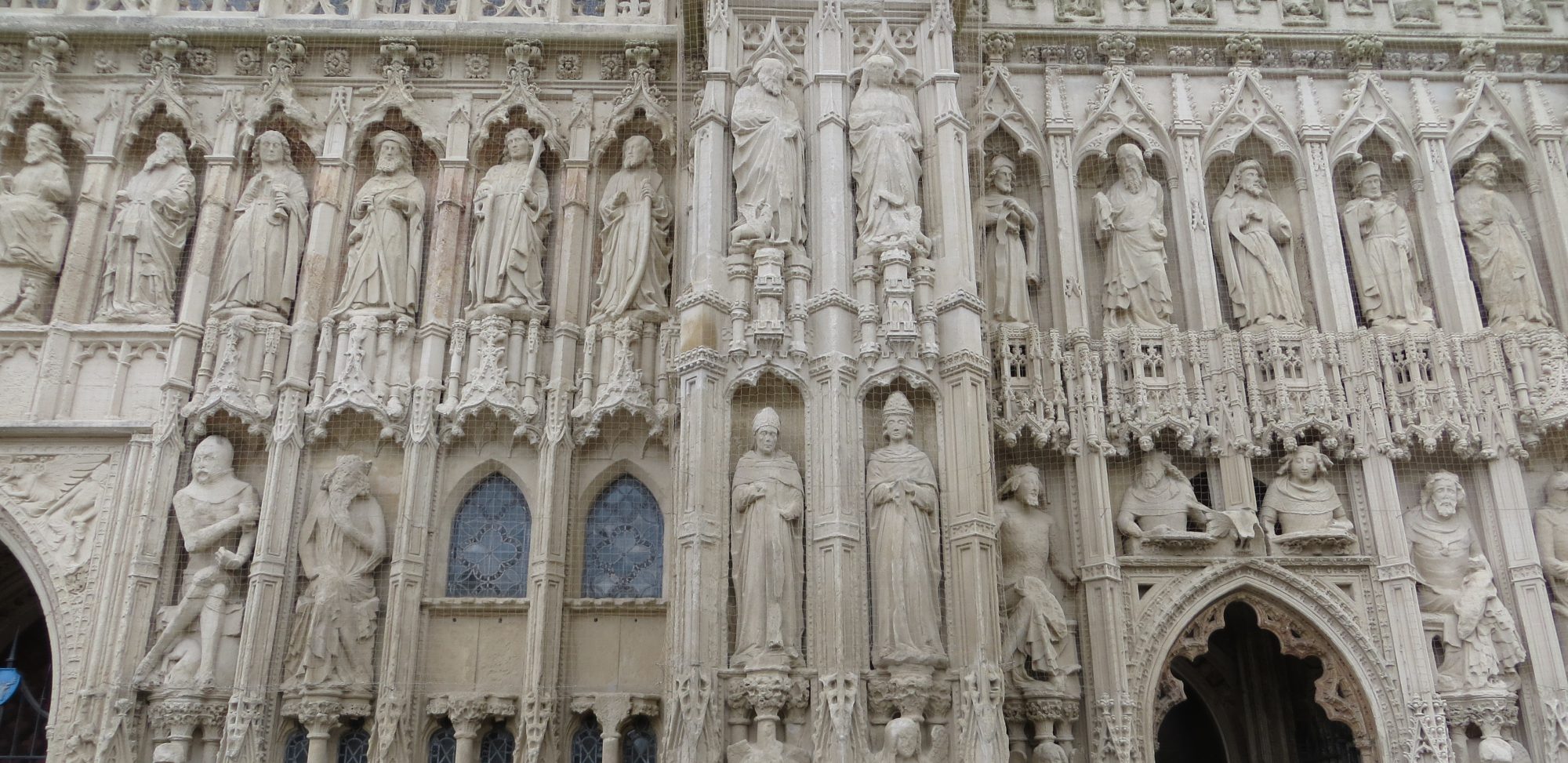
What is occurring in modern Europe? We are all observers of how a dramatic weakening of Europeâ??s Christian identity is taking place. Europe is losing the characteristics given to it by Christianity â?? I would like to stress: both Western and Eastern! Borrowing some words from the title of our conference, Europe is losing its soul. Over the centuries the Christian soul of Europe gave it life, made it remarkably attractive for the most remote countries and peoples and endowed its culture with universal character.
European values are becoming more and more secular, but I would not say that these values have totally lost their ties with Christianity. Many of them could not have appeared if there had been no Christianity in Europe. They represent a watered-down, worldly version of traditional European Christian values, and in this devitalized version are often turned against the Christianity that gave birth to them, casting doubt on the Christian identity of Europe. Breaking with the spiritual foundations of European civilization, these values risk losing the good that was placed in them by Christianity. Our concern is that Europe, having lost its connection to Christianity, may in the end make recourse to such forms of oppression or even violence against the individual that have always been foreign to her. Russia, as no other country, has experienced just how grave the break with oneâ??s spiritual roots can be for civilization, something that threatens societies not only with the loss of their countenance, but also with the rise of violence toward the person, egregious violations of personal freedom and the suppression of spiritual needs. The history of Russia in the twentieth century should serve as a warning to modern Europe, demonstrating that the rejection of the spiritual and cultural foundations on which a civilization is founded can present a serious threat to civilization itself. Indeed, the forms of social relations that were shaped in the twentieth century were to a significant extent a secularized variant of values characteristic of the Russian spiritual tradition: collectivism became the secularized version of conciliarity (â??sobornostâ??â??) and the community-centered life, a single state ideology replaced the spiritual authority of the Church. The effects of this substitution are well-known to everyone. Thus, secularism, the break with spiritual traditions, represents a great threat to the existence of European civilization.
At the foundation of this declaration lie two principal distinctions: between two meanings of human dignity, which we have agreed to call value and dignity, as well as between two meanings of freedom: freedom as the non-determinatedness of human actions and freedom as not being subjugated to evil and sin. The fact that man is created in the image of God, as well as the fact of the Incarnation, i.e. the assumption by the Son of God of our nature for the salvation of the human race, serve as the basis for the affirmation of the pre-eminent value of human nature. This value cannot be taken away or destroyed. It should be respected by everyone: by other people, society, the state, etc. An integral part of human nature that gives it special value is the freedom of choice. This freedom was placed into human nature by God Himself and cannot be violated by anyone: neither other people, nor evil powers, nor even God Himself.
By itself this freedom is only an instrument with which the person realizes his moral choices. Freedom of choice should be used for attaining freedom from sin. Only by liberating oneself from the shackles of sin and acquiring the â??freedom of the glory of Godâ??s childrenâ??, as St. Paul wrote in his Epistle to the Romans (8,21), can one give meaning to his inherent ability to make free choices and acquire that which in the Declaration is called dignity. Human dignity is the highest goal of existence. Expressed in theological terms, it corresponds to the likeness of God in the person. Dignity is acquired when one makes his choices in favour of the good, and is lost when one chooses evil.
Just as freedom of choice, human rights, to which the Declaration is dedicated, are instruments that should serve the higher goal of the moral perfection of the person. On the one hand, the Declaration recognizes human rights as an important social establishment that defends people as Godâ??s creation from infringements from outside. On the other hand, it places the category of human rights into a moral context. The text of the Declaration states: â??We are for the right to life and against the â??rightâ?? to death, for the right to creation and against the â??rightâ?? to destruction. We acknowledge the rights and liberties of the person to the extent that they help the person rise toward the good, protect him from internal and external evil, and help him to realize his potential positively in societyâ??.
Therefore, as mentioned in the text of the Declaration: â??Rights and liberties are inextricably connected with the obligations and responsibilities of the personâ??. In the Declaration the categories of the liberties and rights of the person received an additional, very important dimension â?? the moral dimension. This dimension sets a higher goal to the essentially instrumental categories of the freedom of choice and rights. Thanks to this moral dimension, the category of human rights acquires a teleological completion and a goal that lies beyond its own boundaries, in the realm of the most profound areas of human existence. From this perspective the Declaration contains a more multi-faceted, complex and holistic approach to the problem of human rights, an approach that takes into account the fact that the person bears the image of God and that his existence should have moral significance.
Along with the participants of the Tenth World Russian Peopleâ??s Council, we too can testify to the fact that the welfare and perhaps the very existence of human civilization in a globalized world will to a great extent depend on the ability to combine rights and freedoms with moral responsibility. For freedom and morality, placed by God Himself into human nature and which belong to everyone regardless of their culture or religion, are able to combine the existing civilizational models in a peaceful and viable manner.
Metropolitan Kirill of Smolensk and Kaliningrad Introductory Speech at the European Conference on Christian Culture â??Giving a soul to Europeâ?? Vienna, 3-5 May 2006
