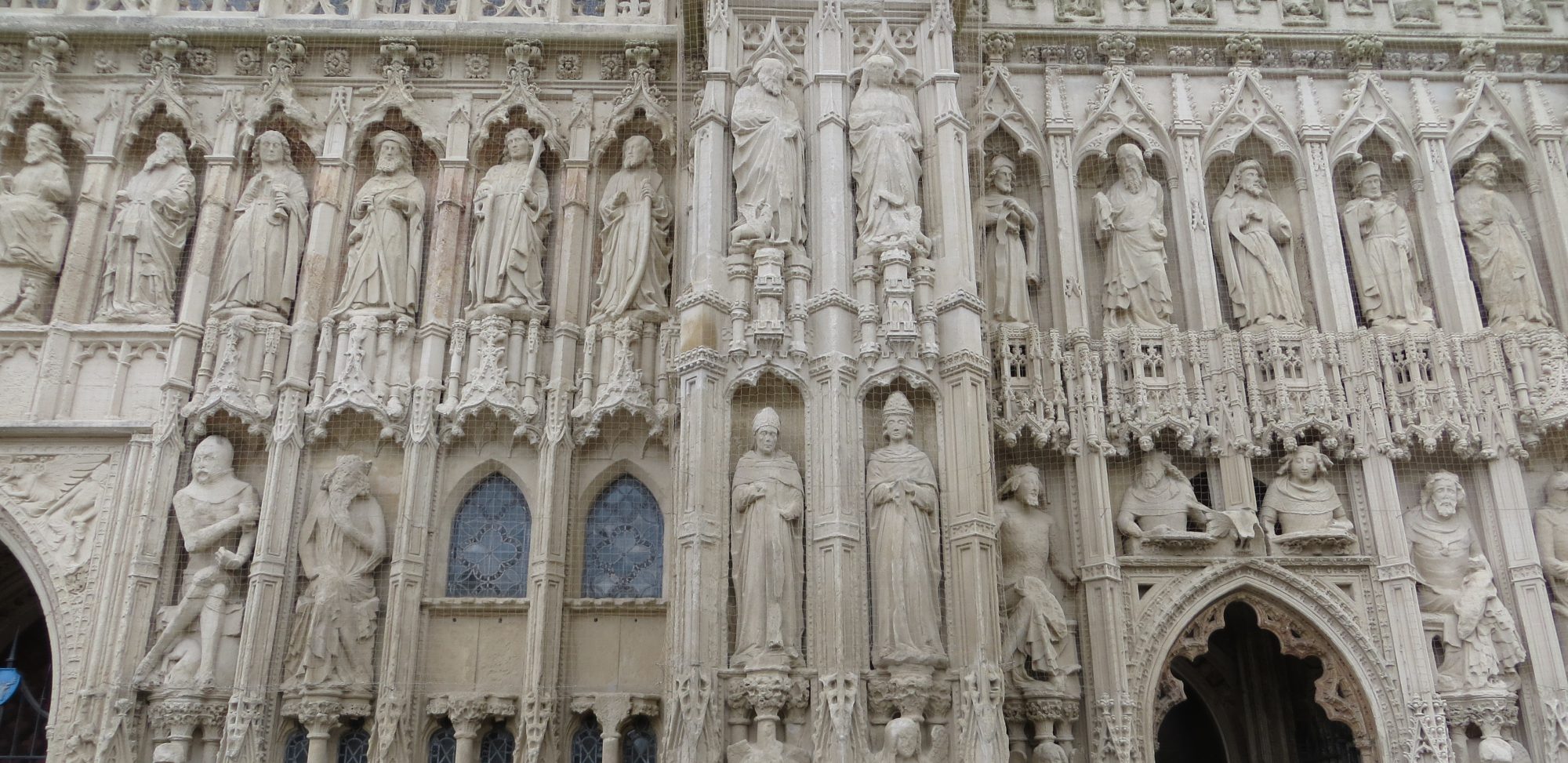
Gathered around the bishop the presbyters are the image of the apostles, pointing us to Christ. The presbyters’ first task therefore was teaching, convening assemblies, preaching and catechizing. Saint John Chrysostom and Origen have left us the homilies they preached as presbyters. While bishops gave us our liturgies and in particular the anaphoras, the Eucharistic prayers of offering, presbyters taught, preached and looked after the administration of the Church, and together with the bishop, were members of the synod of the Church in that place.
However, this arrangement did not last long. By the third century the Church was beginning to take a different course, particularly in the West, as evidenced by Cyprian. The notion of the bishops as the image of Christ changed in favour of the idea that they were the image of the apostles. Nowadays a bishop is regarded as a successor to the apostles, so his primary responsibility is to teach. However, Saint Ignatius says that it is not the bishop who does the teaching and that we should respect the silence, which according to Ignatius’s understanding, the bishop maintains for everything apart from the anaphora of the divine Eucharist, which is his responsibility solely.
This contemporary view that the primary role of the bishop is teaching and only secondarily the Eucharist, is a clear divergence from the historic understanding of the Church. In the West in particular, teaching
became the bishop’s chief role, while the celebrating the liturgy was handed over to the presbyters. Thus in the West the priest performs the liturgy, while the bishop is primarily a manager, who exhausts himself in the administration of the Church. Here is a very significant divergence from the eschatological understanding of the bishop.
