Andy,
You ask about the SST (the Society for the Study of Theology annual conference) last week.
The conference was good, the company was great, and I found a fellow Spaemann fan. My paper was feeble, but everyone was very polite. England’s greatest living theologian was just great – master of self-control and understatement. He talked about Augustine and refused to be pushed into any of moral clichés that the assembly loves.
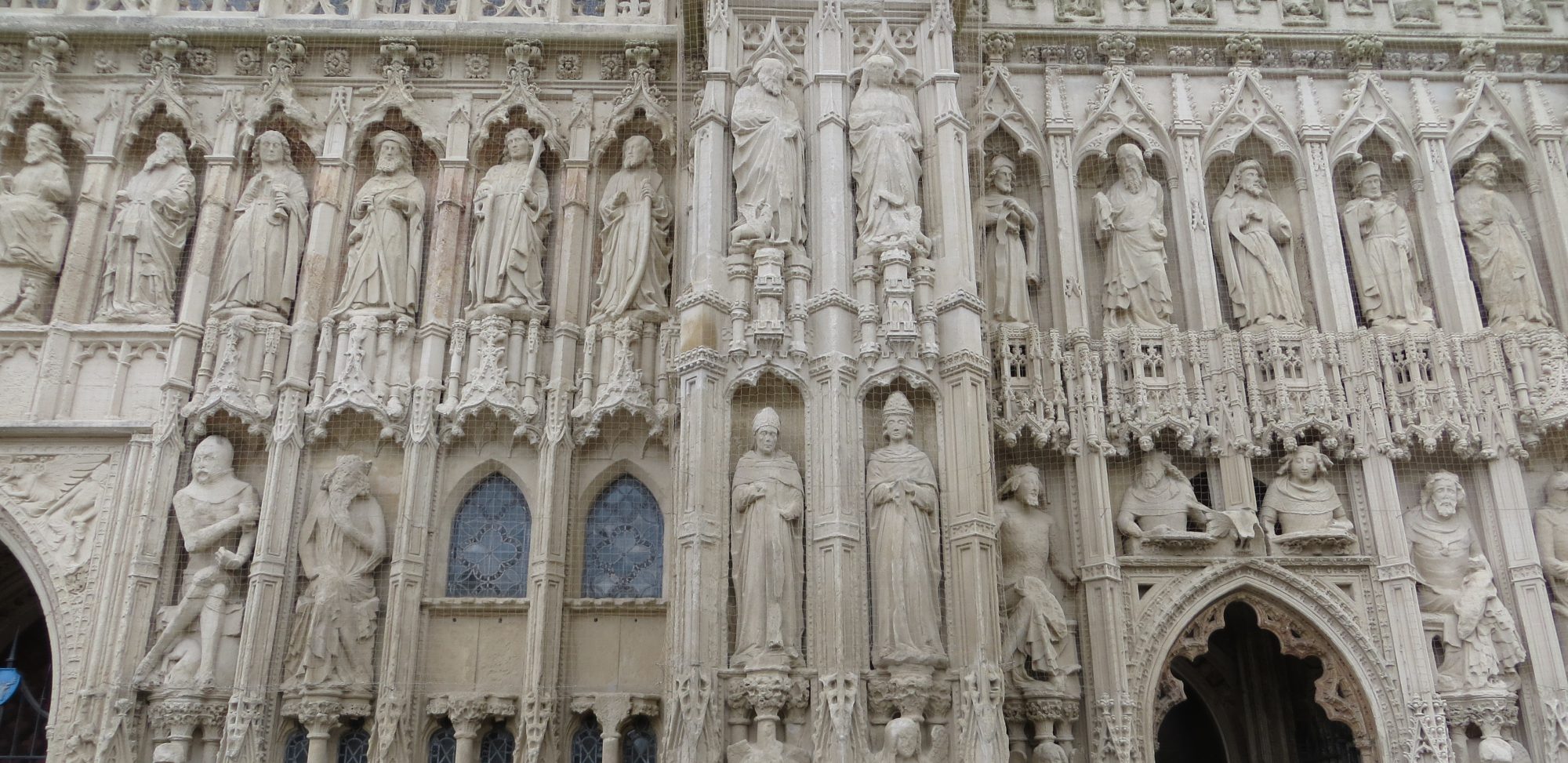
Durham itself was more wonderful even than I had imagined. Durham Cathedral is planted on a hill, good defensive position, with a river below. There is no clutter in the cathedral: the light blazes through the East rose window over the altar at mattins and through the West window at evensong. On the south are the cloisters, Chapterhouse and library, on the north a large green. The building nearest the cathedral is the music school on one side (the lex orandi – cantati) and the department of divinity (lex credendi) on the other, then further down the green, and in neighboring streets, all the other departments of the university, each science and discipline, and all human wonder flowing from the worship that goes on in the cathedral, and the town is beyond them. The whole arrangement is an image of the relationship of Church to society.
Chris Jones showed a group of us round one afternoon. He took us to Bede at one end of the cathedral and behind the altar to Cuthbert at the other. As we approached Cuthbert’s tomb he told us to stop nattering, and when we reached it, there was a momentary silence and that posture of reverence that told us that we were standing before God’s incorruptible saint. We alighted as briefly as flies on Cuthbert’s eternity .
The cathedral was a Benedictine abbey. Our guide couldn’t tell us whether the cathedral and bishop came before the monks (that company dedicated to singing the praise of God) and their abbey. If I was bishop, I would put the monks back in the cloisters and in that Quire, and have them singing around the clock. (I would have monks just between the ages of twenty-one and thirty, and then again those over sixty. At thirty, I would insist that they marry. They would not be released from vows: it would simply become a different vow, to the chaste life with one woman.)
Now I tell you this because in London we have a cathedral and an abbey, two separate institutions. Westminster Abbey is down on the river, and about a mile and a half, on slightly higher ground, in the city of London, is St Paul’s Cathedral. This is just the right distance for processing. So I would have my monks processing, singing the psalms of ascent, from abbey in the morning to the cathedral, where they would sing the office during the day, and back down to the abbey after evensong. Behind them would be the young and the old from every church in London (on yearly rota perhaps). Your baptists would be there, HTB and Jesus House. They know how to sing the praises of God. They would do so past parliament, the length of Whitehall, past the entertainment industry of the West End, past the lawyers, universities and media of the Strand and Fleet Street, and past the finance houses of Ludgate hill. If they sang over the course of this most un-Sacred Way, from Abbey to Cathedral, twice daily, our clergy might stop telling us that this or that can’t be done and tell us that it can indeed be done, and that this Christian life can indeed be lived, and in public too.
This is what I learned from Durham. Can you organise this for me? I know a couple of bishops who are looking for a lead and who would be very glad to hear from you.
