Isaiah 65.17-25, Psalms 148 & 150, Hebrews 11.32-12.2
Let them praise the name of the LORD,
for his name alone is exalted;
his splendor is above the earth and the heavens.
Why?
For he commanded and they were created. Kings of the earth and all nations,
princes and all rulers on earth, young men and maidens, old men and children.
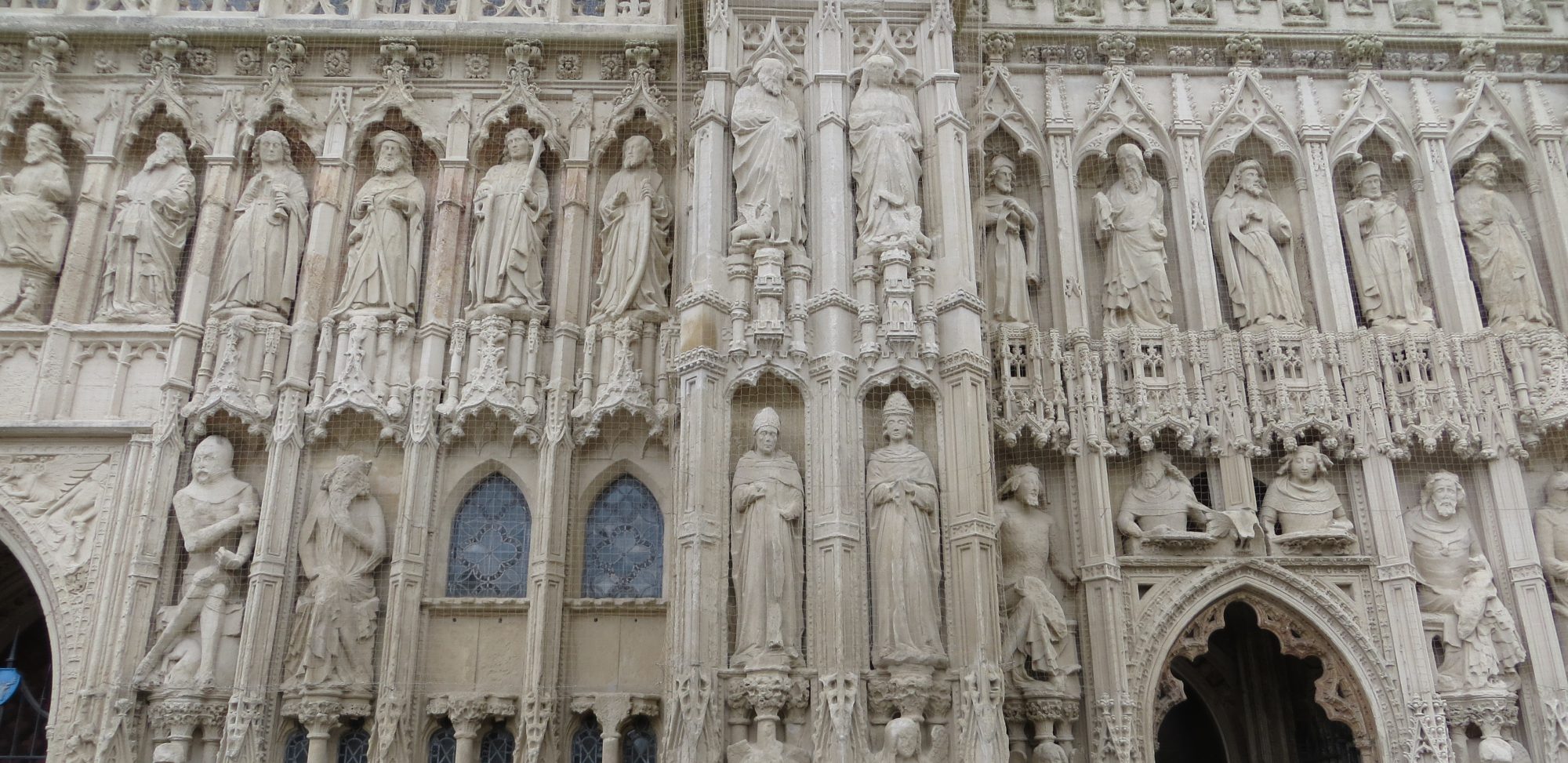
The line Let everything that hath breath praise the Lord rounds off the book of psalms. We end the day with them in our evensong, and end the year with All Saints. Everything that has a voice receives its existence from the Lord – and as long as we say we receive all things from him we receive new breath. From Hebrews we heard about this great a cloud of witnesses, and then this – ‘God had provided something better so that they would not, apart from us, be made perfect…’
The life-work of the saints is not established until we have grasped for ourselves what they want to give us. They not only know something that we don’t know, but they know something about us and have something for us that we don’t yet know and don’t yet have. They tell us that we do not have to establish ourselves or create an identity for ourselves in the face of the world. Our identity is given by God who has a far higher view of us than we have of ourselves. All the people amongst whom I will find my identity, are gifts given by God, and we must receive them as such. Each person, in particular each saint, brings us some part of this good gift of God to us, and with it some part of our very own identity. By the faithfulness of this company of witnesses the gospel has dropped into our lap.
When we allow that our predecessors in the Christian faith have been faithful, and have handed on to us a fair representation of the faith of Jesus Christ and his apostles, an extraordinary adventure opens up to us.
But of all people how has this extraordinary thing come to us so we find ourselves here, saying and singing these things, that God has spoken and speaks now to us? Why us?
I have been asked to talk about the book that the Theology Discussion group has been reading. This time it is Karl Barth’s Dogmatics in Outline, in which Barth introduces the creed which we have just said together. This evening the group will look at these clauses – ‘I believe in… God the Father, Almighty, Maker of heaven and earth…‘, and two in particular, God the Creator, and God the Father.
The first point Barth makes is that:
It cannot be that first of all we presuppose the reality of the world and then ask whether there is also a God.
It is not the case that the truth about God the Creator is directly accessible to us and that only the truth of the second article needs a revelation.
The existence of the creature is the great puzzle and miracle.
By the Word the world exists
– which is what our psalm 148 means by For he commanded and they were created
It is not the existence of God, but the existence of anything besides God, that is the extraordinary thing. The wonder is that there is also us, this creation and existence, and all heaven and earth. Heaven, Barth says, is the earth we do not know yet.
God has allowed us to be his witnesses, and allowed a whole world to be our witnesses as we are God’s witnesses. The existence of this world of witnesses is a marvel. We live before them and through them, sometimes against them, but ultimately always among them and with them. We are also their witnesses and make up their world. All existence a mystery: what it amounts to and who we are is knowable as God makes it known – in Christ.
Barth suggests that the first article of the creed – about God the Father Almighty, the Creator, depends on and frames, the second article about Jesus Christ who was born, suffered and died. Each is the condition for the other.
First it is not obvious that God is Father. We call God this because only because Jesus did. Father is therefore a name, and part of the name, Father, Son and Holy Spirit. This non-transferable name relates to the bible’s recounting of the event of Israel and Jesus. Their story reveals this complex name. It must always disturb us that the name of God is so odd. All the pressure is to look round for another less controversial, less unilateral name, one on which we can all agree. But …
God named us and called us. He gives us life and breath as we participate in the calling and naming by which he calls all things into existence, and in that hearing and replying by we recognise and learn to love one another as God’s creatures. Barth’s point is that God called us into love and existence – existence does not precede love. All love, friendship, relationship and good order are derived from the friendship that God is to us and within which we receive our name and existence.
This love comes with its own definition. If it was down to us to fill this love with meaning that it did not have, it would not be love, but be a new law for us to have to fulfill; then it would not be kind, but another imperative and another opportunity for our narcissism, autonomy and tyranny.
So this God who has introduced himself in Jesus Christ safeguards the mystery of human life. Because of him only I may not presume that I already know you, know what you use you are, and define, manage, manipulate and control you to ends that focus around me. The confession that you and I are gifts of God to one another means that I am not a god myself, so all my attempts to make your existence revolve around me, are vain. Only this God, who has called you into existence-and-fellowship will protect you from me.
That the only name that can protect us from one another is Father, Son and Holy Spirit, has to be taught and learned, just like all the rest of this faith. Use of this name, might put some people against us, and we who confess it in public worship do so with our hearts in our mouths. But that is just as it should be. Not everyone knows this, or agrees with this, or likes this. It is not too obvious to need saying and that is why we have to say it, and that is why we gather here, to be faithful witnesses in our turn, who give thanks to God for all that exists.
