Months ago I promised that I would post pieces from The Apprenticeship. I haven’t told you anything about the purpose or structure of the book, and without any context, passages may not make all that much sense, but let’s try anyway.
This first piece comes from a section asking ‘Which comes first – the individual or society?’
Man is a social animal. We do not live in isolation. We live our lives before others: they make up our audience. We are influenced by them and they are influenced by us, so we wield power over one another. Others observe what we do as much as we watch what we do: they copy us and we copy them. Everyone is looking out for anyone who has good idea or has find a better way of doing the things we do. Better ideas are picked up and integrated.
Man is always with his company and his audience. Each man stands before his own home crowd. He plays to them and they receive and acknowledge his acts, and his acts only have sense to the degree that they acknowledge them. Our every act makes that act first acceptable, then compelling and over the long term binding over others.
But we are not only in relationship with those we are aware of, whom we see and can name. We are also in relationship with others all across the world, who want (or no longer want) the goods and services we produce, with the result that we are making money or struggling financially. Their demand for what we do means that we have a position, in a firm, with all its security and recognition. Though they may be unaware of this, we receive our place, and in it permission to do a range of things, from them. Our identity, even perhaps our very existence, comes from them.
But we are not only in relationship with those who are alive now, our contemporaries across the globe. We are also in a different sort of relationship which those who preceded us, and who set up the institutions and infrastructure that we take for granted, and from whom who have inherited our worldview, the palette from which we select what we regard as our own personal views.
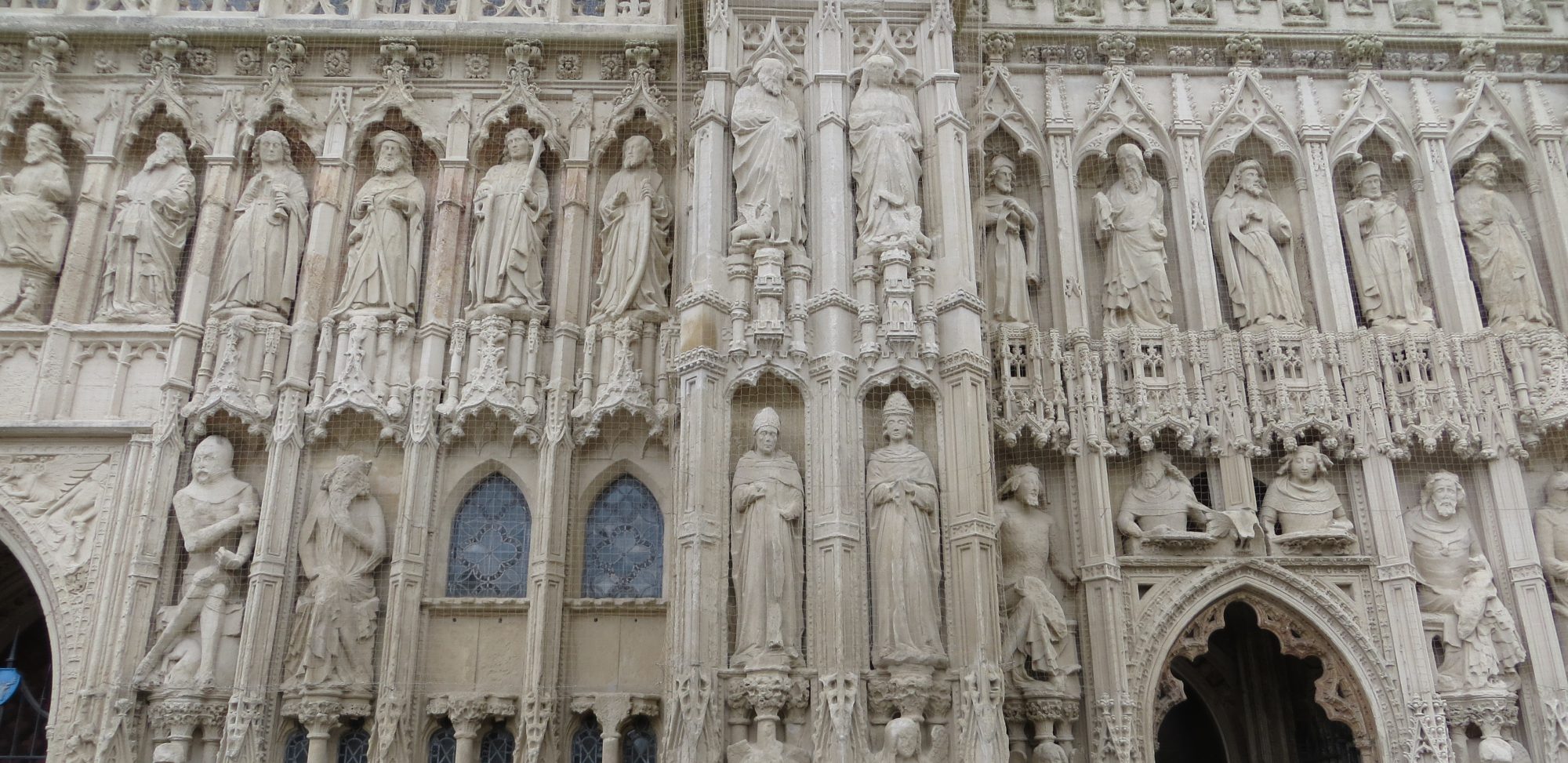
Let us imagine that we do we are observed by others, who inhabit spectator galleries far above us, and of which we are unaware. Ancient people thought of the world as a series of galleries, such that the people who come before us, who are now dead to us, continue to take an interest us while they lead lives in a parallel sphere. Between us is a screen of one-way glass, which means that they can consider us part of their world, but we are unaware of their existence. It wouldn’t matter if we thought of our invisible predecessors as living not above us, but below us, in a basement of which we have no knowledge.
The ancients placed the ancestors not only in the notional spirit of the heavens, but also deep beneath us, because they were able to regard past and present as different floors of a single building. In our modern metaphysics we regard what is past as either behind us or as nature, which in worldview expresses as beneath us, constituting the ground on which we stand. It is not just ancients who visualize different times, past and present, as different locations relative to ourselves, whether arranged vertically one above another, or in some other way.
If we indulge the ancients a moment longer however, we will see that they sometimes visualize our predecessors as a crowd of sympathizers who look down us, and who regard us as their man in the field. We are not only their DNA, but their memes, their worldview, adapted so it survives in a new climate. When we think, it is with the conceptuality they have passed on to us; though we are oblivious of them, we may still be serving their agenda. Then we can say that any man represents and personifies his predecessors and ancestors to us. We could even say that they send him to us. The living man represents and incorporates his ancestors, as though the assembly of ancestors sends out an individual, the individual we see before us in our time.
The ancient world imagined that the ancestors were either above us, or below us, but just out of sight. They want to be our audience, because in some way the outcome of their lives rests on us, on our remembering them or vindicating them by continuing to do what they did. If we have no successors, not only will there be no one to remember us, but no one to remember them, so their memory and ours will disappear and that would place a question mark over our existence. This sort of thinking may seem foreign to Westerners, but there are two points to make here. One is that it may seem much more obvious to non-Westerners. The other is that I don’t think it is as far removed from our Western thinking as we assume, and even that modern Western thinking is an attempt to conceal this issues, and our anxiety, about other people and other times than our own.
Now here is the pay-off for all this cosmological speculation. The company of the ancestors are our soul. The soul is a plural thing. It does not greater matter if we call it the self, or the mind, though I will stick with ‘soul’ for now. We are plural beings, made of two (in some accounts, three) elements, soul and body. We should regard the soul as a noisy convention of ancestors arguing about how best to push forward their identity in the world in which we live, and in which they live through us. We could say that we are the body, while our soul is them. We, the body, are the message boy that the soul sends into the world in order to represent it to other bodies representing other souls. We could say that we are the body and while our soul is our ancestors. But the soul is also us, or is even more us than is our body, for the soul is our past, our agenda and our future.
It is not necessary for us to buy into any worldviews such as these. But the Christian claim is that we are in one world, and a single world-community, not only with those around us now, but with those who have been and who will be, here where we are now. I have sketched for you the beginnings of a participative ontology, or account of corporate personality. This might come in handy when talking through the Christian understanding of communion, as in the communion of saints, eschatology and the eucharist.
