How to pray 2

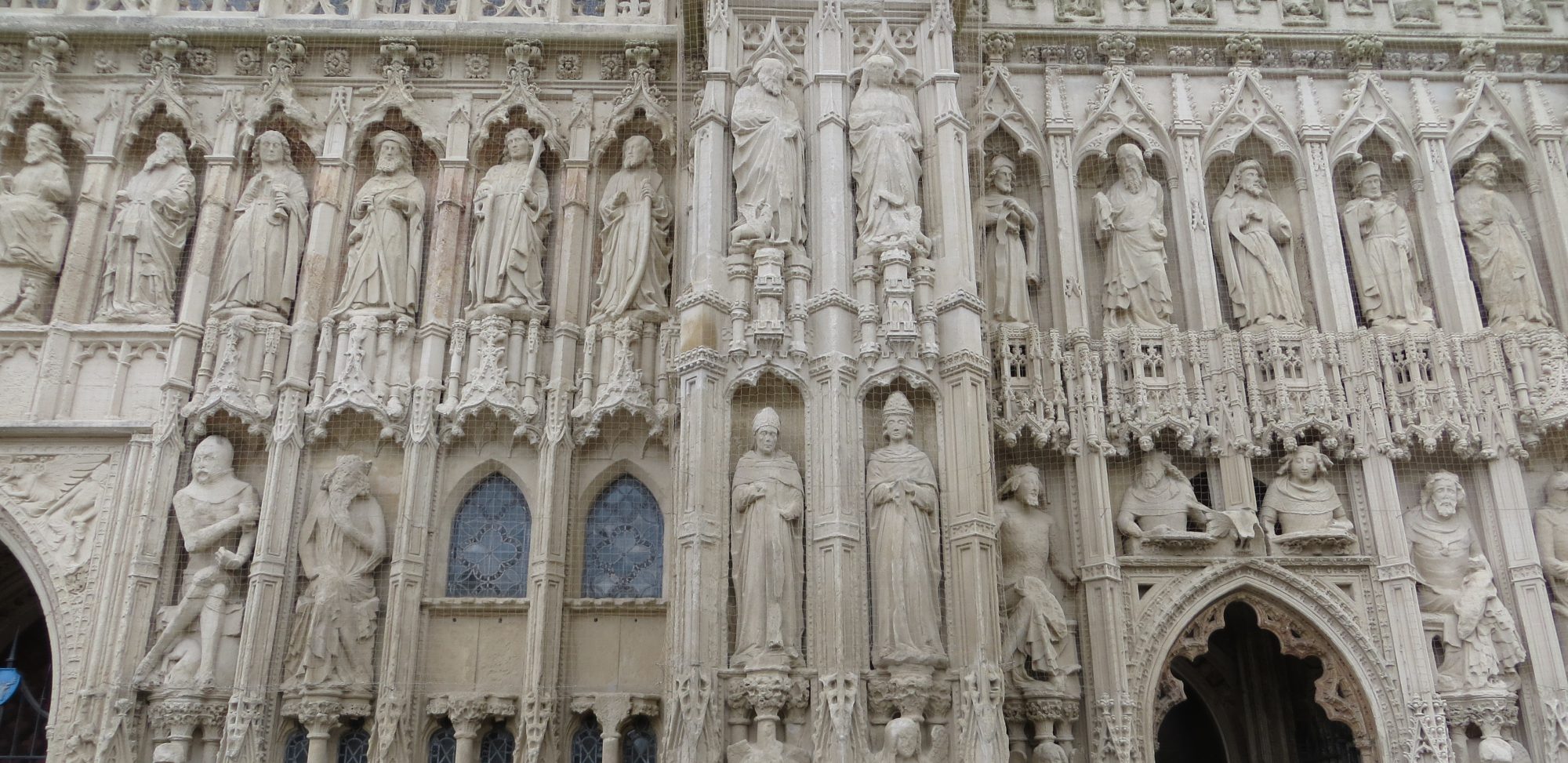
Again, we commemorate those who have gone before, fallen asleep in holiness, and are at rest among the saints; those who have kept the one apostolic faith without blemish and entrusted it to us. We proclaim the three sacred and holy Ecumenical Synods of Nicaea, of Constantinople and of Ephesus. We also remember our glorious and God-fearing fathers, prelates and doctors present at the Synods. Bishop James, the first bishop of Jerusalem, the apostles and martyrs and the saints: Ignatius, Clement, Dionysius, Athanasius, Julius, Basilius, Gregorius, Dioscoros, Timothy, Philoxenus, Antemus, Ivanius. Particularly, St. Cyril that exalted and firm tower who declared and made manifest the incarnation of the Word God, our Lord Jesus Christ Who took flesh. We also remember our Patriarch St. Severius, the crown of the Syrians, that rational mouth, pillar and teacher of all the Holy Church of God; and our saintly and holy father St. Jacob Burd`ono the supporter of the orthodox faith and St. Ephrem, St. Jacob, St. Isaac, St. Balai, St. Barsaumo, head of the anchorites, St. Simon the Stylite and the chosen St. Abhai. Let us, also, remember all those before them, with them and after them, who kept the one, true and uncorrupted faith and delivered it to us. May their prayers be a stronghold to us. Let us beseech the Lord.

Kyrie eleison

Anaphora of St. John Chrysostom

Saint Alban

Know your saints. Today, June 22, is Saint Alban’s day. Saint Alban was the first British martyr. He is in good company and there is room for more.

Benedict on Jesus and sacrifice

His Holiness Pope Benedict XVI is a pastor. He preaches and teaches around the Church year, his homily at every feast telling us something about Christ and something about us. Through his Easter and Corpus Christi homilies in particular he teaches us how to relate the passion, crucifixion, resurrection, the eucharist and body of Christ.

His very impressive little book on Jesus of Nazareth takes us through the ministry up to the transfiguration. We come to it in the knowledge that there is second book dealing with the passion and resurrection to follow. But a work of Christian teaching theology would not put incarnation and ministry in one book, which would then look very like a work of biblical studies, and the resurrection in another, and the Church and eucharist in a third. That would attempt to divide the indivisible, Jesus in one book, Christ in a second, and so divide Christ from his people, take away his anointing, until ‘Christ’ becomes the corpse over which the dogs of biblical studies have fought these many years. So it is a joy to find that the passion, resurrection and worship and eucharist are everywhere in this volume.

Pope Benedict on Jesus and Sacrifice

We, however, have a different goal

Let us dwell on only two points. The first is the journey towards “the maturity of Christ”, as the Italian text says, simplifying it slightly. More precisely, in accordance with the Greek text, we should speak of the “measure of the fullness of Christ” that we are called to attain if we are to be true adults in the faith. We must not remain children in faith, in the condition of minors. And what does it mean to be children in faith? St Paul answers: it means being “tossed here and there, carried about by every wind of doctrine” (Eph 4: 14). This description is very timely!

How many winds of doctrine have we known in recent decades, how many ideological currents, how many ways of thinking. The small boat of the thought of many Christians has often been tossed about by these waves – flung from one extreme to another: from Marxism to liberalism, even to libertinism; from collectivism to radical individualism; from atheism to a vague religious mysticism; from agnosticism to syncretism and so forth. Every day new sects spring up, and what St Paul says about human deception and the trickery that strives to entice people into error (cf. Eph 4: 14) comes true.

Today, having a clear faith based on the Creed of the Church is often labeled as fundamentalism. Whereas relativism, that is, letting oneself be “tossed here and there, carried about by every wind of doctrine”, seems the only attitude that can cope with modern times. We are building a dictatorship of relativism that does not recognize anything as definitive and whose ultimate goal consists solely of one’s own ego and desires.

We, however, have a different goal: the Son of God, the true man. He is the measure of true humanism. An “adult” faith is not a faith that follows the trends of fashion and the latest novelty; a mature adult faith is deeply rooted in friendship with Christ. It is this friendship that opens us up to all that is good and gives us a criterion by which to distinguish the true from the false, and deceit from truth.

Joseph Cardinal Ratzinger to the College of Cardinals 2005

They became secular because they stopped having children

This essay represents what might be called a radical friendly amendment to the revisionists by exploring a hitherto unexamined logical leap in the famous story line. To be fancy about it for a moment, what secularization theory assumes is that religious belief comes ontologically first for people and that it goes on to determine or shape other things they do — including such elemental personal decisions as whether they marry and have children or not. Implied here is a striking, albeit widely assumed, view of how one social phenenomenon powers another: that religious believers are more likely to produce families because religious belief somehow comes first.

And therein lies a real defect with the conventional story line about how and why religion collapsed in Western Europe. For what has not been explained, but rather assumed throughout that chain of argument, is why the causal relationship between belief and practice should always run that way instead of the other, at least some of the time. It is as if recent intellectual history had lined up all the right puzzle pieces — modernity, belief and disbelief, technology, shrinking and absent families — only to press them together in a way that looks whole from a distance but leaves something critical out.
This essay is a preliminary attempt to supply that missing piece. It moves the human family from the periphery to the center of this debate over secularization.

In brief, it is not only possible but highly plausible that many Western European Christians did not just stop having children and families because they became secular. At least some of the time, the record suggests, they also became secular because they stopped having children and families. If this way of augmenting the conventional explanation for the collapse of faith in Europe is correct, then certain things, including some radical things, follow from it.

Mary Eberstadt How the West really lost God

And this is the sevenhundred post on this blog. Fecund in more than one sense then.

Nation of Bastards

Not only do we have an entirely novel definition of marriage that excludes procreation from its purview. That would be dramatic enough, since it shifts the focus of our most basic social institute from inter-generational concerns to those of present personal gratification, and in doing so eliminates many of the responsibilities that belong to marriage. But we also have the novel idea that the state has the power to re-invent marriage by adopting and enforcing this definition. By claiming such a power the Canadian state has drawn marriage and the family into a captive orbit. It has reversed the gravitational field between the family and the state, putting itself at odds with the founding principles of Canada and with the notion of free men and free women. It has effectively made every man, woman and child a chattel of the state, by turning their most fundamental human connections into mere legal constructs at the state’s disposal. It has transformed those connections from divine gifts into gifts of the state.

Douglas Farrow Nation of Bastards: Essays on the End of Marriage. Yup, this is the Douglas Farrow of Ascension and Ecclesia.

Read lots more Farrow at the wonderful Institute for for the Study of Marriage, Law and Culture

How to pray 1

To You, O Lord, both heaven, which is the throne of Your Majesty, and the earth, which is the footstool under Your feet, sing praise. The earth glorifies Your Holy Name in this church that chants the sound of glory to You from the mouth of her children; by the succession of the prophets, the company of the apostles, the sufferings of the martyrs, the orders of the confessors, the theology of the doctors, the orderly standing of the ascetics, the endurance of the abstinents, the hosts of the just, the assemblies of the righteous and the faithful of all ages. In that heavenly Church which is set on high, where Your first-born are inscribed in Your holy books, You are praised by sons of the angels, the joyful voices of the archangels, the melodies of the cherubim, the zeal of the primacies, the splendor of the principalities, the brilliance of the thrones, the honor of the lords, the fiery glow of the legions, the companies of the victorious, the assemblies of the perfect, the feasts and the rejoicing of the saints and the hallowing of the seraphim, who, with their six wings and the serenity of their voices, praise and cry out, saying:

Holy, holy, holy

Anaphora of St. Cyril

The very special visibility of the Church

For a host of historical and theological reasons Anglicans have routinely overplayed an understanding of visibility which associates it too strictly with ordered externality, and underplayed what that stout ecumenist Karl Barth called the ‘very special visibility’ of the Church. By that, Barth did not intend to deny that the Church of Jesus Christ has concrete, historical form; he simply sought to affirm that the Church has visible form by virtue of the presence and action of Jesus Christ through the Holy Spirit; and he wanted to deny that any contingent historical ordering could guarantee or ensure the essence of the Church, since to say that would be to pass the Church from the hands of its Lord to the hands of its human members. Visibility is thus a spiritual event, describable only by talk of the presence and action of God, and not convertible without residue into forms. Again, this is not a denial of externality, but an attempt to spell out how the Church’s externality is a function of present divine action, of which the externality of the Church is a witness. Hence the principle: ‘The visible attests the invisible’ – ‘invisible’ meaning ‘spiritually visible’, perceptible by faith in the work of God. Perhaps the most crucial bit of dogmatic work which Anglicans need to undertake here is to spell out full, visible unity in such a way that the necessary concrete forms of unity (apostolic confession, common sacraments and ministry, and episcope) can credibly be shown to attest the invisible rather than replace the invisible with contingent structures or order.

John Webster The goals of ecumenism – full visible unity? in Paths to Unity (large PDF) in Synod papers

More eschatology

This is a piece for a volume on eschatology edited by John Manoussakis and Neal Deroo to be published by Ashgate in 2009

The Orthodox theologian John Zizioulas is most often associated with the Christian doctrine of the person. The concept of the person holds together the two issues of communion and freedom. Zizioulas argues that if there is one person there must be many persons: the concept is intrinsically plural, relational and yet safeguards our particularity. By making a distinction between person and individual, Zizioulas contrasts the human who is related and integrated, and the human who is disengaged and isolated from all others. According to Christian doctrine, Christ is the person in whom we may all be persons. Christ comes to individuals without relation to anyone else, and brings them into communion so that they become persons, related to all others, indeed related to everything that is not themselves. This catholic being who is simultaneously one and many is coming into being in history, and at the eschaton will turn out to be truth of all humanity. In Christ, time and history move towards this reconciliation in which all creatures discover their proper unity and difference; this coming together of all things makes itself known in history in the Church and in the event of the eucharist. For Christian theology, the concept of the person relates to time and purpose and so to eschatology. His confidence in the theology of the Greek Fathers enables Zizioulas to lay out the logic of the Christian doctrine of the person with the utmost clarity, and it is this that makes his account of personhood distinctive and rewarding. More…

Ashgate say that they have sold the rights to The Theology of John Zizioulas to a Greek publisher. If Ashgate can sell a Greek to the Greeks I am sure they will find a big market for this American phenomenology. (No, I don’t know either). Selling a little British theology to the Brits, though – who is up to that?

Fathers as optional extras

Anastasia de Waal argues that while Labour thinks it is being liberal, its position on the family is actually highly conservative. Its policy is currently determined not by its own priorities, but by Conservative policy and past notions of the repressive ‘traditional’ family. Labour therefore considers family structure to be solely Conservative moralising territory and marriage irrelevant to 21st century policymaking. Instead, the government has focused on celebrating so-called ‘diversity’. But Labour’s nominally inclusive stance is actually blurring the lines between the poor family and what Labour imagines to be the ‘modern’ family:

‘What are construed [by Labour] as positive manifestations of diversity are in fact very often negative manifestations of deprivation and limiting circumstances. This is not to deny that new opportunities to end unhappy relationships and a greater freedom of choice in family life have positively affected families right across the socio-economic spectrum. However, non-marriage and parental separation in the UK today disproportionately represent the problematic, as opposed to the progressive, elements of family diversity.’

Labour’s misjudged resistance to acknowledging the importance of family structure is undermining its equalising agenda, perpetuating inequality between both the classes and the sexes.

Lower marriage rates and greater numbers of cohabitating parents are strongly connected to what Anastasia de Waal terms ‘structural poverty’, that is, unemployment-related poverty incurring further poverty through parental separation. The relationship between unemployment and parental separation is hugely significant because child poverty in Britain is concentrated in single-parent households.

Labour’s treatment of fathers as ‘optional extras’ is exacerbating difficulties for women and children. Whilst the aim has been to be non-judgemental to mothers and children in separated families, in reality the effect has been to legitimise irresponsible fathers.

Civitas Marriage in modern Britain: out of reach, not out of fashion