Human Fertilisation and Embryology Bill Prayer Vigil

In order to mark this Second Reading of the Human Fertilisation and Embryology Bill in the House of Commons on Monday 12th May we will be holding a prayer vigil together with other groups.

PLEASE COME to our prayer vigil outside Parliament, invite members of your church, Christian groups, family and friends. We will gather at 2pm on 12th May in Old Palace Yard, opposite St Stephen’s Entrance to the House of Lords, Westminster.

At Second Reading, MPs vote on the ‘principle’ of the whole Bill. This is usually a formality and then the Bill goes through to its Committee Stages, Report and Third Reading where MPs can vote on specific amendments.

With faith and humility we must come together to pray for a great miracle. Monday, 12th May is the day after Pentecost and exactly 2 years since the miraculous defeat at Second Reading of the Joffe Bill which would have legalised euthanasia in this country. We would like Christians everywhere to come in their hundreds and stand outside Parliament and pray for this miracle; pray that MPs will vote against the principle of the Bill.

Christian Concern for our Nation

Father Zakaria

Though he is little known in the West, Coptic priest Zakaria Botros â?? named Islamâ??s â??Public Enemy #1â?? by the Arabic newspaper, al-Insan al-Jadid â?? has been making waves in the Islamic world. Along with fellow missionaries â?? mostly Muslim converts â?? he appears frequently on the Arabic channel al-Hayat (i.e., â??Life TVâ??). There, he addresses controversial topics of theological significance â?? free from the censorship imposed by Islamic authorities or self-imposed through fear of the zealous mobs who fulminated against the infamous cartoons of Mohammed. Botrosâ??s excurses on little-known but embarrassing aspects of Islamic law and tradition have become a thorn in the side of Islamic leaders throughout the Middle East.

Botros is an unusual figure onscreen: robed, with a huge cross around his neck, he sits with both the Koran and the Bible in easy reach. Egyptâ??s Copts â?? members of one of the oldest Christian communities in the Middle East â?? have in many respects come to personify the demeaning Islamic institution of â??dhimmitudeâ?? (which demands submissiveness from non-Muslims, in accordance with Koran 9:29). But the fiery Botros does not submit, and minces no words. He has famously made of Islam â??ten demandsâ?? whose radical nature he uses to highlight Islamâ??s own radical demands on non-Muslims.

Typically, Botrosâ??s presentation of the Islamic material is sufficiently detailed that the controversial topic is shown to be an airtight aspect of Islam. Yet, however convincing his proofs, Botros does not flatly conclude that, say, universal jihad or female inferiority are basic tenets of Islam. He treats the question as still open â?? and humbly invites the ulema, the revered articulators of sharia law, to respond and show the error in his methodology. He does demand, however, that their response be based on â??al-dalil we al-burhan,â?? â?? â??evidence and proof,â?? one of his frequent refrains â?? not shout-downs or sophistry.

More often than not, the response from the ulema is deafening silence â?? which has only made Botros and Life TV more enticing to Muslim viewers.

Raymond Ibrahim on Father Zakaria Botros
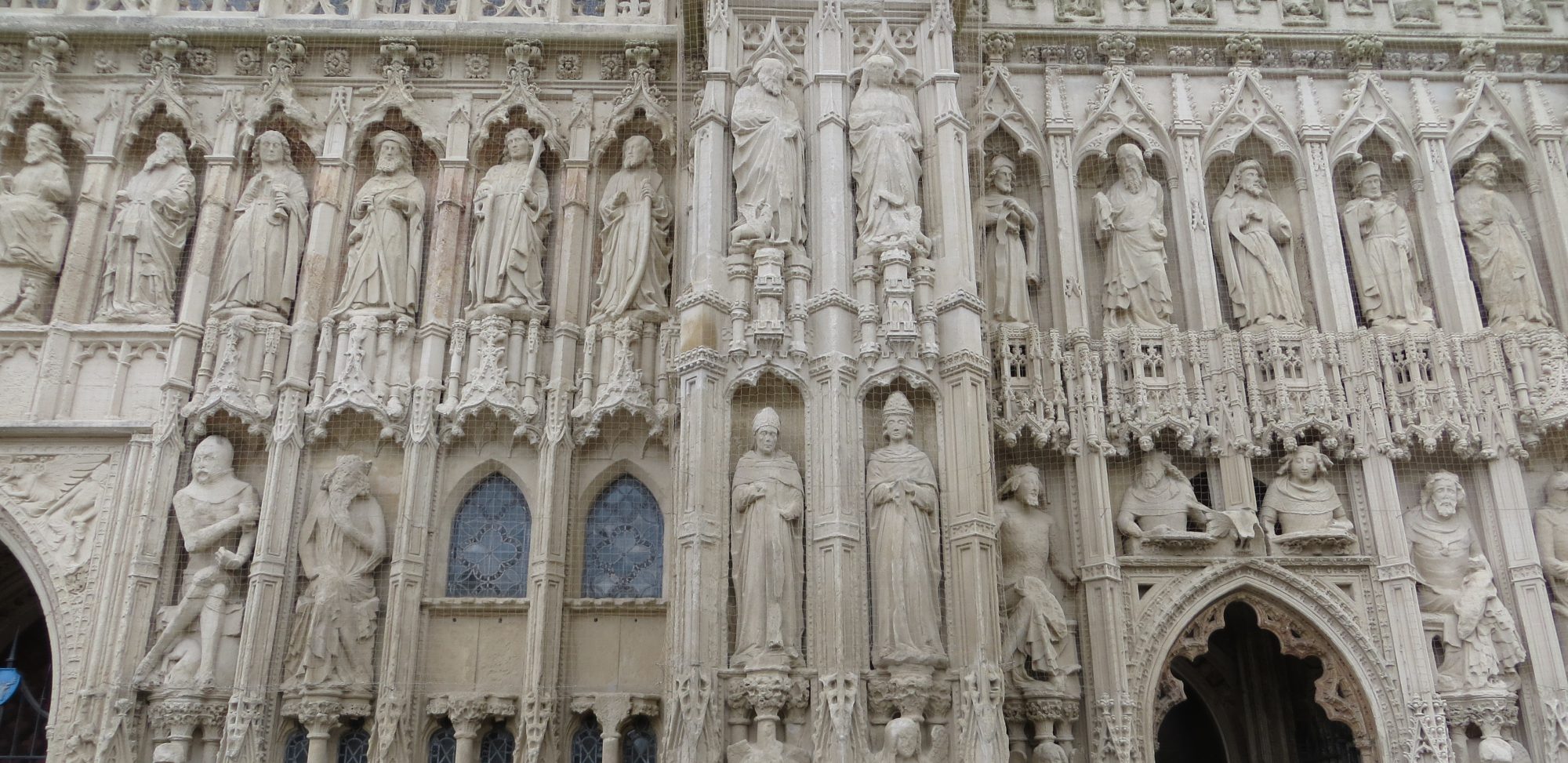
Priest as ring master

The priest was gradually changed in the popular imagination from the celebrant of the Sacred Mysteries of salvation into the coordinator of the liturgical ministries of others. And this false understanding of the ministerial priesthood produced the ever-expanding role of the â??priest presider,â?? whose primary task was to make the congregation feel welcome and constantly engage them with eye contact and the embrace of his warm personality. Once these falsehoods were accepted, then the service of the priest in the liturgy became grotesquely misshapen, and instead of a humble steward of the mysteries whose only task was to draw back the veil between God and man and then hide himself in the folds, the priest became a ring-master or entertainer whose task was thought of as making the congregation feel good about itself.

Father Jay Scott Newman

Separation of Church and State

Philip Hamburger Separation of Church and State

In a powerful challenge to conventional wisdom, Philip Hamburger argues that the separation of church and state has no historical foundation in the First Amendment. The detailed evidence assembled here shows that eighteenth-century Americans almost never invoked this principle. Although Thomas Jefferson and others retrospectively claimed that the First Amendment separated church and state, separation became part of American constitutional law only much later.

Hamburger shows that separation became a constitutional freedom largely through fear and prejudice. Jefferson supported separation out of hostility to the Federalist clergy of New England. Nativist Protestants (ranging from nineteenth-century Know Nothings to twentieth-century members of the K.K.K.) adopted the principle of separation to restrict the role of Catholics in public life. Gradually, these Protestants were joined by theologically liberal, anti-Christian secularists, who hoped that separation would limit Christianity and all other distinct religions. Eventually, a wide range of men and women called for separation. Almost all of these Americans feared ecclesiastical authority, particularly that of the Catholic Church, and, in response to their fears, they increasingly perceived religious liberty to require a separation of church from state. American religious liberty was thus redefined and even transformed. In the process, the First Amendment was often used as an instrument of intolerance and discrimination.

More Spaemann

Der Gottesbeweis: Warum wir, wenn es Gott nicht gibt, überhaupt nichts denken können

Solange Vergangenes erinnert wird, ist es nicht schwer, die Frage nach seiner Seinsart zu beantworten. Es hat seine Wirklichkeit eben im Erinnertwerden. Aber die Erinnerung hört irgendwann auf, und irgendwann wird es keine Menschen mehr auf der Erde geben. Schließlich wird die Erde selbst verschwinden. Da zur Vergangenheit immer eine Gegenwart gehört, deren Vergangenheit sie ist, müßten wir also sagen: mit der bewußten Gegenwart – und Gegenwart ist immer nur als bewußte – verschwindet auch die Vergangenheit, und das Futurum exactum verliert seinen Sinn. Aber genau dies können wir nicht denken. Der Satz: “In ferner Zukunft wird es nicht mehr wahr sein, daß wir heute abend hier zusammen waren” ist Unsinn. Er läßt sich nicht denken. Wenn wir einmal nicht mehr hier gewesen sein werden, dann sind wir tatsächlich auch jetzt nicht wirklich hier, wie es der Buddhismus denn auch konsequenterweise behauptet. Wenn gegenwärtige Wirklichkeit einmal nicht mehr gewesen sein wird, dann ist sie gar nicht wirklich. Wer das Futurum exactum beseitigt, beseitigt das Präsens.

Aber noch einmal: Von welcher Art ist diese Wirklichkeit des Vergangenen, das ewige Wahrsein jeder Wahrheit? Die einzige Antwort kann lauten: Wir müssen ein Bewußtsein denken, in dem alles, was geschieht, aufgehoben ist, ein absolutes Bewußtsein. Kein Wort wird einmal ungesprochen sein, kein Schmerz unerlitten, keine Freude unerlebt. Geschehenes kann verziehen, es kann nicht ungeschehen gemacht werden. Wenn es Wirklichkeit gibt, dann ist das Futurum exactum unausweichlich, und mit ihm das Postulat des wirklichen Gottes.

And that, my friends, is an eschatological ontology.

Der letzte Gottesbeweis

Without faith, reason is without roots

If however reason, concerned about its supposed purity, fails to hear the great message that comes from the Christian faith and the understanding it brings, it will dry up like a tree with roots cut off from the water that gives it life. It will lose the courage needed to find the truth and thus become small rather than great.

Applied to our European culture this means that if it wants to constitute itself on the basis of its arguments and whatever appears to it to be convincing, with concerns about its own secular nature, it will cut itself off from its life-sustaining roots, and in doing so will not become more reasonable and pure but will instead become undone and fragmented.

Pope XVI Benedict Speech to La Sapienza – the University of Rome

Nottingham on Benedict on Jesus

All the stars will be out in Nottingham for

The Pope and ‘Jesus of Nazareth conference 19-20 June

Archbishop Javier Martínez (Granada): â??Christ of history, Jesus of Faithâ??
Questions and Discussion (chaired by Prof. John Milbank)
Prof. Walter Moberly (Durham): â??The Use of the Old Testament in Jesus of Nazarethâ??
Prof. Markus Bockmuehl (Oxford): â??Lessons learned from Reading Scripture with Pope Benedictâ??
Dr Roland Deines (Nottingham): â??Can the â??Realâ?? Jesus be Identified with the Historical Jesus?â??
Prof. Henri-Jérôme Gagey (Paris): â??Between Theology and History: A Question of Epistemologyâ??
Olivier-Thomas Venard OP (Jerusalem): â??Does the Jesus of the Synoptic Gospels reallysay nothing different from the Prologue of John?â??
Dr Simon Oliver (Lampeter): â??Jesus and Eucharistic Exchange: Reflections on Cudworth and Ratzingerâ??
Dr Angus Paddison (Nottingham), â??Following Jesus with Pope Benedictâ??
Dr Richard H. Bell (Nottingham): â??On the Transfigurationâ??
Dr Douglas Knight (London): â??Benedict on the Whole Christâ??
Dr Jane Heath (Aberdeen): â??Burckhardtâ??s Greeks and Ratzingerâ??s Jesusâ??
Dr James Crossley (Sheffield): â??Historical Criticism and the Construction of Judaism in Ratzingerâ??s Jesus of Nazarethâ??
Luke Tallon (St. Andrews), â??The Evangelical Dialogic of Joseph Ratzingerâ??s Own, Personal Jesusbildâ??
Martin BauspieÃ? (Tübingen), â??Event and Testimonyâ??
William Daniel (Nottingham), â??Whose Jesus? Which Christology?â??
Prof. Geza Vermes FBA (Oxford): â??A Historianâ??s Perspective on the Popeâ??s Jesusâ??
Prof. Mona Siddiqui (Glasgow): â??Seeing the Face of the Lord â?? Hope or Heresy?â??
Fr Fergus Kerr OP (Edinburgh): â??Reckoning with the Originality of Jesus: Where Did Christology Come from?â??

Ascension

Clap your hands, all you peoples; shout to God with loud songs of joy. For the Lord, the Most High, is awesome, a great king over all the earth. He subdued peoples under us, and nations under our feet. He chose our heritage for us, the pride of Jacob whom he loves. God has gone up with a shout, the Lord with the sound of a trumpet. Sing praises to God, sing praises; sing praises to our King, sing praises. For God is the king of all the earth; sing praises with a psalm. God is king over the nations; God sits on his holy throne. The princes of the peoples gather as the people of the God of Abraham. For the shields of the earth belong to God; he is highly exalted. Psalm 47

The ascension in Luke and Acts summarises and rounds off the resurrection appearances of Jesus. They tell us that the resurrection is the truth of the incarnation. But the ascension is the thumbprint view of the whole narrative of God with man, and therefore the whole plot of the bible. Man is called and destined for communion with God, and in that communion, fellowship with all other creatures of God. Man in Christ now sits at the right hand of the Father and with us will fill all creation .