Christianity without discipline

Indifference to form was essential to the Evangelical movement. It stemmed from a conviction that mediation of any kind, whether Catholic or Protestant, posed a barrier to direct communion between God and the individual Christian. Ecclesial forms, the logic went, could be faked; they could result in nominal Christianity or dead orthodoxy.

Evangelicalism, accordingly, sought authentic or genuine faith, unencumbered by rites, dogma, and clergy. As such, born-again Protestantism is a new and highly modern form of Christianity, one that regards dependence on churchly mediation, whether through catechesis or creedal subscription, sacraments or ministerial blessings, pastors or priests, or councils of bishops or presbyteries, as in tension with rather than constituting a personal relationship with Christ.

If real antagonism exists between Evangelicalism and ecclesial Christianity, then why do born-again Protestants who desire historically grounded expression of the faith remain Evangelical? Why not simply join one of the other communions that guard ancient Christianity?

One suspects that the reason has something to do with the advantages of being rootless. Without an Evangelical identity, a born-again Protestant would have to choose one of those other traditions, join it, and reject the others. With an Evangelical identity, he can take the best from all Christian expressions without having to come under the discipline and restraint of a particular church’s ministry, authority, and tradition.

If this is so, then the Evangelical future called for in this statement is more modern than ancient, because it is more voluntary than received, more liberated than restrained, more tolerant than exclusive. Without becoming part of a historic Christian communion, Evangelicalism’s ancient future will yield merely the trappings of antiquity minus its churchly substance.

D. G. Hart ‘Born Again Free’ – Responses to Call to an Ancient Evangelical Future

Theology in London 2 – Alan Spence

Alan Spence(left)

Alan Spence is the author of The Promise of Peace: A Unified Theory of Atonement

The Promise of Peace offers a defence of a mediatorial interpretation of the atonement, that is one in which Christ is held to have become as we are, so that he might on our behalf make peace with God. It is argued that such an interpretation is not one of a number of valid descriptions of Christ’s saving work, but the normative redemptive account. The erosion of this classic view of the atonement can be explained partly by a number of developments that have taken place in theological thought during the past two hundred years. These include the emergence of a christology in which Christ’s divinity is linked to his saving ministry; a new interpretation of Pauline theology in which issues of justification are held to be secondary to those of participation; a return to the more dualistic world-view of the Church Fathers; difficulties with the concept of divine judgement; and a culture of relativism in which a unified or coherent account of the atonement not only no longer seems possible, but is generally not even considered desirable. The book achieves its purpose by engaging critically with these various theological ideas. It is as much a clearing of the undergrowth from the foundations of soteriology as it is the construction of a coherent account of Christ Jesus as the one mediator between us and God. It goes on to consider the relation of such an account to the proclamation of the gospel and the response required of its hearers.

The Promise of Peace has won some powerful endorsements:

‘Seasoned by years on the front lines of ministry, both in missions and human rights work, the author’s profound insights into the logic of redemption bear a sense of urgency and pastoral depth. The Promise of Peace is not simply another summary of Christian doctrine; it is a judicious and passionate – at times even polemical – defense of the heart of the gospel for our time. This is the clarity and wisdom that the church desperately needs in our day if we would turn from fads to faith in the promise-maker of peace.’ Professor Michael Horton, Westminster Theological Seminary, California.

‘Alan Spence’s new book is a very welcome addition to the literature on the doctrine of atonement. Dr Spence has read widely and deeply, and engages seriously and sympathetically with many others in developing his own distinctive proposal. More than that, however, any book so well written will gain a heart-felt welcome from scholars so used to wading through impenetrable prose. With the style and urgency of a true preacher, and the knowledge and insight of a true scholar, Dr Spence offers us a book of genuine interest and worth. I am very happy to commend it.’ Dr Steve Holmes, St Andrews.

‘Alan Spence advocates and practises a non-nonsense approach to Christian theology: clear, accessible, passionate, not afraid of controversy, but always pastoral, and, above all, eager to be faithful to the Christian Gospel. Even those who do not agree with his conclusions will enjoy engaging in conversation with him.’ Professor Christoph Schwöbel, Tübingen.

Alan taught theology in Zimbabwe, was Moderator of the Presbyterian Church of Southern Africa and is now minister of the United Reformed Church in Ealing in London.

Alan is the most incisive, passionate and pastoral teacher of Christian doctrine I know, and invariably galvanises every seminar he turns up at. He has been coaching postgraduates who find him through his work on England’s great puritan theologian John Owen. Alan’s book on Owen appears from T & T Clark next year. He is powerful proof that you can still find Christian theology in London.

Rowan Williams

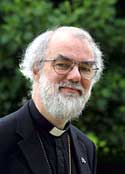
Archbishop Rowan Williams

Yes, we have our very own one-man ‘Deep Church’, right here in London, at Lambeth, and Rowan Williams is his name.

The ‘Sermons and Speeches’ page of the website of the Archbishop of Canterbury is the place to go for contemporary Christian resources.

In the course of a year Archbishop Williams covers a wide range of issues on a large number of occasions and for varied audiences. Some pieces are short and light, and these tend to have the odd titles that reflect the institutions that invited him to be their speaker.

But many of these are big pieces, and we should regard them as our theological resources of first resort. Many of them are about theology in the public square, and so to do with the university as the arena of free public discourse, ‘faith-based education’ and the topic of the moment and foreseeable future – relations with Muslims.

Others are about Anglican unity, Christian unity, and others about discipleship and the ‘religious life’, by which he means the monastic life (which is probably the key for Williams).

His familiarity with the resources represented by the history of the Christian Church and tradition, and his fundamental concern for discipleship and the unity of the Church make his work evangelical. He has a gospel and it is faithful and deep (ludicrous, maybe, that this needs saying). Why doesn’t he just preach the gospel? He preaches the gospel – exactly that is what he is doing: not the gospel in half-dozen chords on the charismatic keyboards perhaps, but massively orchestrated, harmonics reaching back and forward. Though he pitches what he says just right for each specific audience, he is also speaking to the longer-term audiences behind them – it is that communion of saints, again. Of course much of it is in a very different idiom than we are used to.

University and public square

Though more diffidently, he makes the same case as Benedict XVI that the Christian faith provides the good practices of public reasoning together on which all public discourse, civil society and universities are built.

He gives some of the most revealing and exciting accounts of the Christian faith, or of the contribution of Christianity to the public square, when he is playing away from home and having to go back to first principles – for instance in ‘What is a university?’ in China, in his lecture given to the godless Eurocrats on the Christian contribution to Europe, and ‘What is Christianity?’ in the Islamic University, Islamabad, and his speech to Islamic religious leaders in Cairo. They may not sound inviting, but this is where he is doing the real work of showing the contribution of the Christian faith to public discourse and reason – he usually provides a little history of the relationship of the two – and sometimes his gospel sounds most clearly here.

What is a university?‘ Speech given in Wuhan, China. This is my favourite of the moment and I have posted pieces from it on this blog.

Religion, culture, diversity and tolerance – shaping the new Europe – Brussels

Belief, unbelief and religious education – Downing Street 2004

Convictions Loyalties and the Secular State – Chatham lecture 2004

Christian theology and other faiths – Birmingham 2003

What is Christianity? A lecture given at the international Islamic University in Islamabad, Pakistan

Address at al-Azhar al-Sharif – Cairo 2004

Christian unity

One Church One Hope – Freibrug 2006 on Christian unity and the churches’ responsibility for Europe

Christ’s own identity and work was to be found in ‘representative action’, Stellvertretung. Christ stands in our place; all he does is done on our behalf. His perfect obedience is lived out in life and death so that we may live, and for no other purpose, certainly for no individual purpose. But if that is the life he lives, then the life that comes into existence through him must likewise be marked by the same representative quality…

One Holy Catholic and Apostolic Church Anglican Global South-to-South Encounter, Ain al Sukhna, Egypt 28th October 2005

The focus of the centre of Anglican energy in the world is very clearly in the global south in our time and it is therefore for me an experience of learning, as well as of fellowship, to be with you…

Christian life – discipleship and ‘spirituality’

Williams’ lectures about Michael Ramsey and Dietrich Bonhoeffer are most definitely about you, me and Williams in the here and now. He is using Bonhoeffer and his situation to talk about us and our situation. (I said this blog would be full of the blooming obvious). He considers this indirect mode intrinsic to Christian discipleship, that we take the cover our predecessors in the faith offer us, and this is an aspect of following them and looking to them for leadership. What we are looking for is not, or not just, resolutions, ways out of our difficulties, but a style of life, an attitude of mind and way of life, which is the way of the disciple, even the way of the cross. See his approval of Ephraim Radner line on the Anglican crisis of faith as the way of the cross in Williams’ Ramsey lecture.

The Lutheran Catholic The Ramsey Lecture – on Michael Ramsey, the UK’s last great theologian-archbishop, gives a very good idea of Williams himself, with links to Bonhoeffer

Sermon at St Matthäus Church Berlin on the centenary of the birth of Dietrich Bonhoeffer

So if we ask about the nature of the true Church, where we shall see the authentic life of Christ’s Body – or if we ask about the unity of the Church, how we come together to recognise each other as disciples – Bonhoeffer’s answer would have to be in the form of a further question. Does this or that person, this or that Christian community, stand where Christ is? Are they struggling to be in the place where God has chosen to be? And he would further tell us that to be in this place is to be in a place where there are no defensive walls; it must be a place where all who have faith in Jesus can stand together, and stand with all those in whose presence and in whose company Christ suffers, making room together for God’s mercy to be seen.

Williams begins from the life of prayer, spirituality, monasticism.

Religious lives’ Romanes Lecture 2004

The Christian Priest Today

Throughout Williams tells us that the Christian life is one of suffering witness. It costs and it hurts. It particularly hurts when you are carved up by other Christians, uncomprehending and enraged. The Christian is very likely to be the minority, but must put the Christian proposal out there in the public square for this is the greatest service they can offer their society.

Going through these lectures has made me realise again that whether a leader is good, and able to provide leadership in witness to Christ to the world, is in largely determined by those who follow him – or don’t follow him. It is no good Williams saying all this unless the Church (not only Anglican but the whole church in the UK and further afield) receives and affirms this teaching and gives him authority to say these things. He can speak when he speaks from the Church, and this will be when the church hears, assents and gives its audible Amen to all this. We must wake up to the fact that we have a good leader, and stop slouching along as though still led by the B-team. I should have got to grips with the mountain of Williams’ Christian teaching before now. We must get stuck into this.

There is more about Rowan Williams at Wikipedia, which has a bibliography.

Deep Church

You know what London really needs is a seminar in which ministers and worship leaders can re-discover the worship resources of the whole historic Church and discover a thicker, or deeper, exegesis of Scripture.

We did have such a seminar briefly a couple of years ago. It was called Deep Church. It was looking for ways to recover the practices of preaching, prayer, proper emphasis on communion and baptism, and to improving our catechism and theological teaching. I wonder what happened to it?

It produced a book The Gospel-Driven Church: Retrieving Classical Ministries for Contemporary Revivalism, billed as the first of a Deep Church Series.

New Deep Church lectures

I see that Andrew Walker is giving a series of lectures at the brand new Westminster Theological Centre, under the same Deep Church title. I wonder if these two deep churches are related? Professor Walker is a charismatic evangelical member of the Russian Orthodox Church (worth going along just to ask) and well known for his work on C.S. Lewis and the Inklings.

Yet we do have our very own one-man ‘Deep Church’, right here in London, at Lambeth, and Williams is his name. The Sermons and Speeches page of the website of the Archbishop of Canterbury is a trough deep with Christian resources. You want to know more about what he says without actually reading them yourself? Shame on you. All right. Let me see what I can do.

Salvation is health

In the Eastern Orthodox Church, we speak of the impulses that move us toward any kind of sin as â??passions.â?? You shouldnâ??t think of this term as related to â??passionate.â?? Itâ??s more like â??passiveâ?? (as in â??the Passion of Christâ??; his passion is what he endured).

These impulses beat us up. They originate as thoughts, sometimes as thoughts that evade full consciousness. The roots are tangled with memories, shame, anger, fearâ??and the thoughts are also very often inaccurate.

All this mess damages our ability to see the world clearly. We go on misreading situations and other people, and venture further into confusion. The illness compounds itself, to the delight of the Evil One, who nurtures lies and has no compassion on the weak. To him, the weak are breakfast.
Continue reading “Salvation is health”

Two from Calvin for Summer 07

Two of the seminars Calvin is offering next summer look interesting. They are not conferences, since they run over several weeks.

Liturgical Identities: Global, National, Ecclesial

Michael L. Budde and D. Stephen Long
June 25-July 20, 2007

Liturgies form identities. They set forth what is important, focus our attention, shape our bodies through particular practices, and bear communal memory in ways that form who we are, whose we are, and what matters most in life.

Liturgical practices bear in themselves an intentionality about how to live. This is true not only for the church, but other associations such as the nation-state and economic entities. The nation-state, for example, has its own hymns, ritual practices, saints and martyrs, and sacred calendar. Corporations increasingly construct â??liturgiesâ?? that create brand loyalty and allegiance, and shape the affections, dispositions and desires of people.

This seminar will draw upon traditional patterns of Christian worship in order to highlight similarities and difference, points of convergence and conflict, among formative communities â?? ecclesial and secular. It will provide participants the opportunity to explore how Christian ecclesiologies and forms of worship interact with other powerful practices that shape allegiances, identities and loyalties in our world.

Biblical Studies Across the Curriculum: Discerning Scripture for the Disciplines

James K.A. Smith and J. Richard Middleton

July 9-27, 2007

Over the past decade, a vision of integral Christian scholarship across the disciplines has flourished. But curiously absent from much of this discussion is any robust role for Scripture. While Christian scholars across the disciplines mine the resources of the Christian theological tradition for constructive work in their field, they often donâ??t dig down to the level of first-hand, rigorous engagement with the Bible. Or when Christian scholars do invoke Scripture, too often it is in the mode of â??proof-texting,â?? drawing on a less-than-sufficient acquaintance with the Bible that tends to de-contextualize Scripture, wresting passages from their canonical and historical context, or simply reducing them to propositions for logical operations.

The paucity of biblical engagement in Christian scholarship stems from a lack of opportunity for faculty development in this area. (In fact, it first stems from a certain failure of churches to provide solid formation in biblical interpretation.) Scholars are formed in ways that donâ??t provide opportunities to learn how to read Scripture well, and how to read it as scholarsâ??and along with scholars in biblical studies. The goal of this proposed summer seminar is to provide a faculty development opportunity that will rectify this situation. We aim to bring together a team of 12 scholars from across the disciplines who are eager to acquaint themselves with the best of critical, confessional scholarship on Scripture with a view to its impact for thinking across the curriculum. As such, we believe the seminar will have both scholarly and pedagogical impact.

Christian secularism

It is by means of this thinking â?? and not without irony â?? that we arrive at secularism and the concept of the secular public square. The word â??secularâ??, originally from a Latin word meaning â??generationâ?? or â??ageâ?? was adopted in early Christian writings to mean â??this ageâ?? or, more precisely, â??confined to this present age that is passing awayâ??. The secular was Christianityâ??s gift to the world, denoting a public space in which authorities should be respected but could legitimately be challenged and could never accord to themselves absolute or ultimate significance.

This was something the early Church understood well. In Peterâ??s letter to Christians scattered around the eastern Mediterranean, he told them they were â??a people belonging to Godâ??, but that didnâ??t mean they owed nothing to the earthly rulers under whom they lived. On the contrary, they were to â??submit â?¦ to every authority instituted among men: whether â?¦ king â?¦ or â?¦ governors, who â?¦ punish those who do wrong and to commend those who do right.â?? (1 Peter 2.13-14) But this, in turn, does not mean that such kings and governors are, by definition, right, and Peter proceeds to advise his readers what they should do when injustice is done. Similarly, the anonymous second-century writer of the Letter to Diognetus, explains to his reader: Though [Christians] are residents at home in their own countries, their behaviour there is more like that of transients; they take their full part as citizens, but they also submit to anything and everything as if they were aliens â?¦ their days are passed on earth, but their citizenship is above in the heavens. They obey the prescribed laws, but in their own private lives they transcend the laws. The Old Testamentâ??s nervousness about a single individual mediating Godâ??s rule for the people crystalises into the Christian denial that any particular political order is sacred, and, in doing so, produces the concept of a secular public square of which we are inheritors.

But we are only inheritors of it, as Rowan Williams has argued, because we are inheritors of the Judaeo-Christian intellectual foundations on which it is built. A belief in the provisionality and impermanence of political power, which forms the basis of political liberalism, is Christendomâ??s legacy to the modern world. Accordingly:

Western modernity and liberalism are at risk when they refuse to recognise that they are the way they are because of the presence in their midst of that partner and critic which speaks of â??alternative citizenshipâ?? â?? the Christian community â?¦ the distinctively European style of political argument and debate is made possible by the Churchâ??s persistent witness to the fact that states do not have ultimate religious claims on their citizens. Societies that forget this seminal Christian vision of â??dual citizenshipâ?? stumble towards absolutism, (Archbishop Rowan Williams)

either in the form of religious theocracy or state totalitarianism, in such a way as dehumanises its own people. This is an error into which theophobic secularism can fall.

God and Caesar

When the Church is regarded as an enemy to be overcome or a private body that must be resolutely excluded from public debate, liberal modernity turns itself into a fixed and absolute thing, another pseudo-religion, in fact â?¦

Unless the liberal state is engaged in a continuing dialogue with the religious community, it loses its essential liberalism. It becomes simply dogmatically secularâ?¦ (Archbishop Rowan Williams)

By concluding in this way we have consciously moved from a negative argument â?? defending Christianity against the largely baseless accusation that it is an inherently private phenomenon â?? towards a positive one â?? that the secular public square, properly understood, is a Christian legacy and one that requires an ongoing Christian presence to remain true to itself.

TheosDoing God: A Future for Faith in the Public Square

Formation

If you are asked what are the characteristics you would regard as marks of maturity, or having grown up as a human being, what would you say? Let me try a few suggestions. The human adult I imagine is someone who is aware of emotion but not enslaved by it. A human adult is someone who believes that change is possible in their own lives and the lives of those around them. A human adult is someone who is aware of fallibility and death, that is who knows they are not right about everything and that they won’t live forever. An adult is someone sensitive to the cost of the choices they make, for themselves and for the people around them. An adult is someone who is not afraid of difference, who is not threatened by difference. And I would add too, an adult is someone aware of being answerable to something more than just a cultural consensus – someone whose values, choices, priorities are shaped by something other than majority votes…

if we don’t know what it is we are ‘inducting’ people into when we try and help them grow as humans, we cannot be surprised if chaos results.

What if we live in a climate where our emotions are indulged but never educated? That is to say where we never take a thoughtful perspective on how we feel, that brings in other people and their needs. What if we live in an environment where apathy and cynicism are the default positions for most people on issues of public concern? What if our environment is short on dialogue and learning and self-questioning? What if it is characterised by a fear and a denial of human limitations, by a fundamentalist belief in the possibility of technology in solving our problems for example? By the constant bracketing or postponing of the recognition that we have limits and that we are going to die. What if our environment is passive to the culture of the global market, simply receiving that constant streams of messages which flows out from producers and marketers? Because one of the things that implies is that the world ought to be one in which difference doesn’t matter very much because we are all flattened out, as you might say, in the role of consumers. What if our environment is characterised by intense boredom and an addiction to novelty? Or characterised by an obsessive romanticising of victim status, and a lack of empathy? What if it is characterised by secularism, that is to say by an approach to the world which is tone deaf about the sacred and the mysterious?

Archbishop Rowan Williams Formation: Who’s bringing up our children?

To win the world to Christ without his Body

After World War II, conservative Protestants fled oppressively liberal mainline denominations and formed parachurch mission boards, seminaries, and publishing houses, as a matter of survival and faithfulness. As they did so, however, they downplayed their ecclesial differences to the point that establishment Evangelicalism forgot there really was anything important about baptism, the Lordâ??s Supper, or, sadly, the Church itselfâ?¦.

Now, after a half-century, we see Evangelical parachurch institutions and ministries almost indistinguishable in their broadness from the mainline institutions for which they were created as a conservative alternative. The Call hits exactly on some of the reasons for this: a hyper-confident Evangelical movement that thought it could win the world to Christ apart from his Body. Inasmuch as the Call directs us to reconsider the Kingdom communities of our churches, as opposed to databases of donors, we should listenâ?¦.

At the end of the day, the â??Ancient/Futureâ?? Evangelicalism is a natural extension of American Evangelicalismâ??s besetting sins of faddishness and consumerism. Thatâ??s the reason it is fanned (as so many Evangelical winds of doctrine are) by publishing houses. This project comes to us just as Evangelicalism is in the throes of an infatuation with the so-called emerging church, which is also fueled by publishing houses (the sellers of youth ministry curricula) and which is also enamored simultaneously with postmodern cynicism, egalitarianism, doctrinal flexibility, and ancient-seeming worship…

The emerging worshipers and the ancient futurists want to borrow some of the trappings of a time when Christianity was countercultural (dark rooms and candles simulating catacombs, for instance) while embracing primary aspects of contemporary cultural libertarianism (including feminism and pluralism)â?¦.

If the Ancient/Future Evangelicals wish to counter this culture, they will be forced to do so in more than the generalities theyâ??ve outlined. To take on consumerism, do you dare take on the dual-income family structure of contemporary Americanism? To take on the â??culture of death,â?? do you dare speak bluntly about welcoming the gift of children, about the personhood of the embryo, about the way in vitro fertilization turns a child into a means?

To speak against â??civil religion,â?? do you dare call for public prayers in the name of Jesus? To speak against â??political correctness,â?? do you dare say that only in Jesus Christ is salvation found, thus fueling the evangelism of the world religions, including the Jewish people?

Russell D. Moore â??Listen Closelyâ?? â?? Responses to Call to an Ancient Evangelical Future

All Saints Evensong

Isaiah 65.17-25, Psalms 148 & 150, Hebrews 11.32-12.2

Let them praise the name of the LORD,
for his name alone is exalted;
his splendor is above the earth and the heavens
.

Why?

For he commanded and they were created. Kings of the earth and all nations,
princes and all rulers on earth, young men and maidens, old men and children
.

The line Let everything that hath breath praise the Lord rounds off the book of psalms. We end the day with them in our evensong, and end the year with All Saints. Everything that has a voice receives its existence from the Lord – and as long as we say we receive all things from him we receive new breath. From Hebrews we heard about this great a cloud of witnesses, and then this – ‘God had provided something better so that they would not, apart from us, be made perfect…

The life-work of the saints is not established until we have grasped for ourselves what they want to give us. They not only know something that we don’t know, but they know something about us and have something for us that we don’t yet know and don’t yet have. They tell us that we do not have to establish ourselves or create an identity for ourselves in the face of the world. Our identity is given by God who has a far higher view of us than we have of ourselves. All the people amongst whom I will find my identity, are gifts given by God, and we must receive them as such. Each person, in particular each saint, brings us some part of this good gift of God to us, and with it some part of our very own identity. By the faithfulness of this company of witnesses the gospel has dropped into our lap.

When we allow that our predecessors in the Christian faith have been faithful, and have handed on to us a fair representation of the faith of Jesus Christ and his apostles, an extraordinary adventure opens up to us.

But of all people how has this extraordinary thing come to us so we find ourselves here, saying and singing these things, that God has spoken and speaks now to us? Why us?

I have been asked to talk about the book that the Theology Discussion group has been reading. This time it is Karl Barth’s Dogmatics in Outline, in which Barth introduces the creed which we have just said together. This evening the group will look at these clauses – ‘I believe in… God the Father, Almighty, Maker of heaven and earth…‘, and two in particular, God the Creator, and God the Father.

The first point Barth makes is that:

It cannot be that first of all we presuppose the reality of the world and then ask whether there is also a God.

It is not the case that the truth about God the Creator is directly accessible to us and that only the truth of the second article needs a revelation.

The existence of the creature is the great puzzle and miracle.

By the Word the world exists

– which is what our psalm 148 means by For he commanded and they were created

It is not the existence of God, but the existence of anything besides God, that is the extraordinary thing. The wonder is that there is also us, this creation and existence, and all heaven and earth. Heaven, Barth says, is the earth we do not know yet.

God has allowed us to be his witnesses, and allowed a whole world to be our witnesses as we are God’s witnesses. The existence of this world of witnesses is a marvel. We live before them and through them, sometimes against them, but ultimately always among them and with them. We are also their witnesses and make up their world. All existence a mystery: what it amounts to and who we are is knowable as God makes it known – in Christ.

Barth suggests that the first article of the creed – about God the Father Almighty, the Creator, depends on and frames, the second article about Jesus Christ who was born, suffered and died. Each is the condition for the other.

First it is not obvious that God is Father. We call God this because only because Jesus did. Father is therefore a name, and part of the name, Father, Son and Holy Spirit. This non-transferable name relates to the bible’s recounting of the event of Israel and Jesus. Their story reveals this complex name. It must always disturb us that the name of God is so odd. All the pressure is to look round for another less controversial, less unilateral name, one on which we can all agree. But …

God named us and called us. He gives us life and breath as we participate in the calling and naming by which he calls all things into existence, and in that hearing and replying by we recognise and learn to love one another as God’s creatures. Barth’s point is that God called us into love and existence – existence does not precede love. All love, friendship, relationship and good order are derived from the friendship that God is to us and within which we receive our name and existence.

This love comes with its own definition. If it was down to us to fill this love with meaning that it did not have, it would not be love, but be a new law for us to have to fulfill; then it would not be kind, but another imperative and another opportunity for our narcissism, autonomy and tyranny.

So this God who has introduced himself in Jesus Christ safeguards the mystery of human life. Because of him only I may not presume that I already know you, know what you use you are, and define, manage, manipulate and control you to ends that focus around me. The confession that you and I are gifts of God to one another means that I am not a god myself, so all my attempts to make your existence revolve around me, are vain. Only this God, who has called you into existence-and-fellowship will protect you from me.

That the only name that can protect us from one another is Father, Son and Holy Spirit, has to be taught and learned, just like all the rest of this faith. Use of this name, might put some people against us, and we who confess it in public worship do so with our hearts in our mouths. But that is just as it should be. Not everyone knows this, or agrees with this, or likes this. It is not too obvious to need saying and that is why we have to say it, and that is why we gather here, to be faithful witnesses in our turn, who give thanks to God for all that exists.